Salpingitis in Chickens: Symptoms, Causes and Treatment
Salpingitis is a bacterial infection of the oviduct, most commonly caused by Escherichia coli. It causes cessation of egg production, passage of caseous lash eggs, and penguin-like posture from abdominal distension. Without treatment, it progresses to egg yolk peritonitis and death. Treatment involves antibiotics and, for chronic cases, surgical spay (salpingohysterectomy).
Veterinarian Reviewed
FlockVet Veterinary Editorial Team· Reviewed August 2026
This is a veterinary emergency.
If your bird is showing these signs, contact a veterinarian immediately. Do not wait. Time-sensitive conditions can deteriorate rapidly without professional intervention.
At a Glance
- Urgency
- Emergency
- Contagious
- No
- Affects Humans
- No
- Key Symptoms
- sudden stop in egg laying with no other obvious cause, passage of a lash egg (mass of layered caseous material), penguin-like stance due to abdominal distension
- Prognosis
- Good with early antibiotic treatment. Guarded if abdominal distension is severe or egg yolk peritonitis has developed. Excellent with surgical spay if performed before systemic sepsis develops. Many hens with salpingitis experience recurrence if the oviduct is not removed or suppressed, as the underlying bacterial colonization persists.
📑 On This Pagetap to expand
🔍What Are the Symptoms of Salpingitis in Chickens?
- ●Sudden stop in egg laying with no other obvious cause
- ●Passage of a lash egg (mass of layered caseous material)
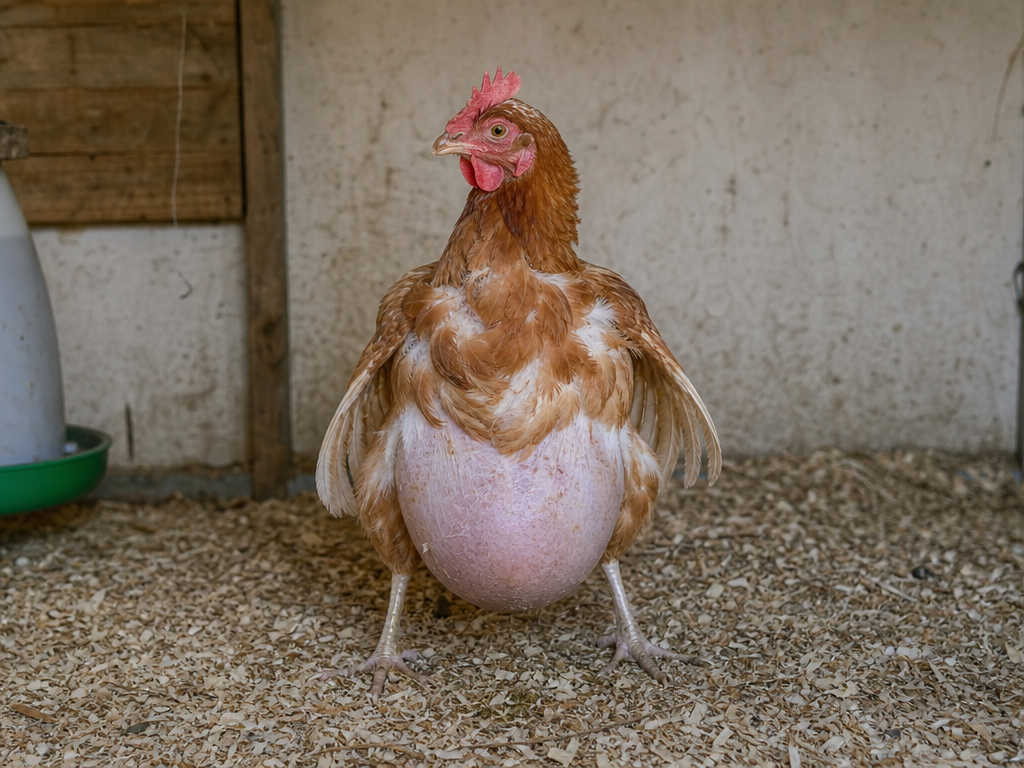
- ●Penguin-like stance due to abdominal distension
- ●Swollen, fluid-filled abdomen
- ●Lethargy and reduced appetite
- ●Pale comb and wattles indicating systemic illness
- ●Labored breathing from abdominal pressure on air sacs
- ●Watery or malformed eggs prior to complete cessation
🧬What Causes Salpingitis in Chickens in Chickens?
Salpingitis is an ascending infection of the oviduct that disrupts normal egg formation. The inflammation and caseous exudate that accumulates becomes a lash egg over weeks to months.
- E. coli (most common): E. coli from the intestinal tract ascends through the cloaca into the oviduct, particularly in high-producing hens with a large, active oviduct. Stressful laying, concurrent vent contamination, and cloacal pecking injuries increase risk.
- Other bacteria: Mycoplasma gallisepticum, Salmonella, Pasteurella, and Proteus spp. can infect the oviduct, particularly following systemic infections that seed the reproductive tract hematogenously.
- High production pressure: Hens pushed to maximum production have a constantly moist, active oviduct that provides an optimal bacterial colonization environment. Heritage breeds in high-production programs and commercial layers late in their production cycle are most at risk.
- Prior reproductive disorders: Internal laying (ectopic ovulation), egg binding, and prolapsed vent all predispose the oviduct to ascending bacterial infection.
🔬How Is Salpingitis in Chickens Diagnosed?
The combination of a lash egg, cessation of laying, and abdominal swelling in a laying hen is strongly suggestive of salpingitis.
- Lash egg identification: A lash egg is a firm, rubbery mass of caseous material resembling layered yellow-white rubber. It may be the size of a normal egg or much larger. The characteristic layered appearance reflects successive deposits of inflammatory material.
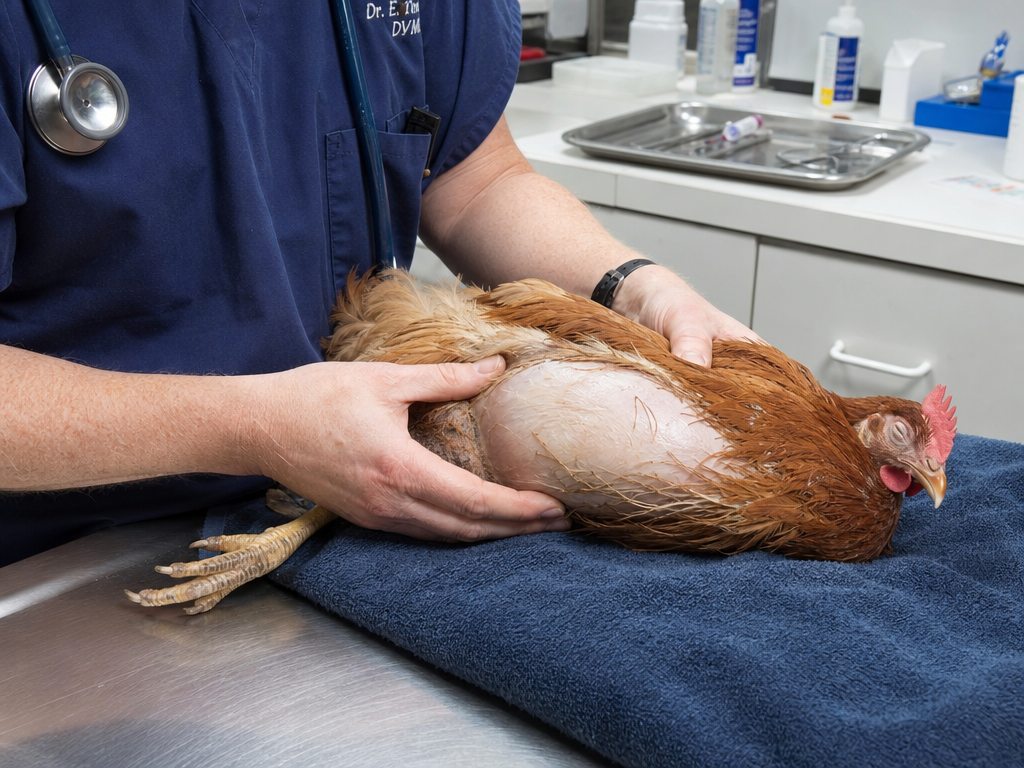
- Physical examination: Palpation of the abdomen reveals a fluid-filled or doughy mass. X-ray or ultrasound can identify the distended oviduct and distinguish salpingitis from ascites or air sacculitis.
- Bacteriology: Culture of the oviduct contents at necropsy or on surgical samples identifies the causative organism and guides antibiotic selection.
- Differentials: Egg yolk peritonitis (lash egg has been passed; fluid is more free in the coelom), egg binding (egg palpable in oviduct or cloaca), ascites (watery fluid without oviduct involvement).
💊How Is Salpingitis in Chickens Treated?
Treatment depends on severity, the bird's value, and whether egg production is a goal after recovery.
Antibiotics (medical management): Trimethoprim-sulfamethoxazole (30 mg/kg orally twice daily for 7-10 days), amoxicillin, or enrofloxacin (under veterinary prescription) can resolve early salpingitis and prevent progression to peritonitis. Culture and sensitivity testing guides selection in non-responding cases.
Supportive care: NSAIDs such as meloxicam (0.5 mg/kg orally once daily) reduce oviduct inflammation and support recovery. Fluid support for dehydrated or systemically ill birds.
Hormone implant (Suprelorin): A GnRH agonist implant placed by a veterinarian suppresses ovulation for 6-12 months. This allows the oviduct to rest and heal without ongoing egg production stress. Recommended for pet hens where long-term production is not the goal.
Surgical spay (salpingohysterectomy): Surgical removal of the oviduct in a pet or valuable breeder hen is curative for salpingitis and prevents recurrence. Requires an avian veterinarian with surgical experience. Hen will not lay eggs postoperatively.
Natural & Integrative Care for Salpingitis in Chickens
Antibiotics are the first-line treatment for salpingitis; hormone implants or surgical spay are preferred for pet hens to prevent recurrence and eliminate ongoing laying stress.
Natural approaches can support recovery during antibiotic treatment but are not adequate sole therapy for established salpingitis. The infection progresses to fatal egg yolk peritonitis without targeted antibacterial treatment.
Reduce production pressure: Limiting light exposure to 10-12 hours daily reduces ovulation frequency and allows the oviduct to rest. This is a meaningful supportive measure for backyard pet hens.
High-quality diet: Ensure the hen is on a complete layer diet with adequate calcium, vitamin E, and selenium. Nutritional deficiencies worsen reproductive tract health and immune function.
🛡️How Can Salpingitis in Chickens Be Prevented?
- Avoid over-lighting laying hens. Limit artificial light to 16 hours maximum. Extended day length pushes hens beyond sustainable production and increases oviduct infection risk.
- Maintain clean, dry vent feathers. Vent contamination with feces is a primary route for E. coli ascending into the oviduct. Trim long feathers around the vent on fluffy-feathered breeds.
- Treat prolapsed vents and vent wounds promptly. Any breach in vent integrity dramatically increases salpingitis risk.
- Provide adequate nest boxes (minimum one per 4 hens). Crowded nesting leads to egg retention and increased oviduct stress.
- Consider hormone implants for pet hens that experience recurrent reproductive tract problems. Eliminating the laying cycle eliminates the salpingitis risk.
📞When Should I Call a Vet for Salpingitis in Chickens?
Consult a veterinarian promptly if:
- You find a lash egg in the nest box. This confirms salpingitis is present and antibiotic treatment should begin within 24-48 hours.
- A hen has stopped laying for more than 2 weeks with abdominal swelling. Egg yolk peritonitis can develop rapidly and is fatal without treatment.
- A hen passes a lash egg, then develops progressive lethargy, penguin posture, and appetite loss. This indicates progression to peritonitis requiring urgent intervention.
❓Salpingitis in Chickens: Frequently Asked Questions
What is salpingitis in chickens?
Salpingitis is a bacterial infection of the oviduct, most often caused by E. coli. It causes the hen to stop laying, produce lash eggs, and develop abdominal swelling. Without treatment, it progresses to egg yolk peritonitis, which is fatal. Treatment involves antibiotics, hormone implants, or surgical removal of the oviduct.
What is a lash egg and does it mean my hen has salpingitis?
A lash egg is a mass of layered caseous material that the hen passes instead of a normal egg. It is the accumulated inflammatory exudate from an infected oviduct. Finding a lash egg is a reliable indicator that salpingitis is present and that antibiotic treatment should be started within 24-48 hours.
Can a hen with salpingitis lay eggs again?
Possibly, with early antibiotic treatment. If treated promptly before significant oviduct scarring, some hens resume laying. However, salpingitis often recurs in hens that continue to lay. Hormone implants suppress ovulation for 6-12 months to allow recovery, and surgical spay is curative but permanently ends egg production.
How do you treat salpingitis in chickens?
Treatment is with antibiotics (trimethoprim-sulfa, amoxicillin, or enrofloxacin) for 7-10 days. NSAIDs reduce inflammation. For pet hens, a Suprelorin hormone implant suppresses laying and allows the oviduct to heal. Salpingohysterectomy (surgical spay) performed by an avian vet is curative.
How does E. coli cause salpingitis in chickens?
E. coli from the intestinal tract ascends through the cloaca into the oviduct, especially in high-producing hens with a large, actively secreting oviduct. Vent contamination, cloacal injuries, and excessive laying pressure all increase the risk. The bacteria colonize the oviduct, triggering the inflammatory response that produces lash eggs.
📋Key Points
- ✓Salpingitis is an ascending infection of the oviduct that disrupts normal egg formation.
- ✓Key symptoms: sudden stop in egg laying with no other obvious cause, passage of a lash egg (mass of layered caseous material), penguin-like stance due to abdominal distension, swollen, fluid-filled abdomen.
- ✓Good with early antibiotic treatment. Guarded if abdominal distension is severe or egg yolk peritonitis has developed. Excellent with surgical spay if performed before systemic sepsis develops. Many hens with salpingitis experience recurrence if the oviduct is not removed or suppressed, as the underlying bacterial colonization persists.
🔗Related
Related Conditions
📚Sources & References
- 1.Reproductive Disorders in Poultry - Salpingitis. Merck Veterinary Manual. 2024
- 2.Salpingitis and Salpingoperitonitis in Laying Hens. PubMed / Avian Pathology. 2014
- 3.Reproductive Problems in Backyard Hens. University of Georgia Extension. 2022