Egg Binding in Chickens: Symptoms, Causes and Treatment
Egg binding in chickens occurs when a hen cannot pass an egg through the oviduct, often because of calcium deficiency, obesity, dehydration, an oversized egg, or weak muscle contractions. Affected hens strain, become lethargic, and may stand upright with a swollen abdomen. Warmth, humidity, and lubrication can help initially, but failure to pass the egg within a few hours requires emergency veterinary care.
Veterinarian Reviewed
FlockVet Veterinary Editorial Team· Reviewed January 2026
This is a veterinary emergency.
If your bird is showing these signs, contact a veterinarian immediately. Do not wait. Time-sensitive conditions can deteriorate rapidly without professional intervention.
At a Glance
- Urgency
- Emergency
- Contagious
- No
- Affects Humans
- No
- Key Symptoms
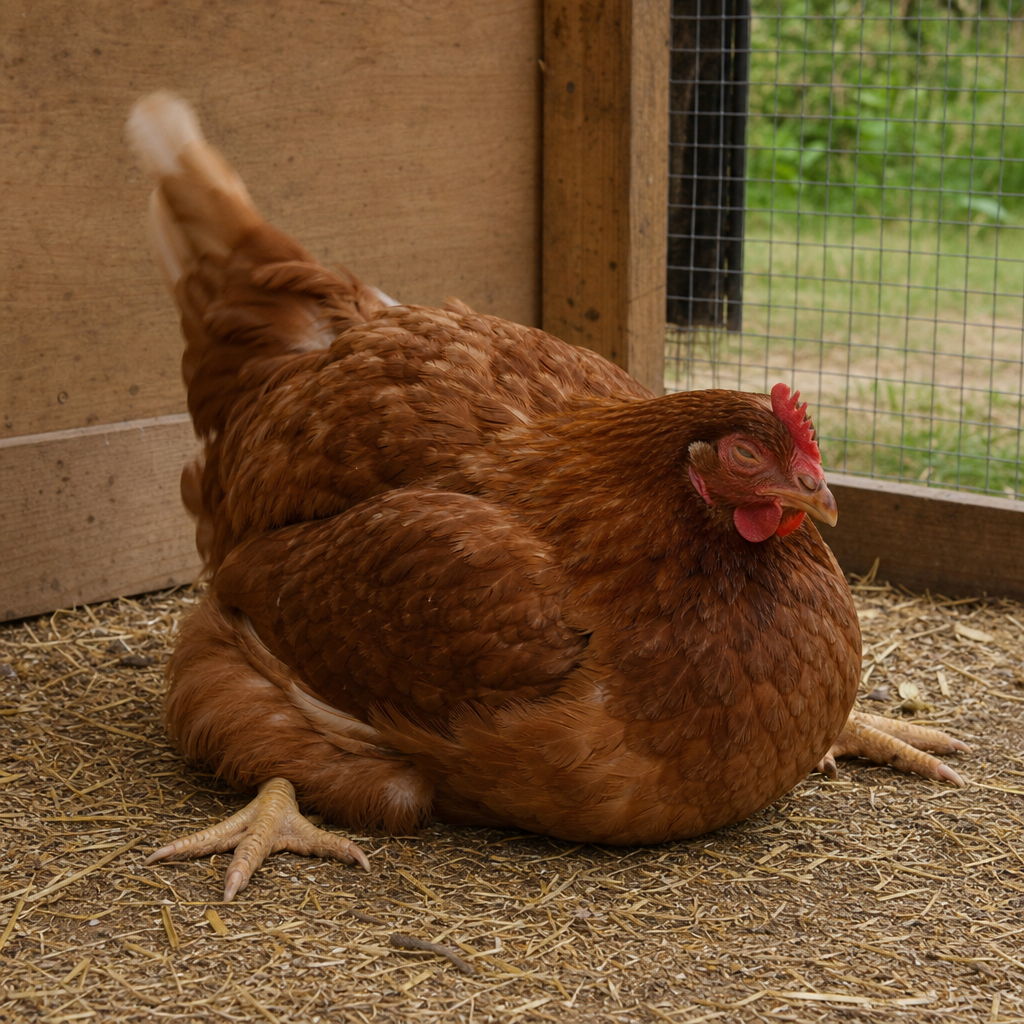
- straining or pumping motions with the tail and abdomen, sitting on the ground with a wide-based stance, fluffed feathers and hunched posture
- Prognosis
- Excellent if treated promptly (within 4-6 hours of symptoms). Fair if delayed. Poor if oviduct rupture has occurred or peritonitis has developed. Hens that experience one episode have higher risk of recurrence.
📑 On This Pagetap to expand
🔍What Are the Symptoms of Egg Binding?
- ●Straining or pumping motions with the tail and abdomen
- ●Sitting on the ground with a wide-based stance
- ●Fluffed feathers and hunched posture
- ●Labored or rapid breathing
- ●Lethargy and not eating
- ●Distended abdomen (palpable egg may be felt)
- ●Watery or absent droppings
- ●Pale comb and wattles
- ●Weakness in legs (egg pressing on sciatic nerve)
🧬What Causes Egg Binding in Chickens?
Egg binding occurs when the oviduct fails to move an egg through normally. The causes are varied but most involve the hen's condition, the egg's characteristics, or both:
- Calcium deficiency - the most common cause. Calcium is required for oviduct muscle contraction. Low calcium = weak contractions = egg stalls. This is why oyster shell supplementation is not optional for laying hens.
- Oversized eggs - double-yolkers, very large eggs, or abnormally shaped eggs physically cannot pass
- Obesity - excess fat deposits around the oviduct reduce its mobility
- Young pullets laying too early - reproductive tract not fully mature
- Cold temperatures - cold stress causes muscle tension that can inhibit oviduct motility
- Dehydration - reduces oviduct lubrication
- Salpingitis (oviduct infection) - inflammation narrows the oviduct
- Previous egg binding episodes - scarring increases risk
🔬How Is Egg Binding Diagnosed?
Diagnosis is clinical. A hen that is straining, sitting wide-legged on the ground, with a palpable mass in the abdomen is egg-bound until proven otherwise. Do not wait for diagnostic confirmation - begin treatment immediately.
To palpate for an egg: Gently feel the abdomen between the legs with your fingertips. A bound egg typically feels like a hard, smooth oval mass. Do this gently - excessive pressure on a bound egg risks oviduct rupture.
Differentials:
- Peritonitis / internal laying - distended fluid-filled abdomen, "penguin stance," longer-duration illness
- Ascites - fluid abdomen, no palpable egg, multiple system involvement
- Vent prolapse - visible protruding tissue
- Broodiness - sitting in nest box, not on ground, no straining, feathers not fluffed from illness
💊How Is Egg Binding Treated?
Immediate home treatment protocol (start NOW, get vet on standby):
- Calcium first. Oral calcium is the single most important intervention. Options: Crush 1 Tums tablet (calcium carbonate), dissolve in a few drops of water, administer with a dropper. Or use liquid calcium gluconate (available at farm stores) - 0.5-1ml orally. Calcium triggers oviduct contractions and is often sufficient for early-stage cases.
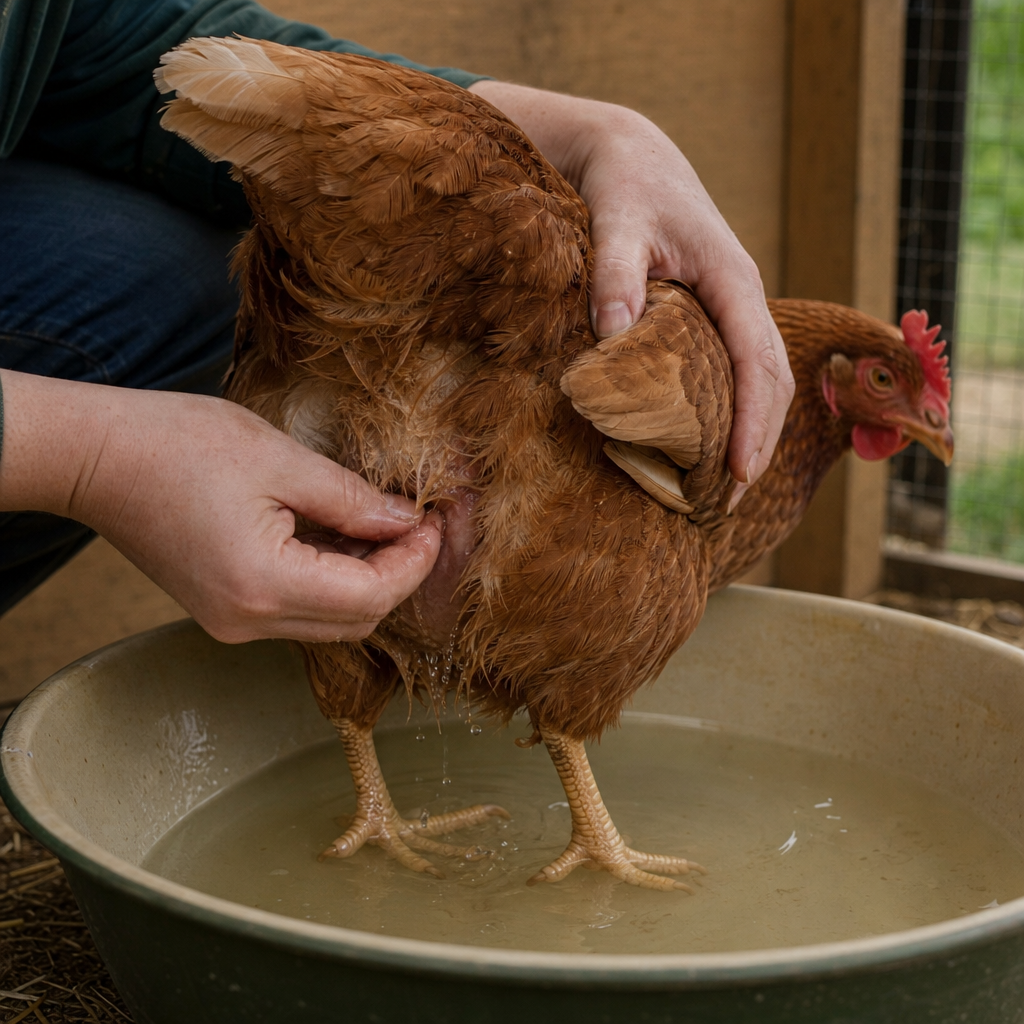
- Warm soak. Place the hen in a warm (not hot) bath up to her abdomen for 20-30 minutes. The warmth relaxes the muscles around the oviduct and helps her pass the egg. Add Epsom salt to the water. Keep her warm and calm throughout.
- Steam. After soaking, place her in a warm, humid environment (a steamy bathroom, or a box with a warm damp towel). Do not leave unattended.
- Lubrication. Apply a small amount of KY jelly or vegetable oil just inside the vent with a clean, gloved finger. This lubricates the last portion of the oviduct. Do this gently - 1-2 cm maximum.
- Darkness and quiet. Place her in a dark, quiet, warm space after treatment. Stress worsens muscle tension.
- Reassess at 2-4 hours. If she has not passed the egg, she needs emergency veterinary care.
What NOT to do:
- Do NOT try to manually push the egg out - this risks rupture
- Do NOT attempt to break the egg inside her - the sharp fragments cause severe oviduct lacerations
- Do NOT wait overnight hoping she'll "work it out" - she won't
Veterinary interventions:
- Oxytocin injection to stimulate oviduct contractions (requires vet)
- Prostaglandin E2 gel applied to vent (requires vet)
- Egg aspiration via needle if the above fail
- Surgery (salpingotomy) in extreme cases
Natural & Integrative Care for Egg Binding
The first-line treatment for egg binding IS integrative - warm soaking, oral calcium, lubrication. These are the correct initial interventions. If they don't work within 4 hours, escalate to veterinary care.
The natural interventions for egg binding are not alternatives to the treatment protocol above - they ARE the first-line treatment protocol. The warm soak, calcium supplementation, and lubrication described above are the correct first response and are the natural interventions.
Additional supportive natural care:
Lavender oil - 1-2 drops diluted in a carrier oil, applied around (not in) the vent area. Lavender has muscle-relaxing properties and may ease oviduct tension. Use as a complement to soaking, not a replacement.
Vitamin E - helps maintain reproductive tissue integrity. Give 1 vitamin E capsule (400 IU) orally. Long-term supplementation reduces recurrence risk.
Calcium-rich diet ongoing:
- Oyster shell free-choice at all times (non-negotiable for laying hens)
- Crushed dried eggshells as a supplement
- Leafy greens (kale, collards) - high in calcium
- Avoid excessive phosphorus (scratch grains) which inhibits calcium absorption
The warm bath is the most powerful natural intervention available. Twenty minutes in a warm Epsom salt bath has resolved thousands of egg binding cases. Do not underestimate it - and do not skip it while looking for something more "active" to do.
Photo needed
Natural remedies for Egg Binding, oyster-shell, vitamin-e, vitamin-d3 shown together
16/9🛡️How Can Egg Binding Be Prevented?
- Oyster shell free-choice at all times - the single most important preventive measure. Never rely on layer feed calcium alone.
- Do not push pullets to lay early with artificial light - let the reproductive tract mature naturally
- Maintain healthy body weight - avoid obesity with limited scratch grains
- Ensure adequate hydration year-round, especially in summer
- Vitamin D3 supplementation in low-light winter months - required for calcium absorption
- Vitamin E in diet - supports reproductive muscle function
- Any hen with a history of egg binding should be monitored closely and given extra calcium during laying season
📞When Should I Call a Vet for Egg Binding?
Call a vet:
- Immediately if the hen is collapsed, unresponsive, or in severe distress
- If she has not passed the egg within 4 hours of warm soaking and calcium treatment
- If her legs appear paralyzed or she cannot stand
- If you can feel the egg but it is not in the normal laying position
- Any time you suspect oviduct rupture (hen deteriorates rapidly after apparent initial improvement)
❓Egg Binding: Frequently Asked Questions
What causes egg binding in chickens?
Egg binding is caused by a combination of factors: calcium deficiency (weakens muscle contractions), obesity, a first-time layer, an oversized egg, dehydration, or low environmental temperature. Young pullets and high-production breeds are most at risk. A poor diet lacking calcium and vitamin D is the most preventable cause.
What is egg binding in chickens?
Egg binding occurs when a hen cannot pass an egg through her oviduct and it becomes stuck. It is a veterinary emergency. A bound hen will strain repeatedly, appear lethargic, hold her tail low, and may stand like a penguin. Without treatment within 24-48 hours, it can be fatal.
How do you treat egg binding in chickens?
Treatment starts with a warm bath (15-20 minutes) to relax muscles, followed by applying a small amount of lubricant (coconut oil or KY jelly) around the vent. Place her in a warm, humid environment. If the egg is not passed within a few hours, take her to a vet immediately - do not try to manually remove the egg.
How do you prevent egg binding in chickens?
Prevention focuses on nutrition and management. Ensure hens have constant access to oyster shell for calcium, vitamin D3 in their diet, fresh water, and enough space to exercise. Do not rush pullets into laying with excessive light. Keep hens at a healthy weight and avoid overfeeding treats.
How do you know if a chicken has egg binding?
Signs of egg binding include a hen straining repeatedly without laying, a swollen or distended abdomen, walking with a penguin-like stance, lethargy, loss of appetite, and labored breathing. You may be able to feel the stuck egg by gently pressing on the lower abdomen. Any of these signs warrant immediate action.
📋Key Points
- ✓Egg binding occurs when the oviduct fails to move an egg through normally.
- ✓Key symptoms: straining or pumping motions with the tail and abdomen, sitting on the ground with a wide-based stance, fluffed feathers and hunched posture, labored or rapid breathing.
- ✓Excellent if treated promptly (within 4-6 hours of symptoms). Fair if delayed. Poor if oviduct rupture has occurred or peritonitis has developed. Hens that experience one episode have higher risk of recurrence.
🔗Related
Related Conditions
Medications
Natural Remedies & Supplements
📚Sources & References
- 1.Egg Binding in Poultry. Merck Veterinary Manual. 2024
- 2.Common Management-Related Problems in Backyard Poultry. Merck Veterinary Manual. 2024
- 3.Management of Backyard Poultry. Merck Veterinary Manual. 2024