Internal Laying in Chickens: Symptoms, Causes and Treatment
Internal laying (ectopic ovulation or reverse peristalsis) occurs when the ovulated yolk is deposited into the abdominal cavity instead of the oviduct. This leads to accumulation of egg material in the coelom, triggering an inflammatory response (egg yolk coelomitis/peritonitis) that is often fatal if untreated. It is distinct from but closely related to egg yolk peritonitis, which is the infectious complication of internal laying.
Veterinarian Reviewed
FlockVet Veterinary Editorial Team· Reviewed August 2026
This is a veterinary emergency.
If your bird is showing these signs, contact a veterinarian immediately. Do not wait. Time-sensitive conditions can deteriorate rapidly without professional intervention.
At a Glance
- Urgency
- Emergency
- Contagious
- No
- Affects Humans
- No
- Key Symptoms
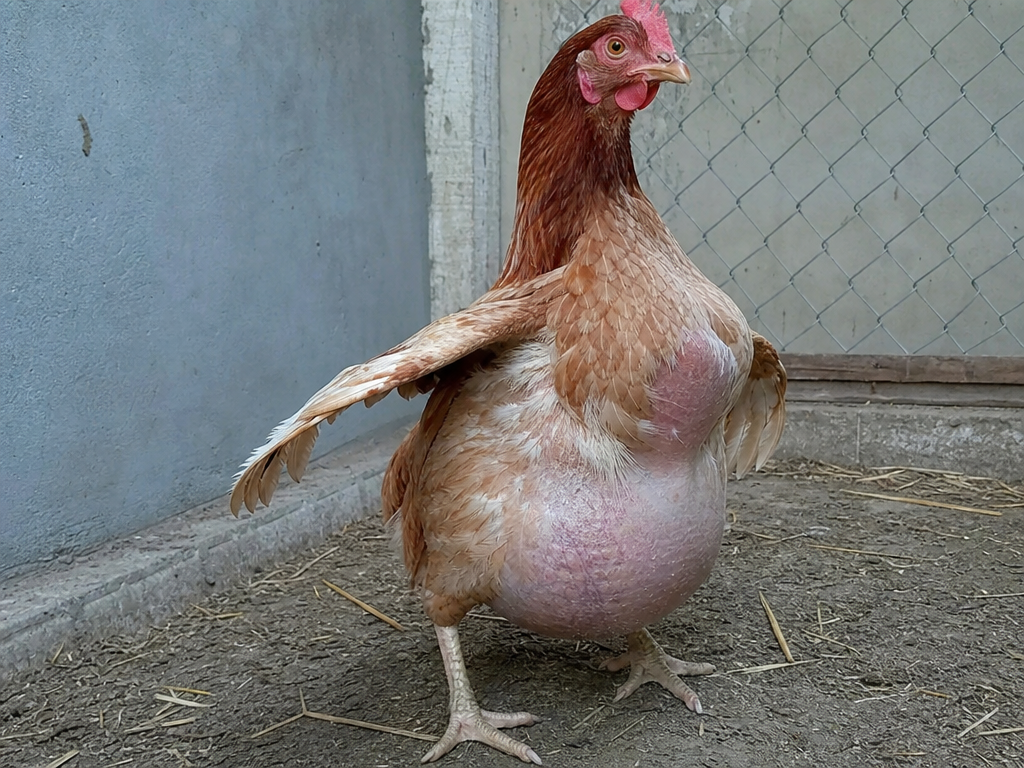
- penguin-like stance with abdomen hanging low and pointing outward, progressive abdominal swelling and weight gain from coelom fluid accumulation, cessation of egg laying or passage of shell-less, yolk-only eggs
- Prognosis
- Guarded without treatment; accumulated yolk in the abdomen triggers progressive inflammatory peritonitis that is fatal if untreated. Good with hormone implant (Suprelorin) if treated before severe peritonitis develops; many hens live comfortably for years with ongoing implant renewal. Excellent with surgical spay performed before systemic illness.
📑 On This Pagetap to expand
🔍What Are the Symptoms of Internal Laying?
- ●Penguin-like stance with abdomen hanging low and pointing outward
- ●Progressive abdominal swelling and weight gain from coelom fluid accumulation
- ●Cessation of egg laying or passage of shell-less, yolk-only eggs
- ●Lethargy and reduced appetite
- ●Labored breathing from abdominal pressure on air sacs
- ●Pale comb and wattles indicating systemic illness
- ●Fluid-filled abdomen that can be palpated (sometimes visible by eye)
- ●Waddling gait from distended abdomen
🧬What Causes Internal Laying in Chickens?
Internal laying results from a failure of the infundibulum (the funnel-shaped opening of the oviduct) to capture the ovulated yolk, causing it to fall free into the abdominal cavity.
- Reverse peristalsis: Abnormal contractions of the oviduct can push previously captured yolk material backward into the abdominal cavity. This is more common in high-production hens with overactive reproductive tracts.
- Physical infundibulum failure: In hens producing yolks faster than the oviduct can process them (superovulation), the infundibulum cannot capture every yolk. Missed yolks fall into the coelom.
- Salpingitis predisposition: Oviduct infection (salpingitis) alters normal peristaltic function and increases the likelihood of reverse peristalsis and ectopic yolk deposition.
- High production breeds: Commercial laying breeds selectively bred for maximum egg numbers have higher rates of internal laying than heritage breeds with moderate production rates. The physical demands of extreme production outpace the oviduct's capture reliability.
- Aging hens: Reproductive tract muscle tone decreases with age, reducing infundibulum capture efficiency. Hens in their 2nd and 3rd laying years have higher internal laying rates than first-year pullets.
🔬How Is Internal Laying Diagnosed?
Internal laying is suspected when a hen develops progressive abdominal distension without a palpable egg in the oviduct, especially in high-production breeds or aging hens.
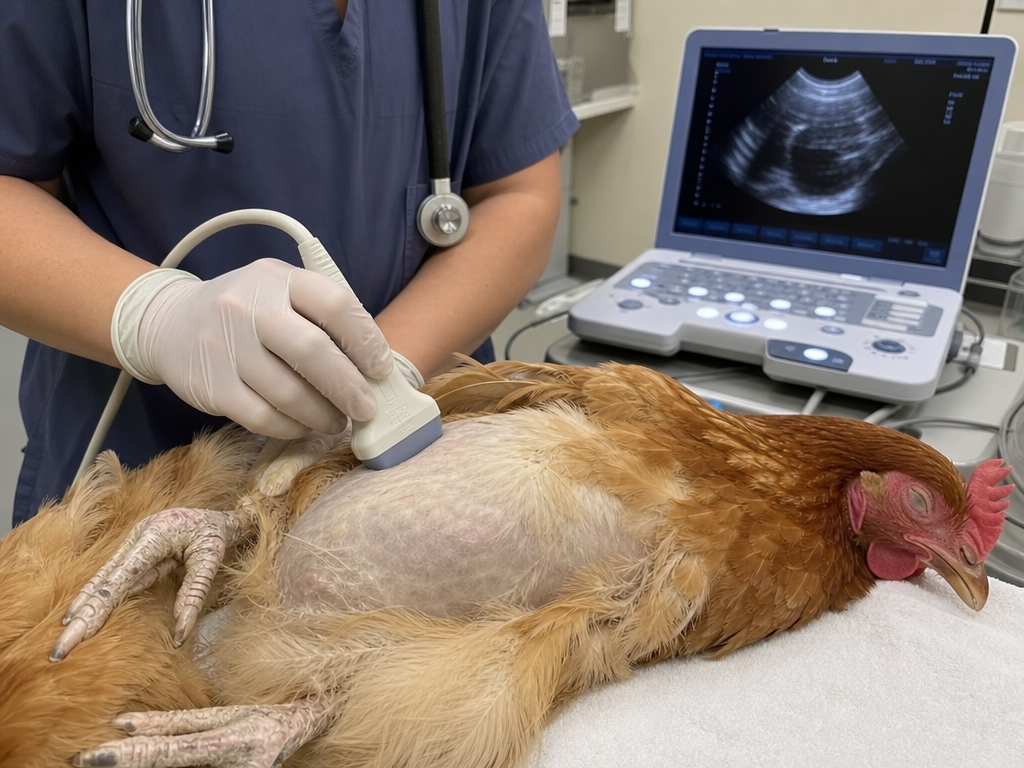
- Abdominal palpation: Fluid-filled, soft, fluctuant abdomen without a firm egg palpable in the lower oviduct. The fluid in the coelom has a characteristic doughy or water-balloon quality.
- Ultrasound or radiograph: Identifies free fluid (yolk/inflammatory exudate) in the coelom, distinguishes from egg binding (palpable egg), and helps assess oviduct integrity.
- Abdominocentesis: Aspiration of straw-colored to yellowish fluid from the abdomen provides temporary relief and can be sent for cytology (inflammatory cells confirm coelomitis) and culture (identifies secondary bacterial infection).
- Differentiate from ascites: Ascites fluid is typically clear and watery. Internal laying fluid is viscous, yellowish, and may contain recognizable yolk material. Cause also differs (ascites = cardiac/hepatic; internal laying = reproductive).
💊How Is Internal Laying Treated?
Treatment options range from medical management to surgical intervention depending on severity and the bird's value.
Abdominocentesis (coeliocentesis): Aspiration of accumulated fluid provides immediate relief of respiratory and abdominal pressure. This is a temporary measure and fluid reaccumulates within days to weeks without addressing the underlying cause.
Hormone implant (Suprelorin deslorelin): A GnRH agonist implant placed subcutaneously by a veterinarian suppresses ovulation for 6-12 months, stopping new yolk deposition into the abdomen. The body reabsorbs existing yolk material over several weeks. This is the treatment of choice for pet hens.
Lupron (leuprolide acetate) injections: A GnRH agonist given by injection every 2-4 weeks suppresses ovulation. Less convenient than the implant but effective for 60-90 day intervals.
Surgical salpingohysterectomy: Removal of the oviduct eliminates the reproductive source of the problem. Most effective and curative option but requires an experienced avian surgeon and carries anesthetic risk in debilitated birds.
Natural & Integrative Care for Internal Laying
Hormone implants (Suprelorin) are the most effective medical management for internal laying in pet hens; surgical spay is curative but requires specialist care.
Natural approaches can slow yolk production but cannot stop it reliably or eliminate existing abdominal fluid.
Reduce day length: Limiting light exposure to 10-12 hours daily reduces reproductive stimulation and can slow or temporarily stop yolk production in some hens. This is the most accessible non-pharmacological approach.
High-quality diet: Ensure adequate vitamin D3 and calcium to support the hen's overall health during management. Nutritional deficiencies worsen the inflammatory response to intracoeliomic yolk material.
🛡️How Can Internal Laying Be Prevented?
- Limit artificial lighting to 16 hours maximum. Extended day length drives maximum ovulation and increases internal laying risk in susceptible hens.
- Consider hormone implants proactively for pet hens with a history of reproductive tract problems, rather than waiting for internal laying to develop.
- Choose heritage or dual-purpose breeds for backyard flocks if maximum egg production is not the goal. Lower production rates dramatically reduce internal laying risk.
- Monitor aging hens (2+ years) closely for early signs of abdominal swelling. Early abdominocentesis and hormone therapy before significant peritonitis develops improves prognosis.
📞When Should I Call a Vet for Internal Laying?
Consult an avian veterinarian if:
- A hen develops progressive abdominal swelling over 2-4 weeks. Early treatment with abdominocentesis and hormone implant has a much better prognosis than waiting until severe illness develops.
- A high-production hen stops laying and develops penguin posture. This presentation strongly suggests internal laying or egg yolk peritonitis requiring veterinary evaluation.
- You want to discuss prophylactic hormone implants for a hen with a history of salpingitis or prior internal laying episodes.
❓Internal Laying: Frequently Asked Questions
What is internal laying in chickens?
Internal laying occurs when the ovulated yolk is deposited into the abdominal cavity instead of the oviduct. The yolk accumulates there, triggering an inflammatory response (coelomitis/peritonitis). Signs include progressive abdominal swelling, penguin-like stance, and cessation of egg laying. It is treated with hormone implants or surgery.
How do I know if my hen has internal laying vs. ascites?
Internal laying fluid is yellowish, viscous, and may contain yolk material. Ascites fluid is typically clear and watery. A hen with internal laying is usually a high-production breed in mid-laying life with no respiratory history. Ascites is associated with cardiovascular or liver problems. Veterinary ultrasound or aspiration for cytology provides definitive differentiation.
Can internal laying be treated?
Yes. A Suprelorin (deslorelin) hormone implant placed by a veterinarian suppresses ovulation for 6-12 months, stopping new yolk deposition. Abdominocentesis removes existing fluid for temporary relief. Surgical removal of the oviduct (salpingohysterectomy) is curative. Without treatment, the condition progresses to fatal peritonitis.
Why do chickens develop internal laying?
The ovulated yolk misses the oviduct opening (infundibulum) and falls into the abdominal cavity. This happens more often in high-production breeds, aging hens with reduced muscle tone, and hens with concurrent salpingitis that disrupts normal oviduct movement. Commercial laying breeds have much higher rates than heritage breeds.
Is internal laying the same as egg yolk peritonitis?
They are related but distinct. Internal laying is the mechanical failure (yolk deposited in the wrong place). Egg yolk peritonitis is the infectious complication: bacteria colonize the intracoeliomic yolk material, converting a mechanical problem into a septic one. Internal laying causes peritonitis if left untreated, but not all internal laying immediately involves active bacterial infection.
📋Key Points
- ✓Internal laying results from a failure of the infundibulum (the funnel-shaped opening of the oviduct) to capture the ovulated yolk, causing it to fall free into the abdominal cavity.
- ✓Key symptoms: penguin-like stance with abdomen hanging low and pointing outward, progressive abdominal swelling and weight gain from coelom fluid accumulation, cessation of egg laying or passage of shell-less, yolk-only eggs, lethargy and reduced appetite.
- ✓Guarded without treatment; accumulated yolk in the abdomen triggers progressive inflammatory peritonitis that is fatal if untreated. Good with hormone implant (Suprelorin) if treated before severe peritonitis develops; many hens live comfortably for years with ongoing implant renewal. Excellent with surgical spay performed before systemic illness.
🔗Related
Related Conditions
📚Sources & References
- 1.Internal Laying and Reproductive Disorders. Merck Veterinary Manual. 2024
- 2.Reproductive Problems in Pet and Backyard Chickens. UC Davis School of Veterinary Medicine. 2023
- 3.GnRH Agonist Implants in Poultry Reproductive Management. PubMed / Journal of Avian Medicine and Surgery. 2018