Egg Yolk Peritonitis in Chickens: Symptoms, Causes and Treatment
Egg yolk peritonitis in chickens is inflammation and often bacterial infection within the abdomen after yolk material enters the body cavity. Hens develop a swollen fluid-filled abdomen, penguin posture, lethargy, breathing difficulty, and stopped egg production. Treatment requires veterinary antibiotics, pain control, and sometimes sterile drainage or hormonal suppression of laying.
Veterinarian Reviewed
FlockVet Veterinary Editorial Team· Reviewed August 2026
This is a veterinary emergency.
If your bird is showing these signs, contact a veterinarian immediately. Do not wait. Time-sensitive conditions can deteriorate rapidly without professional intervention.
At a Glance
- Urgency
- Emergency
- Contagious
- No
- Affects Humans
- No
- Key Symptoms
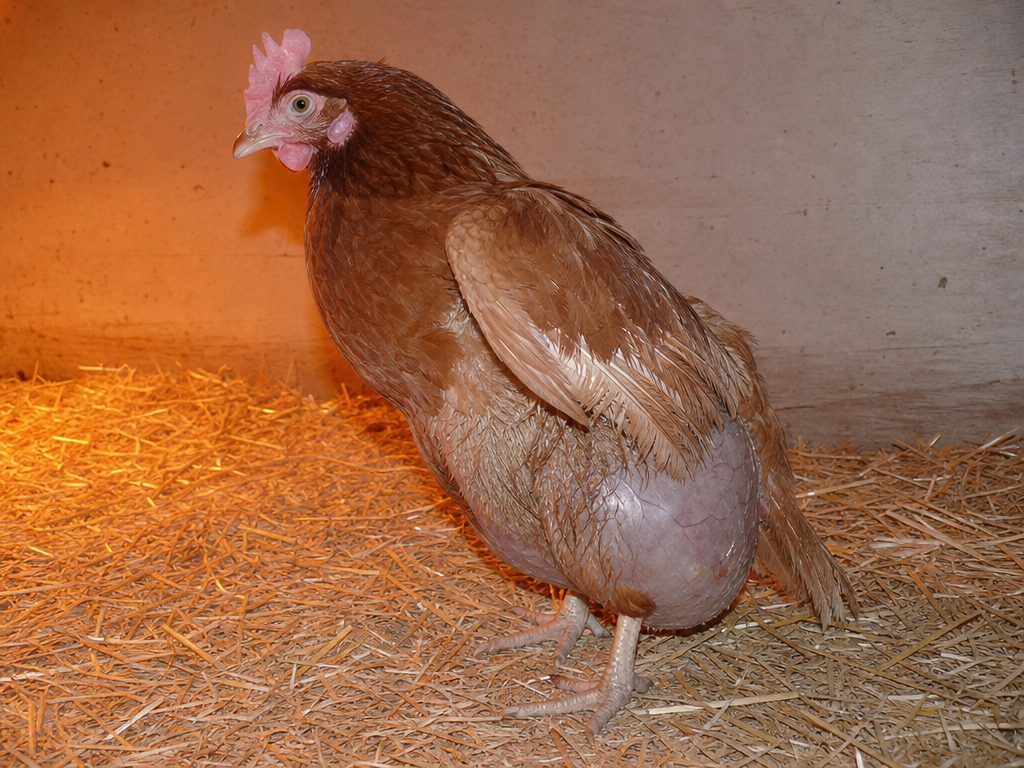
- "penguin stance" - standing upright with abdomen hanging low, tail tilted down, abdominal distension - visibly enlarged, fluid-filled belly that may feel warm or firm, cessation of egg laying, often the first sign noticed
- Prognosis
- Without veterinary treatment, mortality from egg yolk peritonitis exceeds 70% within 5–14 days as bacterial sepsis progresses. With prompt antibiotic therapy and supportive care, 40–60% of hens recover to normal life - though surviving hens often have reduced laying and remain at risk for recurrence. Hens that undergo successful salpingohysterectomy have the best long-term outcomes (60–75% survival) and do not experience recurrence, though they will not lay eggs afterward.
📑 On This Pagetap to expand
🔍What Are the Symptoms of Egg Yolk Peritonitis?
- ●"Penguin stance" - standing upright with abdomen hanging low, tail tilted down
- ●Abdominal distension - visibly enlarged, fluid-filled belly that may feel warm or firm
- ●Cessation of egg laying, often the first sign noticed
- ●Lethargy, reluctance to move, preference for sitting
- ●Loss of appetite and reduced water intake
- ●Labored breathing or open-mouth breathing when abdominal pressure is high
- ●Pale, shrunken, or discolored comb and wattles
- ●Progressive weight loss despite a swollen abdomen
- ●Hunched posture and ruffled feathers signaling pain
- ●Watery, yellow, or foul-smelling droppings as systemic infection progresses
🧬What Causes Egg Yolk Peritonitis in Chickens?
Egg yolk peritonitis occurs when a yolk misses the oviduct and drops into the abdominal cavity, triggering severe inflammation and infection.
- Reverse peristalsis (most common): Instead of traveling down the oviduct, a yolk is pushed backward into the abdomen. High-production breeds are most vulnerable due to the sheer volume of yolks released.
- Salpingitis (oviduct infection): Bacterial infection of the oviduct (E. coli most common) disrupts normal egg transit and causes material to accumulate in the abdomen.
- Ruptured follicle: An ovarian follicle ruptures before the yolk can be captured by the infundibulum. The free yolk becomes an ideal bacterial growth medium in the warm abdominal cavity.
- Reproductive overload: Hens bred for extreme production push the reproductive system beyond its design capacity. The risk increases with each passing laying season.
- Nutritional imbalances: Excess calcium, vitamin D deficiency, or high-energy diets that promote obesity increase reproductive dysfunction and peritonitis risk.
🔬How Is Egg Yolk Peritonitis Diagnosed?
A keeper can identify probable egg yolk peritonitis at home based on the clinical picture. Veterinary confirmation is essential before treatment - this condition must be distinguished from other causes of abdominal swelling:
Home assessment: A hen with the penguin stance, a distended lower abdomen, pale comb, and cessation of laying has egg yolk peritonitis or a closely related condition until proven otherwise. Gently palpate the lower abdomen - peritonitis feels warm, fluctuant, or doughy. Do not apply firm pressure. Time to vet: same day.
Veterinary diagnosis:
- Abdominal ultrasound: Identifies free fluid, yolk material, and oviduct abnormalities. First-line imaging for avian abdominal disorders.
- Radiography (X-ray): Shows soft-tissue haziness and displacement of air sacs by fluid. May reveal mineralized yolk deposits in chronic cases.
- Abdominocentesis: Fine-needle aspiration of abdominal fluid - yellow or orange fluid with a yolk-like appearance is diagnostic. Fluid is cultured to identify the causative bacteria and determine antibiotic sensitivity.
- CBC and blood chemistry: Leukocytosis (elevated white cell count) confirms infection. Elevated biliverdin, AST, and uric acid indicate liver and renal involvement from sepsis.
Differential diagnoses - conditions that look similar:
- Ascites (water belly): Clear or blood-tinged watery fluid on aspiration, versus yellow yolk-laden fluid. Ascites in chickens typically involves heart or liver failure, not reproductive tract. Distinguished definitively by aspirate appearance and culture.
- Internal laying (uncomplicated): Chronic accumulation of inspissated yolk material without active bacterial peritonitis. Birds may be less acutely ill; imaging shows masses rather than free fluid.
- Ovarian carcinoma / ovarian cysts: Solid or semi-solid masses on ultrasound rather than free fluid; common in older hens over 4 years. May coexist with peritonitis.
- Egg binding (dystocia): An egg is palpable in the lower cloaca or abdomen; straining and normal posture initially. Distinguished by physical exam or imaging. Use the Symptom Checker to help narrow the diagnosis.
💊How Is Egg Yolk Peritonitis Treated?
Egg yolk peritonitis is a veterinary emergency. Treatment initiated within 24–48 hours of obvious clinical signs gives a meaningfully better prognosis than delayed care. The treatment ladder depends on severity:
Step 1: Antibiotics (always first-line)
Bacterial culture from aspirated fluid guides optimal antibiotic choice. While awaiting culture results, empiric therapy targets E. coli:
- Enrofloxacin (Baytril): 10–20 mg/kg orally or by injection once daily for 7–14 days. Highly effective against gram-negative peritonitis organisms. Note: Egg withdrawal - enrofloxacin is banned for use in laying hens in the U.S. (FDA-prohibited); legal in many other countries. Confirm local regulations with your vet.
- Trimethoprim-sulfamethoxazole (TMP-SMZ): 30–50 mg/kg orally twice daily for 7–14 days. A common first-line alternative where enrofloxacin is restricted. Egg withdrawal: discard eggs during treatment; wait 7 days after last dose.
- Amoxicillin-clavulanate: 125 mg/kg orally twice daily for 7–10 days. Broad-spectrum; useful if gram-positive co-infection is suspected. Egg withdrawal: 7 days.
Step 2: Anti-inflammatory support
- Meloxicam (Metacam): 0.5–1.0 mg/kg orally or by injection once daily. Reduces peritoneal inflammation, pain, and fever. Often dramatically improves appetite and posture within 24–48 hours.
- Supportive fluids: IV or subcutaneous fluids (lactated Ringer's) if bird is severely dehydrated or septic.
Step 3: Abdominal drainage
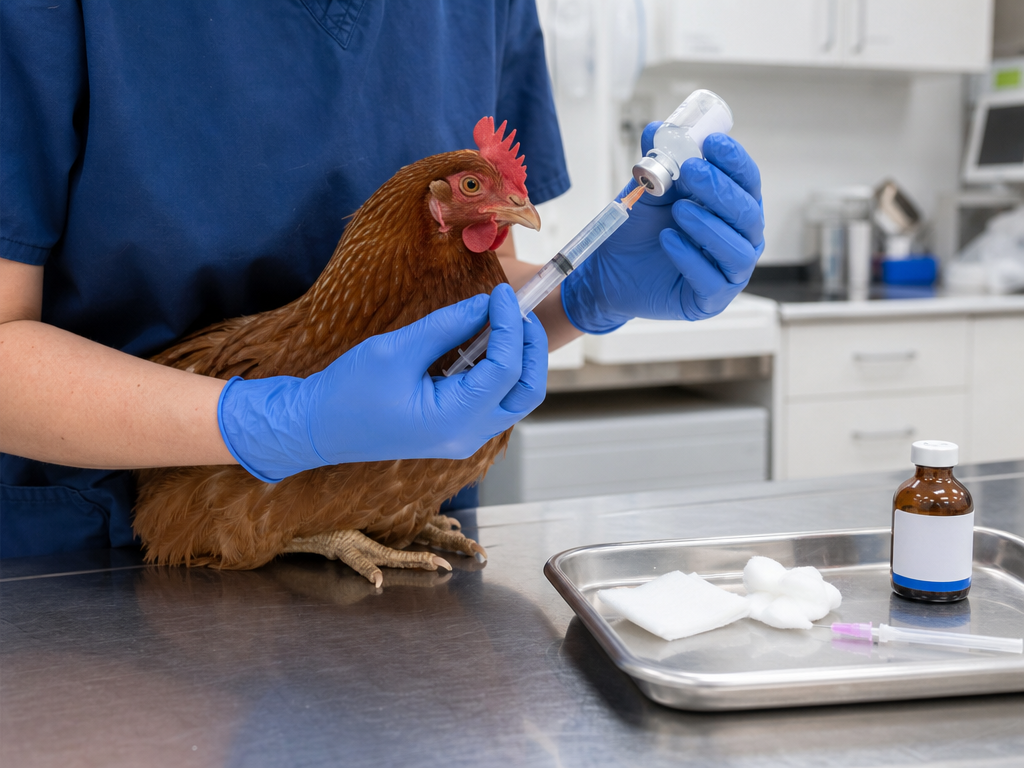
If large volumes of fluid are impairing breathing or causing severe distress, veterinary abdominocentesis (drainage with a sterile needle) provides rapid symptomatic relief. This is palliative - fluid will re-accumulate without addressing the underlying cause, but it buys critical time for antibiotics to work. Some hens require repeated drainage every 3–7 days.
Step 4: Surgical and hormonal options
- Salpingohysterectomy: Surgical removal of the oviduct and, in some cases, the ovary. The definitive cure - eliminates the source of ectopic ovulation and removes infected tissue. Requires a skilled avian surgeon and carries general anesthesia risk, but is curative in birds that survive surgery. Most appropriate for younger hens with otherwise good health status.
- Deslorelin acetate implant (Suprelorin): A slow-release GnRH agonist implanted subcutaneously that suppresses egg production for 6–12 months. Halts further yolk release while antibiotics clear active infection. An option when surgery is not feasible. May not be available in all regions; discuss with your avian vet.
Prognosis with treatment
Hens treated promptly with antibiotics and anti-inflammatories have a 40–60% chance of meaningful recovery. Surgical cases with a skilled avian surgeon: 60–75% survival. Without any treatment: mortality exceeds 70% within 5–14 days.
Natural & Integrative Care for Egg Yolk Peritonitis
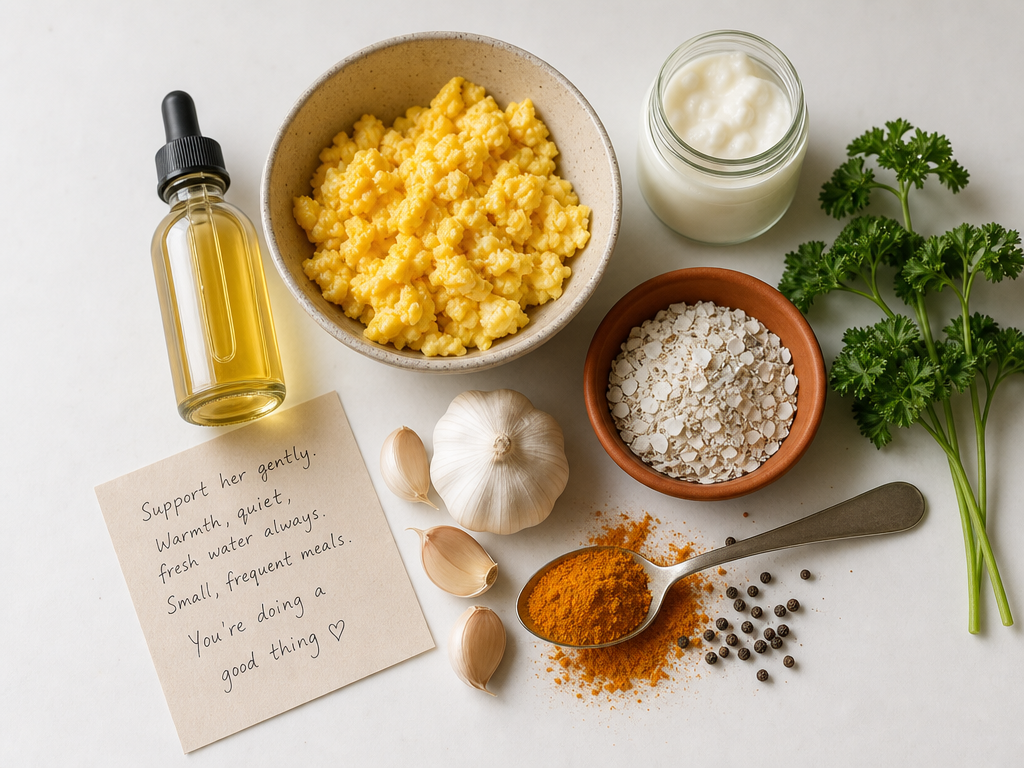
Natural care is supportive only - electrolytes, turmeric, reduced light to slow laying, and isolation improve comfort alongside antibiotics. Antibiotics and drainage are non-negotiable for survival.
Honest scope first: Egg yolk peritonitis is a severity-3 emergency. Natural and supportive measures alone cannot clear an active bacterial peritonitis, stop ectopic ovulation, or drain abdominal fluid. Do not delay veterinary care to attempt herbal treatment - every hour matters with active infection. That said, supportive natural care can meaningfully improve comfort and immune response alongside conventional treatment:
Supportive nutrition
- Hydration above all: A sick hen often stops drinking. Offer electrolyte water (1/4 tsp sea salt + 1 tbsp raw honey per quart) via dropper if she won't drink voluntarily. Dehydration accelerates septic decline.
- High-quality protein: Scrambled eggs (ironic but effective), mealworms, or plain cooked chicken breast support immune function and tissue repair. Offer 2–3x daily in small amounts.
- Probiotics: Plain, unsweetened yogurt (1–2 tsp daily) or a poultry probiotic supplement supports gut microbiome integrity during antibiotic treatment, reducing the risk of secondary dysbiosis.
Anti-inflammatory and immune-support herbs
- Turmeric (curcumin): 1/4 tsp ground turmeric mixed into feed or a small treat once daily. Curcumin has documented anti-inflammatory activity. Pair with a small amount of black pepper (piperine improves absorption by up to 2,000%). Supporting role only - not a substitute for meloxicam in active peritonitis.
- Garlic water: Crush 2–3 cloves per quart of water, steep 20 minutes, offer as drinking water. Allicin has broad-spectrum antimicrobial and anti-inflammatory properties. Modest supporting role alongside antibiotics.
- Fresh parsley and oregano in feed: Both contain flavonoids with anti-inflammatory activity. Offer freely; they also encourage eating in anorexic hens.
Reducing laying stress
- Reduce light exposure: Shortening the photoperiod to 10–12 hours per day reduces laying drive by suppressing LH and FSH. This helps slow ovulation frequency while antibiotics address active infection. This is a meaningful supportive step the keeper can take immediately.
- Isolation and warmth: Keep the hen in a quiet, warm (75–85°F / 24–29°C) hospital space away from flock stress, competition, and pecking. Stress hormones directly impair immune response.
If cost or access prevents veterinary care, the above measures may extend survival time but are not curative. A hen with active peritonitis and untreated bacterial infection will deteriorate. Humane euthanasia by a vet is preferable to a prolonged decline without treatment.
🛡️How Can Egg Yolk Peritonitis Be Prevented?
The three highest-impact prevention steps
- Maintain correct body weight: Obesity is the most modifiable risk factor. Weigh hens periodically against breed standards. Restrict treats to under 10% of diet. Free-range forage reduces obesity risk. Overweight hens should have layer pellets rationed rather than fed ad libitum.
- Provide correct calcium nutrition: Layer-specific feed (16–18% protein, 3.5–4.5% calcium) plus free-choice crushed oyster shell at all times. Calcium deficiency weakens oviduct muscle contractions, predisposing to ectopic ovulation. Do not feed non-layer rations to active hens.
- Manage light to moderate laying drive: High-production hens exposed to 16+ hours of daily light sustain maximum reproductive output, which increases the cumulative risk of ovulation failure. Backyard flocks benefit from a natural lighting cycle with winter reduction - 14–16 hours maximum in summer, allowing a natural fall/winter reduction. Avoid year-round artificial lighting for laying hens at high risk.
Additional prevention strategies
- Choose breed carefully: For backyard flocks where survivability matters as much as egg output, consider dual-purpose breeds (Barred Rock, Rhode Island Red, Australorp) or heritage breeds rather than industrial hybrid layers. Hybrids produce more eggs but have significantly higher rates of reproductive failure by 2–3 years of age.
- Treat oviduct infections promptly: Salpingitis (oviduct infection) predisposes to peritonitis. Any hen with unusual egg changes, soft-shelled eggs, or abdomen sensitivity should be evaluated - treating early infection prevents peritonitis from developing.
- Retire or rehome older hens: Hens over 3–4 years of age have significantly higher reproductive complication rates. For flocks where health matters, plan for retiring high-production hens after peak laying years and replacing them with new pullets.
- Perform monthly abdominal checks: Gently palpate each hen's lower abdomen monthly. Distension, asymmetry, heat, or a hen that resists handling her lower body are early warning signs worth monitoring closely.
📞When Should I Call a Vet for Egg Yolk Peritonitis?
Egg yolk peritonitis is a veterinary emergency. Call a vet today if your hen shows any of these signs:
- Penguin stance - standing upright with abdomen distended and hanging low
- Abdominal swelling that has appeared or worsened over 24–48 hours
- Cessation of laying combined with any of the above signs
- Labored or open-mouth breathing due to abdominal pressure
- Pale comb, lethargy, and refusal to eat - these are signs of systemic infection
- Any hen you suspect has internal laying who is deteriorating in condition
Do not wait 24–48 hours to see if she improves. Bacterial peritonitis progresses to fatal sepsis rapidly. Same-day emergency avian or farm vet contact is the correct response to this clinical picture. If a local avian vet is unavailable, most large-animal vets can perform an abdominal drain and administer antibiotics as bridging treatment.
❓Egg Yolk Peritonitis: Frequently Asked Questions
How do you treat egg yolk peritonitis in chickens?
Treatment requires a vet. In mild cases, antibiotics (amoxicillin or doxycycline) and anti-inflammatory medication can manage the infection. Severe cases with large fluid accumulation need abdominal drainage. Hormone implants to stop ovulation long-term can prevent recurrence. Prognosis improves significantly with early vet intervention.
How do you drain egg yolk peritonitis in chickens?
Abdominal drainage (abdominocentesis) is a veterinary procedure where a sterile needle is inserted into the abdomen to remove fluid. It provides immediate relief from pressure and allows the bird to breathe and move more comfortably. It is not a cure - it must be combined with antibiotics to address the underlying infection.
Can chickens with egg yolk peritonitis heal on their own?
Without treatment, most cases of egg yolk peritonitis are fatal. The infection and inflammation worsen over time. Some very mild cases may temporarily stabilize, but the underlying reproductive problem that caused yolk to leak into the abdomen will continue causing inflammation. Veterinary care significantly improves survival odds.
What are the symptoms of egg yolk peritonitis in chickens?
Symptoms include a swollen, fluid-filled abdomen (the hen looks like a penguin when she walks), labored breathing from pressure on the lungs, lethargy, pale comb, significant weight loss, and a characteristic yellowish tinge to the abdominal skin. Egg production usually stops entirely.
📋Key Points
- ✓Egg yolk peritonitis occurs when a yolk misses the oviduct and drops into the abdominal cavity, triggering severe inflammation and infection.
- ✓Key symptoms: "penguin stance" - standing upright with abdomen hanging low, tail tilted down, abdominal distension - visibly enlarged, fluid-filled belly that may feel warm or firm, cessation of egg laying, often the first sign noticed, lethargy, reluctance to move, preference for sitting.
- ✓Without veterinary treatment, mortality from egg yolk peritonitis exceeds 70% within 5–14 days as bacterial sepsis progresses. With prompt antibiotic therapy and supportive care, 40–60% of hens recover to normal life - though surviving hens often have reduced laying and remain at risk for recurrence. Hens that undergo successful salpingohysterectomy have the best long-term outcomes (60–75% survival) and do not experience recurrence, though they will not lay eggs afterward.
🔗Related
Related Conditions
Medications
Natural Remedies & Supplements
📚Sources & References
- 1.Peritonitis in Poultry. Merck Veterinary Manual. 2024
- 2.Reproductive Disorders in Poultry. Merck Veterinary Manual. 2024