Ascites (Water Belly) in Chickens in Chickens: Symptoms, Causes and Treatment
Ascites, commonly called water belly, is an accumulation of fluid in the abdominal cavity caused by right-sided heart failure and elevated pulmonary arterial pressure. It primarily affects fast-growing meat breeds (Cornish Cross) and high-altitude birds. The abdomen becomes visibly distended with yellow fluid. Prognosis is poor - most affected birds do not survive without drainage.
Veterinarian Reviewed
FlockVet Veterinary Editorial Team· Reviewed August 2026
This is a veterinary emergency.
If your bird is showing these signs, contact a veterinarian immediately. Do not wait. Time-sensitive conditions can deteriorate rapidly without professional intervention.
At a Glance
- Urgency
- Emergency
- Contagious
- No
- Affects Humans
- No
- Key Symptoms
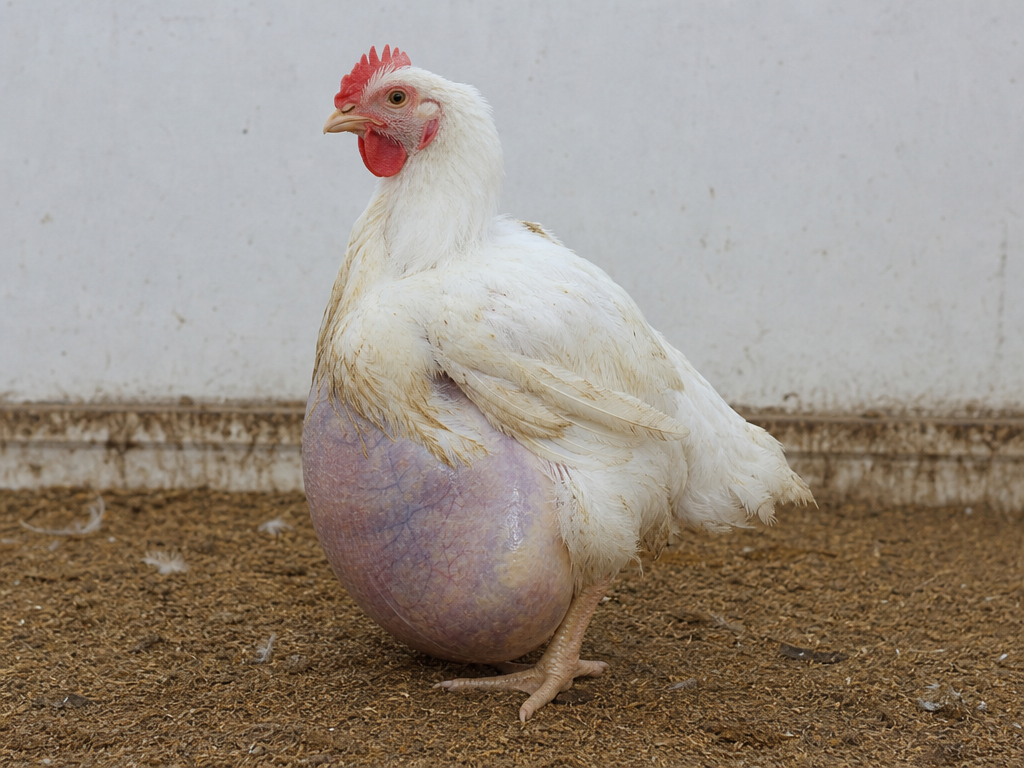
- visibly distended, fluid-filled abdomen - the skin appears stretched and shiny, penguin-like stance due to abdominal distension, difficulty breathing - labored, rapid respirations
- Prognosis
- Prognosis is poor. Ascites indicates advanced right-sided heart failure - the underlying cardiac damage is irreversible. Drained birds typically reaccumulate fluid within 1-4 weeks. Most commercial operations cull affected birds humanely. Some pet chickens with mild ascites secondary to treatable disease (liver disease, respiratory infection) can be managed for months with repeated drainage and medical support.
📑 On This Pagetap to expand
🔍What Are the Symptoms of Ascites (Water Belly) in Chickens?
- ●Visibly distended, fluid-filled abdomen - the skin appears stretched and shiny
- ●Penguin-like stance due to abdominal distension
- ●Difficulty breathing - labored, rapid respirations
- ●Blue-tinged comb and wattles (cyanosis) from low oxygen
- ●Exercise intolerance - sits down immediately after minimal activity
- ●Reduced feed consumption and slow growth
- ●Death in untreated birds, often suddenly
🧬What Causes Ascites (Water Belly) in Chickens in Chickens?
Ascites is the end result of right-sided heart failure - fluid backs up from the failing heart into the abdominal cavity.
- Pulmonary hypertension syndrome (most common): Fast-growing broiler breeds develop heart and lung systems that cannot keep pace with their rapid muscle growth. Elevated pulmonary arterial pressure overloads the right ventricle, which fails and allows fluid to accumulate.
- High altitude: Lower oxygen levels at high altitude cause vasoconstriction in the lungs, increasing pulmonary arterial pressure. Flocks above 5,000 feet have significantly higher ascites rates.
- Sodium overconsumption: High dietary sodium causes fluid retention and increases cardiac workload. Water sources contaminated with salt or feed with excess sodium accelerate ascites development.
- Respiratory disease: Chronic respiratory infections (MG, aspergillosis) that impair oxygen delivery trigger the same pulmonary hypertension cascade as altitude.
- Liver disease: Liver damage from aflatoxins, Marek's disease, or other causes reduces albumin production, lowering plasma oncotic pressure and allowing fluid to leak from blood vessels into the abdomen.
🔬How Is Ascites (Water Belly) in Chickens Diagnosed?
The diagnosis is usually obvious on physical exam.
- Palpation: Gently press the abdomen. Fluid-filled ascites feels like a water balloon - firm, fluctuant, and clearly distended. Distinguish from a full crop (located higher, dorsal) or egg binding (firm, discrete mass).
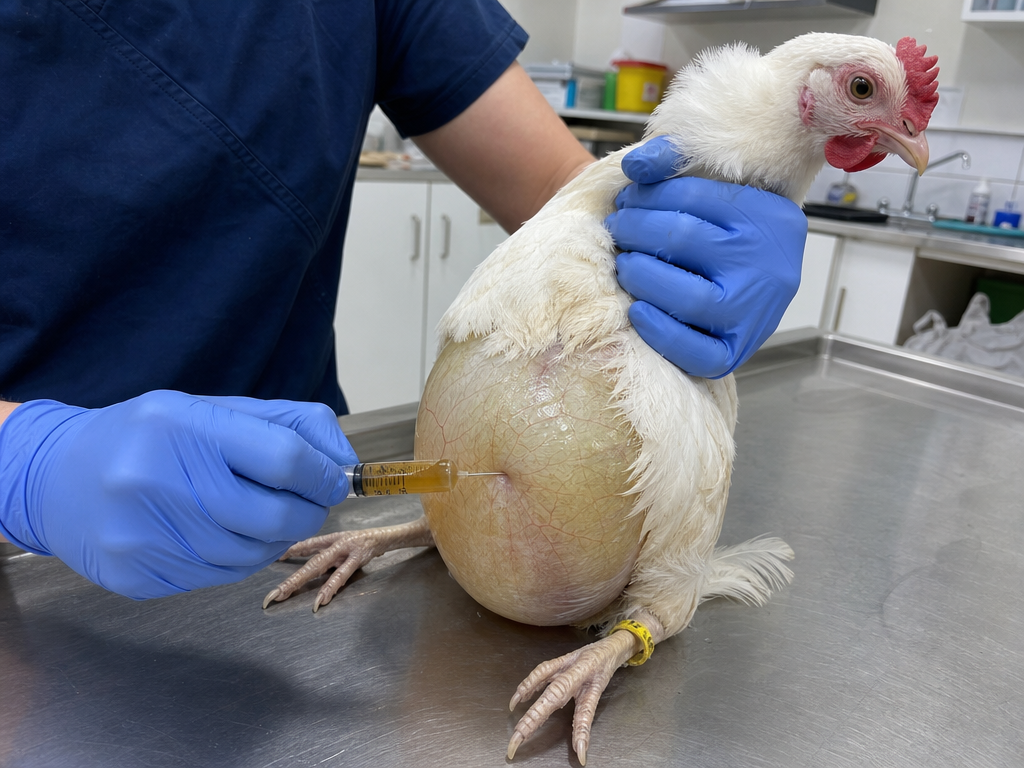
- Needle aspiration: A vet can insert a needle into the abdomen to confirm fluid presence and type. Ascitic fluid is typically straw-yellow to orange and clear.
- Breed and age: Fast-growing Cornish Cross broilers 4-8 weeks old are the classic patient. In backyard flocks, it can occur in any breed with concurrent disease.
💊How Is Ascites (Water Belly) in Chickens Treated?
There is no cure for the underlying cardiac failure. Palliative drainage extends life but does not address the cause.
- Abdominal drainage (abdominocentesis): A vet inserts a needle or catheter to drain accumulated fluid. Provides immediate relief but fluid reaccumulates within days to weeks. Best done by a vet to avoid bowel perforation.
- Furosemide (diuretic): Vet prescription. 5-10 mg/kg IM or orally reduces fluid accumulation temporarily. Not a long-term solution.
- Euthanasia: For commercial broilers, humane culling is the standard recommendation. For pet birds, palliative drainage and quality-of-life assessment guide the decision.
Natural & Integrative Care for Ascites (Water Belly) in Chickens
No natural treatment reverses cardiac failure or removes abdominal fluid safely. Palliative support can improve comfort.
- Low-sodium diet: Reduce dietary sodium immediately. Avoid salty treats and ensure clean, unsalted water. This slows but does not stop fluid accumulation.
- Reduce stress: Keep the bird in a quiet, low-activity space. Stress and physical exertion increase cardiac demand and accelerate decompensation.
- Vitamin C and E support: Antioxidant support may reduce oxidative stress on the failing heart marginally, but evidence is limited in poultry.
🛡️How Can Ascites (Water Belly) in Chickens Be Prevented?
Prevention focuses on reducing risk factors in breeds predisposed to ascites.
- Control growth rate: For meat birds, reducing feed access to 12 hours on/12 hours off during the first 2 weeks slows early growth and reduces pulmonary hypertension incidence by up to 50%.
- Altitude management: Flocks at high altitude should receive vitamin C supplementation and have access to oxygen-rich environments. Select genetics with proven performance at altitude.
- Respiratory disease prevention: Maintain excellent ventilation and biosecurity to prevent MG and other respiratory infections that trigger pulmonary hypertension.
- Sodium control: Feed only well-formulated commercial rations. Avoid high-salt table scraps.
📞When Should I Call a Vet for Ascites (Water Belly) in Chickens?
Call a vet immediately if a bird's abdomen is severely distended and the bird is struggling to breathe, has a blue comb, or cannot stand. Emergency abdominal drainage is a palliative option that provides significant immediate relief. Also consult a vet before attempting home drainage - perforating the intestine is a serious risk without proper technique.
❓Ascites (Water Belly) in Chickens: Frequently Asked Questions
What is water belly in chickens?
Water belly (ascites) is an accumulation of yellow fluid in the abdominal cavity caused by right-sided heart failure. The abdomen becomes visibly distended, the bird adopts a penguin-like stance, and breathing becomes labored. It is most common in fast-growing Cornish Cross broilers and birds at high altitude.
How do you treat water belly in chickens?
There is no cure for the underlying heart failure. A vet can drain the fluid (abdominocentesis) to provide temporary relief, which may be repeated every 1-4 weeks. Diuretics (furosemide) reduce fluid accumulation short-term. For most birds, humane euthanasia is the kindest option once severe ascites develops.
Can a chicken survive water belly?
Rarely without ongoing veterinary intervention. The underlying right-sided heart failure cannot be reversed. Some birds managed with repeated drainage and reduced stress survive for weeks to months, but the condition is progressive. Birds that are breathing comfortably and eating after drainage may have a reasonable quality of life short-term.
Why do Cornish Cross chickens get water belly?
Cornish Cross broilers are bred for extremely fast growth. Their cardiovascular system cannot keep pace with their muscle mass, leading to pulmonary hypertension and right heart failure. The right ventricle fails and fluid backs up into the abdomen. Slowing growth rate in the first 2 weeks by restricting feed access reduces ascites incidence significantly.
Is water belly in chickens contagious?
No. Ascites is a cardiovascular disease, not an infection. It cannot spread between birds. Multiple birds in the same flock may develop it because they share the same genetic predisposition (fast-growing breed) or the same risk factor (high altitude, respiratory disease). There is no quarantine required.
📋Key Points
- ✓Ascites is the end result of right-sided heart failure - fluid backs up from the failing heart into the abdominal cavity.
- ✓Key symptoms: visibly distended, fluid-filled abdomen - the skin appears stretched and shiny, penguin-like stance due to abdominal distension, difficulty breathing - labored, rapid respirations, blue-tinged comb and wattles (cyanosis) from low oxygen.
- ✓Prognosis is poor. Ascites indicates advanced right-sided heart failure - the underlying cardiac damage is irreversible. Drained birds typically reaccumulate fluid within 1-4 weeks. Most commercial operations cull affected birds humanely. Some pet chickens with mild ascites secondary to treatable disease (liver disease, respiratory infection) can be managed for months with repeated drainage and medical support.
🔗Related
Related Conditions
📚Sources & References
- 1.Ascites Syndrome in Poultry. Merck Veterinary Manual. 2024
- 2.Cardiovascular Diseases of Poultry. Merck Veterinary Manual. 2024
- 3.Pulmonary Hypertension Syndrome in Broilers. Poultry Science. 2019