Feather Pecking and Cannibalism in Chickens: Symptoms, Causes and Treatment
Feather pecking in chickens is damaging behavior in which birds pull or eat flock mates' feathers, and severe cases can progress to skin injury and cannibalism. Common triggers include crowding, excessive light, boredom, stress, and inadequate dietary protein. Treatment removes injured birds, corrects the trigger, adds enrichment, and may use an anti-pecking spray to protect wounds.
Veterinarian Reviewed
FlockVet Veterinary Editorial Team· Reviewed January 2026
At a Glance
- Urgency
- Moderate
- Contagious
- No
- Affects Humans
- No
- Key Symptoms
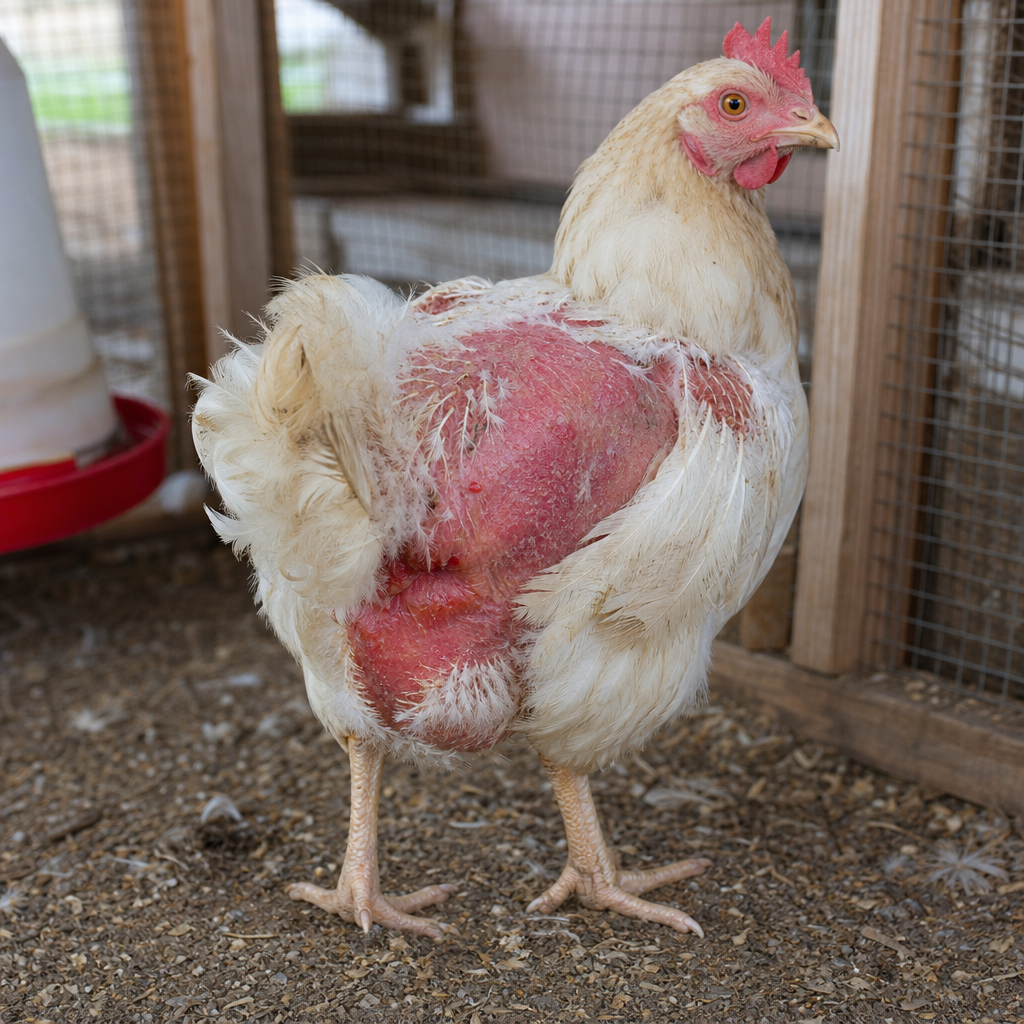
- feather loss on back, vent area, and head, bare red or bleeding skin patches, birds actively pecking at wounds on a flock mate
- Prognosis
- Excellent when trigger is identified and corrected. The behavior stops when the cause is addressed. Recurrence is common if the root cause is not permanently corrected.
📑 On This Pagetap to expand
🔍What Are the Symptoms of Feather Pecking and Cannibalism?
- ●Feather loss on back, vent area, and head
- ●Bare red or bleeding skin patches
- ●Birds actively pecking at wounds on a flock mate
- ●Wounded bird cowering, hiding, or unable to escape
- ●Bloody areas on back, vent, or head
- ●Restlessness in the flock
🧬What Causes Feather Pecking and Cannibalism in Chickens?
Feather pecking and cannibalism are behavioral, not infectious. Root causes:
- Overcrowding: Less than 4 sq ft per bird indoors creates chronic stress and redirected aggression
- Bright lighting: High-intensity light amplifies the visual trigger of red wounds and increases general aggression
- Protein deficiency: Birds seek dietary protein through feather eating - a nutritional drive behavior
- Boredom: Unstimulated birds redirect exploratory behavior toward each other
- Flock integration stress: New bird introductions disrupt pecking order
- Vent gleet or vent irritation: Red inflamed vent attracts pecking
- Mites causing itching and feather damage: Triggers feather pulling in self and others
- Learned behavior: Once one bird pecks and gets a protein reward (blood), others learn
🔬How Is Feather Pecking and Cannibalism Diagnosed?
💊How Is Feather Pecking and Cannibalism Treated?
Immediate priority: Remove the injured bird.
- Isolate the injured bird - not in view of the flock (they will peck through a fence)
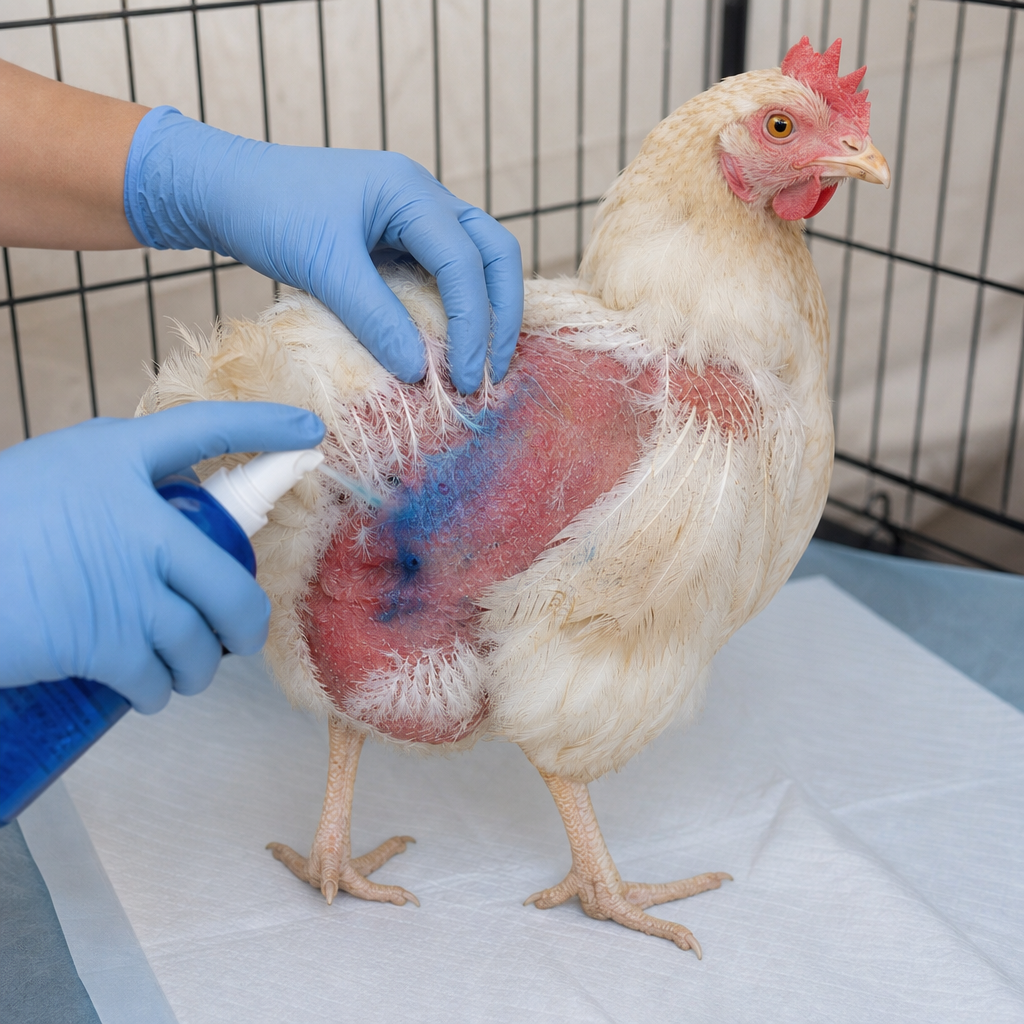
- Clean and treat wounds: chlorhexidine wash, antibiotic ointment, Blue Kote spray (hides red color)
- Identify and correct the trigger (see below)
- Return the bird only after wounds are fully healed and flock trigger is addressed
Environmental corrections:
- Increase space or reduce flock size
- Dim or red-spectrum lighting (reduces visual aggression trigger)
- Add enrichment: cabbage hanging to peck, dust bath areas, perches at varying heights
- Anti-peck pin (pinless peepers) on known instigators
Nutritional corrections:
- Switch to higher-protein feed (18%+ protein during active outbreak)
- Add dried mealworms or black soldier fly larvae
Natural & Integrative Care for Feather Pecking and Cannibalism
Feather pecking is a behavioral and nutritional problem. Natural intervention addresses both: fermented feed for protein, lavender for stress, enrichment for boredom. Remove injured birds first.
Blue Kote spray: Purple-blue spray that covers red wound areas and interrupts the visual trigger for continued pecking. Apply to all wounds before returning any bird to the flock. This is the most critical immediate intervention after isolation.
Increase dietary protein naturally: Dried mealworms, black soldier fly larvae, fermented feed, and sprouted seeds provide high-quality protein that satisfies the nutritional drive behind feather eating. Add daily through active outbreak.
Fermented feed: Increases amino acid availability (especially methionine, which is deficient in many commercial feeds and drives feather eating). Fermented feed also reduces boredom through the foraging behavior required.
Enrichment as behavioral therapy: A hanging cabbage head, a block of cracked corn frozen in ice, a pile of garden debris to scratch through. These redirect exploratory behavior away from flock mates.
Calendula salve on wounds: Promotes rapid tissue healing and has mild analgesic properties. Reduces the irritation that causes the injured bird to attract further attention.
Lavender in the coop: Documented stress-reducing effects in poultry. Reduces overall flock anxiety that contributes to aggression. Hang fresh or dried bundles near roosts.
Photo needed
Natural remedies for Feather Pecking and Cannibalism, mealworms, calendula, lavender shown together
16/9🛡️How Can Feather Pecking and Cannibalism Be Prevented?
- Maintain minimum 4 sq ft per bird indoors, 10 sq ft outdoors
- Dim lighting - bright light amplifies pecking behavior
- High-quality, high-protein feed (minimum 16%, preferably 18%)
- Enrichment year-round: dust baths, perches, hanging treats, garden time
- Introduce new birds at night and in groups - never single birds
- Address any vent irritation, mites, or wounds immediately
- Lavender in the coop reduces general flock stress
📞When Should I Call a Vet for Feather Pecking and Cannibalism?
Call a vet if:
- Wounds are deep, infected, or exposing muscle or bone
- Multiple birds are severely injured and you cannot identify the trigger
- You suspect an underlying medical condition (vent gleet, mites) is driving the behavior
❓Feather Pecking and Cannibalism: Frequently Asked Questions
How do you stop feather pecking in chickens?
Identify and address the root cause first: reduce stocking density, increase protein in feed to at least 16-18%, reduce light intensity, add environmental enrichment (hanging vegetables, dust baths), and separate the most aggressive birds. Anti-pecking sprays (Blu-Kote, Stockholm tar) applied to pecked areas taste unpleasant and deter further pecking.
What causes feather pecking in chickens?
Feather pecking is triggered by overcrowding (insufficient space per bird), boredom, high light intensity, nutritional deficiency (especially protein), stress from flock changes, and vent injuries that draw attention. Once started, it becomes a learned habit that spreads through the flock quickly.
How do you prevent feather pecking in chickens?
Prevention relies on proper management: 4 square feet per bird indoors and 8-10 outdoors, adequate protein (16-18%), moderate light levels (8-10 lux in the coop), multiple feeders and waterers to reduce competition, regular enrichment, and monitoring for early signs before pecking escalates to injury.
What anti-feather pecking spray works best?
Blu-Kote (gentian violet antiseptic spray) is the most widely used product - it treats wounds and colors them blue, masking the red that attracts other birds. Stockholm tar (pine tar) applied to wounds creates a strong-tasting barrier. Both are available at farm supply stores without a prescription.
📋Key Points
- ✓Feather pecking and cannibalism are behavioral, not infectious.
- ✓Key symptoms: feather loss on back, vent area, and head, bare red or bleeding skin patches, birds actively pecking at wounds on a flock mate, wounded bird cowering, hiding, or unable to escape.
- ✓Excellent when trigger is identified and corrected. The behavior stops when the cause is addressed. Recurrence is common if the root cause is not permanently corrected.
🔗Related
Related Conditions
Natural Remedies & Supplements
📚Sources & References
- 1.Feather Pecking and Cannibalism in Poultry. Merck Veterinary Manual. 2024
- 2.Common Management-Related Problems in Backyard Poultry. Merck Veterinary Manual. 2024