Prolapsed Vent (Blowout) in Chickens: Symptoms, Causes and Treatment
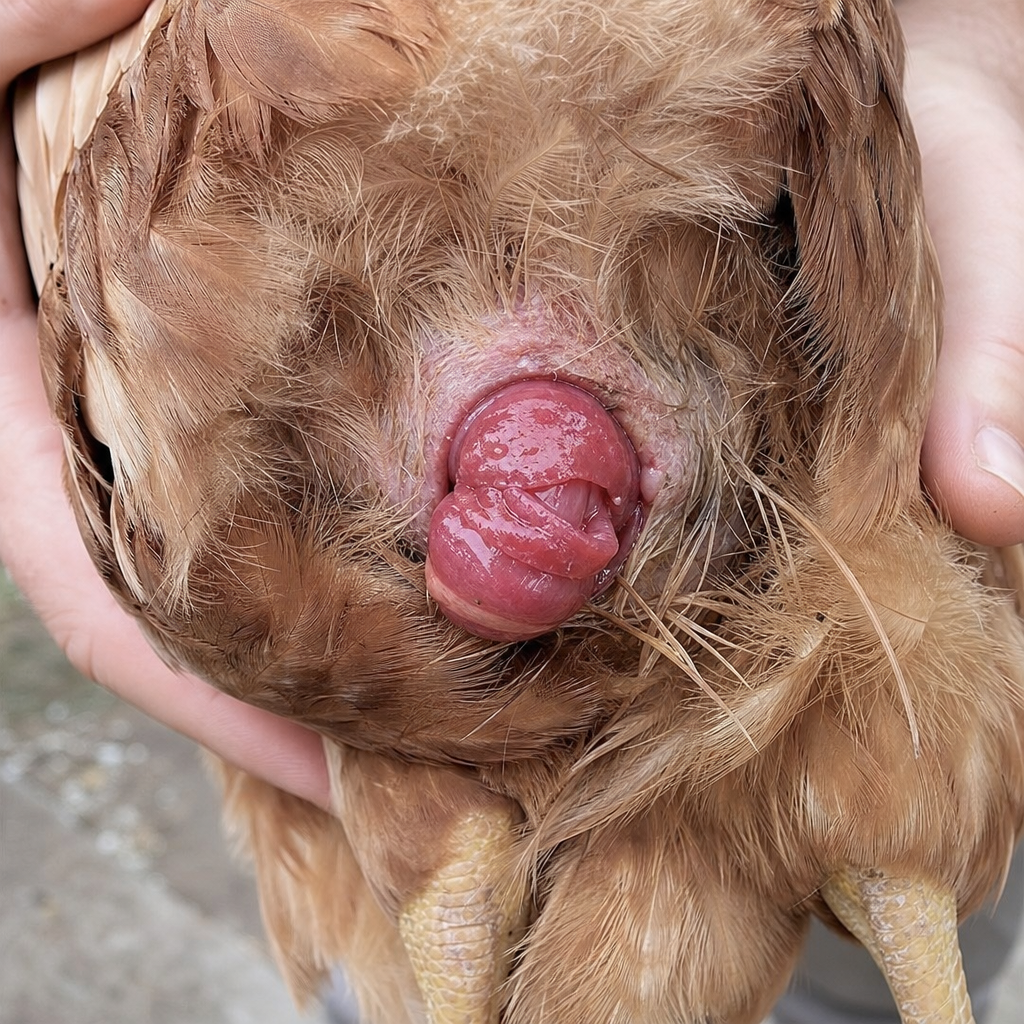
Vent prolapse in chickens occurs when cloacal tissue protrudes through the vent after excessive straining, often during egg laying. It appears as a swollen red or pink mass and can rapidly worsen through drying, trauma, or flock pecking. Immediate isolation, gentle cleaning, swelling reduction, and careful replacement are needed, with veterinary help if the tissue cannot be reduced.
Veterinarian Reviewed
FlockVet Veterinary Editorial Team· Reviewed January 2026
This is a veterinary emergency.
If your bird is showing these signs, contact a veterinarian immediately. Do not wait. Time-sensitive conditions can deteriorate rapidly without professional intervention.
At a Glance
- Urgency
- Emergency
- Contagious
- No
- Affects Humans
- No
- Key Symptoms
- red or pink tissue visibly protruding from the vent, tissue may be bloody or swollen, bird is being pecked at aggressively by flock mates
- Prognosis
- Good for first-time prolapse caught and treated promptly. Recurrence rate is significant (30-50%). Repeated prolapse or severe tissue damage: guarded. Some hens with recurrent prolapse are best retired from laying.
📑 On This Pagetap to expand
🔍What Are the Symptoms of Prolapsed Vent (Blowout)?
- ●Red or pink tissue visibly protruding from the vent
- ●Tissue may be bloody or swollen
- ●Bird is being pecked at aggressively by flock mates
- ●Straining or pumping motions
- ●Lethargy and hunched posture
- ●Not eating
🧬What Causes Prolapsed Vent (Blowout) in Chickens?
Prolapsed vent results from excessive straining during egg laying, causing the oviduct to evert through the cloaca:
- Oversized eggs: Double-yolkers, extra-large eggs that require excessive straining
- Obesity: Fat deposits limit oviduct mobility and increase straining force
- Calcium deficiency: Weak oviduct muscle tone
- Pullets laying too young: Immature reproductive tract
- Previous egg binding: Scarring reduces oviduct elasticity
- High production breeds under intensive laying: Leghorns, Red Sex Links
🔬How Is Prolapsed Vent (Blowout) Diagnosed?
💊How Is Prolapsed Vent (Blowout) Treated?
Step 1: ISOLATE IMMEDIATELY. This is not optional. Every minute in the flock adds injury from pecking.
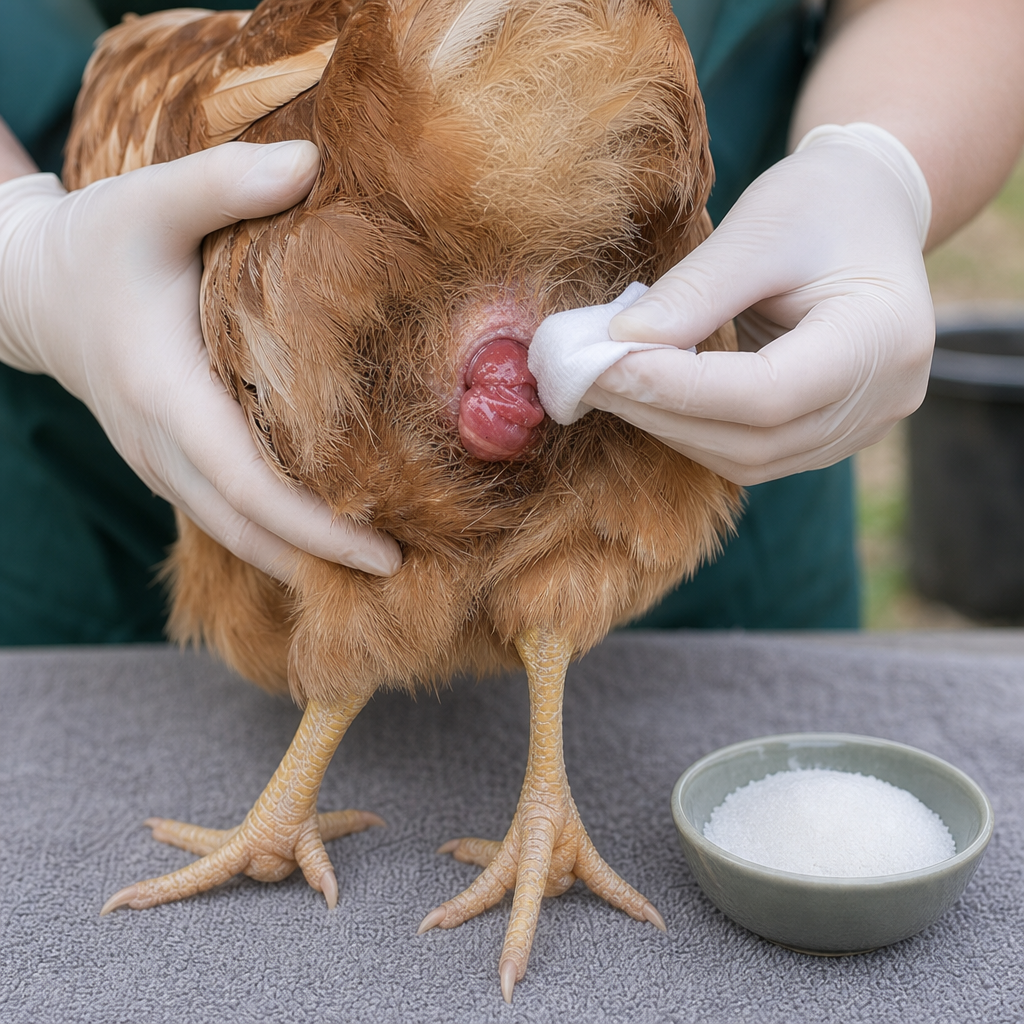
Step 2: Clean the prolapsed tissue. Gently rinse with clean warm water. Assess extent of the prolapse and any injury.
Step 3: Reduce swelling. Apply granulated sugar or honey directly to the tissue. The osmotic effect draws fluid out of the tissue, reducing swelling enough to allow replacement.
Step 4: Replace the tissue. With clean gloved hands, gently push the tissue back through the vent with steady gentle pressure. Do not force. If tissue won't go back after 15-20 minutes of attempts, call a vet.
Step 5: Prevent re-prolapse. Keep the bird in a dark, quiet environment - darkness reduces laying drive and straining. Withhold feed for 24-48 hours (water only).
Step 6: Monitor for 72 hours before returning to flock.
Natural & Integrative Care for Prolapsed Vent (Blowout)
Honey or sugar for swelling reduction and gentle manual replacement is first-line. Darkness to stop laying is the critical prevention of recurrence. Severe or repeated prolapse requires veterinary evaluation.
Raw honey: Applied generously to prolapsed tissue. Raw honey draws fluid out osmotically (reducing swelling), provides antimicrobial protection against the bacteria the tissue is exposed to, and soothes irritated mucosal tissue. Manuka honey (UMF 10+) is most effective but any raw honey works.
Granulated sugar: Same osmotic mechanism as honey. Pour a generous amount over the tissue, wait 10-15 minutes, then attempt gentle reduction. Many experienced keepers prefer this for the initial reduction because it acts faster.
Witch hazel: Applied by cotton ball to reduce inflammation and tighten tissue. Use after reduction to support recovery.
Aloe vera gel: Soothes and promotes mucosal healing after tissue is replaced. Apply externally to the vent area twice daily for one week.
Dark environment: This is arguably the most important "natural" intervention. Hens housed in darkness have dramatically reduced laying drive. A dark quiet space prevents re-prolapse during healing by stopping the straining that caused the original prolapse.
Photo needed
Natural remedies for Prolapsed Vent (Blowout), manuka-honey, witch-hazel, aloe-vera shown together
16/9🛡️How Can Prolapsed Vent (Blowout) Be Prevented?
- Do not force early laying with artificial light in pullets
- Maintain healthy body weight - no overfeeding high-energy scratch
- Calcium free-choice at all times for oviduct muscle tone
- Any hen with a history of prolapse: reduce lighting, reduce high-production feed during peak laying
- Monitor high-production breeds closely during peak laying season
📞When Should I Call a Vet for Prolapsed Vent (Blowout)?
Call a vet if:
- Tissue will not reduce after 20 minutes of attempts
- Tissue is necrotic (black, foul-smelling, dead tissue)
- Bird is in severe distress
- This is a second or third recurrence
- Tissue is deeply lacerated from pecking
❓Prolapsed Vent (Blowout): Frequently Asked Questions
How do you treat a prolapsed vent in chickens?
Clean the prolapsed tissue gently with warm water, then apply a small amount of honey, sugar water, or Preparation H to reduce swelling and inflammation. Carefully push the tissue back through the vent using a gloved, lubricated finger. Isolate the bird in dim light (reduces straining) and restrict feed for 24 hours. Get a vet involved if tissue does not reduce.
What causes a prolapsed vent in chickens?
Prolapsed vent is caused by excessive straining during egg laying. Common triggers include producing oversized eggs, obesity, laying too early (pullets forced into production), egg binding, or chronic diarrhea. High-production breeds and hens with poor muscle tone are most at risk.
What is vent prolapse in chickens?
Vent prolapse occurs when the inner tissue of the cloaca (the combined reproductive and digestive exit) pushes outward through the vent and becomes visible outside the body. It appears as a red or pink mass protruding from the vent. It is a medical emergency requiring immediate intervention.
Can a chicken survive a prolapsed vent?
Yes, if treated immediately. Early, uncomplicated prolapses that are reduced within a few hours have good outcomes. Delayed treatment allows other birds to peck at the exposed tissue, causing severe injury. Repeated prolapses indicate an underlying problem and may require culling if the condition does not resolve.
How do you prevent vent prolapse in chickens?
Keep hens at a healthy weight through diet management. Do not use artificial lighting to force early laying in pullets. Ensure hens have adequate calcium for normal muscle function. Watch for oversized eggs and address egg binding quickly. Provide enough space and nesting boxes to reduce competition and stress.
📋Key Points
- ✓Prolapsed vent results from excessive straining during egg laying, causing the oviduct to evert through the cloaca: Oversized eggs: Double-yolkers, extra-large eggs that require excessive straining Obesity: Fat deposits limit oviduct mobility and increase straining force Calcium deficiency: Weak oviduct muscle tone Pullets laying too young: Immature reproductive tract Previous egg binding: Scarring reduces oviduct elasticity High production breeds under intensive laying: Leghorns, Red Sex Links
- ✓Key symptoms: red or pink tissue visibly protruding from the vent, tissue may be bloody or swollen, bird is being pecked at aggressively by flock mates, straining or pumping motions.
- ✓Good for first-time prolapse caught and treated promptly. Recurrence rate is significant (30-50%). Repeated prolapse or severe tissue damage: guarded. Some hens with recurrent prolapse are best retired from laying.
🔗Related
Related Conditions
Medications
Natural Remedies & Supplements
📚Sources & References
- 1.Cloacal Prolapse in Poultry. Merck Veterinary Manual. 2024
- 2.Common Management-Related Problems in Backyard Poultry. Merck Veterinary Manual. 2024