Poultry Mites in Chickens: Symptoms, Causes and Treatment
Poultry mites are blood-feeding external parasites, including northern fowl mites that remain on birds and red mites that hide in the coop by day. They cause irritation, dark debris near the vent, pale combs, anemia, reduced production, and weakness. Effective treatment targets every bird and the environment at the same time, then repeats on the product schedule.
Veterinarian Reviewed
FlockVet Veterinary Editorial Team· Reviewed January 2026
At a Glance
- Urgency
- Moderate
- Contagious
- Yes
- Affects Humans
- No
- Key Symptoms
- restlessness at night (red mites feed nocturnally), pale or white comb and wattles (anemia), dark crusty masses around the vent (northern fowl mites)
- Prognosis
- Good with simultaneous bird + coop treatment and a second pass in 7–10 days. Anemic birds recover with parasite elimination and iron-rich greens. Untreated heavy red mite loads can kill birds.
📑 On This Pagetap to expand
🔍What Are the Symptoms of Poultry Mites?
- ●Restlessness at night (red mites feed nocturnally)
- ●Pale or white comb and wattles (anemia)
- ●Dark crusty masses around the vent (northern fowl mites)
- ●Tiny red or gray moving dots in coop cracks at night (red mites)
- ●Excessive preening and feather damage around the vent
- ●Weight loss despite normal feeding
- ●Reduced egg production
- ●Weakness or death in severe untreated infestations
🧬What Causes Poultry Mites in Chickens?
Two primary blood-feeding mites matter for backyard flocks (scaly leg mites are covered separately):
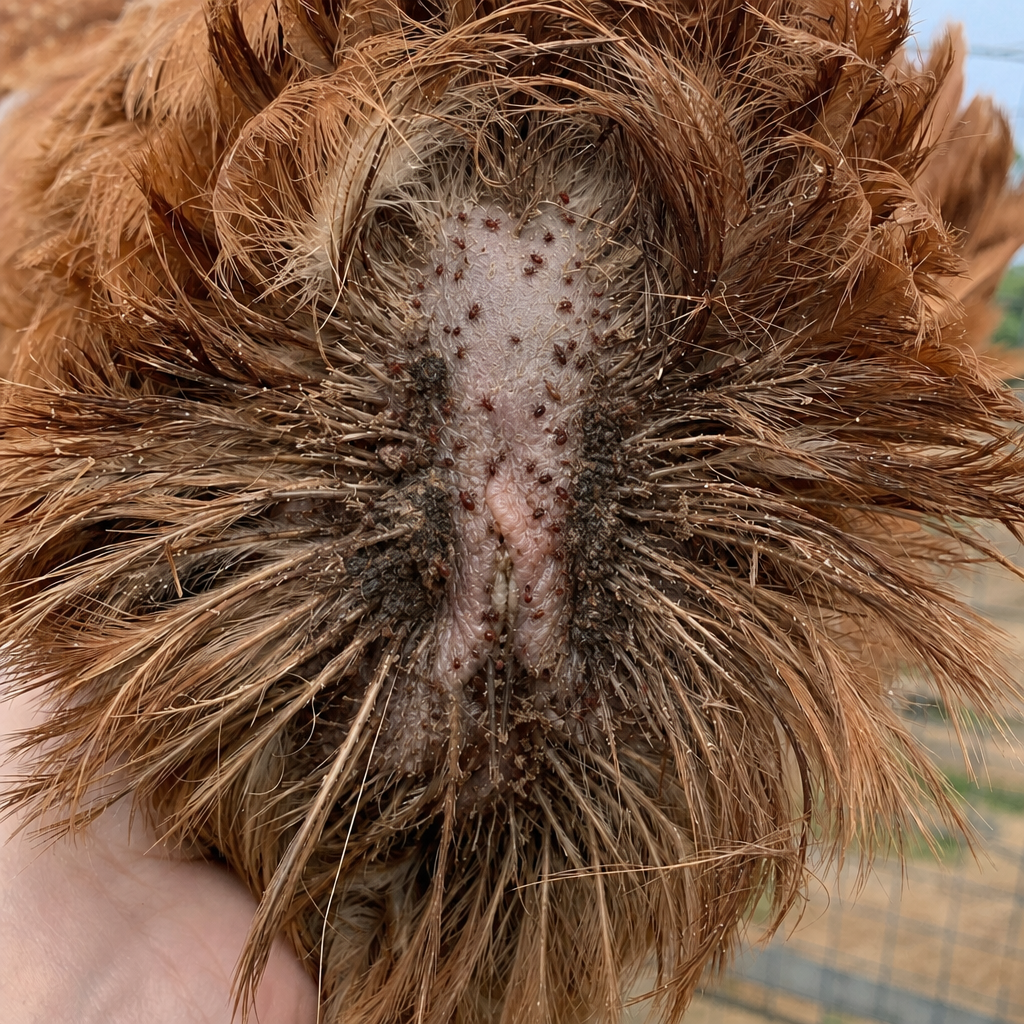
- Northern Fowl Mite (Ornithonyssus sylviarum): Lives permanently on the bird. Visible as dark moving clusters and crusty masses around the vent. Spreads bird-to-bird.
- Red Poultry Mite (Dermanyssus gallinae): Lives in the coop - cracks, roost brackets, nest boxes. Feeds on birds only at night. Nearly impossible to find on birds during the day. Detect with a white cloth wiped across roosts at night.
Both feed on blood. That is why heavy mite loads cause pale combs and true anemia, unlike chewing lice which feed on feather debris.
🔬How Is Poultry Mites Diagnosed?
Daytime bird check (northern fowl mites): Part vent feathers. Look for dark crusty masses and tiny moving dots at feather bases.
Nighttime coop check (red mites): Flashlight inspection of roosts, cracks, and nest boxes. Wipe a white cloth across roosts - red or gray moving spots confirm red mites. Birds may be anemic with no parasites visible on daytime bird exams.
Differentials:
- Chicken lice - larger, tan/gray, nits on feather shafts, less likely to cause severe anemia
- Scaly leg mites - raised crusty leg scales, not vent/coop presentation
- Nutritional anemia / other illness - pale comb without parasites; rule out parasites first
💊How Is Poultry Mites Treated?
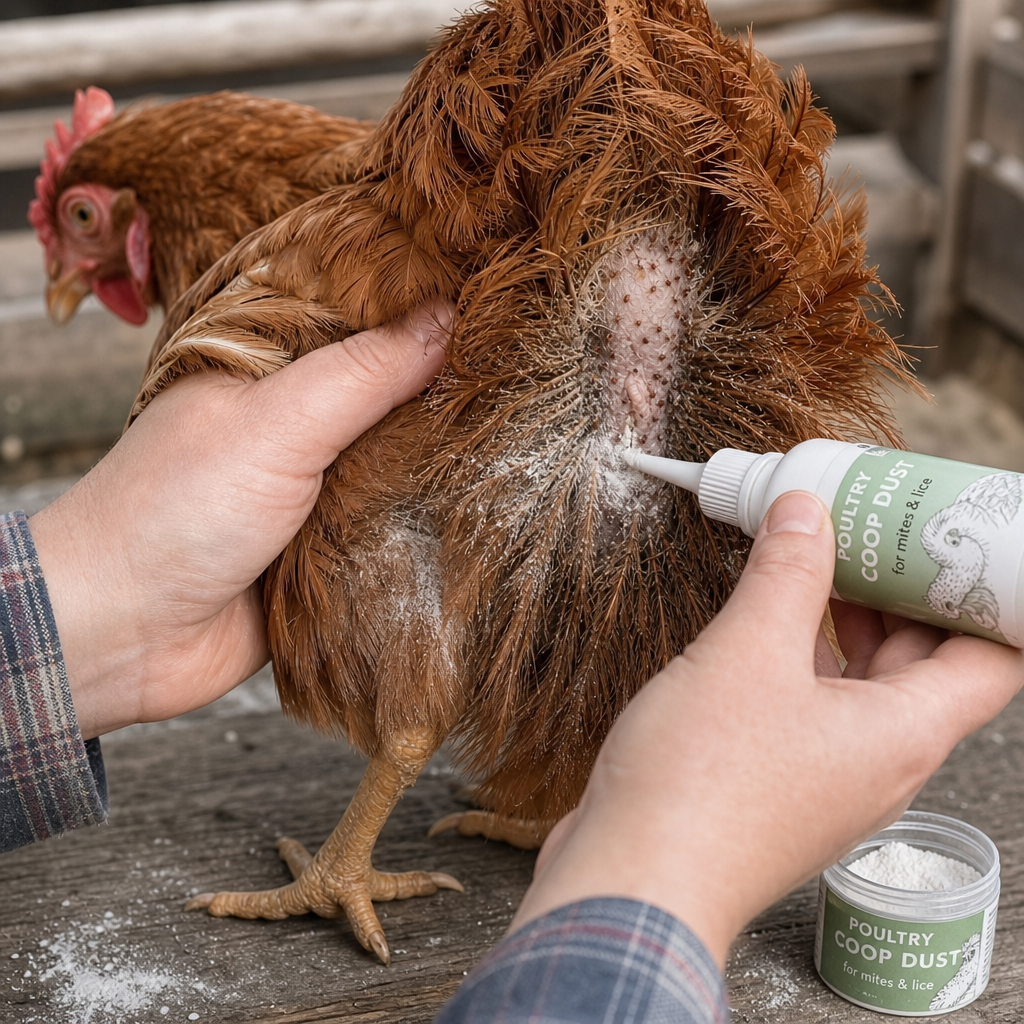
Critical rule: Treat birds AND coop simultaneously. Treating birds only results in reinfestation within days when red mites are present.
For birds:
- Permethrin dust or spray (0.25%) - vent, under wings, neck, fluff
- Spinosad (Elector PSP) spray - effective against mites, lower toxicity
- Ivermectin pour-on (0.1ml per bird topically) for heavy infestations - egg withdrawal typically 14 days; confirm current label/vet guidance
- Repeat treatment in 7–10 days for newly hatched mites
For coop (mandatory for red mites):
- Remove all bedding; bag or burn
- Spray cracks, roosts, nest boxes with permethrin or spinosad
- Allow full dry time before replacing bedding
- Dust cracks with food-grade diatomaceous earth as a residual layer
Natural & Integrative Care for Poultry Mites
Blood-feeding mites are a different problem from chewing lice. Bird treatment plus full coop treatment (especially for red mites) is non-negotiable. Natural prevention maintains control after the infestation is knocked down.
Natural approaches help prevention and light loads. Heavy infestations with pale, weak birds need faster conventional knockdown first.
- Food-grade DE + wood ash dust baths: Ongoing mechanical control
- Garlic in water: 3–4 crushed cloves per gallon, 3x weekly - allicin makes blood less palatable to blood-feeding mites
- Neem oil spray (2%): Disrupts mite reproduction; spray birds and (carefully) roost contact points
- Lavender, rosemary, basil near roosts/nest boxes: Repellent volatiles; replace weekly
Natural methods alone rarely eliminate an established red-mite coop population - you still have to treat the environment.
Photo needed
Natural remedies for Poultry Mites, diatomaceous-earth, garlic, neem-oil shown together
16/9🛡️How Can Poultry Mites Be Prevented?
- Nighttime coop checks every 2–4 weeks with a flashlight and white-cloth roost wipe
- Year-round DE/wood ash dust baths
- Garlic in water 2–3x weekly as a systemic repellent for blood-feeders
- Quarantine new birds 30 days
- Minimize deep cracks and clutter where red mites hide; clean nest boxes regularly
📞When Should I Call a Vet for Poultry Mites?
Call a vet if:
- Comb is very pale and the bird is weak - severe anemia may need supportive care
- Infestation is not responding after two combined bird+coop treatments
- You need ivermectin guidance or help confirming red mites vs northern fowl mites
❓Poultry Mites: Frequently Asked Questions
How do you get rid of poultry mites?
Treat the birds with permethrin spray or dust, focusing on the vent, under wings, and neck. Simultaneously treat the coop - clean out all bedding, apply permethrin or diatomaceous earth to all cracks, roosts, and nesting boxes. Repeat both bird and coop treatment in 7-10 days to break the life cycle.
How do you treat poultry mites?
The most effective treatment is permethrin-based poultry spray or dust applied directly to the bird. For red mites that hide in the coop, a complete coop cleanout followed by treatment with an approved acaricide is essential. Ivermectin pour-on can be used for severe infestations. Treat all birds at once.
Can poultry mites live on humans?
Poultry mites can bite humans when their bird hosts are removed or unavailable, causing an itchy rash. However, they cannot complete their life cycle on humans and will not establish a lasting infestation. Bites typically resolve within a few days without treatment.
What is the difference between poultry mites and chicken lice?
Poultry mites are arachnids (8 legs) that feed on blood, while lice are insects (6 legs) that feed on feather debris and skin. Red mites hide in the coop during the day and feed on birds at night. Northern fowl mites stay on the bird at all times. Lice are visible as fast-moving insects on the feathers.
Do poultry mites bite humans?
Yes, poultry mites can bite humans, especially when separated from their bird hosts. Red mites and northern fowl mites may bite people who handle infested birds or work in infested coops. Bites cause a red, itchy rash similar to mosquito bites. The mites do not survive on humans and bites resolve within days.
📋Key Points
- ✓Two primary blood-feeding mites matter for backyard flocks (scaly leg mites are covered separately): Northern Fowl Mite ( Ornithonyssus sylviarum ): Lives permanently on the bird.
- ✓Key symptoms: restlessness at night (red mites feed nocturnally), pale or white comb and wattles (anemia), dark crusty masses around the vent (northern fowl mites), tiny red or gray moving dots in coop cracks at night (red mites).
- ✓Good with simultaneous bird + coop treatment and a second pass in 7–10 days. Anemic birds recover with parasite elimination and iron-rich greens. Untreated heavy red mite loads can kill birds.
- ✓This condition is contagious, isolate affected birds promptly.
🔗Related
Related Conditions
Medications
Natural Remedies & Supplements
📚Sources & References
- 1.External Parasites of Poultry. Merck Veterinary Manual. 2024
- 2.Lice and Mites of Poultry. University of Georgia Cooperative Extension. 2022
- 3.Common Management-Related Problems in Backyard Poultry. Merck Veterinary Manual. 2024