Chicken Lice in Chickens: Symptoms, Causes and Treatment
Chicken lice are host-specific chewing insects that live on poultry and feed on feathers, skin scales, and debris. Infested birds scratch, lose feather quality, and carry fast-moving tan insects or pale egg clusters near feather bases. Treatment requires an approved poultry insecticide on every bird, repeated after eggs hatch, along with cleaning of nest and dust-bath areas.
Veterinarian Reviewed
FlockVet Veterinary Editorial Team· Reviewed January 2026
At a Glance
- Urgency
- Mild
- Contagious
- Yes
- Affects Humans
- No
- Key Symptoms
- excessive preening and scratching, feather loss, especially around vent, neck, and under wings, bare skin patches with broken feather shafts
- Prognosis
- Excellent. Lice are fully controllable with two properly spaced treatments and ongoing dust-bath prevention. Recurrence usually means a bird was missed or a new bird reintroduced them.
📑 On This Pagetap to expand
🔍What Are the Symptoms of Chicken Lice?
- ●Excessive preening and scratching
- ●Feather loss, especially around vent, neck, and under wings
- ●Bare skin patches with broken feather shafts
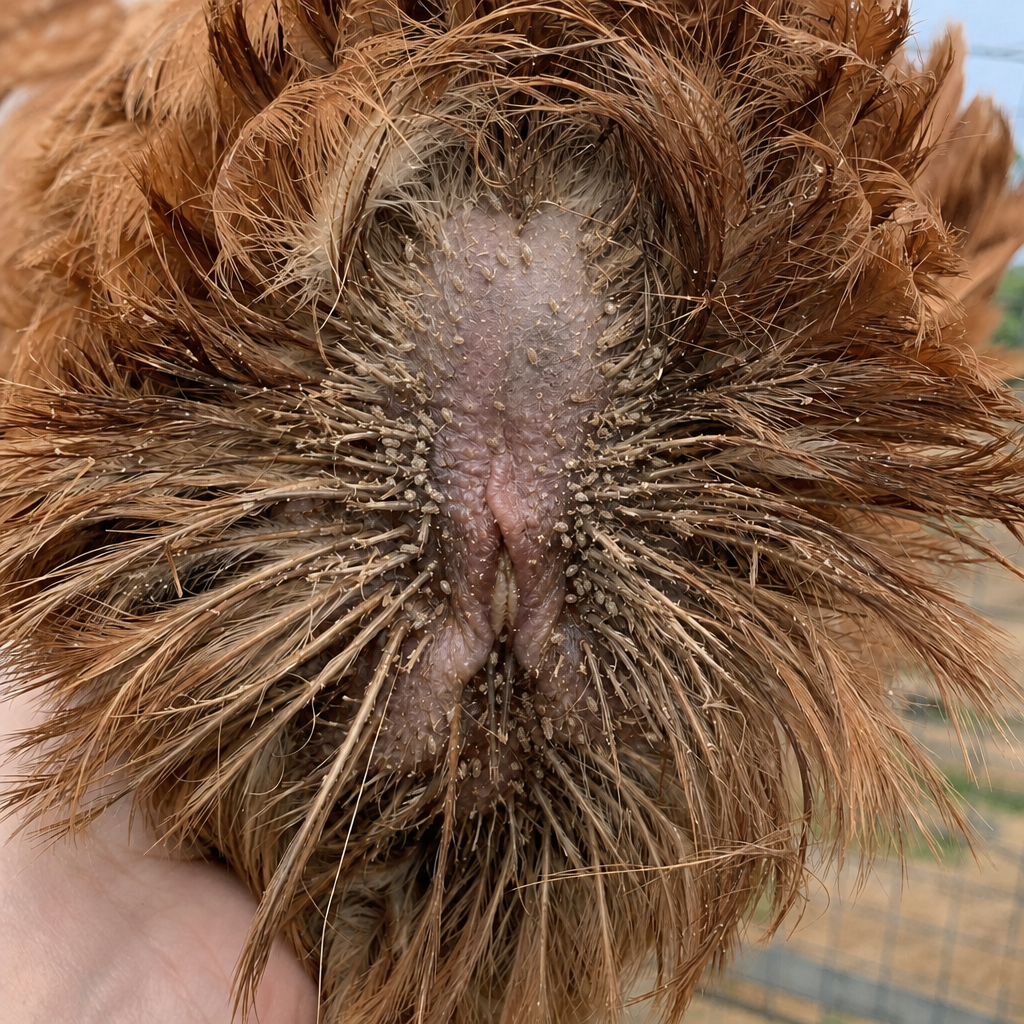
- ●White or tan clusters of eggs (nits) cemented to feather shafts
- ●Small tan or gray insects moving at feather bases when feathers are parted
- ●Irritability and restlessness during the day
- ●Reduced egg production in heavy infestations
- ●Weight loss if infestation is severe and prolonged
🧬What Causes Chicken Lice in Chickens?
Chicken body lice (order Phthiraptera, primarily Menacanthus stramineus and related chewing lice) live permanently on the host. They do not suck blood - they chew feather barbs, skin scales, and debris. Because they complete their entire life cycle on the bird, spread is almost always bird-to-bird contact, shared dust baths, or shared nest boxes.
Why they persist:
- Eggs (nits) are cemented to feather shafts and survive many single-pass treatments
- New birds introduced without quarantine reintroduce lice to a clean flock
- Dust baths without abrasive materials (DE, wood ash) allow populations to rebuild
Not the same as mites: lice are larger (1–2mm), tan/gray, move quickly when disturbed, and are found on the bird during the day. They do not cause the severe anemia typical of heavy blood-feeding mite infestations.
🔬How Is Chicken Lice Diagnosed?
Part feathers at the vent, under the wings, and around the neck base during daylight. Look for:
- Moving tan/gray insects at the feather base (lice themselves)
- Whitish or tan egg clusters cemented along feather shafts near the vent and neck (nits)
Differentials:
- Northern fowl mites - much smaller, form dark crusty masses around the vent, blood-feeding
- Red poultry mites - rarely found on birds during the day; check coop at night
- Feather pecking / cannibalism - bare patches without insects or nits
💊How Is Chicken Lice Treated?
Treat every bird in the flock on the same day. Lice live on birds, so bird treatment is primary; still clean nest boxes and dust-bath areas.
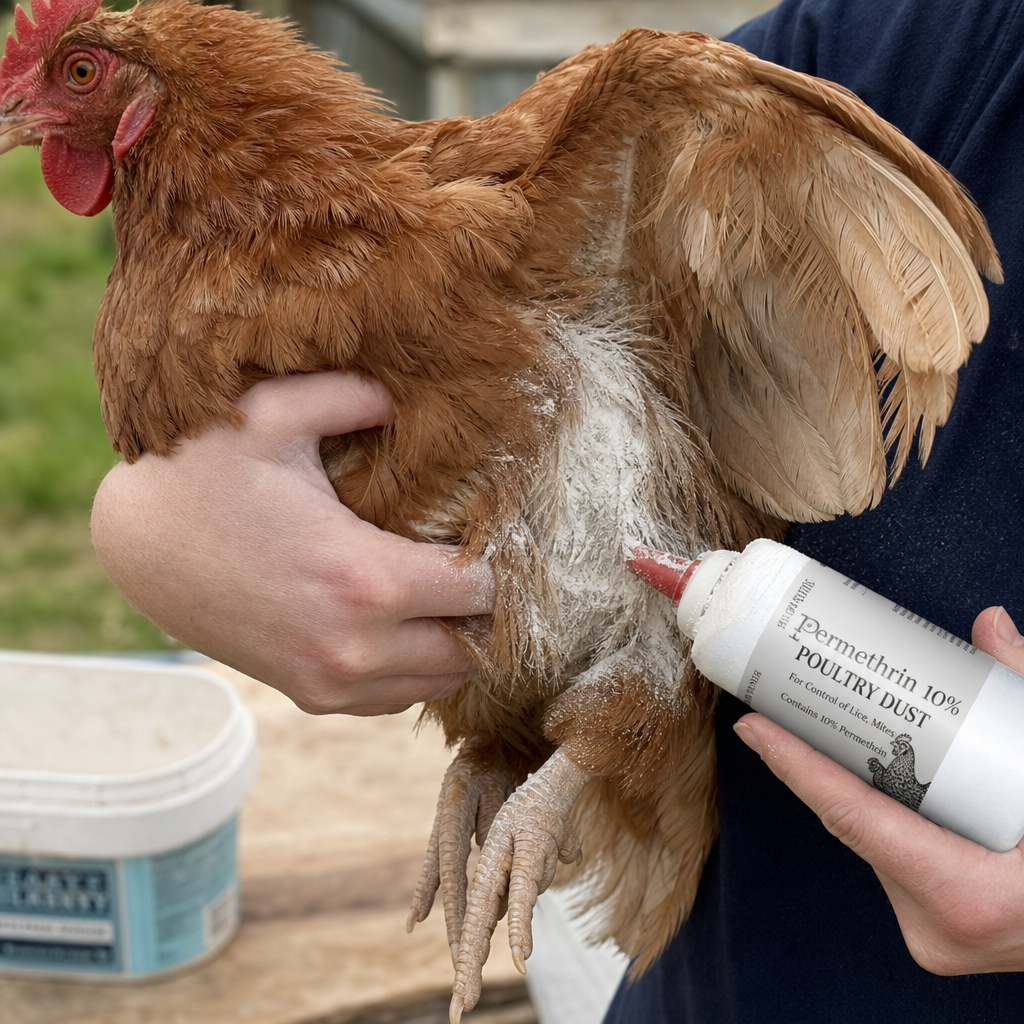
- Permethrin dust or spray (0.25%) applied thoroughly - vent, under wings, neck, fluff feathers
- Spinosad (Elector PSP) spray - effective against lice with lower toxicity than many organophosphates
- Repeat in 7–10 days to kill newly hatched nymphs from surviving nits
Ivermectin is less commonly first-line for pure lice infestations than for heavy blood-feeding mites, but may be used under veterinary guidance for severe mixed infestations.
Can Chicken Lice Spread to Humans?
Chicken lice are adapted to birds and cannot establish an infestation on people. A louse may briefly crawl onto someone handling an infested chicken, but it cannot reproduce or survive long without poultry feathers and skin. Shower, change clothing, and wash handling equipment after flock treatment. Persistent human bites suggest poultry mites or another pest, not a lasting chicken lice infestation.
Natural & Integrative Care for Chicken Lice
Lice live on the bird, so thorough bird treatment plus a continuous DE/wood-ash dust bath is the core strategy. Unlike red mites, coop-only treatment will not solve a lice problem.
Natural methods work well for light-to-moderate lice loads and as ongoing prevention.
- Food-grade diatomaceous earth (DE) dust bath: Damages the lice exoskeleton. Keep available year-round; add wood ash for extra abrasiveness.
- Wood ash dust bath: Highly effective traditional control; free and continuous if birds have access.
- Neem oil spray (2%): Dilute with water + a drop of dish soap as emulsifier; spray vent, under wings, neck. Azadirachtin disrupts lice reproduction.
- Lavender and rosemary in nest boxes: Volatile oils that repel lice; replace weekly.
Heavy infestations with widespread feather damage still benefit from a faster conventional knockdown, then natural prevention to stay clean.
Photo needed
Natural remedies for Chicken Lice, diatomaceous-earth, neem-oil, lavender shown together
16/9🛡️How Can Chicken Lice Be Prevented?
- Year-round dust bath with food-grade DE and wood ash
- Monthly feather checks - part vent and under-wing feathers looking for nits
- Quarantine new birds 30 days and inspect thoroughly before introduction
- Lavender/rosemary in nest boxes, refreshed weekly
- Do not share equipment or birds with unknown-status flocks without cleaning
📞When Should I Call a Vet for Chicken Lice?
Call a vet if:
- Infestation is not responding after two full-flock treatments 7–10 days apart
- Birds are weak, losing significant weight, or have severe skin irritation
- You need prescription-strength products or guidance on mixed lice/mite infestation
❓Chicken Lice: Frequently Asked Questions
Can humans get chicken lice?
No. Chicken lice (Menacanthus stramineus and related species) are host-specific and cannot complete their life cycle on human skin or hair. They may briefly crawl onto a person handling infested chickens but will not bite, lay eggs, or establish an infestation. They die within hours without a bird host.
Can chicken lice live on humans?
Chicken lice cannot live on humans. They require the body heat, feather structure, and skin type of a bird to feed and reproduce. If you handle an infested chicken, lice may crawl onto your skin temporarily but will not survive. A quick shower and change of clothes after handling is all that is needed.
How do you treat chicken lice?
Treat chicken lice with permethrin-based poultry dust or spray, applying directly to the bird - especially under the wings, around the vent, and at the base of the tail. Treat all birds in the flock at the same time. Repeat treatment in 10-14 days to kill lice that hatched after the first treatment.
What does chicken lice look like?
Chicken lice are tiny, flat, wingless insects about 1-3mm long, pale yellow to brown in color. They move quickly through the feathers when you part them. Their eggs (nits) appear as white or cream clusters glued to the base of feather shafts, especially around the vent and under the wings.
How do I know if my chickens have lice?
Check by parting feathers around the vent, under the wings, and at the base of the tail. You may see lice moving quickly through the feathers or clusters of tiny white eggs glued to feather shafts. Affected birds often scratch frequently, have ragged feathers, pale combs, and reduced egg production.
📋Key Points
- ✓Chicken body lice (order Phthiraptera, primarily Menacanthus stramineus and related chewing lice) live permanently on the host.
- ✓Key symptoms: excessive preening and scratching, feather loss, especially around vent, neck, and under wings, bare skin patches with broken feather shafts, white or tan clusters of eggs (nits) cemented to feather shafts.
- ✓Excellent. Lice are fully controllable with two properly spaced treatments and ongoing dust-bath prevention. Recurrence usually means a bird was missed or a new bird reintroduced them.
- ✓This condition is contagious, isolate affected birds promptly.
🔗Related
Related Conditions
Medications
Natural Remedies & Supplements
📚Sources & References
- 1.External Parasites of Poultry. Merck Veterinary Manual. 2024
- 2.Lice and Mites of Poultry. University of Georgia Cooperative Extension. 2022
- 3.Management of Backyard Poultry. Merck Veterinary Manual. 2024
- 4.Common Management-Related Problems in Backyard Poultry. Merck Veterinary Manual. 2024