Wry Neck (Torticollis) in Chickens: Symptoms, Causes and Treatment
Wry neck in chickens is torticollis, a neurological sign in which the head twists sideways or backward because of nutritional deficiency, injury, toxin exposure, or disease. Birds may stargaze, lose balance, and struggle to eat or drink. Treatment addresses the cause, commonly with carefully dosed vitamin E and selenium support plus protected feeding and veterinary evaluation.
Veterinarian Reviewed
FlockVet Veterinary Editorial Team· Reviewed August 2026
At a Glance
- Urgency
- Moderate
- Contagious
- No
- Affects Humans
- No
- Key Symptoms
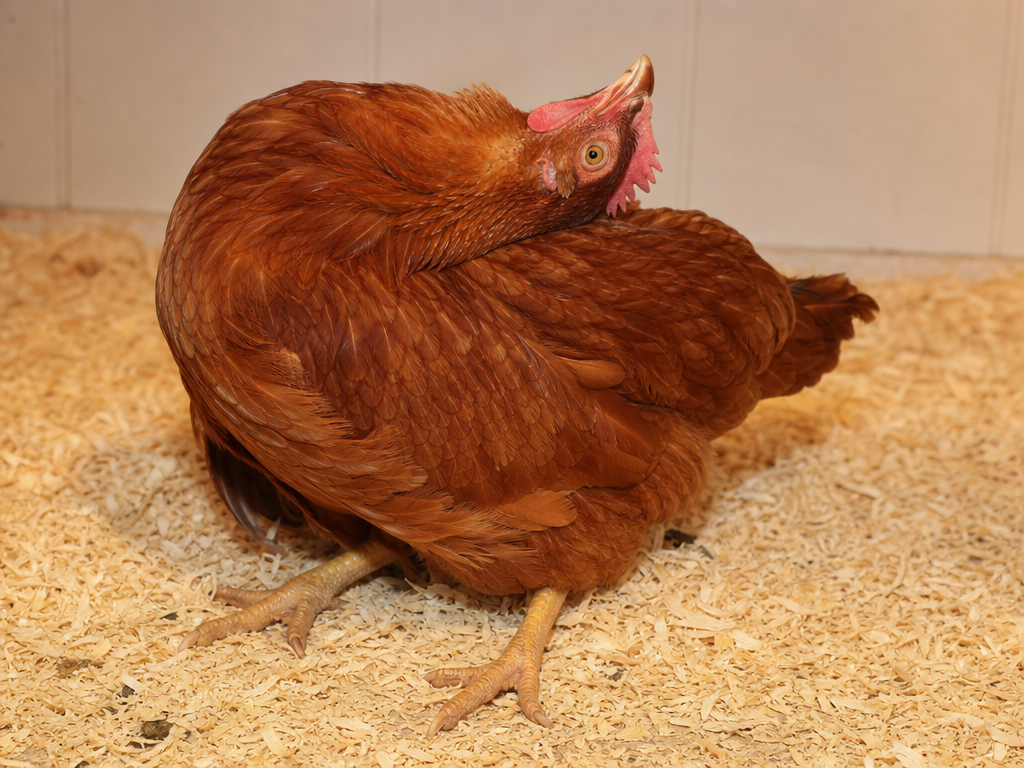
- stargazing - head bent backward toward the spine, looking up at the sky, head twisted to one side (torticollis), sometimes pressed against the body, rolling or spinning uncontrollably, especially when startled
- Prognosis
- 80–90% of wry neck cases caused by vitamin E deficiency resolve fully within 4–6 weeks with consistent supplementation (400 IU/day vitamin E + 0.1 mg/day selenium). Cases caused by head trauma have variable prognosis depending on injury severity, but many recover fully within the same timeframe with supportive care. Wry neck caused by Newcastle Disease or advanced Marek's disease carries a poor prognosis regardless of treatment - recovery is unlikely once the neurological damage is established from these causes.
📑 On This Pagetap to expand
🔍What Are the Symptoms of Wry Neck (Torticollis)?
- ●Stargazing - head bent backward toward the spine, looking up at the sky
- ●Head twisted to one side (torticollis), sometimes pressed against the body
- ●Rolling or spinning uncontrollably, especially when startled
- ●Walking backward or in tight circles
- ●Inability to reach food or water without assistance
- ●Loss of balance, falling sideways or forward
- ●Lethargy and reluctance to move due to disorientation
- ●Head tremors or rhythmic nodding during attempts to right the head
- ●Rapid eye movement (nystagmus) in severe vestibular cases
- ●Normal leg strength and grip - legs work fine, head control is the problem (key distinguishing feature from Marek's)
🧬What Causes Wry Neck (Torticollis) in Chickens?
Wry neck is a symptom, not a disease. The cause determines the treatment - getting this wrong means treating the wrong thing for weeks.
- Vitamin E deficiency (most common, ~70% of cases): Without vitamin E, free radical damage accumulates in the cerebellum and disrupts balance and head control. Old feed (3+ months) loses vitamin E through oxidation - a silent cause.
- Selenium deficiency: Selenium is a cofactor that vitamin E needs to work. Some birds on adequate diets still develop wry neck because selenium is the missing piece. The two always work as a team.
- Head trauma: A predator near-miss, collision with fencing, or fall from a roost can directly damage the brainstem or inner ear. Signs appear suddenly within hours - not gradually over days.
- Newcastle Disease: Causes viral encephalitis. If wry neck is accompanied by coughing or nasal discharge in multiple birds, call your state veterinarian immediately - NDV is federally reportable.
- Marek's Disease: Distinguished by progressive leg weakness alongside the head twist. Isolated wry neck with strong legs is almost never Marek's. If you see both head twisting and leg paralysis, suspect Marek's.
- Inner ear infection (Otitis interna): Produces a one-sided tilt that does not shift. No response to vitamin E after 7-10 days. Vet exam needed for antibiotics.
🔬How Is Wry Neck (Torticollis) Diagnosed?
Most cases of wry neck can be assessed accurately at home by systematically ruling out the more serious causes. Follow this sequence:
Step 1: The Leg Check
Set the bird on a flat surface and watch it try to stand and walk. Can it move its legs normally, grip with its feet, and bear weight? If yes - legs are working - you are almost certainly looking at a nutritional cause (vitamin E deficiency) or inner ear issue, not Marek's. If the legs are progressively weakening or the bird sits with one leg forward and one back, Marek's disease moves to the top of the differential list.
Step 2: The Flock Check
Is this one bird or multiple birds? Single-bird wry neck in a non-molting adult flock almost always points to nutritional deficiency or trauma. Multiple birds developing wry neck or any bird showing wry neck alongside coughing and nasal discharge - stop everything and call your state veterinarian. This pattern suggests Newcastle Disease.
Step 3: The Stargazing Test
Hold the bird gently and observe the head position. Is the head bent backward, looking up - the classic "stargazing" posture? This strongly suggests cerebellar involvement, which is the signature of vitamin E deficiency. A head tilted to one side at roughly 45–90 degrees without backward bending is more consistent with vestibular (inner ear) origin.
Differential Diagnosis Summary
- Vitamin E deficiency: Stargazing or head twist, strong legs, single bird or chicks, no respiratory signs. Improves within 3–7 days of supplementation. Start supplementation and monitor.
- Marek's disease: Head twist + progressive leg paralysis, bird is 4–20 weeks old, other flock members may have wing droop or leg weakness. Vitamin E supplementation does not improve signs. Vet diagnosis recommended.
- Head trauma: Sudden onset within hours of a known or suspected event, possible wound or bruising on head, no flock spread. Supportive care + vitamin E empirically.
- Newcastle Disease: Head twist + coughing, gasping, or nasal discharge, multiple birds affected, rapidly spreading. Reportable disease - call your state veterinarian immediately. Do not move birds.
- Otitis interna: Consistent one-sided head tilt, possible ear discharge, no response to vitamin E after 7–10 days. Vet exam for antibiotics.
Use the FlockVet Symptom Checker to help narrow the differential if you are uncertain after this assessment.
💊How Is Wry Neck (Torticollis) Treated?
The vitamin E + selenium protocol is the first-line treatment for wry neck caused by nutritional deficiency - and it works fast in most birds.
The Core Protocol
- Vitamin E: 400 IU per bird per day
- Use: Human vitamin E gel capsules (400 IU each, widely available at pharmacies as d-alpha-tocopherol)
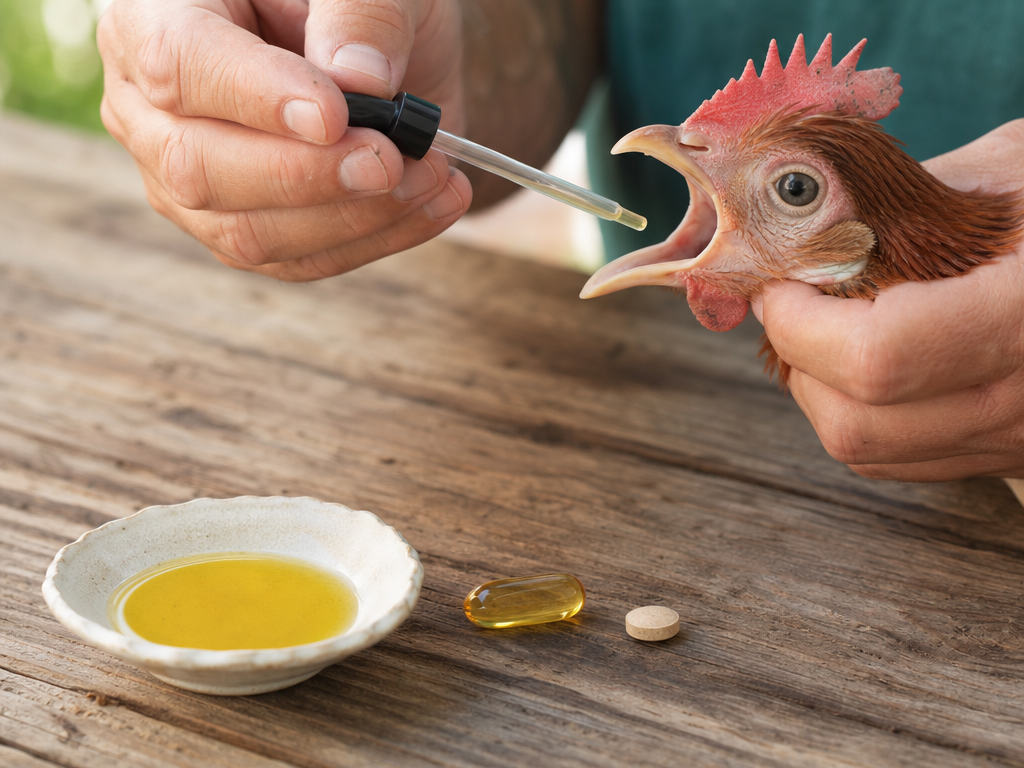
- Method A (dropper): Pierce the capsule with a pin, squeeze the oil into a dropper, administer directly into the beak once daily. Hold the beak closed briefly so the bird swallows.
- Method B (food): Pierce the capsule and squeeze the oil into a small amount of scrambled egg, plain yogurt, or soft mash. Offer as a single-bird feeding so you know it was consumed.
- Duration: Continue for minimum 4–6 weeks, or 2 full weeks past complete resolution of symptoms.
- Selenium: 0.1 mg (100 mcg) per bird per day
- Use: Human selenium supplement tablets (200 mcg). Give half a tablet = 100 mcg = 0.1 mg.
- Crush the half-tablet and mix into the bird's food or soft treat alongside the vitamin E dose.
- Selenium toxicity warning: Do not exceed 0.1 mg/day. Selenium overdose in poultry causes liver damage, feather abnormalities, and neurological toxicity. More is not better.
- Alternative: Use a combined poultry vitamin E + selenium supplement (PoultryNu, Rooster Booster) - follow label dosing.
- Duration: Same as vitamin E - continue for 4–6 weeks.
Expected Timeline
- Days 1–3: No visible change - the nerve myelin is rebuilding, not immediately visible
- Days 3–7: First signs of improvement - the head may be held slightly more upright, rolling episodes may be less severe
- Weeks 1–2: Significant improvement - bird may begin feeding independently
- Weeks 2–6: Full resolution in 80–90% of nutritional cases
- No improvement at 7 days: Reassess - consider non-nutritional cause (Marek's, otitis, trauma), consult a vet
Supportive Care (Essential During Treatment)
- Assisted feeding and drinking: 2–3 times daily. Hold the bird's head in a normal position and guide beak to food and water. Birds with wry neck cannot always find the feeder.
- Padded housing: Line the pen floor and sides with towels or foam to prevent injury from rolling and falling. Remove hard objects.
- Accessible food and water: Place feeders at beak level. Deep waterers cause drowning risk - use shallow dishes or nipple drinkers.
- Isolation (optional): Isolate the bird only if flockmates are pecking at it. Otherwise, some keepers prefer keeping the bird with familiar companions to reduce stress.
- Warmth: Neurologically compromised birds cannot thermoregulate as well. Keep ambient temperature at 65–75°F (18–24°C).
Treating Wry Neck from Trauma
Add vitamin E and selenium supplementation as above - even trauma cases benefit from the neuroprotective effect. Anti-inflammatories (meloxicam 0.5–1 mg/kg, prescription only) may reduce brainstem swelling in the first 48 hours if a vet can be consulted quickly after injury.
What Toxins Cause Wry Neck?
Neurological twisting can follow mycotoxins in moldy grain, botulinum toxin in spoiled organic matter, or exposure to pesticides and other chemicals. Remove suspect feed and isolate access to compost, carcasses, stagnant water, and treated areas. Because Newcastle disease, Marek's disease, injury, and nutritional deficiency can look similar, sudden or flock-wide signs need prompt veterinary testing.
Natural & Integrative Care for Wry Neck (Torticollis)
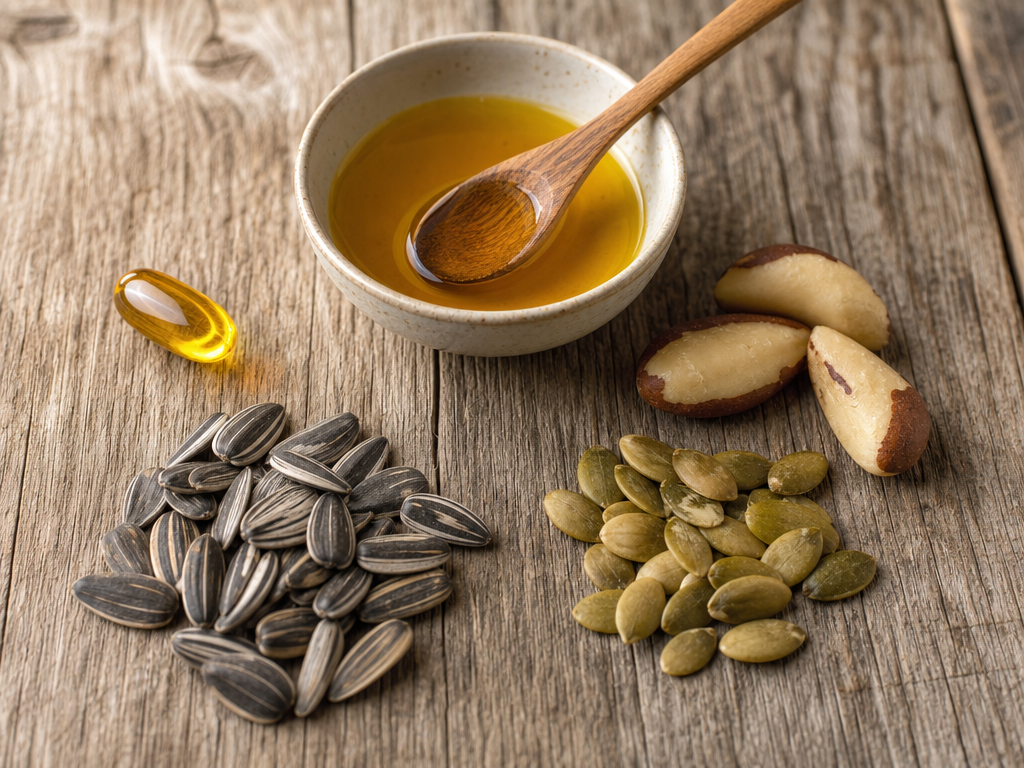
Vitamin E deficiency wry neck responds excellently to a combined approach: 400 IU capsule supplementation for rapid therapeutic dosing, alongside wheat germ oil, sunflower seeds, and Brazil nuts to sustain levels through full recovery. The supplement treats the deficit; the whole foods rebuild the diet that caused it.
Natural care is a legitimate and effective primary treatment for vitamin E deficiency wry neck - the mechanism is straightforward, and several whole food sources deliver therapeutic levels. However, be honest about the limitations: whole foods work more slowly than supplements and cannot deliver the consistent 400 IU/day dosing needed for rapid resolution. Use them as accelerators alongside supplementation, or as a sole approach only for very mild or early cases.
Wheat Germ Oil - Natural Vitamin E
- Wheat germ oil is the richest natural source of alpha-tocopherol (vitamin E)
- Dose: 1 teaspoon (5 mL) per bird per day = approximately 20–25 mg (30–38 IU) vitamin E
- Mix into feed or offer on a piece of bread as a treat. Most birds accept it readily.
- Limitation: This is 10–15x below the therapeutic 400 IU/day needed for active wry neck. Use wheat germ oil as a bridge treatment while sourcing capsule supplements, or as a maintenance supplement during recovery and prevention.
Sunflower Seeds - Supportive Vitamin E
- Plain sunflower seeds (not salted) contain approximately 7.4 mg vitamin E per ounce
- Dose: 1–2 tablespoons per bird per day as a feed supplement
- Easy to administer and universally accepted by chickens. A good daily addition to the diet during recovery and prevention.
Brazil Nuts - Selenium Source
- Brazil nuts are the richest natural selenium source available, containing 70–90 mcg selenium per nut
- Dose: 1 Brazil nut per bird per day - crack or chop for smaller birds
- Selenium toxicity warning applies here too: Do not exceed 1–2 nuts per day. Brazil nut selenium content varies significantly by growing region. One nut per day is safe; more risks toxicity.
Spinach and Dark Leafy Greens
- Spinach, kale, and Swiss chard contain vitamin E alongside antioxidant compounds that support neurological health
- Offer freely as daily greens during the treatment and recovery period
- Not sufficient as a standalone treatment but meaningfully supports the supplementation protocol
Honest Scope of Natural Care
Natural care sources can maintain vitamin E and selenium status, accelerate recovery alongside supplements, and prevent recurrence. They cannot deliver the concentrated 400 IU/day needed to rapidly repair a myelin-damaged nervous system. For a bird that is rolling, cannot eat, and losing weight - use the pharmaceutical supplement capsules. For a bird with mild early head tilt - natural sources combined with whole-food feeding may be sufficient. Do not delay effective treatment to "try natural first" if the bird cannot access food and water independently.
🛡️How Can Wry Neck (Torticollis) Be Prevented?
Most wry neck in backyard flocks is preventable through feed management and routine supplementation.
- Use fresh, high-quality layer feed: Commercial layer pellets provide 15–30 IU vitamin E per kg when fresh. After 3–4 months of storage, vitamin E content drops significantly as it oxidizes. Buy feed in quantities you can use within 6–8 weeks. Store in a sealed, cool, dark container. Old feed is the #1 preventable cause of vitamin E deficiency in backyard flocks.
- Weekly wheat germ oil supplementation for at-risk breeds: Polish and Silkie chickens have vaulted skulls with thinner bone structure - making them physically vulnerable to head injuries that trigger wry neck. Silkies also have neurological quirks related to their crest genetics. Add 1 teaspoon wheat germ oil to their weekly feed as routine maintenance. Other at-risk breeds include Sultan, Houdan, and Crevecoeur.
- Sunflower seeds as a vitamin E maintenance feed: 1 tablespoon of plain sunflower seeds per bird per day as part of the diet (not as "treats" on top of it) provides a meaningful dietary vitamin E baseline without overfeeding fat.
- Selenium in the diet: If your region has selenium-deficient soils (much of the US Pacific Northwest, parts of the Northeast), your locally grown grains will also be selenium-deficient. Use a selenium-fortified poultry feed, or add a Brazil nut per bird per week as a preventive measure.
- Reduce stress: Nutritional demands spike under stress - crowding, coccidiosis outbreaks, predator pressure, extreme temperatures, and abrupt feed changes all accelerate vitamin E and selenium depletion. Managing stress reduces the risk of deficiency tipping into clinical disease.
- Polish and Silkie breed management: Trim crest feathers that obscure vision - birds that cannot see properly are more likely to collide with feeders, fencing, and coop structures. Provide lower roosts to reduce fall distance. Avoid housing these breeds with larger, more aggressive chickens.
- Quarantine new birds: Newcastle Disease is the one infectious cause of wry neck - and it enters through new birds. Quarantine new additions for 30 days before introducing to the flock.
📞When Should I Call a Vet for Wry Neck (Torticollis)?
Call a vet if:
- No visible improvement after 7 full days of vitamin E 400 IU + selenium supplementation - a non-nutritional cause needs to be ruled out
- The bird develops progressive leg weakness or paralysis alongside head twisting - this pattern strongly suggests Marek's disease and requires veterinary confirmation
- More than one bird in the flock develops wry neck, especially alongside coughing, nasal discharge, or rapid mortality - this is a potential Newcastle Disease emergency; do not move birds, contact your state veterinarian immediately
- The bird cannot eat or drink despite 2–3 assisted feedings per day and is losing significant body weight over 48–72 hours
- You observe ear discharge, facial swelling, or a head tilt that is consistently one-directional and does not shift - this suggests otitis interna requiring antibiotic treatment
- The bird sustained visible head trauma (wound, bleeding, loss of consciousness) - a vet can assess for internal injury and prescribe anti-inflammatories
❓Wry Neck (Torticollis): Frequently Asked Questions
What is wry neck in chickens?
Wry neck (torticollis or stargazing) is a neurological condition where a chicken cannot hold its head upright. The neck twists to the side or backward, causing the bird to look upward involuntarily. It is a symptom of an underlying cause, not a disease itself, and most cases respond well to vitamin E and selenium supplementation.
How do you treat wry neck in chickens?
The standard treatment is vitamin E (400 IU daily) and selenium (0.025mg via a human selenium supplement) given together - selenium improves vitamin E absorption. Treatment may take 2-8 weeks to show full improvement. Keep the bird isolated, offer feed and water at accessible heights, and support the head during feeding if needed.
What toxins cause wry neck in chickens?
Mycotoxins in moldy grain are the most common toxic cause of wry neck. Avian encephalomyelitis virus, Newcastle disease, and Marek's disease can also present with wry neck symptoms. Certain pesticide exposures and botulism toxin from spoiled feed can cause similar neurological signs.
What causes wry neck in chickens?
The most common causes are vitamin E and selenium deficiency, genetic predisposition in some bantam breeds, head injury, or neurological disease (Marek's, Newcastle, avian encephalomyelitis). Silkie bantams and Polish crested breeds are genetically prone to wry neck.
How do you fix wry neck in chickens?
Start vitamin E and selenium supplementation immediately - improvement can occur within days for deficiency-related cases. Open a vitamin E capsule directly into the beak once daily. Protect the bird from injury by placing food and water at beak level and providing padded bedding. Most cases resolve within 2-8 weeks of treatment.
How long does wry neck last in chickens?
Recovery time depends on the cause. Vitamin E deficiency-related wry neck typically improves noticeably within 1-2 weeks and resolves fully in 4-8 weeks with daily supplementation. Disease-related wry neck (Marek's, Newcastle) may not fully resolve if the underlying disease has caused permanent nerve damage.
📋Key Points
- ✓Wry neck is a symptom, not a disease.
- ✓Key symptoms: stargazing - head bent backward toward the spine, looking up at the sky, head twisted to one side (torticollis), sometimes pressed against the body, rolling or spinning uncontrollably, especially when startled, walking backward or in tight circles.
- ✓80–90% of wry neck cases caused by vitamin E deficiency resolve fully within 4–6 weeks with consistent supplementation (400 IU/day vitamin E + 0.1 mg/day selenium). Cases caused by head trauma have variable prognosis depending on injury severity, but many recover fully within the same timeframe with supportive care. Wry neck caused by Newcastle Disease or advanced Marek's disease carries a poor prognosis regardless of treatment - recovery is unlikely once the neurological damage is established from these causes.
🔗Related
Related Conditions
Natural Remedies & Supplements
📚Sources & References
- 1.Nervous System Disorders in Poultry. Merck Veterinary Manual. 2024
- 2.Vitamin E and Selenium Deficiency in Poultry. Merck Veterinary Manual. 2024
- 3.Newcastle Disease in Poultry. Merck Veterinary Manual. 2024