Tibial Dyschondroplasia in Chickens: Symptoms, Causes and Treatment
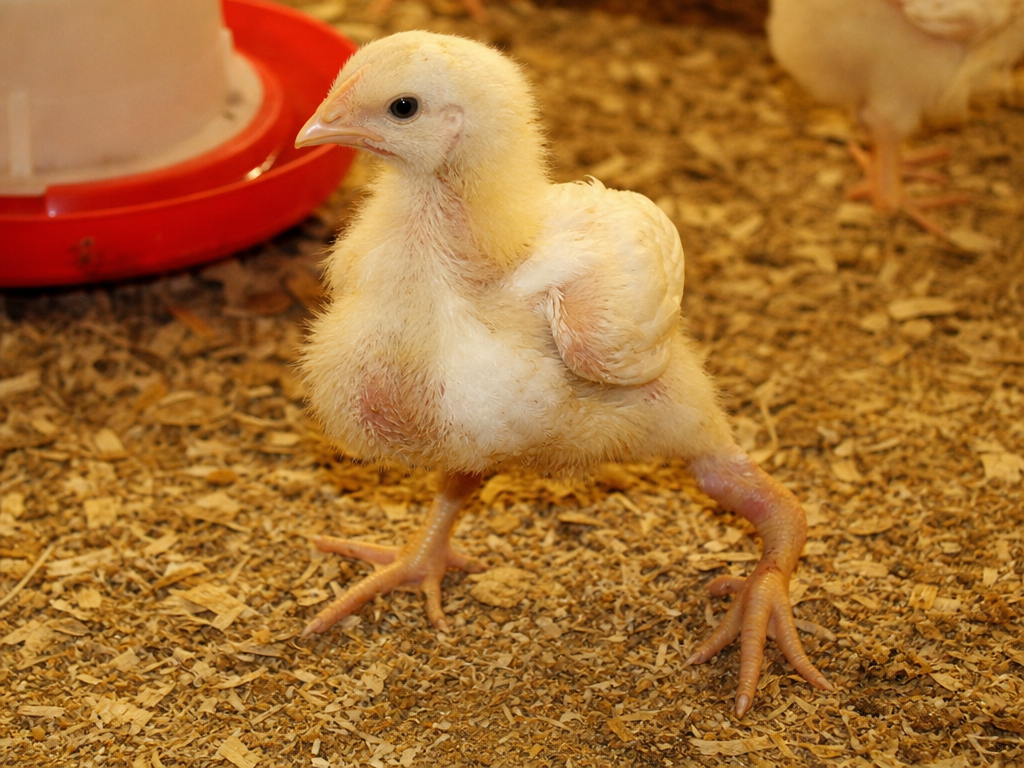
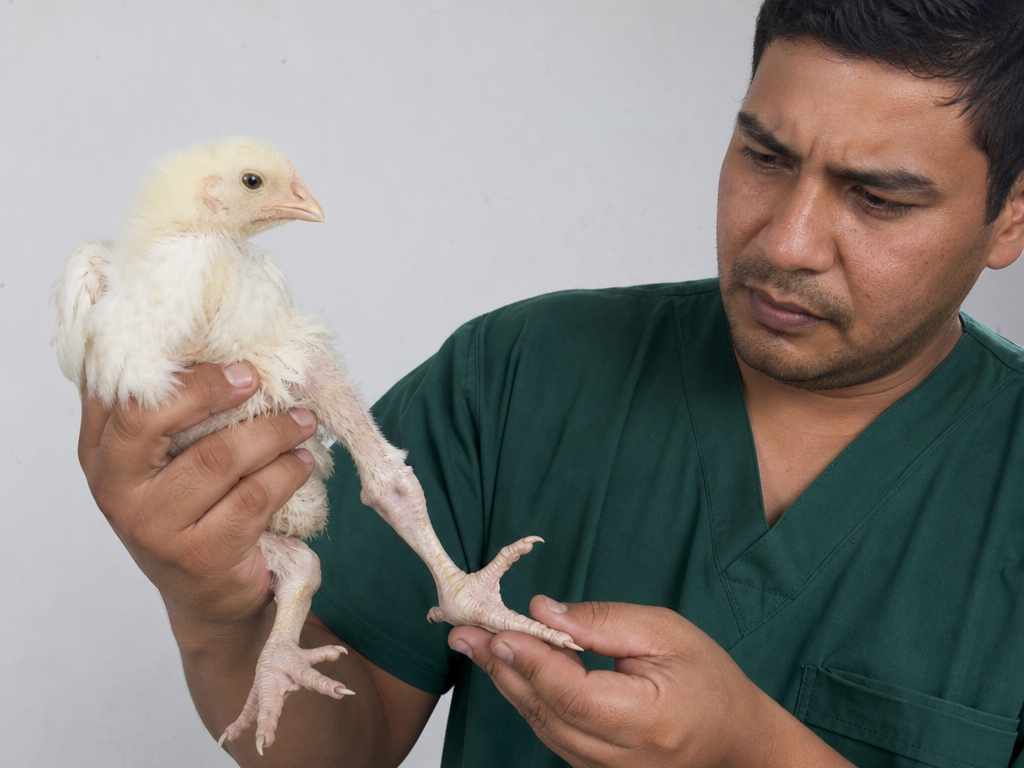
Tibial dyschondroplasia (TD) is a skeletal disorder of young, fast-growing chickens in which abnormal cartilage accumulates in the growth plate of the proximal tibiotarsus, forming a plug of avascular, non-calcifying cartilage that cannot convert to bone. This weakens the leg, causing bowing, twisting, or fracture. It is strongly associated with rapid growth, nutritional imbalances, and certain feed acidifiers.
Veterinarian Reviewed
FlockVet Veterinary Editorial Team· Reviewed August 2026
At a Glance
- Urgency
- Moderate
- Contagious
- No
- Affects Humans
- No
- Key Symptoms
- visible bowing or twisting of the lower leg (tibiotarsus) in birds 2-6 weeks old, lameness ranging from slight to complete inability to walk, stunted growth from reduced feed intake due to pain
- Prognosis
- Poor for birds with established severe TD and fractures. Mild TD cases in broilers destined for market rarely require individual management and do not significantly affect market weight. Prevention through nutrition is far more effective than any flock-level treatment.
📑 On This Pagetap to expand
🔍What Are the Symptoms of Tibial Dyschondroplasia?
- ●Visible bowing or twisting of the lower leg (tibiotarsus) in birds 2-6 weeks old
- ●Lameness ranging from slight to complete inability to walk
- ●Stunted growth from reduced feed intake due to pain
- ●White plug of cartilage visible in the tibial growth plate on necropsy
- ●Birds spending more time sitting than standing
- ●Swelling at the tibiotarsal-metatarsal joint in severe cases
- ●Sudden leg fracture through the weakened growth plate
- ●Primarily affects males in fast-growing broiler breeds
🧬What Causes Tibial Dyschondroplasia in Chickens?
Tibial dyschondroplasia results from failure of the growth plate cartilage to vascularize and mineralize properly, leaving behind a structurally weak plug of avascular fibrocartilage.
- Rapid growth rate: Fast-growing broiler genetics create demand for rapid bone elongation that can outpace normal growth plate maturation. The growth plate is under maximum mechanical stress during peak growth periods.
- Calcium:phosphorus imbalance: The optimal Ca:P ratio for bone development is approximately 2:1. Excess phosphorus relative to calcium, or calcium deficiency, impairs cartilage mineralization and predisposes to TD.
- Vitamin D3 deficiency: Vitamin D3 is essential for intestinal calcium absorption and growth plate cartilage differentiation. Deficiency produces a clinical picture overlapping with TD and rickets.
- Chloride excess from feed acidifiers: High dietary chloride (from ammonium chloride or other acidifiers added to reduce urinary tract infections) acidifies the blood, impairing the alkaline environment needed for bone matrix mineralization. This is the most documented nutritional cause of TD in commercial broilers.
- Mycotoxins: Some Fusarium mycotoxins disrupt growth plate chondrocyte function and have been associated with increased TD incidence.
🔬How Is Tibial Dyschondroplasia Diagnosed?
TD is confirmed by the characteristic gross finding of a white or translucent plug of cartilage in the proximal tibiotarsal growth plate at necropsy.
- Clinical signs: Bowing or twisting of the lower leg in 2-6 week old fast-growing birds. The deformity is progressive and most visible when viewing the bird from behind while standing.
- Necropsy: Section the tibia longitudinally to reveal the growth plate. TD presents as a white, waxy, avascular cartilage plug extending into the metaphysis. Normal growth plate cartilage is thin and pink-vascular.
- Differentials: Rickets (soft, rubbery bones throughout, not just growth plate plug), perosis/slipped tendon (tendon displacement without growth plate lesion), Mycoplasma synoviae arthritis (joint swelling with exudate, no growth plate lesion).
💊How Is Tibial Dyschondroplasia Treated?
Established TD lesions in broilers are generally not treatable at flock level. Management is directed at reducing incidence in future flocks through nutritional correction.
Dietary correction for affected flocks: Adjust calcium to 1.0-1.1% (starter phase), phosphorus to 0.45-0.50% available phosphorus, and verify calcium:phosphorus ratio is 2:1. Supplement vitamin D3 to 2,000-4,000 IU/kg if deficiency is suspected.
Reduce dietary chloride: If ammonium chloride or other chloride-containing acidifiers are in the diet, reduce or eliminate them. Target dietary cation-anion balance (Na + K - Cl, in mEq/kg) of 250-300 mEq/kg.
For individual pet birds: Rest, soft bedding, and nutritional correction are supportive. Surgical intervention is not practical for broiler-class birds but may be considered in valuable breeding birds.
Natural & Integrative Care for Tibial Dyschondroplasia
TD is prevented through balanced calcium, phosphorus, and vitamin D3 nutrition while avoiding excess dietary chloride that impairs growth plate mineralization.
Natural management focuses on optimizing the nutritional environment for bone development.
Oyster shell or limestone access: Ensures adequate calcium intake beyond what is formulated in the base diet. Particularly useful when feed analysis shows calcium below target.
Sun exposure: Natural sunlight triggers vitamin D3 synthesis in skin. For birds with outdoor access, sunlight exposure supports bone health through endogenous D3 production.
🛡️How Can Tibial Dyschondroplasia Be Prevented?
- Formulate starter diets with Ca:P ratio of 2:1 and verify available phosphorus is at target (0.45-0.50%). Have feed tested if TD incidence is elevated in a flock.
- Use vitamin D3 at 2,000-4,000 IU/kg in starter feed. Avoid vitamin D2 (ergocalciferol) as poultry utilize D3 (cholecalciferol) far more efficiently.
- Avoid excessive dietary chloride from acidifiers. Monitor the dietary cation-anion balance and target 250-300 mEq/kg.
- Consider feed restriction programs (skip-a-day or 6-hours-off) in fast-growing broiler breeds during weeks 1-3. Slower growth rate reduces mechanical stress on developing growth plates.
- Test feed for Fusarium mycotoxins (DON, fumonisin) if TD incidence rises despite correct nutrition. Mycotoxin binders may reduce TD rates in mycotoxin-challenged flocks.
📞When Should I Call a Vet for Tibial Dyschondroplasia?
Consult a veterinarian if:
- More than 2-3% of a broiler flock shows leg deformity or lameness at 3-4 weeks. This rate warrants feed testing and nutritional evaluation.
- Leg deformity is appearing in heritage or laying breeds, where TD is unusual. Rule out Mycoplasma synoviae, rickets, or perosis as alternative diagnoses.
❓Tibial Dyschondroplasia: Frequently Asked Questions
What is tibial dyschondroplasia in chickens?
Tibial dyschondroplasia is a growth plate disorder in which abnormal cartilage accumulates in the upper tibia of fast-growing chicks, weakening the leg and causing bowing, twisting, or fracture. It is most common in commercial broiler breeds at 2-6 weeks of age. Nutritional balance (calcium, phosphorus, vitamin D3) and avoiding excess dietary chloride are the primary prevention strategies.
What causes tibial dyschondroplasia in chickens?
Rapid growth rate combined with calcium-phosphorus imbalance, vitamin D3 deficiency, or excess dietary chloride from feed acidifiers are the main causes. Mycotoxins can also disrupt growth plate development. Modern fast-growing broiler breeds are most susceptible because their growth rate outpaces what the growth plate can reliably support.
How is tibial dyschondroplasia diagnosed?
Visually, by bowing or twisting of the lower leg in 2-6 week old fast-growing birds. At necropsy, the tibial growth plate is sectioned to reveal a white, avascular cartilage plug. This distinguishes TD from rickets (soft bones throughout), perosis (tendon slippage), and joint infections (exudate present).
Can tibial dyschondroplasia be treated?
Established TD is generally not treatable at flock level. Nutritional correction (calcium:phosphorus 2:1, adequate vitamin D3, reduced chloride) prevents new cases from developing in the same flock and in future flocks. Mildly affected birds often compensate and reach market weight. Severely lame birds should be humanely euthanized.
What is the difference between tibial dyschondroplasia and rickets?
TD involves a localized plug of avascular cartilage in the tibial growth plate with no systemic bone softening. Rickets involves systemic deficiency of calcium, phosphorus, or vitamin D3, causing soft, rubbery bones throughout the skeleton, bowed legs, and poor shell formation in layers. Both can coexist, and both respond to calcium and vitamin D3 correction.
📋Key Points
- ✓Tibial dyschondroplasia results from failure of the growth plate cartilage to vascularize and mineralize properly, leaving behind a structurally weak plug of avascular fibrocartilage.
- ✓Key symptoms: visible bowing or twisting of the lower leg (tibiotarsus) in birds 2-6 weeks old, lameness ranging from slight to complete inability to walk, stunted growth from reduced feed intake due to pain, white plug of cartilage visible in the tibial growth plate on necropsy.
- ✓Poor for birds with established severe TD and fractures. Mild TD cases in broilers destined for market rarely require individual management and do not significantly affect market weight. Prevention through nutrition is far more effective than any flock-level treatment.
🔗Related
Related Conditions
📚Sources & References
- 1.Tibial Dyschondroplasia in Poultry. Merck Veterinary Manual. 2024
- 2.Tibial Dyschondroplasia in Broilers. PubMed / Poultry Science. 1999
- 3.Bone Disorders in Broiler Chickens. University of Georgia Extension. 2021