Rickets in Chickens in Chickens: Symptoms, Causes and Treatment
Rickets in chickens is a metabolic bone disease caused by deficiency of vitamin D3, calcium, or phosphorus, or an incorrect calcium-to-phosphorus ratio. It primarily affects growing chicks and causes soft, rubbery bones, leg deformities, and poor feathering. Treatment is supplementation with the deficient nutrient, and most birds recover if caught before permanent deformity sets in.
Veterinarian Reviewed
FlockVet Veterinary Editorial Team· Reviewed August 2026
At a Glance
- Urgency
- Moderate
- Contagious
- No
- Affects Humans
- No
- Key Symptoms
- rubbery, soft beak that bends easily (pathognomonic in severe cases), bowed or crooked legs, sitting back on hocks, reluctance to walk, spending most time sitting
- Prognosis
- Prognosis is excellent if treatment begins within the first week of symptoms. Most chicks show improvement in leg strength and appetite within 5-7 days of correct supplementation. Mild leg bowing often straightens with bone growth. Severe deformities in chicks treated after 3+ weeks of deficiency may leave permanent crooked legs or skull deformities that impair quality of life.
📑 On This Pagetap to expand
🔍What Are the Symptoms of Rickets in Chickens?
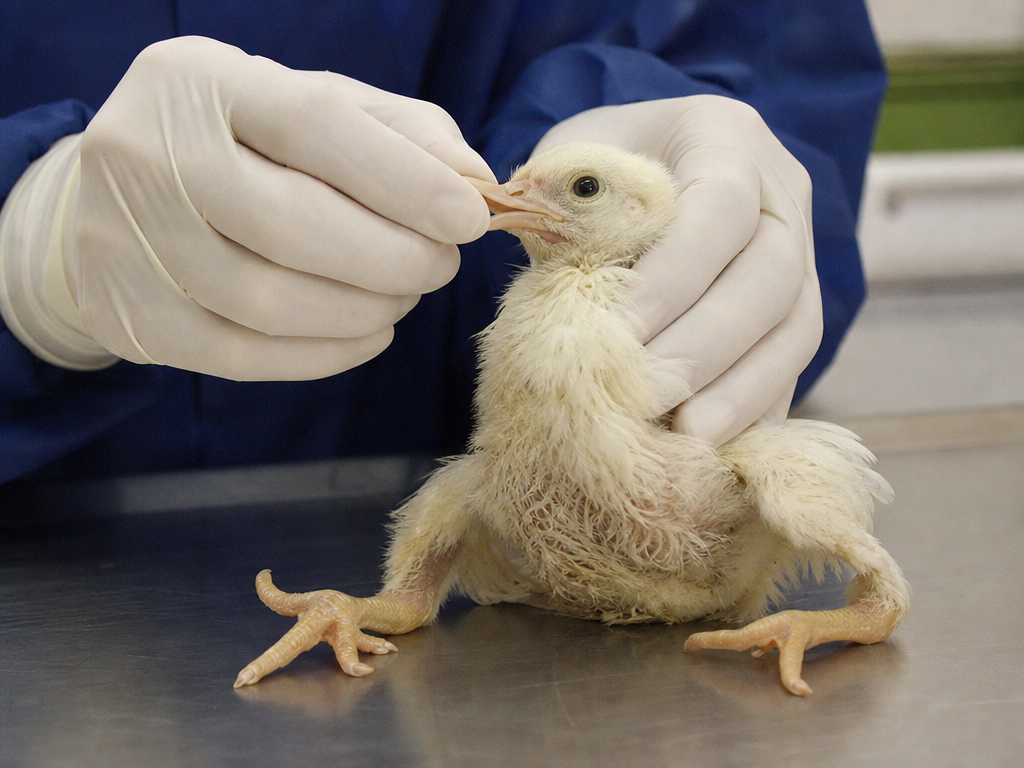
- ●Rubbery, soft beak that bends easily (pathognomonic in severe cases)
- ●Bowed or crooked legs, sitting back on hocks
- ●Reluctance to walk, spending most time sitting
- ●Swollen, painful joints in the legs
- ●Soft or deformed skull bones
- ●Poor feathering and slow growth
- ●Reduced weight gain compared to flockmates
- ●Thin-shelled or shell-less eggs in laying hens
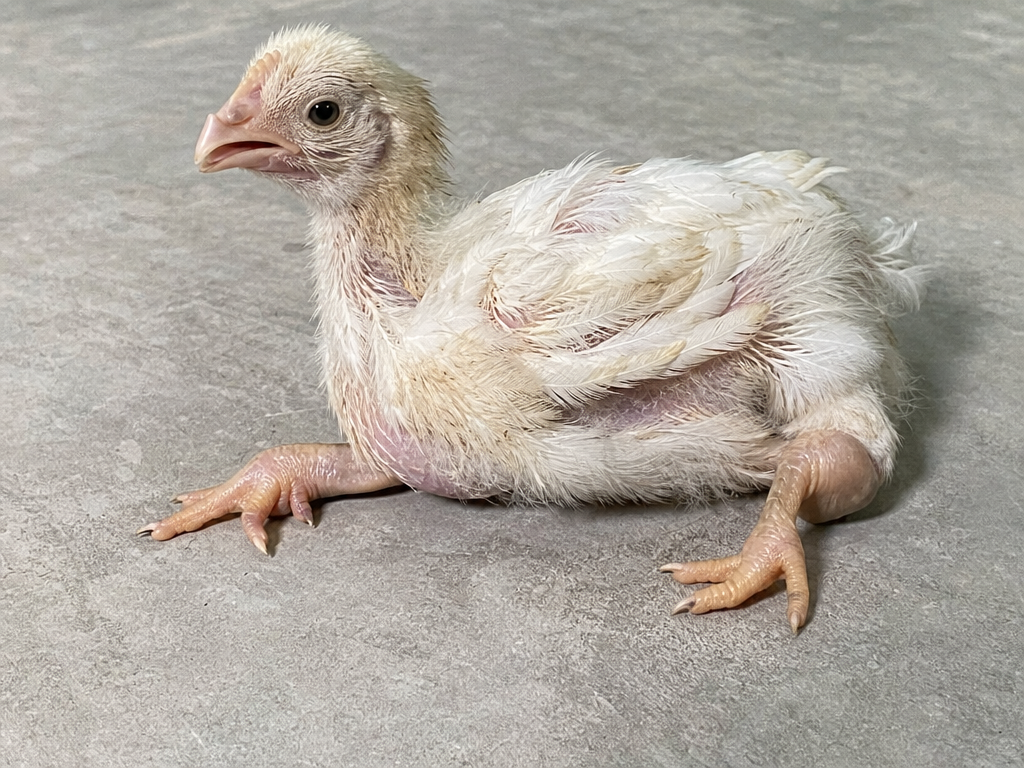
🧬What Causes Rickets in Chickens in Chickens?
Rickets results from failure of bone mineralization due to inadequate calcium, phosphorus, or vitamin D3. In chicks, this is most commonly a feed problem.
- Vitamin D3 deficiency: Vitamin D3 is required to absorb calcium from the gut. Indoor chicks with no access to natural sunlight and fed a vitamin D-deficient diet develop rickets within 2-3 weeks. D2 (plant source) does not substitute adequately for poultry.
- Calcium deficiency: Chick starter feed with inadequate calcium fails to provide enough mineral for rapid bone growth. Supplementing adult layer pellets (high calcium) to chicks also causes rickets by disrupting the Ca:P ratio.
- Phosphorus deficiency or imbalance: The optimal calcium-to-phosphorus ratio for growing chicks is approximately 2:1. Imbalanced ratios impair bone formation even when total intake appears adequate.
- Malabsorption from intestinal disease: Coccidiosis and other intestinal infections can impair vitamin D and calcium absorption even when the diet is correct.
🔬How Is Rickets in Chickens Diagnosed?
Rickets is diagnosed by age, clinical signs, and rapid response to supplementation.
- Age: Rickets almost exclusively affects chicks 1-6 weeks old during rapid bone growth. Adult-onset is rare and suggests another metabolic cause.
- Soft beak test: Gently press the tip of the beak - a rubbery beak that bends easily is nearly pathognomonic for advanced rickets.
- Leg exam: Bowed legs, hock swelling, and inability to stand confirm musculoskeletal involvement.
- Feed review: Check the calcium, phosphorus, and vitamin D3 content of the current feed. Confirm chicks are not being fed layer pellets or calcium-only supplements without phosphorus balance.
- Trial supplementation: Adding vitamin D3 at 2,000 IU per gallon of water with improvement in 5-7 days confirms the diagnosis.
💊How Is Rickets in Chickens Treated?
Correct the deficiency immediately - every day of delay allows further bone deformity to develop.
- Vitamin D3 supplementation: Add a poultry vitamin supplement containing D3 (Rooster Booster, Durvet Vitamins and Electrolytes) to drinking water per label dose. Alternatively, 2,000-5,000 IU D3 per gallon for 7-10 days.
- Feed correction: Switch immediately to a complete chick starter with correct Ca:P ratio (typically 1% Ca, 0.45% available P). Do not supplement with layer pellets or oyster shell until 18 weeks.
- Sunlight exposure: 15-30 minutes of direct (not through glass) sunlight daily allows natural vitamin D3 synthesis through the skin. A safe outdoor run is the simplest long-term prevention.
- Supportive care: Provide food and water at beak height for birds that cannot stand. Soft bedding prevents pressure sores on affected legs.
Natural & Integrative Care for Rickets in Chickens
Natural light is the most effective natural treatment.
- Direct sunlight: 20-30 minutes of direct sunlight daily provides the ultraviolet B radiation needed for vitamin D3 synthesis. This is more reliably effective than dietary supplementation in mild cases.
- Dark leafy greens: Kale, collards, and spinach provide modest amounts of vitamin K2 which supports bone mineralization alongside D3. Do not substitute for a vitamin D3 supplement.
🛡️How Can Rickets in Chickens Be Prevented?
Rickets is almost entirely preventable with correct feeding and light access.
- Feed age-appropriate rations: Chicks need chick starter (0-8 weeks), then grower (8-18 weeks), then layer feed (18+ weeks). Feeding layer pellets to chicks causes excess calcium and disrupts the Ca:P ratio.
- Vitamin D3 in feed: All commercial chick starters contain vitamin D3. Confirm that any homemade or raw-fed diet is supplemented appropriately.
- Outdoor access: Chicks with access to direct sunlight rarely develop rickets regardless of diet, because they can synthesize their own vitamin D3.
📞When Should I Call a Vet for Rickets in Chickens?
Call a vet if a chick cannot stand at all after 5-7 days of supplementation, if the beak is severely deformed (permanently bent), or if the whole brooder flock is affected simultaneously (suggests a commercial feed deficiency that needs reporting). Severely deformed bones may not fully correct even with treatment.
❓Rickets in Chickens: Frequently Asked Questions
What causes rickets in baby chicks?
Rickets in chicks is caused by vitamin D3 deficiency, calcium deficiency, or an incorrect calcium-to-phosphorus ratio in the feed. The most common cause in backyard flocks is feeding layer pellets (high calcium) to young chicks, or raising indoor chicks without sunlight on a diet lacking adequate vitamin D3.
How do you treat rickets in chickens?
Add a vitamin D3 supplement to drinking water immediately (2,000 IU per gallon for 7-10 days) and switch to a properly balanced chick starter feed. Provide access to direct sunlight if possible. Most chicks improve noticeably within 5-7 days. Support weak birds with food and water placed at beak height.
Can rickets be reversed in chickens?
Yes, if caught early. Mild to moderate rickets with rubbery bones and leg weakness reverses fully with proper vitamin D3 and calcium supplementation within 2-4 weeks. Severe deformities (permanently bent beak, grossly deformed leg bones) that develop over 3+ weeks of deficiency may be partially permanent.
Do chickens need vitamin D?
Yes. Vitamin D3 is essential for calcium and phosphorus absorption in the gut. Without it, bone mineralization fails and rickets develops. Chickens synthesize vitamin D3 from direct sunlight exposure to their skin. Indoor birds with no sunlight must receive vitamin D3 in their feed or water supplement.
Can layer feed cause rickets in chicks?
Yes. Layer pellets contain 3-4% calcium, which is correct for laying hens but excessive for growing chicks. High calcium in chicks suppresses phosphorus absorption and disrupts the calcium-to-phosphorus ratio needed for bone formation. Always feed species- and age-appropriate rations: chick starter for birds under 18 weeks.
📋Key Points
- ✓Rickets results from failure of bone mineralization due to inadequate calcium, phosphorus, or vitamin D3.
- ✓Key symptoms: rubbery, soft beak that bends easily (pathognomonic in severe cases), bowed or crooked legs, sitting back on hocks, reluctance to walk, spending most time sitting, swollen, painful joints in the legs.
- ✓Prognosis is excellent if treatment begins within the first week of symptoms. Most chicks show improvement in leg strength and appetite within 5-7 days of correct supplementation. Mild leg bowing often straightens with bone growth. Severe deformities in chicks treated after 3+ weeks of deficiency may leave permanent crooked legs or skull deformities that impair quality of life.
🔗Related
Related Conditions
📚Sources & References
- 1.Nutritional Diseases of Poultry. Merck Veterinary Manual. 2024
- 2.Calcium and Vitamin D Requirements in Poultry. University of Georgia Extension. 2022
- 3.Metabolic and Nutritional Diseases of Poultry. Merck Veterinary Manual. 2024