Limping Chicken (Lameness) in Chickens: Symptoms, Causes and Treatment
Limping in chickens is a symptom with many possible causes including bumblefoot, Marek's disease, gout, injury, and infectious arthritis. Identifying the cause is essential because treatments differ significantly. Single-bird lameness with no other signs usually indicates a local injury or bumblefoot.
Veterinarian Reviewed
FlockVet Veterinary Editorial Team· Reviewed August 2026
At a Glance
- Urgency
- Moderate
- Contagious
- No
- Affects Humans
- No
- Key Symptoms
- favoring one leg, not bearing full weight, reluctance to walk or move around the coop, sitting down more than usual
- Prognosis
- Prognosis depends on cause. Bumblefoot caught at Grade 1-2 resolves with home treatment in 80% of cases. Infectious arthritis responds to antibiotics but may leave permanent joint damage. Marek's disease paralysis is permanent but stable birds can live well with supportive care. Gout is progressive and usually fatal over months to years.
📑 On This Pagetap to expand
🔍What Are the Symptoms of Limping Chicken (Lameness)?
- ●Favoring one leg, not bearing full weight
- ●Reluctance to walk or move around the coop
- ●Sitting down more than usual
- ●Swollen hock or foot joint
- ●Black scab on the bottom of the foot (bumblefoot)
- ●Leg held at an abnormal angle
- ●Both legs affected in severe cases
- ●Loss of balance or falling sideways
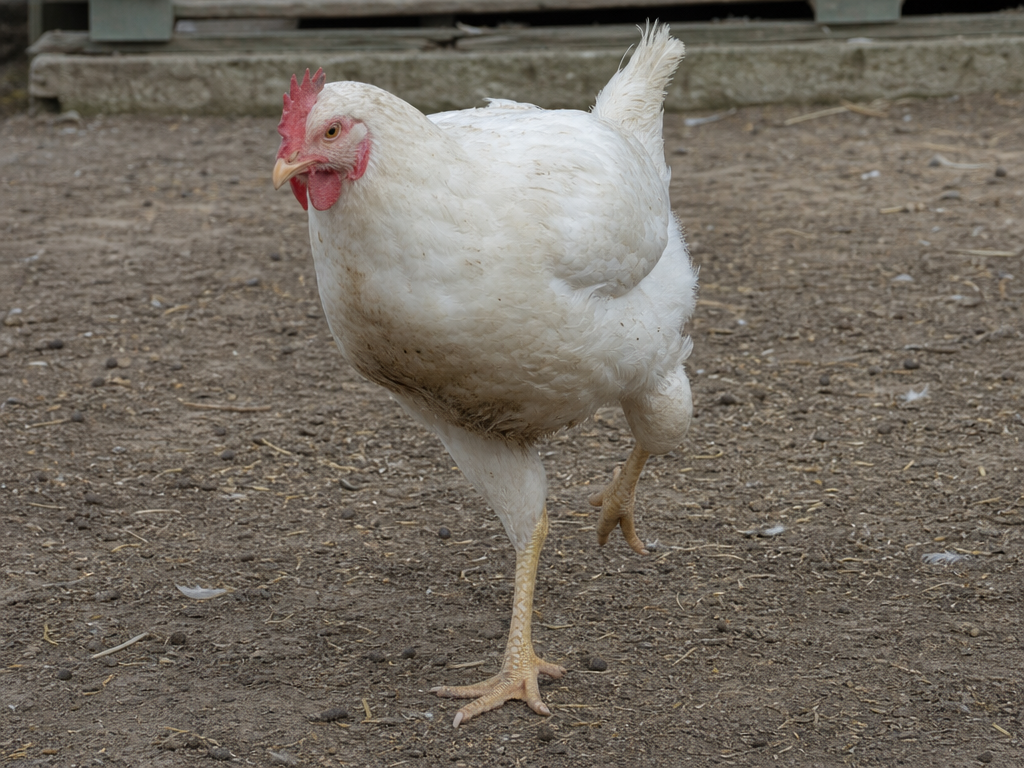
🧬What Causes Limping Chicken (Lameness) in Chickens?
Lameness in chickens has six common causes - the pattern of which leg, which joint, and whether other birds are affected narrows the diagnosis quickly.
- Bumblefoot (plantar pododermatitis): The most common cause in backyard flocks. A bacterial infection (Staph. aureus) of the footpad, starting as a hard black scab and progressing to a painful abscess.
- Marek's Disease: Causes progressive leg paralysis, usually in birds 4-24 weeks old. The classic posture is one leg extended forward and one backward. Both legs eventually fail.
- Injury or trauma: Falls from roosts, predator encounters, getting caught in fencing - all cause sudden-onset single-leg lameness. Check for wounds, swelling, and bruising.
- Infectious arthritis (Staph/Myco synoviae): Hot, swollen hock or stifle joints in one or multiple birds. Mycoplasma synoviae causes a creamy joint fluid; Staphylococcus causes purulent (pus-filled) arthritis.
- Gout (visceral or articular): Uric acid crystal deposition in joints causes painful, chalky swellings around the hock and toe joints. Associated with kidney disease and high-protein diets.
- Nutritional deficiency: Rickets (vitamin D/calcium deficiency) causes soft, deformed bones and rubbery legs in chicks. Biotin deficiency causes dermatitis and lameness in older birds.
🔬How Is Limping Chicken (Lameness) Diagnosed?
A systematic exam takes 2 minutes and identifies most causes without lab work.
- Check the footpad first: Turn the bird over and examine both feet. A black or brown scab = bumblefoot. Chalky white deposits around joints = gout. Clean footpad = look higher up the leg.
- Feel the joints: Run your hand up the leg. Hot, swollen hock or knee joint = infectious arthritis. Cold, firm joint with white deposits = gout.
- Test leg function: Set the bird down and watch it move. One leg forward, one back with progressive weakness = suspect Marek's. Sudden onset with a wound = trauma.
- Age of the bird: Chicks and young birds (under 6 months) - think Marek's, rickets, or perosis. Adults - think bumblefoot, injury, gout, or arthritis.
💊How Is Limping Chicken (Lameness) Treated?
Treatment is cause-specific.
- Bumblefoot: Grade 1-2 (scab only): Soak in Epsom salt solution, apply Vetericyn or iodine, wrap. Grade 3+ (abscess): Surgical debridement under anesthesia or by a vet; antibiotics (amoxicillin or enrofloxacin).
- Infectious arthritis: Tylosin (MG/MS) or enrofloxacin for bacterial arthritis. Long course (7-14 days) often needed. Joint drainage by a vet improves outcomes.
- Gout: No cure. Supportive care - low-protein diet, increased water intake, allopurinol (vet prescription). Address underlying kidney cause if identified.
- Injury: Splint fractures, rest the bird in a small recovery pen, provide food and water at beak level. NSAIDs (meloxicam, vet prescription) for pain.
- Marek's Disease: No treatment. Vaccinate all chicks before exposure. Birds that survive stabilize and may live comfortably with permanent deficits.
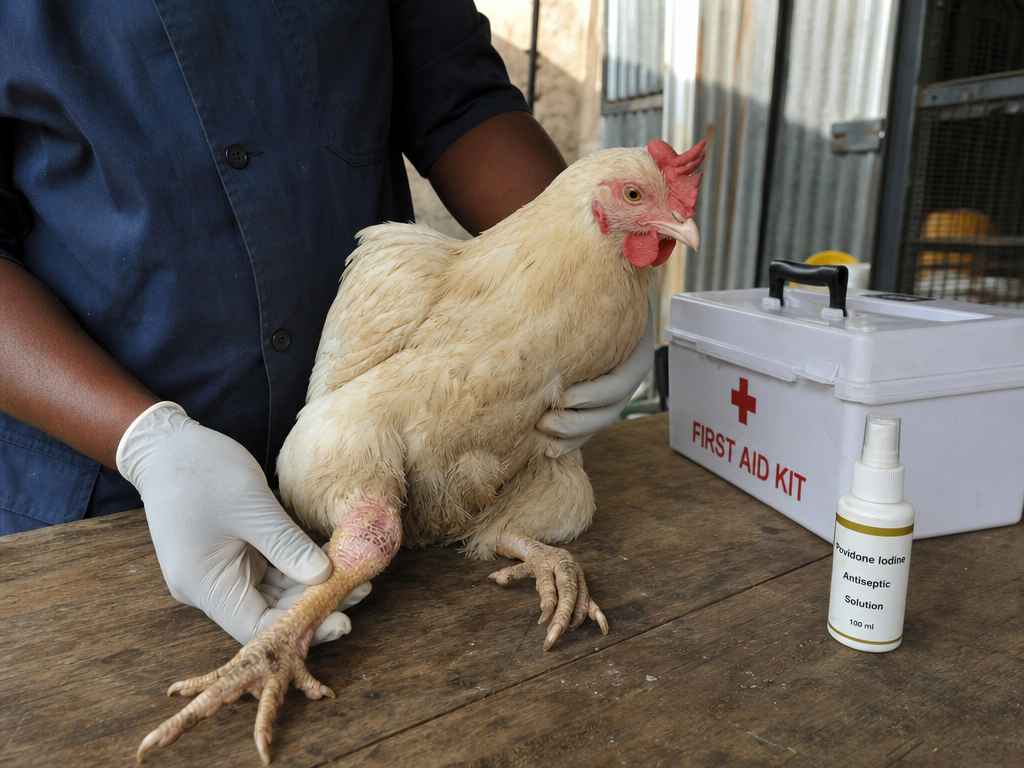
Natural & Integrative Care for Limping Chicken (Lameness)
Natural care is appropriate for mild lameness from minor injuries or early bumblefoot.
- Epsom salt soak: For bumblefoot or swollen joints, soak the foot in warm Epsom salt solution (1 cup per gallon) for 10-15 minutes twice daily. Softens the scab and reduces swelling.
- Rest and separation: Remove the lame bird from the flock to prevent pecking and allow rest. A small recovery pen with soft bedding reduces further injury.
- Anti-inflammatory herbs: Turmeric (1/4 tsp daily mixed into feed) has mild anti-inflammatory properties and may reduce joint pain in mild cases.
🛡️How Can Limping Chicken (Lameness) Be Prevented?
Most lameness is preventable with good flock management.
- Roost height: Keep roosts below 24 inches for heavy breeds to prevent landing injuries. Add a step ramp for large fowl.
- Dry litter: Wet litter causes footpad dermatitis that progresses to bumblefoot. Refresh litter weekly and use a deep litter method on well-drained floors.
- Marek's vaccination: Vaccinate all chicks at hatch - the vaccine does not prevent infection but prevents tumor and paralysis development.
- Biosecurity: Quarantine new birds for 30 days to prevent introducing Mycoplasma synoviae and Staphylococcus arthritis.
📞When Should I Call a Vet for Limping Chicken (Lameness)?
Call a vet if the bird cannot stand at all, the joint is severely hot and swollen, you see an open wound with bone exposure, the lameness progresses despite home treatment, or multiple birds in the flock develop leg problems simultaneously (suggests infectious cause).
❓Limping Chicken (Lameness): Frequently Asked Questions
Why is my chicken limping on one leg?
The most common cause of single-leg limping in backyard chickens is bumblefoot - a bacterial infection of the footpad causing a black scab and painful swelling. Turn the bird over and examine the footpad. Other causes include injury from a fall or predator encounter, a swollen hock joint (infectious arthritis), or gout.
How do you treat a limping chicken at home?
First examine the footpad for a black scab (bumblefoot). If found, soak the foot in warm Epsom salt water daily and apply an antiseptic wrap. Isolate the bird in a recovery pen with food and water at beak height. If the joint is hot and swollen or the bird cannot bear any weight, a vet visit is needed.
Can a chicken recover from Marek's disease lameness?
Birds that develop Marek's paralysis do not recover full neurological function, but many stabilize. Severely paralyzed birds that cannot reach food and water need assisted feeding or humane euthanasia. Birds with partial deficits can live comfortably for months to years with supportive care and low-stress housing.
What is bumblefoot in chickens?
Bumblefoot is a bacterial infection of the chicken's footpad caused by Staphylococcus aureus entering through a small cut or abrasion. It presents as a hard black or brown scab on the sole of the foot, often with underlying swelling. Early cases respond to soaking and topical treatment; advanced cases need surgery.
Can chickens live with a broken leg?
Yes, with proper care. A chicken with a clean fracture can be splinted and recover fully if the break is below the hock and not compound. Keep the bird in a small recovery pen to limit movement. Most fractures in chickens heal within 3-4 weeks with splinting. Open or comminuted fractures above the hock have a poor prognosis.
📋Key Points
- ✓Lameness in chickens has six common causes - the pattern of which leg, which joint, and whether other birds are affected narrows the diagnosis quickly.
- ✓Key symptoms: favoring one leg, not bearing full weight, reluctance to walk or move around the coop, sitting down more than usual, swollen hock or foot joint.
- ✓Prognosis depends on cause. Bumblefoot caught at Grade 1-2 resolves with home treatment in 80% of cases. Infectious arthritis responds to antibiotics but may leave permanent joint damage. Marek's disease paralysis is permanent but stable birds can live well with supportive care. Gout is progressive and usually fatal over months to years.
🔗Related
Related Conditions
📚Sources & References
- 1.Lameness in Backyard Poultry. Merck Veterinary Manual. 2024
- 2.Musculoskeletal Disorders in Poultry. Merck Veterinary Manual. 2024
- 3.Bumblefoot Management in Backyard Poultry. University of Georgia Extension. 2022