Swollen Eye in Chickens: Causes and Treatment
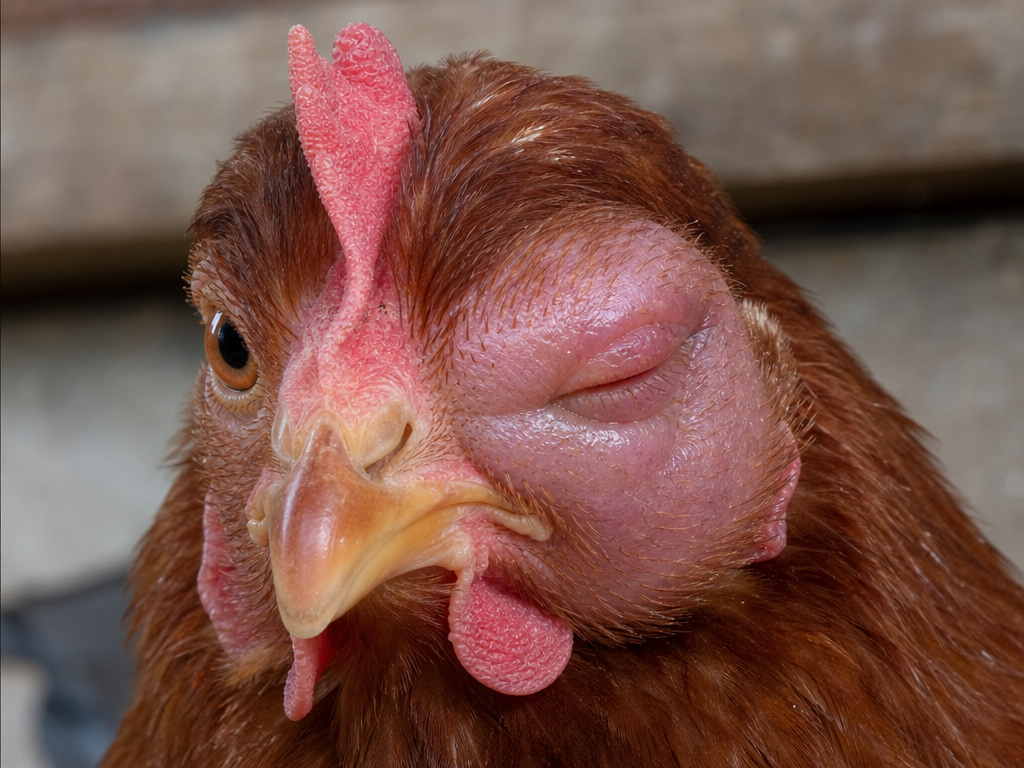
A swollen eye in a chicken can result from Mycoplasma gallisepticum (MG), Chronic Respiratory Disease (CRD), a peck injury, Infectious Coryza, vitamin A deficiency, or sinus infection. The pattern of involvement (one eye vs. both, with or without respiratory signs, degree of pus) guides the diagnosis. Most causes respond well to treatment if started within the first few days of signs.
Veterinarian Reviewed
FlockVet Editorial Team· Reviewed August 2026
At a Glance
- Urgency
- Moderate
- Contagious
- Yes
- Affects Humans
- No
- Key Symptoms
- one or both eyelids swollen and partially or fully closed, foamy or bubbly discharge in the eye corner (mycoplasma), thick yellow or white pus in the eye or under the eyelid
- Prognosis
- Good for ammonia irritation (resolves in days), peck injury (heals in 1-2 weeks), and vitamin A deficiency (responds within 2 weeks of supplementation). Guarded for Mycoplasma (controlled but not cured). Good for Infectious Coryza with prompt antibiotic treatment.
📑 On This Pagetap to expand
🔍What Are the Symptoms of Swollen Eye in Chickens?
- ●One or both eyelids swollen and partially or fully closed
- ●Foamy or bubbly discharge in the eye corner (Mycoplasma)
- ●Thick yellow or white pus in the eye or under the eyelid
- ●Facial swelling extending below the eye (sinus involvement)
- ●Nasal discharge alongside eye swelling (CRD, Infectious Coryza)
- ●Sneezing or rattling breathing with eye signs
- ●Crusty eyelids sealed shut in the morning
- ●Bird pawing at the affected eye or rubbing the head
- ●Visible wound or blood near the eye (peck injury)
- ●Multiple birds with eye signs and respiratory symptoms (flock-wide infectious cause)
🧬What Causes Swollen Eye in Chickens in Chickens?
Swollen eyes in chickens have distinct causes with different treatments, so identifying the correct cause before treating is essential.
- Mycoplasma gallisepticum (MG): The most common infectious cause. MG produces characteristic foamy or bubbly discharge in the eye corners with gradual swelling. Usually accompanied by rattling, nasal discharge, and slow flock spread. Birds remain carriers for life.
- Infectious Coryza (Avibacterium paragallinarum): Causes rapid-onset facial swelling, foul-smelling nasal discharge, and conjunctivitis. Distinctive feature is the strong, sour odor from nasal discharge. Spreads through the flock within 24-48 hours.
- Chronic Respiratory Disease (CRD): A combined MG and E. coli infection. Produces more severe respiratory signs and eye involvement than MG alone. More common in stressed or overcrowded flocks.
- Peck injury: Chickens peck at shiny objects and will target eyes of flock mates. A wounded eye will swell within hours and may develop secondary infection. Look for puncture marks, blood, or corneal opacity to identify trauma.
- Vitamin A deficiency: Chronic vitamin A deficiency causes caseous (cheesy) white deposits under the eyelid and corneal damage. Both eyes are affected gradually over weeks. No respiratory involvement. Most common in flocks fed mostly scratch grain or corn with no greens.
- Sinusitis (infraorbital sinus infection): The infraorbital sinus sits directly below the eye. When infected (most commonly by MG or Aspergillus), it causes firm to fluctuant swelling below and around the eye with or without discharge.
- Ammonia irritation: High ammonia levels in poorly ventilated coops cause bilateral conjunctivitis, watery eyes, and eyelid swelling without infectious pathogens. Improves rapidly when ventilation is corrected.
🔬How Is Swollen Eye in Chickens Diagnosed?
Use these distinguishing features to identify the cause:
- Foamy eye + rattling + slow flock spread: Mycoplasma gallisepticum. The most common combination in backyard flocks.
- Facial swelling + foul odor + rapid spread: Infectious Coryza. The odor is the clinically distinctive feature.
- Single eye, wound present, no respiratory signs: Peck injury. Separate the bird and examine for puncture wounds.
- Both eyes, cheesy deposits, no respiratory signs: Vitamin A deficiency. Check the diet for sources of vitamin A (leafy greens, beta-carotene).
- Bilateral watery eyes, no pus, improves with ventilation: Ammonia irritation. Measure coop ammonia levels (under 10 ppm is safe).
- Firm swelling below the eye, fever: Sinusitis. May require sinus flushing or aspiration under veterinary care.
💊How Is Swollen Eye in Chickens Treated?
Mycoplasma / CRD: Tylosin (Tylan Soluble, 1 tsp per gallon of water for 5-7 days) or doxycycline (25 mg/kg orally twice daily for 7-10 days under veterinary prescription) are first-line treatments. Control but do not eliminate the organism.
Infectious Coryza: Sulfadimethoxine (SDM) in water for 5-7 days per label directions, or erythromycin in water. All in-contact birds should be treated to prevent carrier spread.
Peck injury: Clean the wound with saline, apply veterinary ophthalmic antibiotic ointment (terramycin eye ointment applied 2-3x daily), and separate the bird until healed. Keep the wound clean and watch for corneal ulceration.
Vitamin A deficiency: Administer vitamin A supplement (5,000-10,000 IU daily for 7 days) via water or directly into the beak. Feed fresh leafy greens and a complete ration. Cheesy deposits under the eyelid may require manual removal with cotton swabs under gentle restraint.
Sinusitis: Antibiotic treatment plus, in refractory cases, sinus flushing by a veterinarian using a saline wash through the nostril or a needle aspiration of accumulated caseous material.
Natural & Integrative Care for Swollen Eye in Chickens
Identify whether the cause is infectious, traumatic, nutritional, or environmental before treating. Saline flushing and improved ventilation help all causes. Specific antibiotics or nutrients target the underlying issue.
Natural approaches are most effective for mild MG swelling and ammonia irritation, and as supportive care for infectious causes alongside antibiotics.
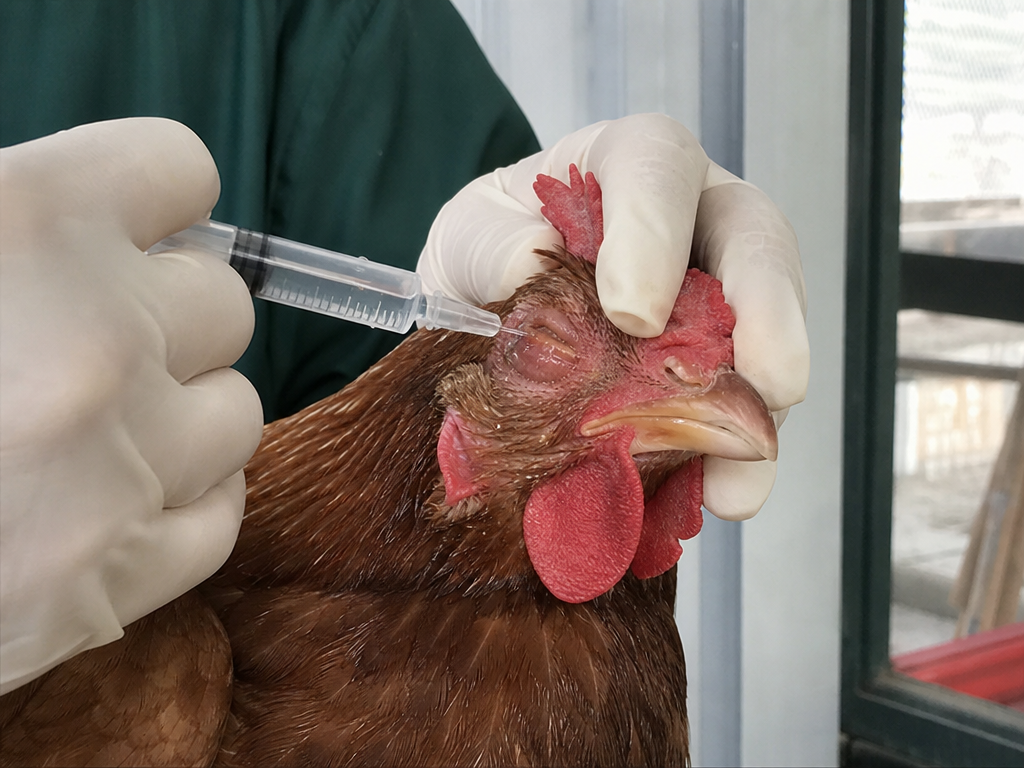
Saline eye wash: Flush the affected eye with sterile saline (0.9% NaCl) twice daily using a dropper. This removes discharge, reduces bacterial load, and soothes inflamed tissue.
Chamomile tea compress: Brew chamomile tea, cool completely, and apply as a warm compress over the closed eye for 5 minutes twice daily. Chamomile has mild anti-inflammatory and antimicrobial properties.
Oregano oil in water (2-3 drops per gallon): Provides broad-spectrum antimicrobial support, particularly against Mycoplasma. Use daily during active eye infection as a water additive for the whole flock.
Ventilation improvement: If ammonia irritation is suspected, open coop vents, clean and replace wet litter immediately, and check ammonia levels with a test strip. Many bilateral eye cases resolve completely within 48-72 hours of ammonia reduction.
Vitamin A-rich foods: Offer dark leafy greens (kale, spinach), sweet potato, and carrot as daily treats if vitamin A deficiency is suspected. These provide beta-carotene that chickens convert to vitamin A.
🛡️How Can Swollen Eye in Chickens Be Prevented?
- Maintain coop ammonia under 10 ppm with adequate ventilation and regular litter turnover. Ammonia is the most preventable cause of eye irritation in backyard flocks.
- Quarantine new birds 30 days. Mycoplasma and Infectious Coryza are both introduced almost exclusively by new birds joining an existing flock.
- Feed a complete layer pellet or ration that includes vitamin A. Supplement with fresh leafy greens 3-4x weekly to prevent vitamin A deficiency in flocks with limited outdoor access.
- Address pecking behavior immediately by identifying and isolating the aggressor. Providing adequate space (4+ sq ft per bird indoors) and environmental enrichment reduces peck-related eye injuries.
- Vaccinate for Infectious Bronchitis and Newcastle, which weaken mucosal immunity and predispose birds to secondary MG and CRD infections.
📞When Should I Call a Vet for Swollen Eye in Chickens?
Contact a veterinarian if:
- Eye swelling is severe, the eye is completely sealed shut, or the eyeball appears damaged (cloudiness, rupture). Corneal damage can lead to permanent blindness without prompt treatment.
- Multiple birds develop eye swelling within 24-48 hours with an unpleasant nasal odor. This pattern suggests Infectious Coryza, which spreads rapidly and requires specific antibiotic selection.
- Swelling does not improve after 3-4 days of appropriate treatment. Sinusitis may require flushing or aspiration that cannot be performed at home.
❓Swollen Eye in Chickens: Frequently Asked Questions
What causes a swollen eye in chickens?
The most common causes are Mycoplasma gallisepticum (MG), Infectious Coryza, CRD, peck injuries, vitamin A deficiency, sinus infection, and ammonia irritation from poor coop ventilation. Foamy discharge with rattling suggests MG. Foul-smelling swelling with rapid flock spread suggests Coryza.
How do I treat a swollen eye in my chicken?
Start by flushing the eye with sterile saline and identifying the cause. For MG or CRD, treat with Tylan in water for 5-7 days. For peck injuries, apply terramycin eye ointment and separate the bird. For vitamin A deficiency, add vitamin A supplements and leafy greens.
Is a swollen eye in a chicken contagious?
It depends on the cause. Mycoplasma, Infectious Coryza, and CRD are all contagious and can spread to the whole flock through direct contact, shared water, and respiratory secretions. Peck injuries, vitamin A deficiency, and ammonia irritation are not contagious.
Can I use Terramycin eye ointment on chickens?
Yes. Terramycin (oxytetracycline and polymyxin B ophthalmic ointment) is commonly used in chickens for bacterial eye infections and peck injuries. Apply a small amount inside the lower eyelid 2-3 times daily. It is available over the counter at farm supply stores.
What does vitamin A deficiency look like in chickens' eyes?
Vitamin A deficiency causes white, caseous (cheesy) deposits to accumulate under the eyelid, leading to gradual swelling of both eyes. Unlike infectious causes, there is no nasal discharge or respiratory involvement. Diet correction and supplementation resolve the condition within 2-3 weeks.
How do I tell if my chicken has Mycoplasma eye infection?
Mycoplasma eye infections are characterized by foamy or bubbly discharge in the inner corner of the eye (not thick pus), slow spread through the flock over days to weeks, and accompanying respiratory rattling or nasal discharge. The foam is the distinctive clinical marker separating MG from other causes.
📋Key Points
- ✓Swollen eyes in chickens have distinct causes with different treatments, so identifying the correct cause before treating is essential.
- ✓Key symptoms: one or both eyelids swollen and partially or fully closed, foamy or bubbly discharge in the eye corner (mycoplasma), thick yellow or white pus in the eye or under the eyelid, facial swelling extending below the eye (sinus involvement).
- ✓Good for ammonia irritation (resolves in days), peck injury (heals in 1-2 weeks), and vitamin A deficiency (responds within 2 weeks of supplementation). Guarded for Mycoplasma (controlled but not cured). Good for Infectious Coryza with prompt antibiotic treatment.
- ✓This condition is contagious, isolate affected birds promptly.
🔗Related
Related Conditions