Avian Spirochetosis in Chickens: Symptoms, Causes and Treatment
Avian spirochetosis is caused by Borrelia anserina and transmitted by soft-bodied Argas persicus ticks (fowl tick). It causes fever, depression, diarrhea, and paralysis with high mortality in untreated flocks. It is most common in tropical and subtropical regions including the southern United States. Treatment with penicillin is highly effective if started early. Tick control is the primary prevention strategy.
Veterinarian Reviewed
FlockVet Veterinary Editorial Team· Reviewed August 2026
This is a veterinary emergency.
If your bird is showing these signs, contact a veterinarian immediately. Do not wait. Time-sensitive conditions can deteriorate rapidly without professional intervention.
At a Glance
- Urgency
- Emergency
- Contagious
- No
- Affects Humans
- No
- Key Symptoms
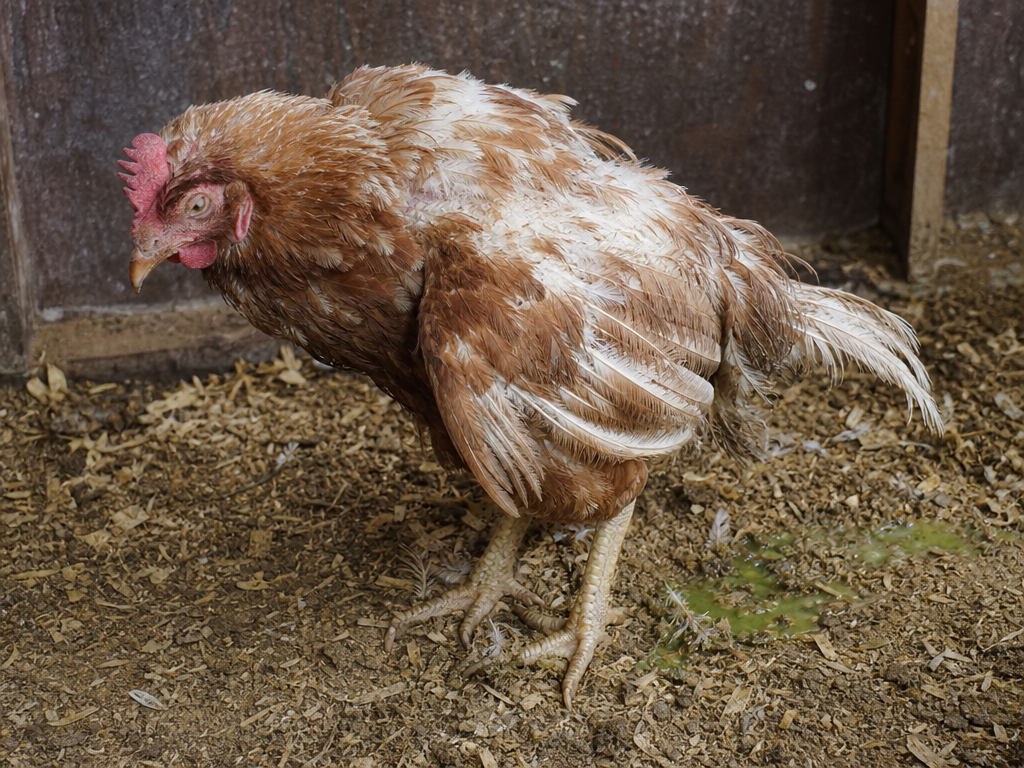
- sudden onset of fever, lethargy, and green to yellow diarrhea, progressive weakness leading to paralysis of legs and wings, pale comb and mucous membranes from anemia
- Prognosis
- Excellent with early penicillin treatment. Poor if treatment is delayed until paralysis is established. Flock mortality in untreated outbreaks can reach 100%.
📑 On This Pagetap to expand
🔍What Are the Symptoms of Avian Spirochetosis?
- ●Sudden onset of fever, lethargy, and green to yellow diarrhea
- ●Progressive weakness leading to paralysis of legs and wings
- ●Pale comb and mucous membranes from anemia
- ●Trembling, loss of balance, and inability to stand
- ●Rapid weight loss and dehydration
- ●Mortality of 20-100% in untreated naive flocks
- ●Death within 2-5 days of first signs in acute cases
🧬What Causes Avian Spirochetosis in Chickens?
Borrelia anserina is a spirochete bacterium transmitted exclusively by Argas persicus (the fowl tick), a soft-bodied tick that feeds at night and hides in crevices during the day.
- Tick vector: Argas persicus ticks are the sole transmission route. The tick feeds on an infected bird, acquires the spirochete, and transmits it to the next bird it feeds on. The spirochete does not spread directly between birds.
- Geographic distribution: Most common in tropical, subtropical, and semi-arid regions. In the US, primarily found in the southwestern states, Gulf Coast, and Hawaii. Uncommon in northern or cold-climate regions.
- Tick biology: Argas persicus is a soft tick that hides in cracks, crevices, and litter during the day and feeds on roosting birds at night. Ticks survive for years without a blood meal, maintaining infection in a coop long after birds are removed.
🔬How Is Avian Spirochetosis Diagnosed?
Avian spirochetosis is diagnosed by detecting Borrelia anserina spirochetes in the blood of a febrile, acutely ill bird. The diagnosis should be confirmed before initiating penicillin treatment, as blood smear results are rapid and readily available.
- Blood smear (primary test): A thin blood smear from a febrile bird, stained with Giemsa or Wright's stain, reveals helical spirochetes among red blood cells during the acute bacteremic phase. Spirochetemia is typically detectable within 24-48 hours of onset of clinical signs and before mortality begins. Sample at least 3 birds to increase detection probability.
- Dark-field microscopy: A drop of fresh blood examined under dark-field illumination shows the characteristic corkscrew motility of B. anserina spirochetes in real time. Results in minutes without staining.
- Tick identification: Finding Argas persicus ticks in the coop confirms the vector and supports the diagnosis. Inspect after dark with a flashlight: ticks feed at night on roosting birds and retreat to crevices at dawn. Flat, oval, brownish-gray, 5-10mm unfed ticks in wall cracks adjacent to roost bars are characteristic.
- Differentials: Fowl cholera (bipolar-staining rods on smear, no spirochetes, swollen wattles); Newcastle disease (neurological signs without fever pattern); heat stress (no systemic bacteremia).
💊How Is Avian Spirochetosis Treated?
Penicillin is highly effective against B. anserina if administered before paralysis becomes severe. Begin treatment as soon as spirochetemia is confirmed on blood smear rather than waiting for laboratory culture.
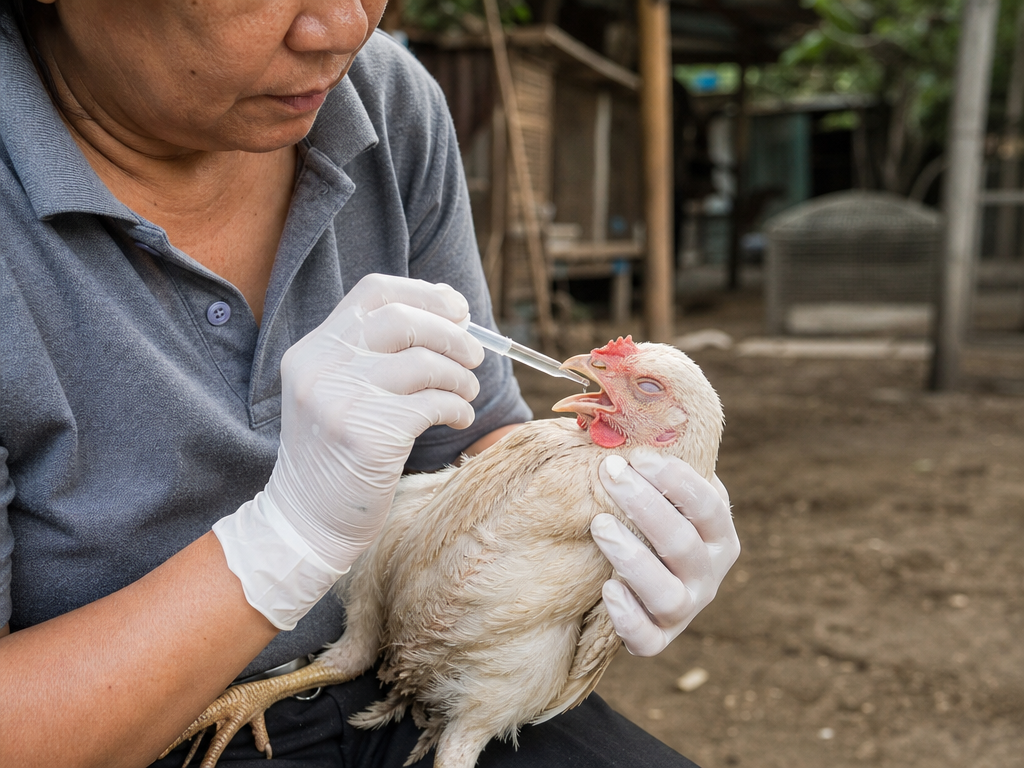
Procaine penicillin G (drug of choice): 100,000 IU/kg body weight IM once daily for 2-3 consecutive days. In a 2 kg hen, this is approximately 0.6 ml of procaine penicillin G (300,000 IU/ml) injected into the breast muscle. Most birds show dramatic improvement within 24-48 hours and recover fully within 72 hours if treated before paralysis is established. Birds that have been paralyzed for more than 24 hours have a much poorer prognosis.
Oxytetracycline (flock-wide treatment): When IM injection of every bird is not practical, oxytetracycline at 10 mg/kg/day in drinking water for 5-7 days provides reasonable flock coverage. Less effective than penicillin for individual birds but achieves therapeutic blood levels through the water line simultaneously across the entire flock. Ensure the only water source contains the medicated water.
Supportive care: Provide electrolyte solution (Sav-A-Chick or equivalent) in water during treatment to support hydration in birds with diarrhea. Move paralyzed birds to a separate pen with food and water within easy reach to prevent death from starvation or dehydration while they recover motor function.
Concurrent tick elimination (essential): Antibiotic treatment stops the current outbreak but does not prevent reinfection from Argas ticks still in the coop. Apply permethrin-based acaricide spray thoroughly to all crevices, roost boards, floor joints, and wall cracks. Repeat every 7 days for 3 weeks to kill newly hatching larvae. Replace heavily infested wooden roost bars with new material, as ticks embedded deep in wood grain survive surface spraying.
Natural & Integrative Care for Avian Spirochetosis
Penicillin is highly effective for spirochetosis if given early; eliminating Argas tick vectors from the coop is essential for long-term flock protection.
Diatomaceous earth applied to coop crevices and litter provides mild tick control. For confirmed spirochetosis, do not delay penicillin treatment in favor of natural approaches; the disease progresses to fatal paralysis rapidly.
🛡️How Can Avian Spirochetosis Be Prevented?
- Inspect coops for Argas ticks during warm months, especially in endemic regions. Check roost boards and wall crevices after dark with a flashlight when ticks are feeding.
- Apply permethrin-based acaricide to all coop surfaces, focusing on crevices where Argas ticks hide. Repeat monthly during tick season.
- Seal cracks and crevices in wooden structures where ticks overwinter. Replace heavily infested wood rather than treating in place.
- Quarantine new birds from endemic areas. Argas ticks may be transported on birds from tick-endemic regions.
📞When Should I Call a Vet for Avian Spirochetosis?
Contact a veterinarian if multiple birds develop sudden fever, diarrhea, and progressive weakness in a tick-endemic area. Blood smear examination is rapid and confirmatory. Begin penicillin treatment immediately while awaiting confirmation.
❓Avian Spirochetosis: Frequently Asked Questions
What is avian spirochetosis in chickens?
Avian spirochetosis is caused by the spirochete Borrelia anserina, transmitted by Argas persicus soft ticks. It causes fever, diarrhea, and paralysis with high mortality in untreated naive flocks. It is most common in subtropical and tropical regions. Penicillin treatment is highly effective if started before paralysis develops.
How does spirochetosis spread between chickens?
It does not spread directly between birds. Transmission requires the Argas persicus tick vector: a tick feeds on an infected bird, acquires Borrelia anserina, and transmits it to the next bird it feeds on. Eliminating the tick from the coop eliminates the disease.
How do you treat spirochetosis in chickens?
Procaine penicillin G at 100,000 IU/kg IM once daily for 2-3 days is highly effective. Most birds treated before paralysis recover fully within 48-72 hours. Oxytetracycline in water is used for flock-wide treatment. Tick control must accompany antibiotic treatment to prevent reinfection.
What ticks carry avian spirochetosis?
Argas persicus (fowl tick) is the primary vector. It is a soft tick that hides in coop crevices during the day and feeds on roosting birds at night. It survives for years without feeding and can maintain Borrelia anserina infection in a coop long after infected birds are removed.
Where is avian spirochetosis most common?
Most common in tropical, subtropical, and semi-arid regions globally. In the United States, it occurs primarily in the southwestern states, Gulf Coast, and Hawaii where Argas persicus ticks are established. Uncommon in northern regions with cold winters that limit tick populations.
📋Key Points
- ✓Borrelia anserina is a spirochete bacterium transmitted exclusively by Argas persicus (the fowl tick), a soft-bodied tick that feeds at night and hides in crevices during the day.
- ✓Key symptoms: sudden onset of fever, lethargy, and green to yellow diarrhea, progressive weakness leading to paralysis of legs and wings, pale comb and mucous membranes from anemia, trembling, loss of balance, and inability to stand.
- ✓Excellent with early penicillin treatment. Poor if treatment is delayed until paralysis is established. Flock mortality in untreated outbreaks can reach 100%.
🔗Related
Related Conditions
📚Sources & References
- 1.Spirochetosis in Poultry. Merck Veterinary Manual. 2024
- 2.Borrelia anserina and Avian Spirochetosis. PubMed / Avian Diseases. 1985
- 3.Tick-Borne Diseases in Poultry. University of Georgia Extension. 2021