Erysipelas in Chickens: Symptoms, Causes and Treatment
Erysipelas is a bacterial disease of poultry caused by Erysipelothrix rhusiopathiae, a Gram-positive rod that affects turkeys most severely but also causes outbreaks in chickens. It presents as sudden death in apparently healthy birds, with comb and skin discoloration, septicemia, and cardiovascular involvement. It is zoonotic, causing erysipeloid skin infections in humans who handle infected carcasses. Penicillin is the treatment of choice.
Veterinarian Reviewed
FlockVet Editorial Team· Reviewed August 2026
This is a veterinary emergency.
If your bird is showing these signs, contact a veterinarian immediately. Do not wait. Time-sensitive conditions can deteriorate rapidly without professional intervention.
At a Glance
- Urgency
- Emergency
- Contagious
- Yes
- Affects Humans
- Yes, zoonotic
- Key Symptoms
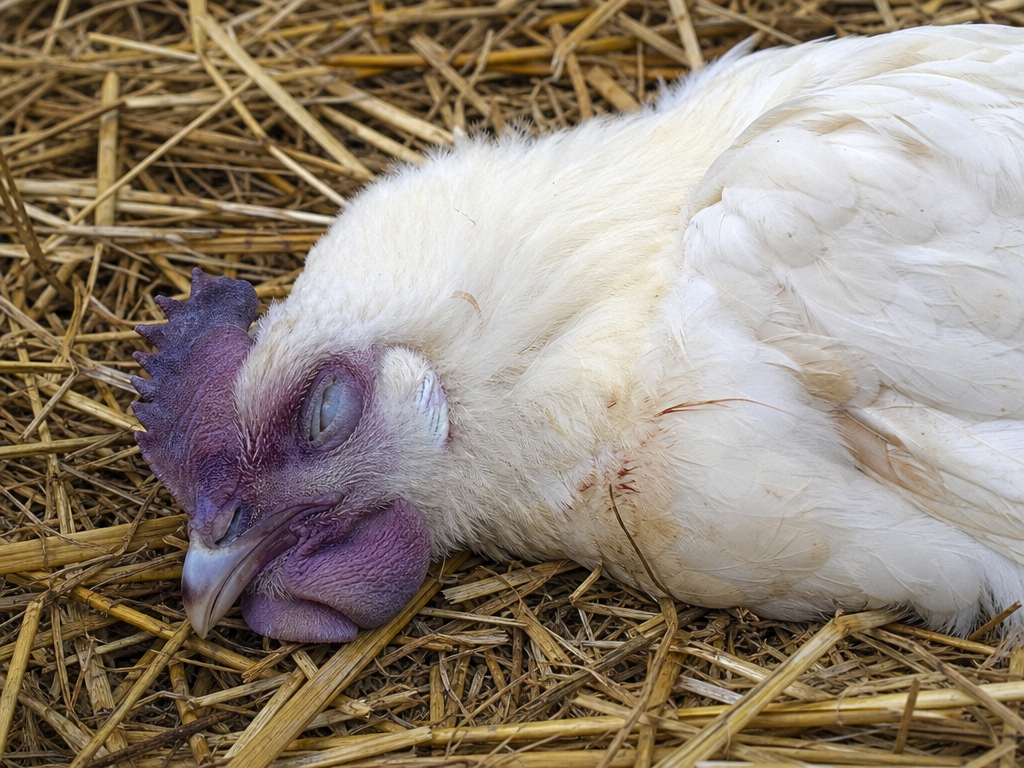
- sudden death in apparently healthy birds (most common presentation), swollen, discolored (dark purple to black) comb and wattles, diamond-shaped or irregular raised skin lesions on unfeathered areas
- Prognosis
- Guarded to poor for acutely affected birds showing systemic signs without prompt penicillin treatment. Good for the flock overall if antibiotic treatment begins before widespread mortality. Poor long-term for birds that develop chronic endocarditis, which typically leads to cardiac failure within weeks to months.
📑 On This Pagetap to expand
🔍What Are the Symptoms of Erysipelas in Chickens?
- ●Sudden death in apparently healthy birds (most common presentation)
- ●Swollen, discolored (dark purple to black) comb and wattles
- ●Diamond-shaped or irregular raised skin lesions on unfeathered areas
- ●Lethargy and weakness before death
- ●Greenish or watery diarrhea
- ●Swollen joints (arthritis form in chronic cases)
- ●Pale mucous membranes indicating anemia
- ●Reduced egg production in surviving hens
- ●Vegetative endocarditis (heart valve lesions) in chronic surviving birds
- ●Multiple deaths in a short period in affected flocks
🧬What Causes Erysipelas in Chickens in Chickens?
Erysipelas is caused by Erysipelothrix rhusiopathiae, a highly persistent environmental bacterium that survives for months in soil, litter, and water.
- Erysipelothrix rhusiopathiae: A Gram-positive, non-spore-forming rod that is ubiquitous in the environment. It is carried in the intestines of many wild and domestic animals including pigs, fish, and birds. Pigs are the classic reservoir, and poultry operations near swine facilities have elevated risk.
- Routes of entry: The bacterium enters through wounds, scratches, skin abrasions, or the mucosa of the digestive and respiratory tracts. Muddy or waterlogged runs after rain concentrate environmental bacteria near the skin entry points on the feet and legs.
- Predisposing factors: Skin wounds from pecking, wire injuries, spur fighting, or rough handling provide entry points. Immunosuppression from concurrent disease, Marek's, or nutritional deficiency increases susceptibility.
- Environmental persistence: E. rhusiopathiae survives 35 days in mud, months in water, and indefinitely in preserved products. Once a farm is contaminated, the organism can persist for years in litter and soil even after decontamination efforts.
- Zoonotic transmission: Humans acquire erysipeloid (a localized skin infection, not systemic erysipelas) through cuts or abrasions contaminated with infected bird tissue, carcasses, or environmental material. It is an occupational risk for poultry handlers and slaughterhouse workers.
🔬How Is Erysipelas in Chickens Diagnosed?
Erysipelas is frequently diagnosed post-mortem because sudden death is often the first sign:
- Gross necropsy findings: Septicemic erysipelas produces petechial hemorrhages on the heart and serosal surfaces, splenomegaly, and generalized vascular congestion. The comb and skin may show characteristic purple discoloration or diamond-shaped skin lesions.
- Chronic form: Surviving birds may develop vegetative endocarditis (warty growths on heart valves), swollen joints, and pale combs from anemia. These birds often die suddenly weeks later from cardiac failure.
- Bacterial culture: E. rhusiopathiae is definitively identified by culture of blood, spleen, or bone marrow on standard blood agar. The organism has a characteristic alpha-hemolysis pattern and produces a distinctive colony morphology.
- Differential diagnoses: Fowl Cholera (Pasteurella multocida) produces similar sudden death and comb discoloration. Newcastle Disease velogenic strains cause rapid flock mortality. Avian Influenza must be ruled out urgently given the mortality pattern.
💊How Is Erysipelas in Chickens Treated?
Penicillin is the drug of choice for Erysipelothrix rhusiopathiae, which remains reliably sensitive to penicillin-class antibiotics.
Penicillin treatment: Procaine penicillin G at 50,000 IU/kg IM once or twice daily for 3-5 days dramatically reduces flock mortality when started promptly. Birds showing clinical signs may be treated individually. Oral penicillin in water provides group treatment for the at-risk flock.
Ampicillin or amoxicillin: Alternative options for cases where injectable penicillin is impractical. Administer at 10-20 mg/kg orally twice daily. These are more bioavailable orally than parenteral penicillin G forms.
Vaccination: Commercial bacterin vaccines are available for turkeys and may be used in chickens in endemic areas or farms with recurrent outbreaks. Killed whole-cell bacterins are administered subcutaneously and provide 3-6 months of protection. Two doses 3-4 weeks apart for initial protection.
Flock treatment: During an active outbreak, treat the entire affected flock with water-soluble antibiotics to prevent spread and reduce mortality in apparently healthy birds that may be bacteremic.
Natural & Integrative Care for Erysipelas in Chickens
Erysipelas is a veterinary emergency requiring immediate penicillin treatment of the flock. Natural care focuses on environmental decontamination and wound prevention to reduce introduction risk.
Natural approaches do not have established efficacy against systemic Erysipelothrix infection. Erysipelas is a life-threatening septicemia that requires antibiotic intervention. Natural care has value in environmental decontamination and supportive recovery.
Environmental decontamination: Remove all wet litter and soil from the run. Apply agricultural lime to the soil surface to raise pH and reduce bacterial survival. E. rhusiopathiae is susceptible to alkaline pH. Allow runs to dry thoroughly before restocking.
Wound care prevention: Apply dilute iodine solution to skin wounds, spur injuries, or any abrasion as soon as identified. Reducing the number of skin entry points is the most practical natural prevention strategy.
Supportive care for recovering birds: Provide electrolytes, probiotics, and a high-nutrition diet to birds recovering from subacute infection. Nutritional support speeds recovery and reduces the likelihood of progression to chronic endocarditis.
🛡️How Can Erysipelas in Chickens Be Prevented?
- Vaccinate flocks in endemic areas or farms with a history of Erysipelas outbreaks. A killed bacterin given at 8-10 weeks with a booster 3-4 weeks later provides meaningful protection through the high-risk production period.
- Prevent skin wounds by providing adequate space to prevent fighting, removing sharp wire or equipment, and trimming sharp spurs on roosters. Skin abrasions are the primary entry route for E. rhusiopathiae.
- Avoid co-mingling poultry with swine or locating poultry operations downhill from swine effluent areas. Pigs are the primary environmental reservoir and a proven source of flock introduction.
- Remove and lime-treat soil from runs after a confirmed outbreak. E. rhusiopathiae persists in contaminated soil for months and can reinfect replacement flocks.
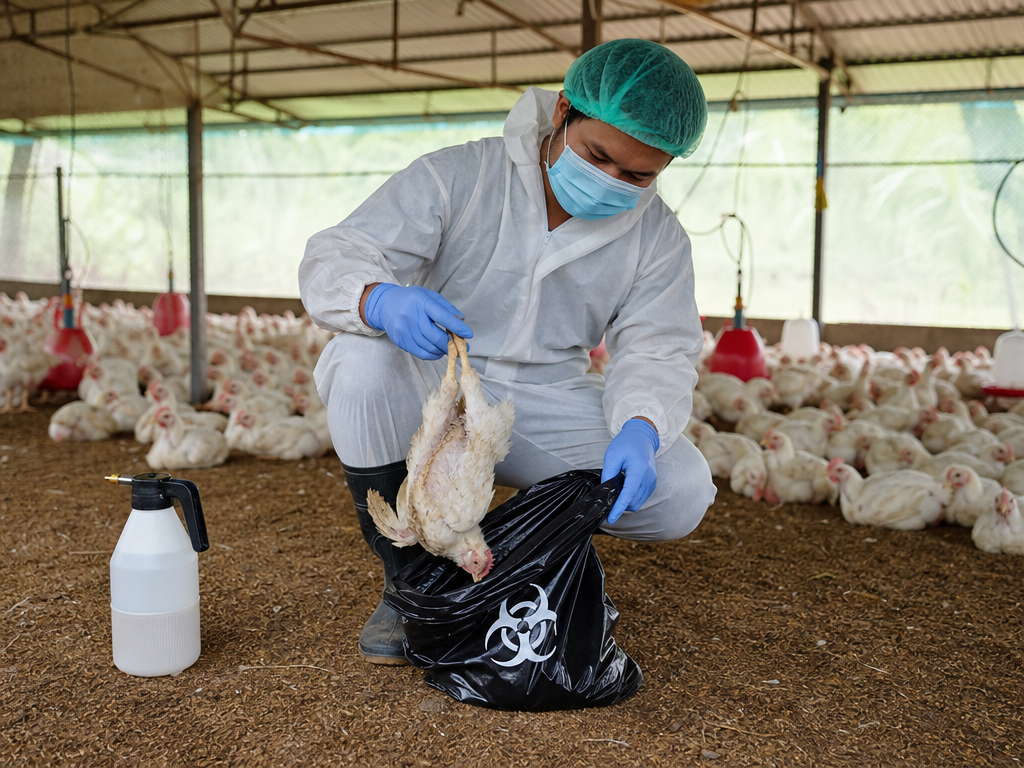
- Wear gloves when handling sick birds, carcasses, or processing birds from a flock with suspected or confirmed Erysipelas. The zoonotic risk of erysipeloid is real and results in painful, slow-healing skin lesions.
📞When Should I Call a Vet for Erysipelas in Chickens?
Erysipelas is a veterinary emergency:
- Call a veterinarian immediately if multiple apparently healthy birds are dying within 24-48 hours, particularly with comb discoloration or skin lesions. Rapid diagnosis and penicillin treatment initiated the same day can save the flock.
- Submit carcasses to a state diagnostic lab within hours of death for necropsy and culture. Fresh carcasses provide the most reliable bacterial isolation for diagnosis and antibiotic sensitivity confirmation.
- Report any occupational skin wound or abrasion sustained while handling birds from a suspected Erysipelas flock to a physician. Erysipeloid is treatable with amoxicillin but requires early recognition to prevent spread to deeper tissue.
❓Erysipelas in Chickens: Frequently Asked Questions
What is erysipelas in chickens?
Erysipelas is a bacterial septicemia caused by Erysipelothrix rhusiopathiae that causes sudden death in poultry, particularly turkeys but also chickens. Affected birds may show dark comb discoloration, skin lesions, and joint swelling before death. It is treatable with penicillin if caught early.
Can chickens with erysipelas infect humans?
Yes. Humans can develop erysipeloid, a localized skin infection, through cuts or abrasions that contact infected bird tissue, carcasses, or contaminated litter. Erysipeloid is not systemic erysipelas (the human strep-related condition); it is a superficial skin infection that responds to amoxicillin or penicillin.
How is erysipelas treated in chickens?
Penicillin is the first-line treatment and reliably eliminates Erysipelothrix rhusiopathiae. Procaine penicillin G IM, or oral amoxicillin in water, is used to treat the whole flock during an outbreak. Treatment must begin within hours to days of the first deaths to prevent further losses.
What does erysipelas look like in chickens?
The most common presentation is sudden death in birds that appeared healthy 12-24 hours earlier. Affected birds may have swollen, dark purple-black combs and wattles, raised diamond-shaped skin lesions on the face or legs, and greenish diarrhea. Some birds survive acutely but develop chronic joint swelling or heart problems.
How do you prevent erysipelas in a chicken flock?
Prevention involves vaccination with a killed bacterin in high-risk flocks, eliminating skin wound risk by providing adequate space and removing sharp hazards, avoiding exposure to swine, and liming contaminated soil after any outbreak. These measures together significantly reduce introduction and recurrence risk.
Is erysipelas the same as fowl cholera?
No. Both cause sudden death and comb discoloration, but they are different diseases with different causative organisms. Fowl Cholera is caused by Pasteurella multocida and is treated with sulfonamides or tetracyclines. Erysipelas is caused by Erysipelothrix rhusiopathiae and requires penicillin. Laboratory culture distinguishes them definitively.
📋Key Points
- ✓Erysipelas is caused by Erysipelothrix rhusiopathiae, a highly persistent environmental bacterium that survives for months in soil, litter, and water.
- ✓Key symptoms: sudden death in apparently healthy birds (most common presentation), swollen, discolored (dark purple to black) comb and wattles, diamond-shaped or irregular raised skin lesions on unfeathered areas, lethargy and weakness before death.
- ✓Guarded to poor for acutely affected birds showing systemic signs without prompt penicillin treatment. Good for the flock overall if antibiotic treatment begins before widespread mortality. Poor long-term for birds that develop chronic endocarditis, which typically leads to cardiac failure within weeks to months.
- ✓This condition is contagious, isolate affected birds promptly.
- ✓This condition is zoonotic and can potentially affect humans. Practice thorough hygiene when handling sick birds.
🔗Related
Related Conditions