Fowl Cholera in Chickens: Symptoms, Causes and Treatment
Fowl cholera is a bacterial disease caused by Pasteurella multocida that presents in two forms: peracute (sudden death with no prior signs) and chronic (swollen wattles, respiratory signs, joint infections). It is one of the most common infectious diseases of backyard and commercial poultry worldwide. Treatment with penicillin or oxytetracycline is effective, and vaccines are available for endemic operations.
Veterinarian Reviewed
FlockVet Veterinary Editorial Team· Reviewed August 2026
This is a veterinary emergency.
If your bird is showing these signs, contact a veterinarian immediately. Do not wait. Time-sensitive conditions can deteriorate rapidly without professional intervention.
At a Glance
- Urgency
- Emergency
- Contagious
- Yes
- Affects Humans
- No
- Key Symptoms
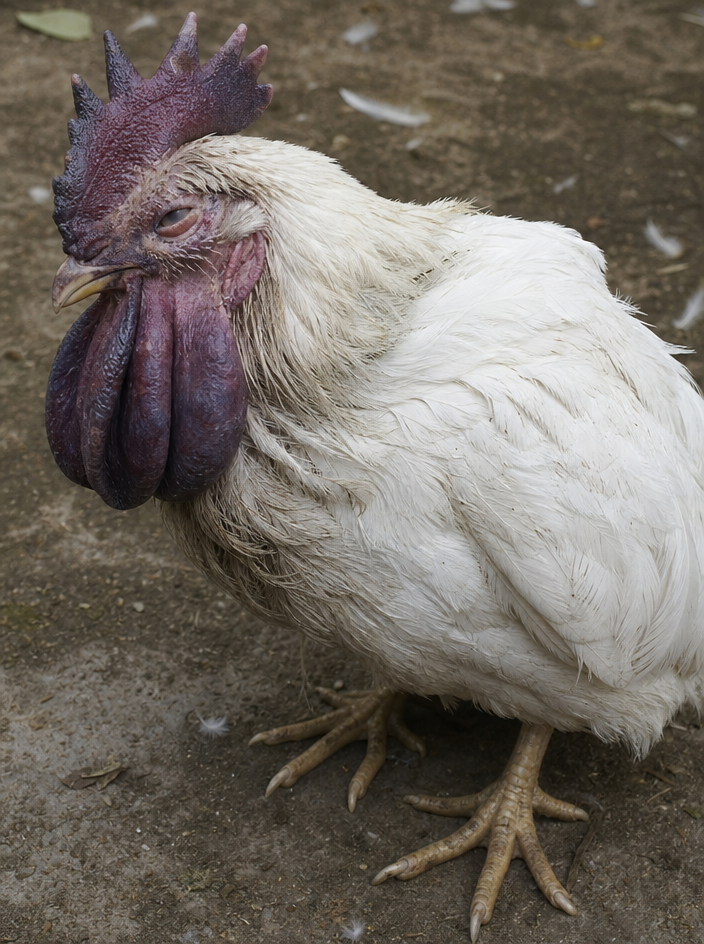
- peracute form: birds found dead with no prior illness, purple-blue discoloration of comb and wattles (cyanosis), swollen, edematous wattles, especially in males
- Prognosis
- Peracute form: mortality can reach 20-50% before treatment is initiated, as birds die before signs are observed. Acute form with prompt antibiotic treatment: mortality drops to 1-5%. Chronic form: good prognosis with antibiotic treatment, but swollen wattles and joint damage may persist. Recovered birds are lifelong carriers.
📑 On This Pagetap to expand
🔍What Are the Symptoms of Fowl Cholera?
- ●Peracute form: birds found dead with no prior illness
- ●Purple-blue discoloration of comb and wattles (cyanosis)
- ●Swollen, edematous wattles, especially in males
- ●Watery or blood-tinged mucus from nose and mouth
- ●Bright green or yellow-green diarrhea
- ●Labored breathing and gurgling respiratory sounds
- ●Swollen joints causing lameness (chronic form)
- ●Torticollis (wry neck) from middle ear or meningeal infection in chronic form
🧬What Causes Fowl Cholera in Chickens?
Pasteurella multocida is a gram-negative coccobacillus with multiple capsular types (A, B, D, E, F) and somatic types that vary in virulence. Type A is the most common cause of fowl cholera.
- Carrier wildlife: Wild birds (especially waterfowl, crows, and sparrows), rodents, and cats are natural reservoirs. A single infected wild bird near a poultry facility can introduce the organism.
- Carrier chickens: Recovered birds can carry Pasteurella in their nasal passages for months. Introducing recovered birds or birds from farms with a history of cholera is a primary introduction route.
- Contaminated water and feed: Pasteurella survives in moist soil and contaminated water for days to weeks. Shared water sources are an efficient flock spread mechanism.
- Stress triggers: Heat stress, poor nutrition, concurrent infection, and transport dramatically increase susceptibility to cholera. Peracute outbreaks often follow a stressful event in an endemically exposed flock.
🔬How Is Fowl Cholera Diagnosed?
The combination of sudden deaths with purple combs and swollen wattles is highly suggestive of fowl cholera.
- Necropsy findings: Classic findings include petechial hemorrhages throughout the heart and liver surfaces, congested and enlarged liver with pinpoint necrotic foci (a pathognomonic finding for P. multocida), and excess fluid in the pericardium and body cavity.
- Bacteriology: Blood smears or impression smears from liver stained with Wright's or Giemsa stain often show bipolar-staining coccobacilli. Culture on blood agar confirms P. multocida within 24-48 hours.
- Differentials: Newcastle disease (neurological signs, no swollen wattles), erysipelas (diamond-skin lesions, peracute death in turkeys), blackhead (yellow diarrhea, liver lesions in cecae).
💊How Is Fowl Cholera Treated?
Fowl cholera responds well to antibiotic treatment if started early. Treatment reduces mortality but does not eliminate the carrier state in recovered birds.
Penicillin (first choice): Procaine penicillin G at 3,000 IU/kg body weight IM once daily, or penicillin V in water. Highly effective against most P. multocida strains.
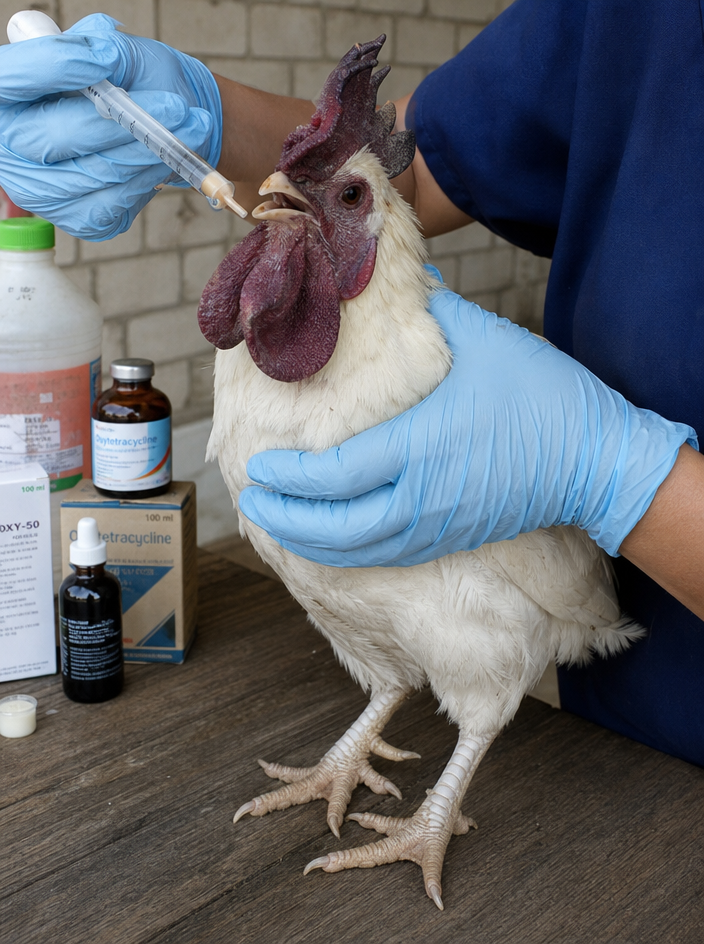
Oxytetracycline: 5-10 mg/kg in drinking water for 5-7 days. Broad availability and effectiveness make this a practical choice for flock-wide treatment.
Sulfonamides: Sulfadimethoxine or sulfamethazine in water (0.05% for 6 days) provides good coverage. Often combined with enhanced supportive care.
Fluoroquinolones: Enrofloxacin under veterinary prescription for resistant strains. Culture and sensitivity testing guides selection when first-line drugs fail.
Depopulation and disinfection: In severe outbreaks, complete depopulation followed by thorough disinfection and a minimum 3-week downtime before restocking may be the only way to break the cycle in endemic operations.
Natural & Integrative Care for Fowl Cholera
Antibiotic treatment is essential for fowl cholera; natural supportive care aids recovery but cannot replace targeted antibacterial therapy in this rapidly fatal disease.
Natural approaches are not adequate treatment for active fowl cholera. The disease progresses rapidly and can cause significant mortality without antibiotic intervention. Use natural approaches only as adjunct support during antibiotic treatment.
Vitamin A supplementation: Vitamin A deficiency predisposes birds to Pasteurella infection by compromising mucosal integrity. Supplementing with vitamin A during and after treatment supports respiratory tract recovery.
Electrolytes and high-quality nutrition: Sick birds are often dehydrated and anorexic. Electrolyte solution in water supports recovery during the acute phase.
🛡️How Can Fowl Cholera Be Prevented?
- Vaccinate in endemic areas using a killed bacterin specific to the capsular type present in your region. Two doses 3-4 weeks apart are needed. Annual revaccination maintains protection.
- Control wild bird and rodent access to poultry housing. Sparrows, crows, and waterfowl are primary Pasteurella reservoirs. Screen all openings and remove feed spills that attract wildlife.
- Never introduce birds with an unknown health history. Purchase from P. multocida-free flocks with documented health records.
- All-in, all-out management prevents recovered carrier birds from serving as a reservoir for new, susceptible arrivals.
- Maintain litter quality and avoid heat stress during summer months. Peracute outbreaks frequently follow heat stress events in flocks with endemic Pasteurella exposure.
📞When Should I Call a Vet for Fowl Cholera?
Call a veterinarian immediately if:
- Multiple birds are found dead with no prior signs, especially if combs and wattles are purple. This is a potential peracute cholera outbreak requiring immediate necropsy and diagnosis.
- Green diarrhea with respiratory signs spreads to more than 10% of the flock within 24 hours. Start treatment empirically while awaiting lab confirmation.
- Mortality does not slow within 48 hours of starting antibiotics. Antibiotic-resistant strains or concurrent infection with another pathogen require culture and sensitivity testing.
❓Fowl Cholera: Frequently Asked Questions
What is fowl cholera in chickens?
Fowl cholera is a bacterial infection caused by Pasteurella multocida. It causes sudden death, purple combs, swollen wattles, and green diarrhea. It can kill birds within hours of first signs in its peracute form. Treatment with penicillin or oxytetracycline is effective if started early.
How do you treat fowl cholera in chickens?
Treatment is with antibiotics, typically penicillin (most effective), oxytetracycline in drinking water for 5-7 days, or sulfonamides. Start treatment immediately when cholera is suspected. Treatment reduces mortality but does not eliminate the carrier state in recovered birds.
How does fowl cholera spread?
Fowl cholera spreads through contact with infected birds, contaminated water, feed, and equipment. Wild birds, rodents, and cats are natural reservoirs. Recovered carrier birds are a major source of reintroduction. The organism can survive in moist soil for several weeks.
Is there a vaccine for fowl cholera in chickens?
Yes. Killed bacterin vaccines are available for fowl cholera. Two doses 3-4 weeks apart followed by annual revaccination provide good protection in endemic areas. Vaccine selection should match the Pasteurella capsular type circulating in your region.
What does fowl cholera look like at necropsy?
Classic necropsy findings include pinpoint necrotic spots on an enlarged liver (highly distinctive), petechial hemorrhages on heart surfaces and fat, excess fluid in the pericardium, and congested lungs. Bipolar-staining coccobacilli are often visible on impression smears from the liver.
📋Key Points
- ✓Pasteurella multocida is a gram-negative coccobacillus with multiple capsular types (A, B, D, E, F) and somatic types that vary in virulence.
- ✓Key symptoms: peracute form: birds found dead with no prior illness, purple-blue discoloration of comb and wattles (cyanosis), swollen, edematous wattles, especially in males, watery or blood-tinged mucus from nose and mouth.
- ✓Peracute form: mortality can reach 20-50% before treatment is initiated, as birds die before signs are observed. Acute form with prompt antibiotic treatment: mortality drops to 1-5%. Chronic form: good prognosis with antibiotic treatment, but swollen wattles and joint damage may persist. Recovered birds are lifelong carriers.
- ✓This condition is contagious, isolate affected birds promptly.
🔗Related
Related Conditions
📚Sources & References
- 1.Fowl Cholera in Poultry. Merck Veterinary Manual. 2024
- 2.Pasteurella multocida in Poultry. PubMed / Avian Pathology. 2012
- 3.Fowl Cholera Control in Backyard Flocks. University of Georgia Extension. 2021