Chicken Fleas (Sticktight Fleas): Symptoms, Causes and Treatment
Chicken fleas, primarily the sticktight flea (Echidnophaga gallinacea), embed their mouthparts into bare skin around the eyes, comb, wattles, and vent of chickens and remain attached for days to weeks. Unlike most fleas, they do not jump. Heavy infestations cause anemia, ulcerative wound formation, secondary bacterial infection, and death in chicks. Treatment involves manual removal and permethrin application.
Veterinarian Reviewed
FlockVet Veterinary Editorial Team· Reviewed August 2026
At a Glance
- Urgency
- Mild
- Contagious
- No
- Affects Humans
- Yes, zoonotic
- Key Symptoms
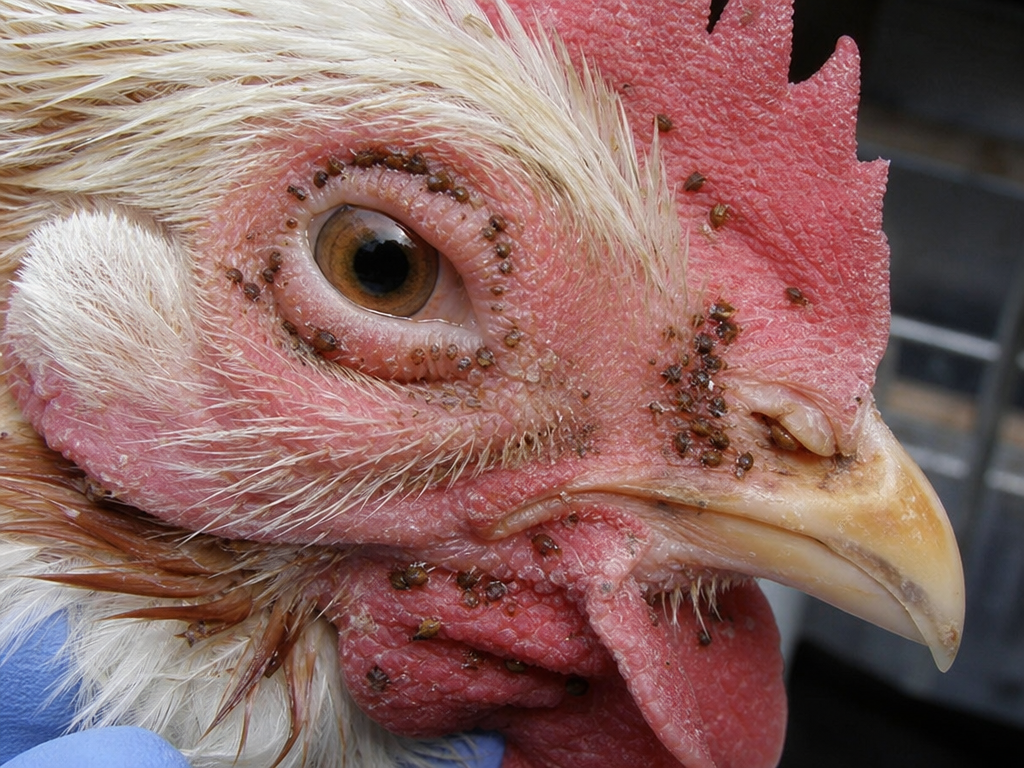
- clusters of small dark specks embedded in skin around eyes, comb, and wattles, ulcerative wounds and crusty lesions at attachment sites, eye damage and blindness from periorbital flea clusters
- Prognosis
- Excellent with prompt treatment. Mortality from sticktight fleas is limited to heavily infested chicks or severely debilitated adults. Most birds recover fully after flea removal and wound healing. Reinfection from contaminated soil is the primary ongoing management challenge.
📑 On This Pagetap to expand
🔍What Are the Symptoms of Chicken Fleas (Sticktight Fleas)?
- ●Clusters of small dark specks embedded in skin around eyes, comb, and wattles
- ●Ulcerative wounds and crusty lesions at attachment sites
- ●Eye damage and blindness from periorbital flea clusters
- ●Anemia (pale comb) in heavy infestations or in chicks
- ●Scratching, head-shaking, and obvious discomfort
- ●Secondary bacterial wound infection at attachment sites
- ●Reduced egg production and weight gain in affected flocks
🧬What Causes Chicken Fleas (Sticktight Fleas) in Chickens?
Echidnophaga gallinacea (sticktight flea) is a sedentary flea that feeds continuously from a fixed attachment point, unlike jumping fleas that feed transiently.
- Soil-dwelling lifecycle: Female sticktight fleas lay eggs that fall to the ground. Larvae develop in dry, sandy soil. This makes shaded, sandy-soiled outdoor runs a major reservoir and reinfection source.
- Wildlife introduction: Rabbits, ground squirrels, cats, and dogs commonly carry Echidnophaga gallinacea to poultry premises. Wildlife contact or contaminated bedding from wildlife areas introduces the flea.
- Warm climate prevalence: Sticktight fleas are most common in the southern United States, Central America, and Australia. Cold winters reduce populations in more northern regions.
- Fixed feeding behavior: Unlike chicken lice or mites, sticktight fleas do not leave the bird between feedings. They remain embedded for the duration of blood meal and egg-laying, making them more damaging per individual parasite than more mobile ectoparasites.
🔬How Is Chicken Fleas (Sticktight Fleas) Diagnosed?
Sticktight fleas are visible to the naked eye as dark, sessile clusters embedded in featherless facial skin.
- Visual identification: Dark brown to black, 1-2mm oval insects firmly embedded in clusters around the eyes, comb base, and wattle edges. They do not move or jump when disturbed (distinguishes from mites and lice).
- Differentiation from mites: Red mites are found in coop crevices (not attached during the day). Northern fowl mites move through feathers. Sticktight fleas remain fixed to bare facial skin.
- Ground inspection: In heavy infestations, the outdoor run soil contains flea larvae and pupae. Disturbing dry soil reveals cream-colored larvae.
💊How Is Chicken Fleas (Sticktight Fleas) Treated?
Treatment involves physical removal of embedded fleas, environmental treatment of the outdoor run, and prevention of wildlife reintroduction.
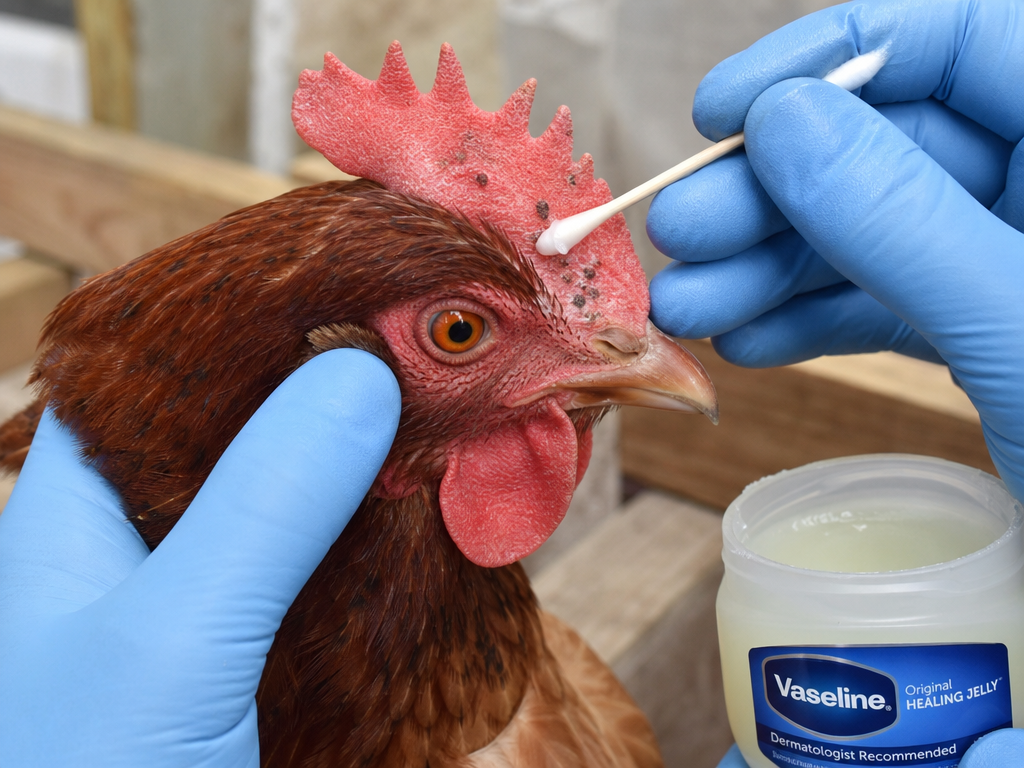
Manual removal: Apply petroleum jelly (Vaseline) over the clusters. This suffocates fleas and facilitates removal with fine-tipped tweezers after 24 hours. Do not forcibly pull embedded fleas without petroleum jelly, as retained mouthparts cause festering wounds.
Permethrin spray: Pyrethrin or permethrin-based sprays applied to the comb, wattle, and face areas kill fleas on contact. Avoid the eyes. Repeat weekly for 3-4 weeks. Permethrin also treats the housing environment.
Environmental treatment: Treat the outdoor run soil with permethrin dust or carbaryl (Sevin) dust to kill larvae and pupae in the soil. This breaks the flea lifecycle and prevents reinfection from the ground.
Wound care: Clean ulcerated attachment sites with dilute chlorhexidine after flea removal. Apply antibiotic ointment to prevent secondary bacterial infection.
Natural & Integrative Care for Chicken Fleas (Sticktight Fleas)
Petroleum jelly followed by manual removal addresses existing embedded fleas; permethrin treats both birds and the soil environment to break the lifecycle.
Natural approaches are supportive but may not achieve adequate control in heavy infestations.
Diatomaceous earth (food grade): Dust the run soil with food-grade DE to kill larvae. Also dust birds around the head area. Less effective than permethrin for heavy infestations but adequate for prevention and light loads.
Petroleum jelly application: Regular application of Vaseline to bare facial skin creates a barrier against flea attachment and suffocates newly attaching fleas.
🛡️How Can Chicken Fleas (Sticktight Fleas) Be Prevented?
- Exclude wildlife from poultry areas. Rabbits, ground squirrels, and cats are primary sticktight flea carriers. Hardware cloth barriers and eliminating harborage (brush piles, woodpiles) near the run reduce wildlife contact.
- Apply permethrin dust to the outdoor run soil monthly in endemic areas (southern US). This prevents larval buildup in sandy soil.
- Inspect the face, comb, and wattles of all birds weekly during warm months. Early detection of small clusters prevents the rapid population buildup that causes severe anemia.
- Apply petroleum jelly to combs and wattles of birds in endemic areas. This physical barrier prevents flea attachment and is safe for the bird.
📞When Should I Call a Vet for Chicken Fleas (Sticktight Fleas)?
Consult a veterinarian if:
- Chicks are heavily infested and showing anemia (pale comb). Flea removal under sedation or anesthesia may be needed to safely treat young birds.
- Periorbital flea clusters are causing corneal damage or blindness. Eye involvement requires careful removal to prevent permanent vision loss.
❓Chicken Fleas (Sticktight Fleas): Frequently Asked Questions
What are chicken fleas (sticktight fleas)?
Chicken fleas are primarily the sticktight flea (Echidnophaga gallinacea), which embeds its mouthparts into bare skin around the eyes, comb, and wattles and remains fixed for days. Unlike jumping fleas, sticktight fleas stay attached and feed continuously. Heavy infestations cause anemia, wounds, and death in chicks. Treatment involves petroleum jelly, manual removal, and permethrin.
How do you get rid of sticktight fleas on chickens?
Apply petroleum jelly over the clusters and leave for 24 hours to suffocate and loosen embedded fleas, then remove with fine-tipped tweezers. Spray permethrin on the comb, wattle, and face areas (avoiding eyes) weekly for 3-4 weeks. Treat the run soil with permethrin dust to kill larvae and break the lifecycle.
Can chicken fleas infest humans?
Yes. Echidnophaga gallinacea can temporarily attach to human skin and cause painful bites, though humans are not their preferred host and infestations are self-limiting. Wear long sleeves and pants when working in heavily infested areas, and wash clothing immediately after handling infested birds.
How do sticktight fleas differ from other poultry parasites?
Sticktight fleas are unique in remaining permanently attached to bare facial skin (they do not jump or move through feathers). Chicken lice and mites move through the feathers and are found in the plumage. Red mites hide in coop crevices during the day. Sticktight fleas form visible dark clusters on the face visible during daylight.
Do sticktight fleas live in the chicken coop?
The adult fleas live on the birds. Larvae and pupae develop in dry, sandy soil in the outdoor run. Treating the coop itself has less impact than treating the outdoor run soil with permethrin dust, which kills the developing stages. Wet or clay soil does not support flea larval development as well as dry, sandy soil.
📋Key Points
- ✓Echidnophaga gallinacea (sticktight flea) is a sedentary flea that feeds continuously from a fixed attachment point, unlike jumping fleas that feed transiently.
- ✓Key symptoms: clusters of small dark specks embedded in skin around eyes, comb, and wattles, ulcerative wounds and crusty lesions at attachment sites, eye damage and blindness from periorbital flea clusters, anemia (pale comb) in heavy infestations or in chicks.
- ✓Excellent with prompt treatment. Mortality from sticktight fleas is limited to heavily infested chicks or severely debilitated adults. Most birds recover fully after flea removal and wound healing. Reinfection from contaminated soil is the primary ongoing management challenge.
- ✓This condition is zoonotic and can potentially affect humans. Practice thorough hygiene when handling sick birds.
🔗Related
Related Conditions
📚Sources & References
- 1.Sticktight Flea Infestations in Poultry. Merck Veterinary Manual. 2024
- 2.Echidnophaga gallinacea in Backyard Poultry. PubMed / Veterinary Parasitology. 2011
- 3.External Parasites of Poultry. University of Georgia Extension. 2021