Scaly Leg Mites in Chickens: Symptoms, Causes and Treatment
Scaly leg mites in chickens are Knemidocoptes mites that burrow beneath leg and foot scales. Infested legs become raised, crusty, thickened, painful, and sometimes deformed. Treatment smothers or kills the mites over repeated applications, with veterinary ivermectin guidance for heavy cases and cleaning to limit spread.
Veterinarian Reviewed
FlockVet Veterinary Editorial Team· Reviewed January 2026
At a Glance
- Urgency
- Mild
- Contagious
- Yes
- Affects Humans
- No
- Key Symptoms
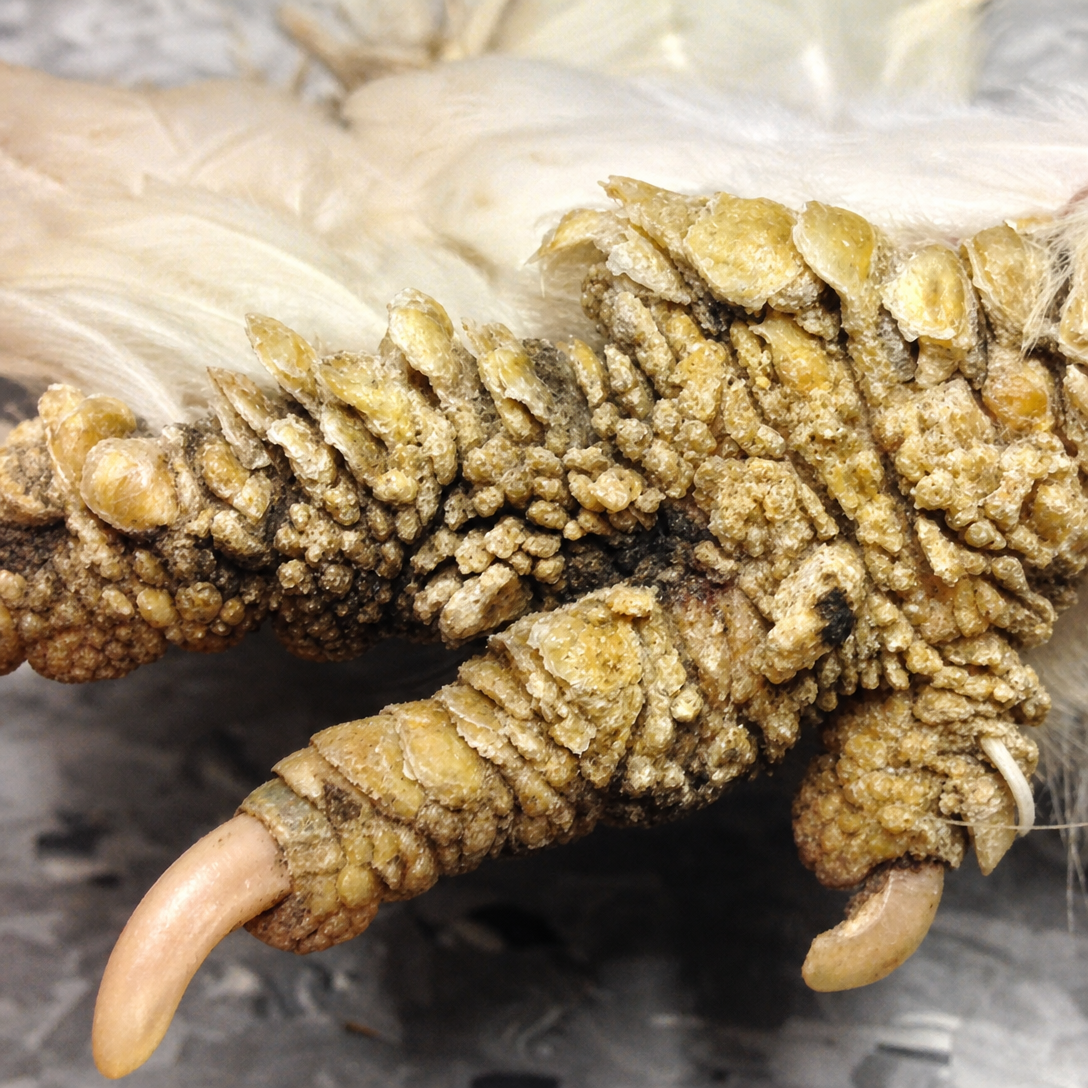
- raised, crusty, thickened leg scales, white or gray crust lifting off the leg, rough, bumpy leg surface instead of smooth overlapping scales
- Prognosis
- Excellent. Full recovery expected with consistent treatment over 4-6 weeks. Severely deformed legs in long-neglected cases may not fully normalize, but the infestation is cleared.
📑 On This Pagetap to expand
🔍What Are the Symptoms of Scaly Leg Mites?
- ●Raised, crusty, thickened leg scales
- ●White or gray crust lifting off the leg
- ●Rough, bumpy leg surface instead of smooth overlapping scales
- ●Mild lameness in advanced cases
- ●Scales pulling away from leg
- ●Legs appear swollen or deformed in severe cases
🧬What Causes Scaly Leg Mites in Chickens?
Knemidocoptes mutans mites burrow under the keratin leg scales and feed on skin debris. They complete their entire life cycle on the bird - eggs are laid under the scales, and the accumulation of mite bodies, eggs, and debris causes the characteristic crust formation.
Transmission is through direct bird-to-bird contact and possibly shared perches. Spread is slow - birds can have mild infestations for months before it becomes obvious.
🔬How Is Scaly Leg Mites Diagnosed?
💊How Is Scaly Leg Mites Treated?
The standard treatment is smothering - not chemical kill. Applying an oil or occlusive substance under the scales suffocates the mites within days.
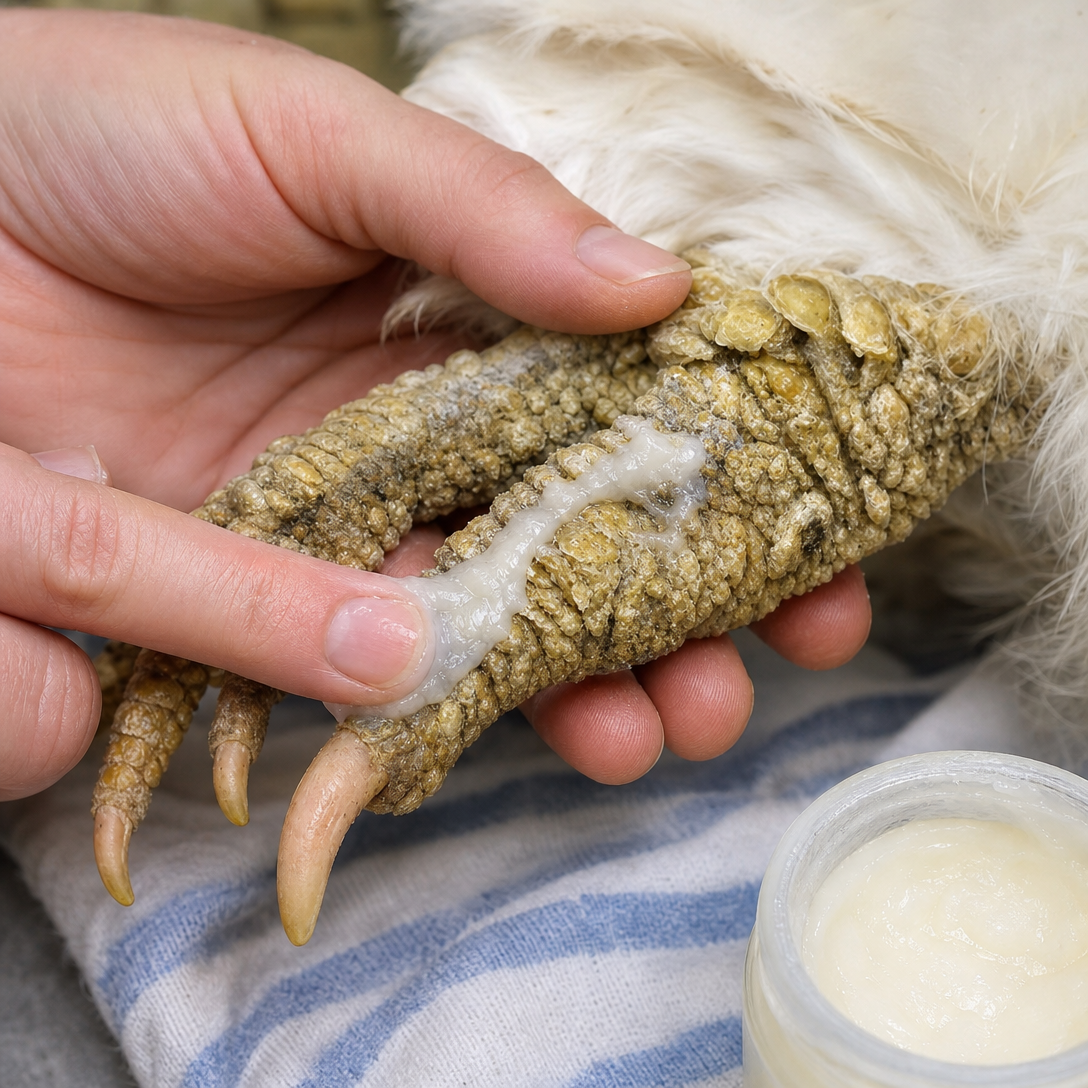
Petroleum jelly protocol: Apply generously under all leg scales, rubbing it in well. Reapply every 3-5 days. Continue for 4-6 weeks until all scales return to normal. This is the conventional and natural treatment simultaneously - there is no separate pharmaceutical protocol for mild cases.
Ivermectin (severe cases): 0.1ml pour-on ivermectin per bird. More practical when infestation is widespread or bird is not tolerating leg handling. One treatment usually sufficient. Egg withdrawal 14 days.
Ivermectin for scaly leg mites
Ivermectin use in laying chickens is off-label in the United States. Under veterinary direction, 0.5% pour-on may be applied to bare skin at 0.5 mL per 1 kg body weight and repeated in 10-14 days. Measure by weight and product concentration, not by a fixed number of drops. No US egg withdrawal period is established, so follow the prescribing veterinarian's discard interval.
Natural & Integrative Care for Scaly Leg Mites
Scaly leg mites are treated naturally by default - smothering with coconut oil or petroleum jelly is both the natural and conventional first-line treatment. This is one of the best cases for natural-first care.
This is one of the clearest wins for natural treatment in poultry. Smothering with oil is the correct treatment, and natural oils are the best substances for this purpose.
Coconut oil: The preferred natural choice. Contains caprylic acid with antimicrobial activity against the mites in addition to the smothering effect. Apply daily for first week, then every 3 days for 4-6 weeks. Massage thoroughly under the scales at each application.
Petroleum jelly (Vaseline): Equally effective smothering agent. OTC, inexpensive, stays in place well. Traditional first-line treatment.
Neem oil (diluted): Mix 2% neem oil with coconut oil. Azadirachtin in neem disrupts mite reproduction in addition to smothering. Apply weekly.
Olive oil or vegetable oil: Less preferred (more runoff) but effective as emergency treatment when nothing else is available.
Warm water soak first: Before each oil application, soak legs in warm water for 10-15 minutes to soften and loosen the crust, allowing better penetration of the oil beneath the scales.
Photo needed
Natural remedies for Scaly Leg Mites, coconut-oil, neem-oil, petroleum-jelly shown together
16/9🛡️How Can Scaly Leg Mites Be Prevented?
- Regular leg inspection during routine health checks
- Quarantine and inspect new birds' legs before flock introduction
- Apply petroleum jelly to legs of new birds as both treatment and prevention
- Clean, dry perches reduce transmission opportunity
📞When Should I Call a Vet for Scaly Leg Mites?
Rarely needed. Call if:
- Bird is lame and not responding after 3 weeks of treatment
- You need ivermectin for a severe or widespread case
❓Scaly Leg Mites: Frequently Asked Questions
How do you treat scaly leg mites in chickens?
The most effective home treatment is coating the legs thoroughly with petroleum jelly (Vaseline), coconut oil, or olive oil once a week for several weeks. This smothers the mites by blocking their air supply. Ivermectin pour-on applied to the skin is the fastest treatment for heavy infestations.
Can scaly leg mites kill chickens?
Scaly leg mites rarely kill chickens directly, but a severe untreated infestation causes lameness, pain, and significant stress that weakens the immune system. In advanced cases, the mites destroy the blood supply to the toes, leading to toe loss or permanent deformity. Treatment started early prevents permanent damage.
How do chickens get scaly leg mites?
Scaly leg mites (Knemidocoptes mutans) spread through direct contact with infected birds. They burrow under the leg scales, where they live their entire life cycle. New birds introduced without quarantine are the most common source of introduction. Wild birds can also carry them.
How do you use ivermectin for scaly leg mites in chickens?
Ivermectin 0.5% pour-on is applied to the skin at the back of the neck or between the shoulder blades. The standard dose is 0.5ml per 1kg of body weight. Apply once and repeat in 10-14 days. There is no egg withdrawal period established for chickens in the US, so most keepers discard eggs during and 2 weeks after treatment.
Can humans get scaly leg mites from chickens?
No. Knemidocoptes mutans, the mite that causes scaly leg in chickens, is host-specific and cannot infest humans. The mites live and breed only on birds. You can handle affected chickens safely, though washing hands after is always good practice.
📋Key Points
- ✓Knemidocoptes mutans mites burrow under the keratin leg scales and feed on skin debris.
- ✓Key symptoms: raised, crusty, thickened leg scales, white or gray crust lifting off the leg, rough, bumpy leg surface instead of smooth overlapping scales, mild lameness in advanced cases.
- ✓Excellent. Full recovery expected with consistent treatment over 4-6 weeks. Severely deformed legs in long-neglected cases may not fully normalize, but the infestation is cleared.
- ✓This condition is contagious, isolate affected birds promptly.
🔗Related
Related Conditions
Medications
Natural Remedies & Supplements
📚Sources & References
- 1.Scaly Leg Mites in Poultry. Merck Veterinary Manual. 2024
- 2.External Parasites of Poultry. Merck Veterinary Manual. 2024
- 3.Lice and Mites of Poultry. University of Georgia Cooperative Extension Poultry Science. 2022