Salmonella in Chickens: Zoonotic Risk, Pullorum and Prevention
Salmonella encompasses hundreds of serovars with different impacts on chickens and humans. Most paratyphoid serovars (S. Enteritidis, S. Typhimurium) colonize chickens silently but cause foodborne gastroenteritis in humans through contaminated eggs and meat. Salmonella Pullorum and Gallinarum cause reportable poultry diseases under the National Poultry Improvement Plan (NPIP). Backyard flock owners need to understand both the flock health and food safety dimensions.
Veterinarian Reviewed
FlockVet Veterinary Editorial Team· Reviewed August 2026
At a Glance
- Urgency
- Moderate
- Contagious
- Yes
- Affects Humans
- Yes, zoonotic
- Key Symptoms
- paratyphoid serovars in adult chickens: usually none (asymptomatic carriers), s. pullorum in chicks: white pasty diarrhea (bacillary white diarrhea), huddling, weakness, high mortality, s. gallinarum in adults: lethargy, pale comb, green diarrhea, sudden death in some birds
- Prognosis
- Paratyphoid serovars: excellent for flock health; near-zero mortality in healthy adult birds. Pullorum in chicks: high mortality (up to 80-100%) in infected hatches without intervention. NPIP culling of reactors eliminates Pullorum from a flock over successive test-and-cull cycles.
📑 On This Pagetap to expand
🔍What Are the Symptoms of Salmonella in Chickens?
- ●Paratyphoid serovars in adult chickens: usually none (asymptomatic carriers)
- ●S. Pullorum in chicks: white pasty diarrhea (bacillary white diarrhea), huddling, weakness, high mortality
- ●S. Gallinarum in adults: lethargy, pale comb, green diarrhea, sudden death in some birds
- ●Reduced egg production in affected adult flocks
- ●In humans: diarrhea, fever, abdominal cramps 12-72 hours after exposure
- ●Severe illness in young children, elderly, pregnant women, immunocompromised individuals
🧬What Causes Salmonella in Chickens in Chickens?
Salmonella is divided into three clinically important groups in poultry: host-adapted pathogens (Pullorum, Gallinarum), and ubiquitous paratyphoid serovars (Enteritidis, Typhimurium, and hundreds of others).
- Paratyphoid serovars - environmental: S. Enteritidis and S. Typhimurium live in soil, rodent feces, wild bird droppings, and contaminated feed for months. They are introduced via contaminated bedding, feed, rodents, or wild birds and colonize the chicken intestine without causing disease.
- Transovarial transmission: S. Enteritidis uniquely colonizes the ovary and oviduct, contaminating eggs internally before shell formation. This is why even uncracked, clean-appearing eggs from an infected hen can contain Salmonella.
- Pullorum disease (NPIP reportable): S. Pullorum spreads vertically (hen to chick through the egg) and horizontally through feces. Chicks hatch infected or are infected in the hatcher by hatchmates. Strict NPIP testing has nearly eliminated Pullorum from commercial flocks but it persists in unmonitored heritage and backyard flocks.
- Rodent vectors: Mice and rats are highly efficient Salmonella carriers and shed massive numbers of organisms in feces. A single mouse nesting in a feed bin can contaminate an entire feed supply.
🔬How Is Salmonella in Chickens Diagnosed?
Salmonella in backyard flocks is usually diagnosed through surveillance testing, human illness investigation, or NPIP testing, not through flock clinical signs.
- NPIP testing for Pullorum/Typhoid: The Whole Blood Test (WBT) or Tube Agglutination Test (TAT) detects antibodies to S. Pullorum/Gallinarum. Required for interstate transport and exhibition in most US states.
- Fecal culture: Environmental swabs, cloacal swabs, or fresh fecal samples plated on selective Salmonella media identify colonizing serovars. PCR is faster and more sensitive.
- Chick mortality investigation: White pasty diarrhea and high mortality in chicks 1-3 weeks old is Pullorum until proven otherwise. Necropsy shows grayish nodules in liver, cecae, and lungs.
💊How Is Salmonella in Chickens Treated?
Paratyphoid Salmonella colonization in chickens is not treated. Treatment with antibiotics eliminates clinical signs in Pullorum/Typhoid but does not reliably clear the carrier state and is not the preferred management approach under NPIP.
NPIP approach to Pullorum/Typhoid: Positive reactors identified by WBT or TAT testing are culled, not treated. This is the regulatory approach in the US to achieve and maintain Pullorum-Typhoid Clean status.
Paratyphoid outbreak supportive care: In flocks with high mortality from paratyphoid infections (rare in adults), antibiotics (gentamicin, enrofloxacin, or trimethoprim-sulfa under veterinary guidance) can reduce acute losses. Long-term colonization is not eliminated.
Rodent control: Eliminating the rodent reservoir from poultry facilities is the most effective long-term control measure for paratyphoid serovars.
Natural & Integrative Care for Salmonella in Chickens
Salmonella in chickens is primarily a food safety and public health concern; flock management focuses on reducing human exposure through hygiene, egg handling, and rodent control rather than treating birds.
Natural approaches are supportive for paratyphoid colonization management, not a treatment for Pullorum disease.
Probiotics: Regular Lactobacillus-based probiotic supplementation reduces competitive attachment sites for Salmonella in the gut. Studies show modest reductions in shedding with consistent probiotic use.
Oregano oil: Carvacrol shows laboratory activity against Salmonella. Adding 3-5 drops per gallon of drinking water supports gut health but does not eliminate colonization.
Rodent control (non-toxic): Snap traps, exclusion (hardware cloth), and eliminating harborage sites are effective and do not require chemical rodenticides that may contaminate feed.
🛡️How Can Salmonella in Chickens Be Prevented?
- Participate in the NPIP (National Poultry Improvement Plan). NPIP Pullorum-Typhoid Clean certification is required for flock exhibition and interstate transport in most states. Testing costs are minimal and provides important documentation of flock health.
- Eliminate rodent access to feed, bedding, and housing. A single mouse in a feed bin can colonize an entire flock with Salmonella within weeks.
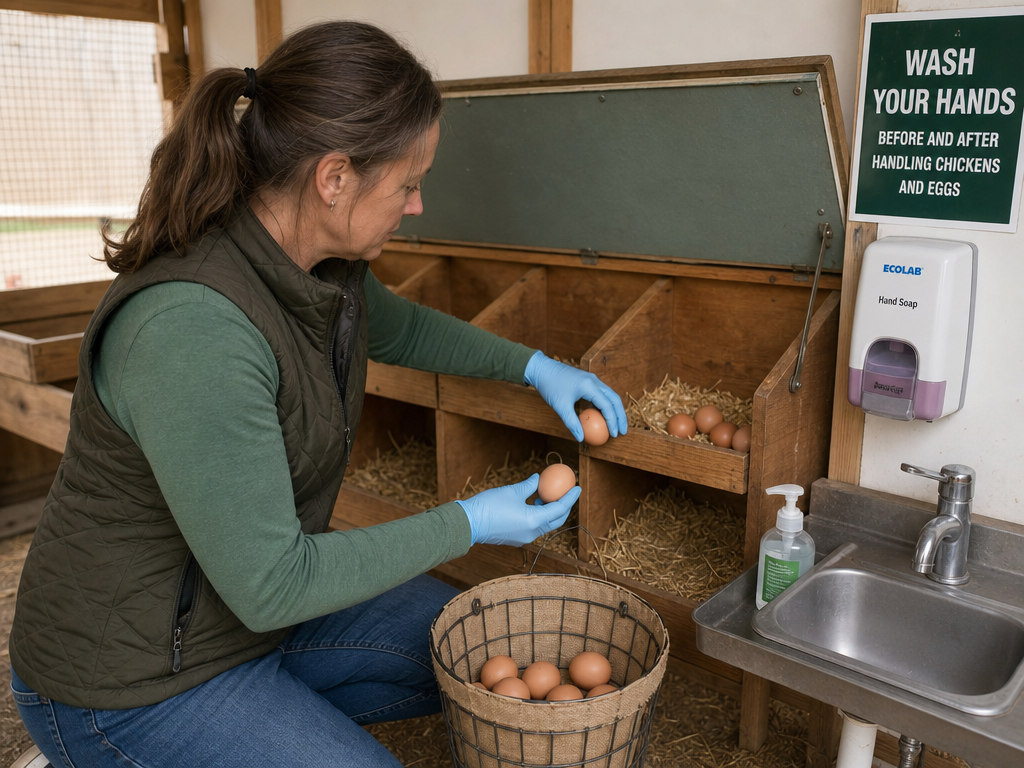
- Collect eggs daily and refrigerate at 40F or below immediately. Wash hands after egg collection. Do not wash eggs unless visibly dirty, as washing removes the protective bloom that prevents bacterial penetration.
- Cook all eggs and poultry to 165F internal temperature. Never eat raw or undercooked eggs from any source, including backyard flocks.
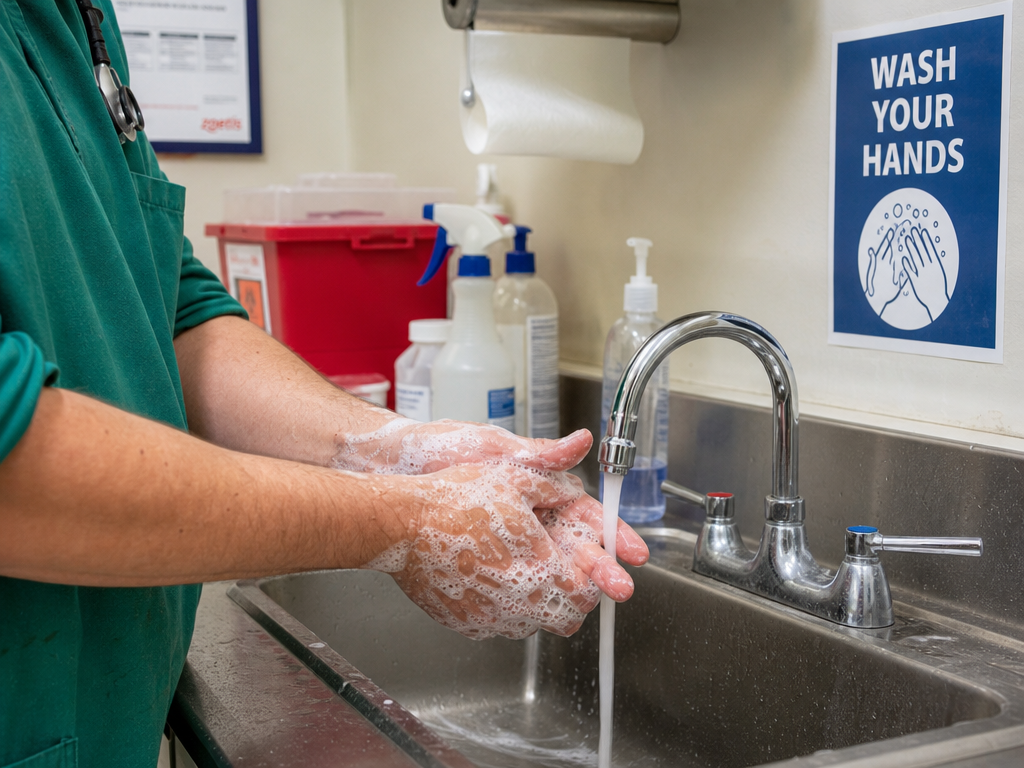
- Supervise children handling live birds; ensure immediate handwashing. The CDC has linked numerous multistate Salmonella outbreaks specifically to backyard poultry contact by children.
- Quarantine new birds 30 days and consider fecal Salmonella testing before integrating into an existing flock.
📞When Should I Call a Vet for Salmonella in Chickens?
Call a veterinarian or state veterinarian if:
- Chicks show white pasty diarrhea and high mortality in the first 2-3 weeks of life. Suspect Pullorum disease and initiate NPIP contact and testing.
- A human family member or visitor develops Salmonella gastroenteritis after contact with your flock. Report to your local health department and consider flock testing.
- You want to test your flock for Pullorum-Typhoid Clean status before sale, exhibition, or transport.
❓Salmonella in Chickens: Frequently Asked Questions
Can backyard chickens give you Salmonella?
Yes. Salmonella is the most common cause of backyard poultry-associated human illness in the US. Chickens shed Salmonella in their feces without appearing sick. Humans are infected through contact with birds, their feces, or contaminated eggs without adequate handwashing. Children under 5 are at highest risk.
What is Pullorum disease in chickens?
Pullorum disease is caused by Salmonella Pullorum and causes high chick mortality from white pasty diarrhea in the first 2-3 weeks of life. It is a federally reportable disease under the National Poultry Improvement Plan (NPIP). It has been largely eliminated from commercial US flocks through mandatory testing and culling but persists in some backyard and heritage flocks.
Can Salmonella be in eggs from backyard chickens?
Yes. Salmonella Enteritidis can colonize the hen's ovary and contaminate eggs internally before the shell forms. Even clean, uncracked eggs from an infected hen can contain Salmonella. Refrigerate eggs promptly, cook them to 165F, and wash hands after collecting eggs.
How do chickens get Salmonella?
Chickens pick up Salmonella from contaminated soil, feed, wild birds, and rodent feces. Pullorum spreads vertically from infected hen to chick through the egg. Rodents are the most efficient environmental reservoir and can colonize a feed supply rapidly.
What is the NPIP and why does it matter for backyard flocks?
The National Poultry Improvement Plan is a federal-state cooperative program that tests for Pullorum disease, Typhoid, and other reportable poultry diseases. NPIP Pullorum-Typhoid Clean certification is required in most US states for exhibiting birds at fairs, transporting them across state lines, and selling hatching eggs. Testing is inexpensive and provides flock health documentation.
📋Key Points
- ✓Salmonella is divided into three clinically important groups in poultry: host-adapted pathogens (Pullorum, Gallinarum), and ubiquitous paratyphoid serovars (Enteritidis, Typhimurium, and hundreds of others).
- ✓Key symptoms: paratyphoid serovars in adult chickens: usually none (asymptomatic carriers), s. pullorum in chicks: white pasty diarrhea (bacillary white diarrhea), huddling, weakness, high mortality, s. gallinarum in adults: lethargy, pale comb, green diarrhea, sudden death in some birds, reduced egg production in affected adult flocks.
- ✓Paratyphoid serovars: excellent for flock health; near-zero mortality in healthy adult birds. Pullorum in chicks: high mortality (up to 80-100%) in infected hatches without intervention. NPIP culling of reactors eliminates Pullorum from a flock over successive test-and-cull cycles.
- ✓This condition is contagious, isolate affected birds promptly.
- ✓This condition is zoonotic and can potentially affect humans. Practice thorough hygiene when handling sick birds.
🔗Related
Related Conditions
📚Sources & References
- 1.Salmonellosis in Poultry. Merck Veterinary Manual. 2024
- 2.Multistate Outbreaks of Salmonella Linked to Backyard Poultry. CDC. 2024
- 3.National Poultry Improvement Plan. USDA APHIS. 2024