Polymelia (Extra Limbs) in Chickens: Symptoms, Causes and Treatment
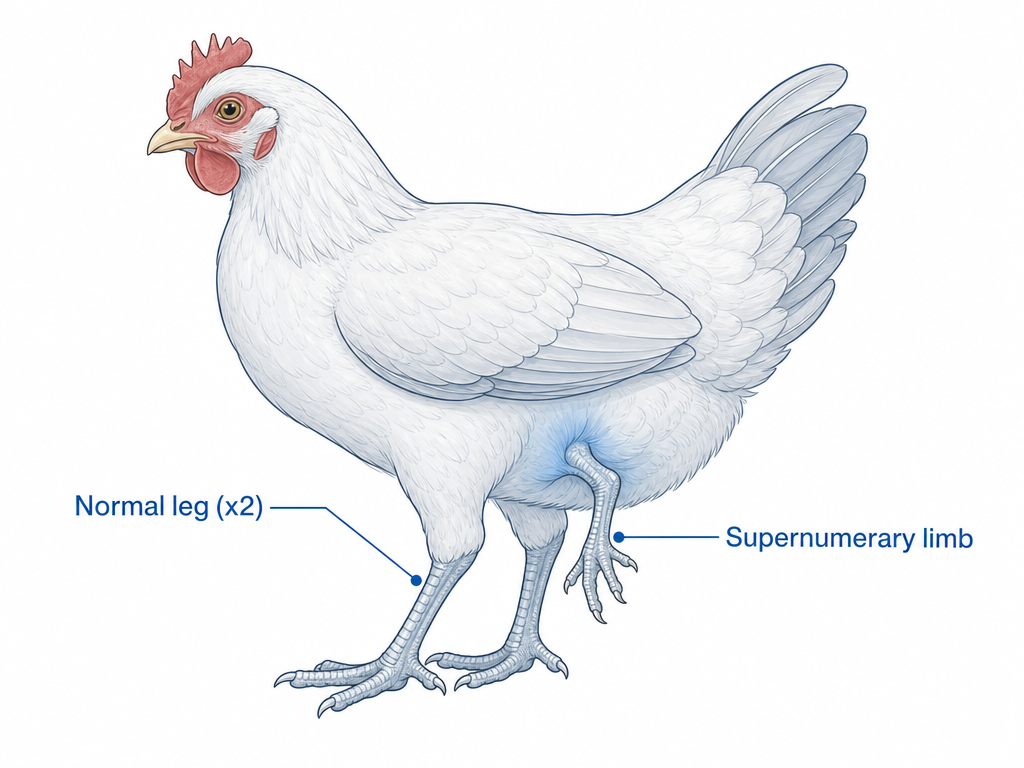
Polymelia in chickens is a rare congenital defect in which a chick develops one or more extra limbs during embryonic growth. The additional limb may be harmless or may impair walking, develop sores, or attract flock pecking. Management is based on quality of life, with veterinary surgical removal considered when the limb causes injury or disability.
Veterinarian Reviewed
FlockVet Veterinary Editorial Team· Reviewed August 2026
This is a veterinary emergency.
If your bird is showing these signs, contact a veterinarian immediately. Do not wait. Time-sensitive conditions can deteriorate rapidly without professional intervention.
At a Glance
- Urgency
- Emergency
- Contagious
- No
- Affects Humans
- No
- Key Symptoms
- extra limb (leg, wing, or partial limb) visible at hatch - the definitive sign, abnormal posture or gait caused by the extra limb interfering with normal movement, difficulty standing, walking, or balancing if the extra leg contacts the ground
- Prognosis
- Prognosis for polymelia in chickens is entirely dependent on the size, position, and functional impact of the extra limb. Birds with small, non-ground-contacting extra limbs that do not impair mobility or feeding can live normal lifespans with appropriate management - some keepers report affected birds surviving 5+ years without significant complications. Birds with large, ground-contacting extra legs that impair walking and feeding have a poor prognosis without surgical intervention; without surgery, progressive skin ulceration, joint infection, and chronic pain typically lead to welfare-driven euthanasia within weeks to months. There is no spontaneous resolution.
📑 On This Pagetap to expand
🔍What Are the Symptoms of Polymelia (Extra Limbs)?
- ●Extra limb (leg, wing, or partial limb) visible at hatch - the definitive sign
- ●Abnormal posture or gait caused by the extra limb interfering with normal movement
- ●Difficulty standing, walking, or balancing if the extra leg contacts the ground
- ●Skin irritation, pressure sores, or ulceration where the extra limb drags or presses
- ●Inability to compete at the feeder or waterer in a normal flock setting
- ●Feather loss or trauma around the extra limb from self-grooming attempts or flock-mate pecking
- ●Secondary joint swelling or infection if the extra limb is dragged across litter
- ●Behavioral withdrawal, reduced activity, or signs of chronic discomfort in severe cases
🧬What Causes Polymelia (Extra Limbs) in Chickens?
Polymelia results from errors in early embryonic development. The extra limb typically forms when a single embryo fails to fully separate from a twin.
- Incomplete twin separation: The most common cause. Two embryos begin to develop but fail to fully divide, leaving one bird with extra limb tissue from the other.
- Incubation temperature irregularities: Temperature spikes or drops in the first 72 hours of incubation - when limb development begins - can disrupt normal cell differentiation.
- Nutritional deficiencies in the breeder hen: Riboflavin (B2), folic acid, and biotin deficiencies are associated with higher rates of developmental limb defects in offspring.
- Genetic factors: Certain inbred or closely related breeding pairs show higher incidence. Not hereditary in the traditional sense but correlates with reduced genetic diversity.
- Teratogenic exposure: Pesticide residue on incubated eggs or exposure to certain chemicals during the first week of incubation has been linked to limb malformations in experimental settings.
🔬How Is Polymelia (Extra Limbs) Diagnosed?
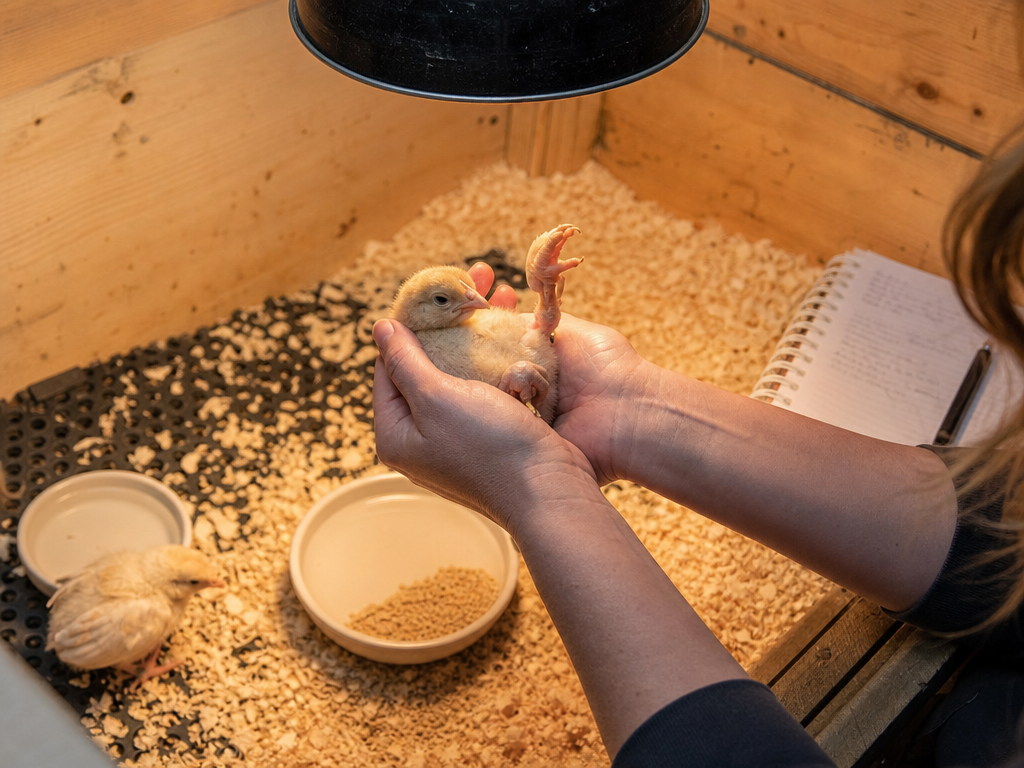
Polymelia in chickens is diagnosed by direct visual examination at hatch. A supernumerary limb is immediately obvious - there is no ambiguous clinical presentation. However, accurate assessment of the limb's attachment, functionality, and impact on the bird requires a structured examination within the first 24–48 hours.
Initial Assessment at Hatch
- Gently examine the full body of the chick, noting the position, size, and skeletal structure of the extra limb
- Determine whether the extra limb has a joint and musculature (functional attachment) or is a soft-tissue appendage without bony support
- Assess whether the extra limb contacts the ground during standing - ground-contact extra legs dramatically worsen prognosis
- Check for open skin or vascular exposure at the base of the extra limb (rare but requires immediate veterinary attention)
Differential Diagnoses
- Bumblefoot (plantar pododermatitis): Causes limb swelling and lameness in mature birds, not extra limbs. Distinguished by the characteristic black scab on the footpad. Not present at hatch.
- Curled toe paralysis (riboflavin deficiency): Causes toe curling and difficulty walking in the first 2 weeks. All toes are on existing legs - no extra limb is present. Responds rapidly to riboflavin supplementation.
- Splayed leg (spraddle leg): Causes the legs to splay laterally, mimicking the gait disruption of polymelia, but the correct number of legs is present. Caused by slippery hatch surfaces, not embryonic defect.
- Valgus/varus deformity (twisted leg): An angular limb deformity of existing legs in fast-growing breeds. Distinguishable because the leg count is normal and deformity develops over weeks, not at hatch.
- Fused toes or extra digits (polydactyly): Extra digits on an otherwise normal foot - much milder than polymelia, common in certain breeds (Silkies, Dorkings). Not the same as a supernumerary limb.
A veterinarian can use radiography to map the skeletal architecture of the extra limb, which informs decisions about surgical amputation candidacy. Use the FlockVet Symptom Checker if you are uncertain whether your bird's presentation matches polymelia or another limb condition.
💊How Is Polymelia (Extra Limbs) Treated?
There is no medical treatment that corrects polymelia. The extra limb is a permanent anatomical feature - it will not resolve, atrophy, or self-detach. The entire clinical conversation is about quality of life assessment and the decision between active supportive management or humane euthanasia.
Quality of Life Assessment (First 72 Hours)
Evaluate these five criteria within the first 72 hours of life. Birds that fail three or more should be seriously considered for humane euthanasia:
- Can the chick reach feed and water without assistance?
- Does the extra limb contact the ground and impede walking?
- Is the chick maintaining weight and showing normal vocalization?
- Are there open wounds, exposed bone, or active bleeding at the limb base?
- Does the chick show behavioral signs of pain (hunching, withdrawal, continuous distress calls)?
Surgical Amputation (Specialist Only)
Surgical removal of the extra limb by a licensed avian veterinarian is occasionally appropriate when: the limb is small, superficially attached, non-vascularized, and the bird is otherwise vigorous. Amputation of a well-vascularized limb with bony attachment carries significant anesthetic and hemorrhage risk in a newly hatched chick weighing under 40 grams. This decision requires a specialist avian vet, not a general practice. Do not attempt home removal - it is likely fatal.
Supportive Care for Birds Being Managed
- Padding and bandaging: If the extra limb drags on the ground, a veterinarian can apply a padded dressing to protect the skin and reduce friction injury. Change every 48 hours.
- Isolation from flock: Affected birds are targets for pecking. House separately or with only one or two gentle companions until stable.
- Assisted feeding if needed: Some chicks cannot compete at feeders. Hand-feed crumble mixed with water to a paste consistency (20–30% moisture) 3–4 times daily for the first week if competition is observed.
- Pain assessment: Avian veterinarians can prescribe meloxicam (0.5–1.0 mg/kg orally, once daily) for pain management in birds showing signs of discomfort. This is a prescription medication - do not dose without veterinary guidance.
Humane Euthanasia
When quality of life is unacceptable - persistent inability to access food and water, chronic pain, or progressive mobility failure - humane euthanasia is the right decision. A licensed veterinarian can administer an overdose of sodium pentobarbital (the most humane option). Home euthanasia methods (cervical dislocation performed correctly) are acceptable for keepers experienced with the technique. Do not allow a bird to die slowly from starvation or infection because the decision is emotionally difficult.
Natural & Integrative Care for Polymelia (Extra Limbs)
No natural intervention corrects the extra limb, but nutritional support, anti-inflammatory herbs, and environmental modifications meaningfully reduce secondary complications and improve quality of life for birds being managed long-term.
Natural and integrative care does not correct polymelia - the extra limb will remain - but it plays a meaningful role in reducing secondary complications, managing pain, and supporting the bird's overall resilience during its life with this condition.
Nutritional Support
- High-quality starter/grower crumble: Ensure the affected bird is actually eating. Birds with mobility limitations often cannot compete. Provide feed in multiple low, shallow dishes placed within easy reach. A 20% protein chick crumble supports tissue repair and muscle maintenance.
- Vitamin B-complex supplementation: While the defect is already formed, B-vitamin support (particularly riboflavin at 4 mg/kg of feed, and folic acid) supports nervous system function and reduces the risk of secondary nutritional deficiencies from reduced intake. Add a poultry-formulated B-complex supplement to water at the label dose for the first 4 weeks.
- Probiotic supplementation: Birds under the chronic stress of a congenital defect have measurably altered gut microbiomes. Add a poultry-specific probiotic to feed daily. Lactobacillus acidophilus-based products are the best-studied in poultry and support immune function as well as digestion.
Pain and Inflammation Management
- Turmeric (curcumin): Anti-inflammatory with documented activity in poultry at 1–2 g per kg of feed. Mix into a wet mash daily. Evidence for pain relief is moderate - appropriate for mild discomfort, not severe pain (use prescription meloxicam for that).
- Comfrey leaf poultice (topical only): Applied to skin irritation or pressure sores at the extra limb base - not ingested. Allantoin in comfrey promotes epithelial healing. Apply as a wet compress for 10–15 minutes, twice daily, to affected skin areas.
Environmental Modifications
- Rubber mat or textured flooring: Replace wire or slippery surfaces with rubber anti-fatigue mat or deep, clean shavings (3–4 inches). This reduces dragging injury to the extra limb and reduces infection risk from ground contact.
- Low feeder and waterer placement: Mount feed and water at chest height for a standing chick - no taller. Some polymelia birds cannot raise their heads fully without losing balance.
- Dust bath access: Dust bathing is an important comfort behavior. Provide a shallow box (4–6 inches) with dry dirt or wood ash - easily accessible without the bird needing to climb over a lip. Reduces ectoparasite load and supports normal behavioral expression.
- Thermal comfort: Keep affected birds at the high end of the normal temperature range for their age (95°F at week 1, reducing 5°F per week). Cold stress compounds musculoskeletal discomfort and suppresses immune function.
🛡️How Can Polymelia (Extra Limbs) Be Prevented?
Because polymelia is established in the first 72 hours of incubation, prevention focuses entirely on what happens before and during those critical early days. These are the highest-leverage interventions:
1. Breeding Stock Selection (Highest Impact)
- Remove any bird that produces polymelia offspring from your breeding program - both the hen and the rooster. If a second affected chick appears from the same pair, cull the pair from breeding immediately. Heritability is not fully characterized but the pattern is consistent with at least partial genetic influence.
- Avoid inbreeding within small flocks. A coefficient of inbreeding above 6.25% (equivalent to first-cousin mating repeated for several generations) measurably increases the rate of developmental defects across all organ systems, not only limbs.
- Source hatching eggs or chicks from flocks with documented production records, not from pairs with a history of hatch defects.
2. Incubation Temperature Control
- Maintain incubator temperature at 99.5°F (37.5°C) dry bulb for forced-air incubators, 101–102°F for still-air. Use a calibrated, independent thermometer - do not trust the incubator's built-in display alone. Calibrate against a NIST-traceable thermometer once per season.
- Avoid opening the incubator during days 1–3 of incubation. Every opening causes a temperature transient that, repeated, accumulates embryonic thermal stress during the limb-bud formation window.
- Place the incubator away from windows, HVAC vents, and exterior walls. Ambient temperature swings above 5°F in the incubator room create internal temperature instability even with feedback-controlled incubators.
- Log incubator temperature every 4–6 hours during the first 4 days. If you see excursions above 103°F or below 97°F, document them - you may need this data if a hatch produces defects.
3. Breeder Hen Nutrition
- Feed breeding hens a quality layer breeder ration formulated for reproduction - not standard layer feed. Breeder rations are fortified with higher levels of riboflavin (B2), folic acid (B9), and B12 specifically because these vitamins are critical for embryo development.
- Supplement with 1 mg riboflavin per hen per day (mixed in feed) during peak breeding season (spring/early summer when hatch rates are highest). Riboflavin degrades rapidly in stored, light-exposed feed - use fresh product.
- Do not feed grain-based rations older than 90 days. B-vitamins, particularly riboflavin, degrade measurably within 60–90 days of milling, especially in warm, humid storage environments.
- Inspect all grain and feed for mold before offering to breeding birds. Even visually minor mold contamination can produce mycotoxin levels (aflatoxin, fumonisin) sufficient to disrupt embryonic limb patterning. When in doubt, discard the feed.
4. Toxin Avoidance
- Do not apply organochlorine or organophosphate pesticides in or around the breeding flock during the 30 days preceding and during the hatching season.
- Provide clean, covered water sources to prevent algae toxin accumulation in standing water, particularly cyanotoxins from blue-green algae blooms in warm months.
📞When Should I Call a Vet for Polymelia (Extra Limbs)?
Contact a licensed avian veterinarian immediately if:
- The extra limb has exposed skin, bleeding, or appears to have open vascular structures at the attachment point - this is a surgical emergency in the first 24 hours
- The affected chick cannot stand, walk, or access food or water within 48 hours of hatch
- The bird shows signs of systemic infection (swelling spreading up from the limb base, warmth, the bird becoming progressively weaker or lethargic)
- You are considering surgical amputation - this must be performed by an avian specialist, not a general vet, and only after radiographic assessment
- You need humane euthanasia performed professionally
- The extra limb is causing self-trauma that cannot be controlled with bandaging
- You are unsure whether the bird's quality of life justifies continued management - a vet can provide an objective assessment using validated welfare scoring tools
❓Polymelia (Extra Limbs): Frequently Asked Questions
What is polymelia in chickens?
Polymelia is a rare congenital defect where a chicken hatches with one or more extra limbs. The extra limb is typically non-functional and may be attached to the back, side, or an existing limb. It results from abnormal embryonic development and is not painful in itself, though secondary complications can arise.
What causes polymelia in chickens?
Polymelia results from errors in early embryonic development, most commonly incomplete separation of twin embryos. Contributing factors may include incubation temperature irregularities, nutritional deficiencies in the breeder hen, pesticide exposure, or genetic factors. It is not contagious and cannot spread through a flock.
Can a chicken with polymelia live a normal life?
Quality of life depends on the size and position of the extra limb. Small, non-interfering extra limbs often cause no significant problems. Larger limbs that impair movement, attract pecking from flock-mates, or develop sores require management or surgical removal by a vet. Many polymelia birds live normal lifespans.
📋Key Points
- ✓Polymelia results from errors in early embryonic development.
- ✓Key symptoms: extra limb (leg, wing, or partial limb) visible at hatch - the definitive sign, abnormal posture or gait caused by the extra limb interfering with normal movement, difficulty standing, walking, or balancing if the extra leg contacts the ground, skin irritation, pressure sores, or ulceration where the extra limb drags or presses.
- ✓Prognosis for polymelia in chickens is entirely dependent on the size, position, and functional impact of the extra limb. Birds with small, non-ground-contacting extra limbs that do not impair mobility or feeding can live normal lifespans with appropriate management - some keepers report affected birds surviving 5+ years without significant complications. Birds with large, ground-contacting extra legs that impair walking and feeding have a poor prognosis without surgical intervention; without surgery, progressive skin ulceration, joint infection, and chronic pain typically lead to welfare-driven euthanasia within weeks to months. There is no spontaneous resolution.
🔗Related
Related Conditions
📚Sources & References
- 1.Developmental Defects in Poultry. Merck Veterinary Manual. 2024
- 2.Common Management-Related Problems in Backyard Poultry. Merck Veterinary Manual. 2024