Spraddle Leg in Chicks: Symptoms, Causes and Treatment
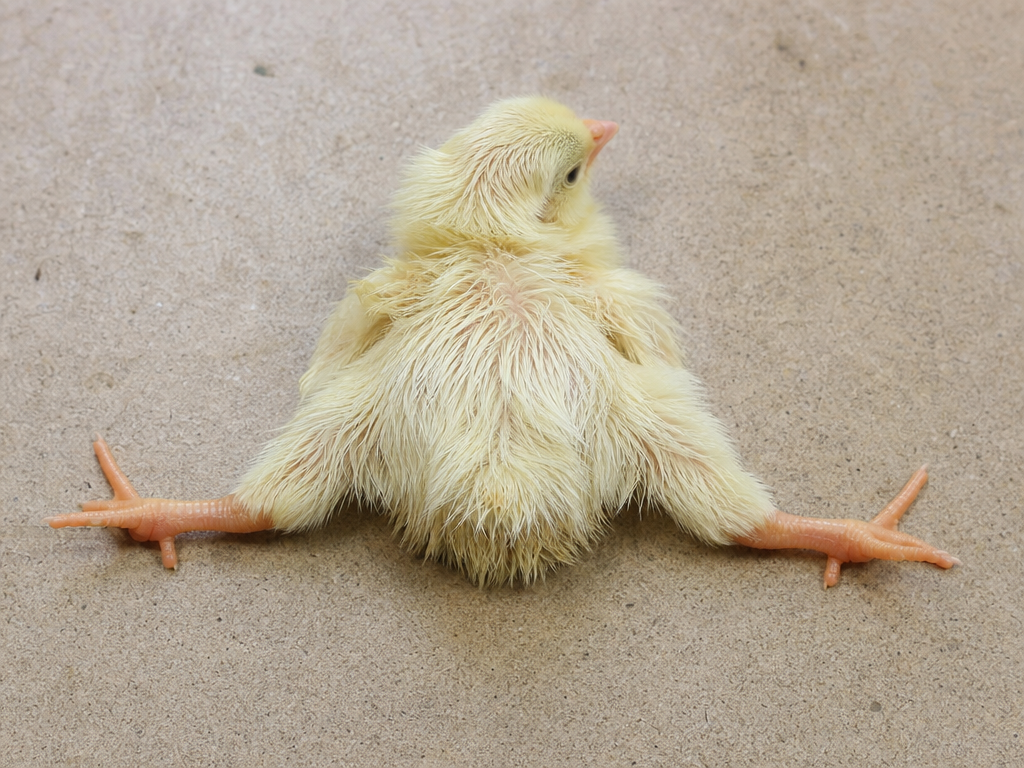
Spraddle leg (also called splay leg) is a developmental deformity in newly hatched chicks in which one or both legs slide outward and cannot be held under the body for walking. It results from slippery incubation or brooder surfaces, nutritional deficiencies in the breeding flock, or incubation errors. Most mild to moderate cases can be corrected within 24-72 hours using a simple leg brace made from medical tape or a bandage.
Veterinarian Reviewed
FlockVet Editorial Team· Reviewed August 2026
At a Glance
- Urgency
- Moderate
- Contagious
- No
- Affects Humans
- No
- Key Symptoms
- one or both legs splayed to the side at hatch, chick unable to stand or walk normally, chick uses wings to prop itself up
- Prognosis
- Excellent when treated within 24-48 hours of hatch. Mild unilateral cases: full recovery within 48 hours. Bilateral cases: full recovery within 3-7 days with consistent splinting. Cases untreated beyond 5-7 days have poor prognosis as tendons and joints begin to permanently set in the abnormal position.
📑 On This Pagetap to expand
🔍What Are the Symptoms of Spraddle Leg in Chicks?
- ●One or both legs splayed to the side at hatch
- ●Chick unable to stand or walk normally
- ●Chick uses wings to prop itself up
- ●Hocks or feet pointing outward instead of forward
- ●Chick cannot reach food or water without falling
- ●Visible rotation of the leg at the hip joint
- ●Thin or underdeveloped muscles in the affected leg
- ●Other chicks in the same hatch also showing leg problems (incubation cause)
- ●Normal neurological function otherwise (alert eyes, responsive to sound)
🧬What Causes Spraddle Leg in Chicks in Chickens?
Spraddle leg develops when the tendons and muscles that hold the legs beneath the body do not develop or anchor correctly during or immediately after hatching. The most common cause is preventable.
- Slippery brooder or incubator surface: The most frequent cause in backyard hatching. Chicks hatching on smooth surfaces (newspaper, bare incubator tray) cannot gain purchase with their feet, and the hips drift outward during the critical 24-hour post-hatch period when tendons are still soft.
- Incubation temperature errors: Overheating during the final days of incubation or sudden temperature fluctuations damage developing connective tissue and musculoskeletal structures in the embryo.
- Incubation humidity errors: Excessive humidity during the first 18 days prevents normal air cell development and can produce large, weak chicks that struggle to position correctly in the shell.
- Nutritional deficiency in the breeder flock: Vitamin B2 (riboflavin) and vitamin D3 deficiencies in breeding hens produce chicks with curled toe paralysis and leg weakness that mimics or accompanies spraddle leg. Ensure breeders receive a complete breeder ration.
- Genetics: Some breeds (particularly heavy breeds like Cornish Cross) have higher incidence of leg development problems. Chicks from closely inbred lines are also more susceptible.
- Traumatic hatching assistance: Chicks assisted too early from the egg (before the yolk sac is absorbed) are weak and more prone to leg deformity.
🔬How Is Spraddle Leg in Chicks Diagnosed?
Spraddle leg is diagnosed visually at or within hours of hatch. Distinguish from other leg problems:
- Spraddle leg vs. curled toes: In spraddle leg, the legs splay at the hip. In curled toe paralysis (riboflavin deficiency), the toes curl inward and the chick walks on its knuckles while the legs remain in normal position.
- Spraddle leg vs. Marek's disease: Marek's leg paralysis typically appears at 4-16 weeks in a previously mobile bird, with one leg extended forward and one back. Spraddle leg is present at or immediately after hatch.
- Unilateral vs. bilateral: One affected leg is more treatable than two, but bilateral cases still respond well to early splinting.
- Assess alertness: A chick that is alert, vocalizing, and interested in food despite leg deformity has good prognosis. A lethargic, silent chick with multiple problems is less likely to survive.
💊How Is Spraddle Leg in Chicks Treated?
Leg splinting (hobble brace) is the primary treatment and is highly effective when started within the first 24-48 hours of life.
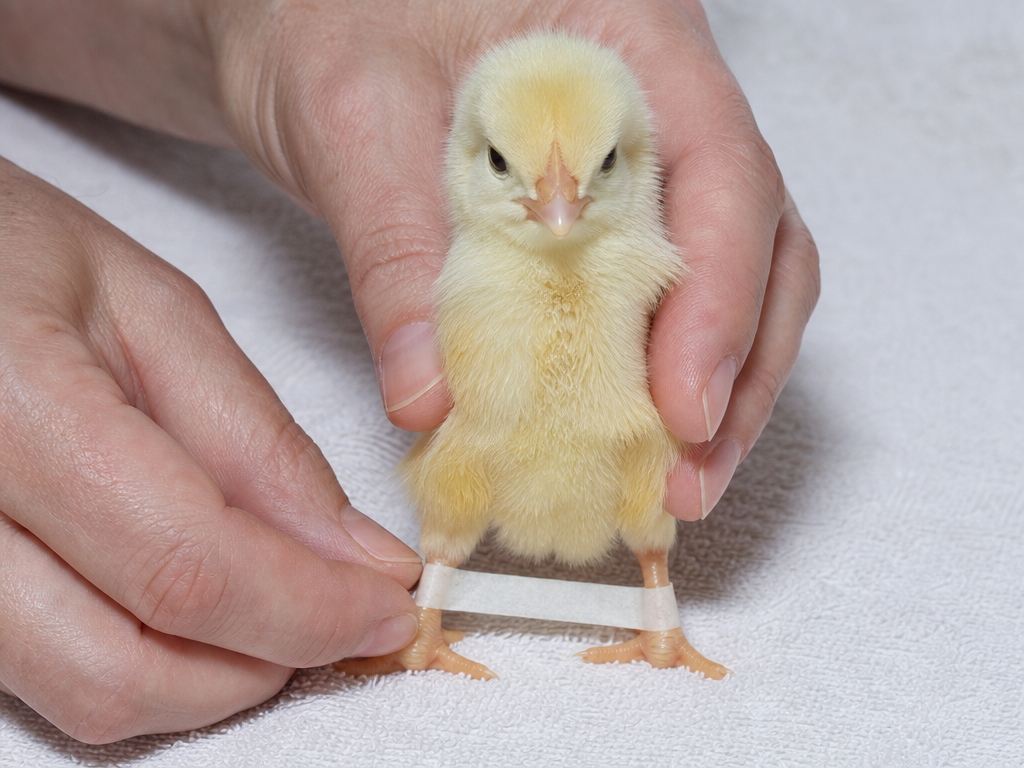
Method: Cut a piece of medical foam tape, Vetrap, or fabric bandage approximately 1-1.5 cm wide and 5-7 cm long. Wrap gently around both legs just above the hock, leaving the legs positioned directly below the body at hip width. The brace should allow slight natural movement but prevent outward splaying. Replace every 24 hours and adjust as the chick grows.
Duration: Most mild cases correct fully within 24-48 hours. Moderate cases may need the brace for 3-5 days. Remove the brace once the chick can stand and take several steps without falling.
Supportive care: Place the chick in a small container with a non-slip surface (paper towel, rubber mat) so it can push up against the sides while the brace is in place. Bring food and water to the chick as it may not be able to reach them independently. Niacin supplementation (25 mg/gallon of water) supports leg muscle development during recovery.
Natural & Integrative Care for Spraddle Leg in Chicks
A foam tape hobble brace plus a non-slip surface corrects most cases within 48-72 hours. Nutritional support speeds muscle recovery and prevents recurrence in the hatch group.
Natural and supportive approaches accelerate recovery when combined with splinting.
Non-slip surface: Immediately replace smooth brooder flooring with textured paper towels, rubberized shelf liner, or rubber shelf matting. This prevents worsening and helps recovering chicks grip the floor during physical therapy.
Niacin in water: Add 25-40 mg of plain niacin (not niacinamide) per gallon of drinking water. Niacin supports leg muscle development and is especially important for ducklings and goslings but also benefits chicks with leg weakness.
Passive range-of-motion exercise: Gently hold the chick and move the legs through a normal walking motion for 2-3 minutes twice daily. This helps maintain muscle tone and hip joint mobility during the splinting period.
Vitamin B-complex in water: A water-soluble B-vitamin supplement supports nerve function and muscle development in recovering chicks. Use a poultry-specific formulation for 7-10 days.
🛡️How Can Spraddle Leg in Chicks Be Prevented?
- Line incubator hatching trays with non-slip shelf liner, rubber mesh, or paper towels with a rough texture. Never allow chicks to hatch on smooth plastic or metal surfaces.
- Set incubation temperature and humidity precisely and verify with a calibrated thermometer and hygrometer. Temperature spikes above 102 F during the first 18 days are the primary incubation cause of leg deformity.
- Feed breeding hens a complete breeder ration containing vitamin D3, riboflavin, and adequate calcium. Nutritional deficiencies in the hen transfer directly to the developing embryo.
- Do not assist chicks from the egg before pipping has been ongoing for at least 24 hours. Premature assistance produces weak chicks more prone to developmental leg problems.
- Cover brooder floors with textured paper towels for the first 2 weeks after chicks are moved from the incubator. Non-slip surfaces are essential during the period when tendons are still soft.
📞When Should I Call a Vet for Spraddle Leg in Chicks?
Contact a veterinarian if:
- The chick does not improve after 5-7 days of correct splinting. A veterinarian can assess for underlying hip joint luxation or skeletal deformity that requires different management.
- The leg appears fractured, the hock joint is swollen, or there are open wounds around the brace area. Infection in an open wound on a baby chick escalates quickly.
- Multiple chicks from the same hatch are affected. This pattern suggests an incubation or nutritional issue in the breeding flock that requires investigation to prevent losses in future hatches.
❓Spraddle Leg in Chicks: Frequently Asked Questions
How do you fix spraddle leg in chicks?
The standard treatment is a leg brace (hobble) made from medical foam tape or Vetrap. Cut a strip 1-1.5 cm wide, wrap it around both legs just above the hocks, and position the legs at normal hip width. Replace daily. Most mild cases correct within 48-72 hours.
What causes spraddle leg in baby chicks?
The most common cause is hatching or brooding on a slippery surface like newspaper or a smooth incubator tray. Incubation temperature errors, vitamin B2 deficiency in breeder hens, and genetic factors are also causes.
Can spraddle leg be fixed?
Yes, when caught early. Chicks treated within 24-48 hours of hatching have an excellent prognosis for full recovery. Treatment becomes less effective as chicks age and tendons firm up in the abnormal position.
Is spraddle leg painful for chicks?
The deformity itself may not cause pain but prevents the chick from reaching food and water, leading to rapid starvation and dehydration. Early splinting combined with hand-delivery of water and feed is essential for chick survival.
How long does it take to correct spraddle leg?
Mild cases can correct in as little as 24-48 hours. Moderate bilateral cases typically take 3-5 days of consistent splinting. Remove the brace once the chick can walk several steps without falling.
Does spraddle leg happen more in certain breeds?
Heavy meat breeds like Cornish Cross and Jersey Giants have higher rates of leg problems including spraddle leg. Eggs that are too large or chicks that are disproportionately heavy for their leg strength at hatch are more susceptible.
📋Key Points
- ✓Spraddle leg develops when the tendons and muscles that hold the legs beneath the body do not develop or anchor correctly during or immediately after hatching.
- ✓Key symptoms: one or both legs splayed to the side at hatch, chick unable to stand or walk normally, chick uses wings to prop itself up, hocks or feet pointing outward instead of forward.
- ✓Excellent when treated within 24-48 hours of hatch. Mild unilateral cases: full recovery within 48 hours. Bilateral cases: full recovery within 3-7 days with consistent splinting. Cases untreated beyond 5-7 days have poor prognosis as tendons and joints begin to permanently set in the abnormal position.
🔗Related
Related Conditions