Infectious Coryza in Chickens: Symptoms, Causes and Treatment
Infectious coryza is a bacterial upper respiratory disease caused by Avibacterium paragallinarum. It is recognized by swelling around the face and sinuses, a foul-smelling sticky nasal discharge, and rapid spread through the flock within 1-2 days. Treatment with sulfonamides or other antibiotics is effective, but recovered birds remain permanent carriers.
Veterinarian Reviewed
FlockVet Veterinary Editorial Team· Reviewed August 2026
At a Glance
- Urgency
- Moderate
- Contagious
- Yes
- Affects Humans
- No
- Key Symptoms
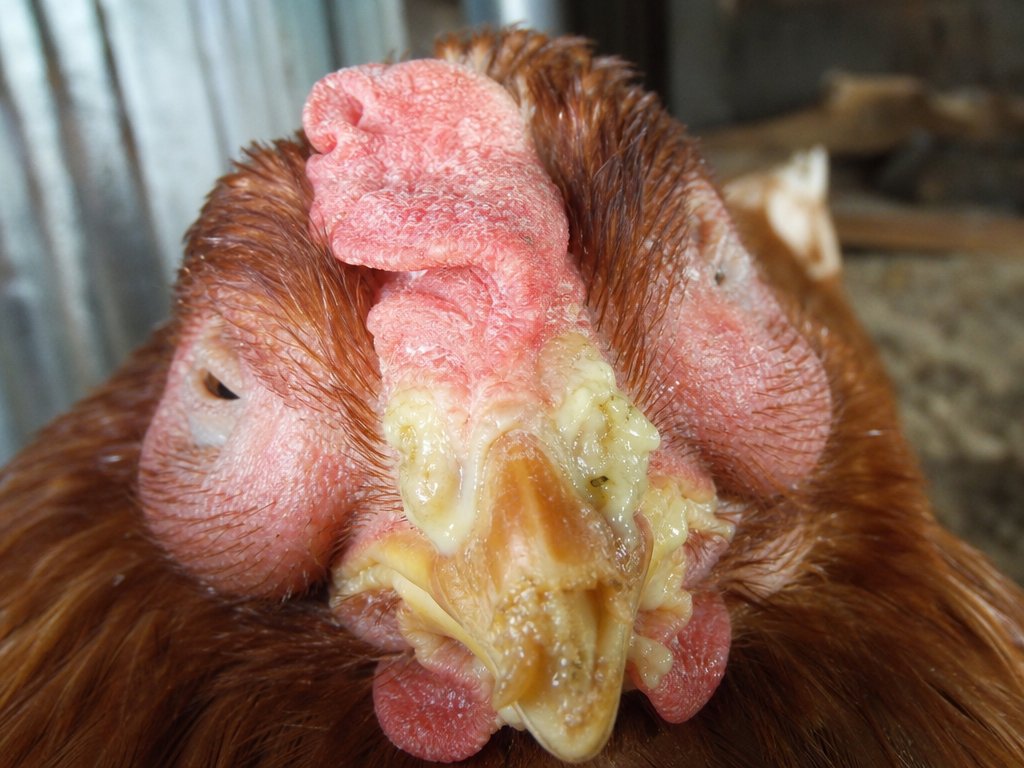
- swelling of the face, especially around the eyes and sinuses, foul-smelling, sticky mucoid nasal discharge, swollen, edematous wattles in male birds
- Prognosis
- Good with prompt antibiotic treatment. Mortality is low (1-5%) in uncomplicated cases. Egg production usually recovers within 4-6 weeks after treatment. Prognosis worsens significantly with concurrent Mycoplasma or Newcastle disease infection. Recovered birds are permanent carriers and must be managed accordingly.
📑 On This Pagetap to expand
🔍What Are the Symptoms of Infectious Coryza?
- ●Swelling of the face, especially around the eyes and sinuses
- ●Foul-smelling, sticky mucoid nasal discharge
- ●Swollen, edematous wattles in male birds
- ●Squinting or partially closed eyes due to facial swelling
- ●Sneezing and shaking of the head
- ●Reduced appetite and water intake
- ●Drop in egg production of 10-40%
- ●Moist rattling sounds when breathing in severe cases
🧬What Causes Infectious Coryza in Chickens?
Avibacterium paragallinarum (formerly Haemophilus paragallinarum) is a gram-negative bacterium that requires V-factor (NAD) for growth and does not survive long in the environment. Despite this fragility, it spreads readily through infected birds.
- Carrier birds: Recovered chickens remain permanent subclinical carriers for life. Introducing a single carrier bird into a naive flock is the most common source of coryza outbreaks. This is why buying birds at auctions or from unknown sources carries high risk.
- Three serovars (A, B, C): Avibacterium paragallinarum exists in three serovars with limited cross-protection. Vaccination against one serovar may not prevent disease caused by another. This also explains why vaccinated flocks sometimes still get coryza.
- Contaminated water: The bacteria survive in drinking water for several hours. Shared water lines and drinkers are an efficient transmission route within a flock.
- Stress and co-infections: Mycoplasma gallisepticum, Newcastle disease, and IBV infections dramatically worsen coryza severity and duration.
🔬How Is Infectious Coryza Diagnosed?
The combination of rapid flock spread, characteristic facial swelling, and foul-smelling discharge is highly suggestive of coryza.
- Smell test: The discharge from coryza has a distinctively foul, sweet-sour odor unlike other respiratory diseases. This alone is a useful field diagnostic clue.
- Flock pattern: Coryza typically spreads to 80-100% of susceptible birds within 1-2 weeks. The facial swelling is more pronounced in birds housed in poor ventilation.
- Lab confirmation: Bacterial culture from sinus exudate on blood agar with a Staphylococcus nurse colony (for V-factor). PCR is more sensitive and faster. Serotyping (A, B, C) guides vaccine selection.
- Differentials: Mycoplasmosis (slower spread, no distinct odor), fowl cholera (more acute death), swollen head syndrome (different pathogen, turkey-associated), vitamin A deficiency (gape-like lesions without bacterial culture).
💊How Is Infectious Coryza Treated?
Infectious coryza responds well to antibiotics, but treatment suppresses rather than eliminates the organism. Recovered birds remain carriers regardless of treatment duration.
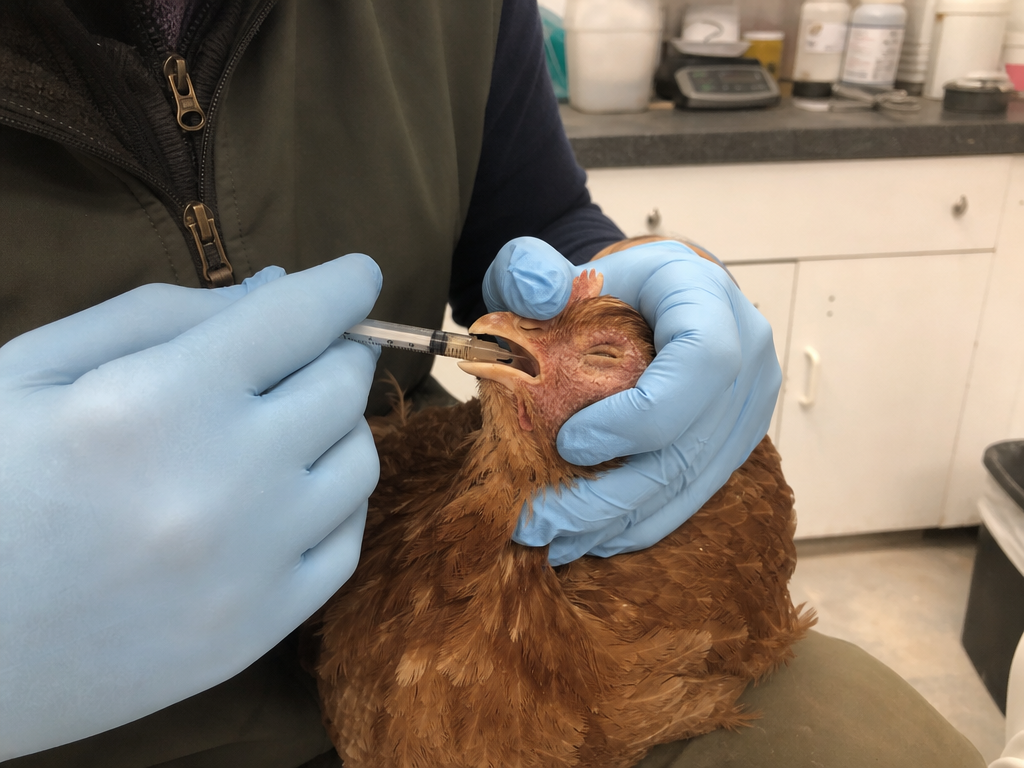
First-line therapy: Sulfadimethoxine (Albon) 0.05% in drinking water for 6 consecutive days. Alternatively, sulfamethazine at 0.2% in water for 2 days on, 3 days off, 2 days on. Trimethoprim-sulfamethoxazole combinations have shown good efficacy.
Alternative antibiotics: Erythromycin (200mg/gallon), tylosin, oxytetracycline, or amoxicillin are effective against susceptible strains. Increasing antibiotic resistance has been documented in some regions; lab sensitivity testing guides selection.
Duration of treatment: Treat for the full recommended course even if signs resolve early. Incomplete treatment increases the risk of resistant strains and carrier development.
Important caveat: Treatment clears clinical signs but does NOT eliminate the carrier state. Recovered birds must be considered permanent carriers and should not be mixed with uninfected flocks.
Natural & Integrative Care for Infectious Coryza
Antibiotic treatment is necessary to control coryza; natural approaches provide supportive benefit but cannot replace targeted antibacterial therapy.
Natural approaches do not adequately treat active coryza infections. The disease progresses rapidly and antibiotic treatment is necessary to prevent significant production losses and spread.
Supportive care during antibiotic treatment: Vitamins A and E supplementation supports mucosal integrity. Vitamin A deficiency is a predisposing factor for upper respiratory disease severity.
Apple cider vinegar (1 tbsp/gallon): Acidified water reduces bacterial load in drinkers but does not treat systemic infection. Use alongside, not instead of, antibiotics.
Ventilation improvement: Reducing ammonia and moisture is a powerful supportive measure that reduces respiratory tract inflammation and secondary bacterial colonization.
🛡️How Can Infectious Coryza Be Prevented?
- Never introduce birds from unknown sources or auctions into a naive flock. If introducing new birds, quarantine for 30 days and observe for facial swelling or discharge before integration.
- Vaccinate in endemic areas using a bacterin that covers the serovars (A, B, C) circulating locally. Two doses 3-4 weeks apart are required for protection. Vaccination reduces severity but may not prevent infection.
- All-in, all-out flock management prevents carrier birds from serving as a reservoir for new arrivals.
- Cull or permanently isolate known carrier birds rather than reintroducing them to naive flocks after treatment.
- Disinfect water lines and drinkers regularly. Avibacterium paragallinarum survives in water for hours and spreads efficiently through shared drinkers.
📞When Should I Call a Vet for Infectious Coryza?
Consult a veterinarian if:
- Facial swelling and foul discharge spread to more than 20% of the flock within 48 hours. Confirm the diagnosis and get sensitivity testing before choosing an antibiotic.
- Signs do not improve within 3-4 days of starting sulfonamide therapy. Antibiotic-resistant strains require culture and sensitivity to guide alternative treatment.
- Mortality exceeds 5%. Combined infection with Mycoplasma, IBV, or Newcastle disease significantly increases mortality and requires aggressive management.
❓Infectious Coryza: Frequently Asked Questions
What is infectious coryza in chickens?
Infectious coryza is a bacterial respiratory disease caused by Avibacterium paragallinarum. It causes swelling around the face and sinuses, foul-smelling nasal discharge, and reduced egg production. It spreads rapidly through flocks and responds to antibiotics, but recovered birds remain permanent carriers.
How do you treat infectious coryza in chickens?
Treatment is with sulfonamides such as sulfadimethoxine (Albon) in drinking water for 6 days, or erythromycin, tylosin, or trimethoprim-sulfa. Antibiotics suppress the infection and resolve clinical signs but do not eliminate the carrier state. Treat the entire flock, not just visibly sick birds.
How does coryza spread between chickens?
Coryza spreads through direct contact with infected birds, contaminated water, and respiratory droplets. The most common introduction route is a recovered carrier bird mixed into a naive flock. The bacteria survive for several hours in water drinkers, enabling rapid flock-wide spread.
Can coryza in chickens spread to humans?
No. Avibacterium paragallinarum is not a human pathogen and poses no zoonotic risk. The disease is specific to chickens and a few related bird species. Normal hygiene practices after handling sick birds are sufficient.
Do chickens recover from infectious coryza?
Yes. Most birds recover from clinical signs within 2-4 weeks with antibiotic treatment. However, recovered birds become permanent subclinical carriers of Avibacterium paragallinarum for life and can reintroduce the disease to any naive flock they contact.
📋Key Points
- ✓Avibacterium paragallinarum (formerly Haemophilus paragallinarum) is a gram-negative bacterium that requires V-factor (NAD) for growth and does not survive long in the environment.
- ✓Key symptoms: swelling of the face, especially around the eyes and sinuses, foul-smelling, sticky mucoid nasal discharge, swollen, edematous wattles in male birds, squinting or partially closed eyes due to facial swelling.
- ✓Good with prompt antibiotic treatment. Mortality is low (1-5%) in uncomplicated cases. Egg production usually recovers within 4-6 weeks after treatment. Prognosis worsens significantly with concurrent Mycoplasma or Newcastle disease infection. Recovered birds are permanent carriers and must be managed accordingly.
- ✓This condition is contagious, isolate affected birds promptly.
🔗Related
Related Conditions
📚Sources & References
- 1.Infectious Coryza in Poultry. Merck Veterinary Manual. 2024
- 2.Avibacterium paragallinarum Infections in Poultry. PubMed / Avian Pathology. 2020
- 3.Poultry Disease Management - Infectious Coryza. University of Georgia Extension. 2021