Infectious Bronchitis in Chickens: Symptoms, Causes and Treatment
Infectious bronchitis (IB) is a highly contagious coronavirus that spreads through an entire flock within 24-48 hours. It causes respiratory signs in chicks, and sharp drops in egg production with watery whites and misshapen shells in laying hens. There is no curative treatment; vaccination and biosecurity are the primary control tools.
Veterinarian Reviewed
FlockVet Veterinary Editorial Team· Reviewed August 2026
This is a veterinary emergency.
If your bird is showing these signs, contact a veterinarian immediately. Do not wait. Time-sensitive conditions can deteriorate rapidly without professional intervention.
At a Glance
- Urgency
- Emergency
- Contagious
- Yes
- Affects Humans
- No
- Key Symptoms
- sudden onset coughing, sneezing, and tracheal rales (rattling breath), watery nasal and ocular discharge, drop in egg production of 25-50% within 48 hours in laying flocks
- Prognosis
- Good for respiratory form in mature birds - most recover within 2-3 weeks. Egg production usually returns within 4-6 weeks. Poor prognosis for permanent full production recovery if hens under 6 weeks are infected before oviduct development is complete. Nephropathogenic strains: guarded, mortality 25-60% in young chicks without supportive care.
📑 On This Pagetap to expand
🔍What Are the Symptoms of Infectious Bronchitis?
- ●Sudden onset coughing, sneezing, and tracheal rales (rattling breath)
- ●Watery nasal and ocular discharge
- ●Drop in egg production of 25-50% within 48 hours in laying flocks
- ●Eggs with watery whites, rough or thin shells, or misshapen bodies
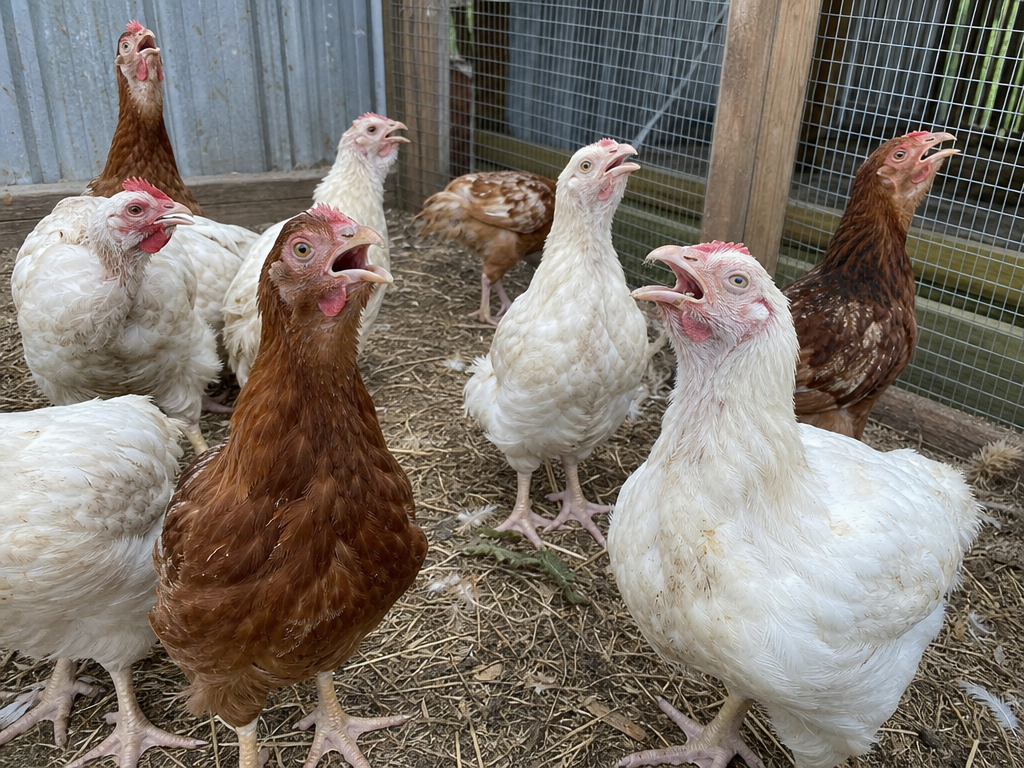
- ●Chicks gasping and huddling under heat source
- ●Swollen sinuses around the eyes and beak in some strains
- ●Reduced appetite and lethargy
- ●Increased mortality in chicks under 3 weeks old
🧬What Causes Infectious Bronchitis in Chickens?
Infectious bronchitis virus (IBV) is an avian gammacoronavirus with dozens of serotypes, many of which do not cross-protect against each other. This makes complete vaccine protection difficult to achieve.
- Airborne transmission: IBV is shed in respiratory secretions and feces. In susceptible flocks, airborne spread can infect all birds within 24-48 hours. Virus can travel on wind between farms.
- Fomite and equipment spread: Contaminated clothing, equipment, vehicles, and feed bags carry virus between flocks. IBV survives on surfaces for hours at room temperature.
- Multiple serotypes: Massachusetts, Connecticut, Delaware, Arkansas, California and numerous other serotypes circulate regionally. Vaccination against one serotype does not protect against others, explaining why vaccinated flocks sometimes still get IB.
- Stress triggers: Chilling, ammonia buildup, and concurrent infection with Mycoplasma or E. coli dramatically worsen clinical signs and increase mortality.
🔬How Is Infectious Bronchitis Diagnosed?
Presumptive diagnosis is based on the rapid spread of respiratory signs combined with acute egg production drops and shell quality changes in layers. No other disease causes this exact pattern so quickly.
- Flock pattern: If 80-100% of birds show respiratory signs within 48 hours, IBV is the most likely cause. Newcastle disease causes similar spread but more severe neurological signs.
- Egg quality change: Watery thin albumin (egg white) is nearly pathognomonic for IB in laying flocks. Shells may be rough, misshapen, or thin.
- Lab confirmation: Reverse transcription PCR (RT-PCR) on tracheal swabs or fresh tissues identifies the virus. Serology (ELISA, HI test) confirms exposure but doesn't differentiate strains.
- Nephropathogenic strains: Some IBV strains (Holte, Gray) attack kidneys causing pale, swollen kidneys with urate deposits visible at necropsy. These strains cause higher mortality.
💊How Is Infectious Bronchitis Treated?
There is no antiviral treatment for infectious bronchitis. Management focuses on supportive care and preventing secondary bacterial infections.
Supportive care: Maintain optimal brooder temperature (95F at day 1, reducing 5F per week). Reduce stocking density to improve air quality. Provide vitamins and electrolytes in drinking water. Ensure ventilation removes ammonia without chilling birds.
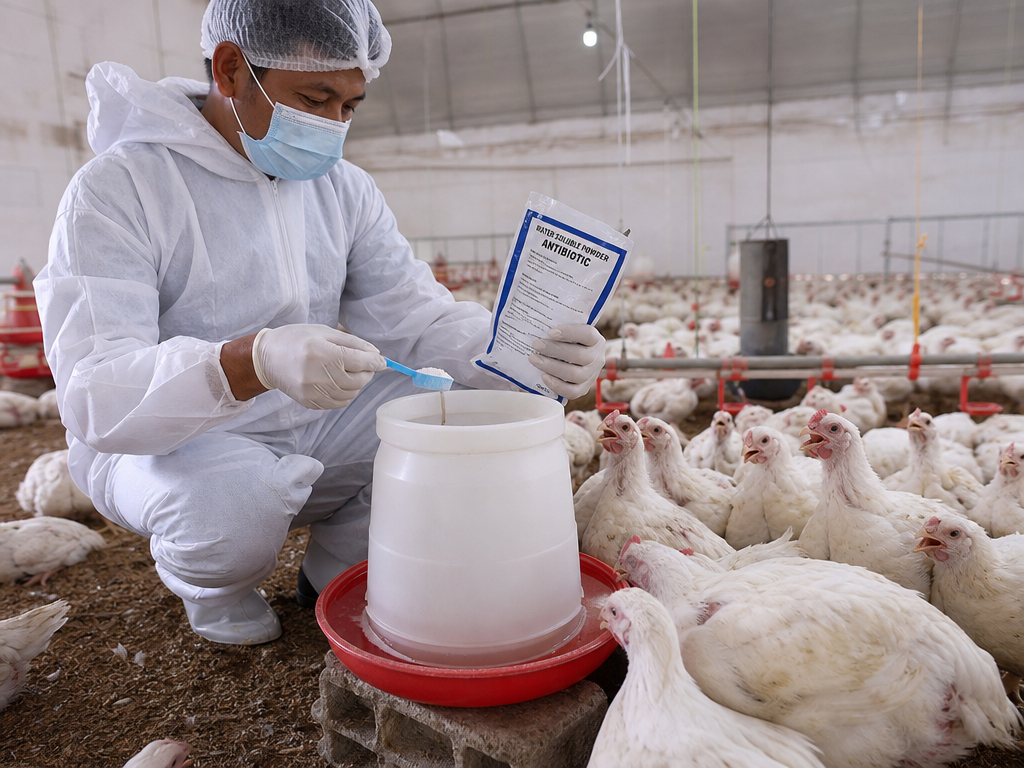
Secondary infection control: Bacterial superinfection (E. coli air sacculitis, Mycoplasma) significantly increases mortality. Prophylactic broad-spectrum antibiotics (oxytetracycline, tylosin, or enrofloxacin under veterinary guidance) are commonly used to control secondary pathogens during the acute phase.
Egg production recovery: In uncomplicated IB, most flocks recover egg production within 4-6 weeks. Severe or nephropathogenic strains may cause permanent reduction in production capacity in some hens due to oviduct scarring in early infections.
Natural & Integrative Care for Infectious Bronchitis
Supportive care and secondary infection control are the only tools available once IB strikes; vaccination before exposure is the only effective preventive strategy.
Natural supportive care can reduce stress on the flock but does not affect the virus itself. Do not delay conventional secondary infection control in favor of natural approaches during an acute outbreak.
Oregano oil in water (3-5 drops per gallon): Carvacrol has documented activity against some bacterial respiratory pathogens. Use as a water additive to support resistance to secondary infections during the viral phase.
Vitamin C supplementation (250mg per gallon): Ascorbic acid supports mucosal integrity during respiratory infection. Dissolve in drinking water daily during the acute phase.
Improve ventilation and reduce ammonia: This is the single most effective non-pharmaceutical intervention. High ammonia compromises respiratory ciliary function, giving bacteria easy access to damaged airways.
🛡️How Can Infectious Bronchitis Be Prevented?
- Vaccinate all chicks at hatch with a spray or eye-drop Massachusetts-type live vaccine, followed by a booster at 2-3 weeks. In high-risk areas, add a killed oil-emulsion vaccine at 16 weeks in layers.
- Use regionally appropriate vaccine strains. Contact your state veterinarian or poultry diagnostic lab to identify the IBV serotypes circulating in your area before choosing a vaccine.
- Practice all-in, all-out flock management. Avoid mixing birds of different ages on the same premises, as older birds can be immune carriers that infect susceptible young birds.
- Strict biosecurity: foot baths at entry, dedicated clothing and equipment for each flock house, vehicle disinfection.
- Minimize co-infection risk: keep Mycoplasma and Newcastle disease vaccinations current, as these dramatically worsen IB outcomes.
📞When Should I Call a Vet for Infectious Bronchitis?
Call a veterinarian or state veterinarian immediately if:
- Rapid flock-wide respiratory signs appear with simultaneous egg production crash. Confirm the diagnosis before treating, as Newcastle disease has similar presentation and requires regulatory notification.
- Mortality exceeds 5% in any age group within 72 hours. Nephropathogenic IBV strains can kill rapidly and require aggressive fluid and electrolyte support.
- Neurological signs appear alongside respiratory illness. This combination suggests Newcastle disease, which is a federally reportable condition in the US.
❓Infectious Bronchitis: Frequently Asked Questions
What is infectious bronchitis in chickens?
Infectious bronchitis is a highly contagious coronavirus that causes respiratory disease in chicks and sharp drops in egg production in laying hens. It spreads to an entire flock within 24-48 hours. There is no treatment; vaccination before exposure is the primary control method.
How does infectious bronchitis affect egg production?
IBV can cause a 25-50% drop in egg production within 48 hours of infection. Hens also lay eggs with watery thin whites, rough or misshapen shells, and reduced yolk color. Most flocks recover production within 4-6 weeks, but hens infected as chicks may have permanently reduced output.
Is there a treatment for infectious bronchitis in chickens?
There is no antiviral treatment for IBV. Supportive care (warmth, electrolytes, ventilation) and antibiotics to prevent secondary bacterial infections are the main interventions. Vaccination before exposure is the only effective control. Once a flock is infected, management focuses on minimizing losses.
How does infectious bronchitis spread?
IBV spreads almost exclusively through the air via respiratory secretions and feces. It can infect an entire flock within 24-48 hours and may travel on wind between neighboring farms. Contaminated equipment, clothing, and feed bags also carry the virus between facilities.
Can infectious bronchitis be prevented with vaccination?
Vaccination significantly reduces severity but does not guarantee full protection because dozens of IBV serotypes exist and cross-protection between them is limited. Use regionally appropriate vaccine strains, vaccinate at hatch with a booster at 2-3 weeks, and add a killed vaccine at 16 weeks in layers.
📋Key Points
- ✓Infectious bronchitis virus (IBV) is an avian gammacoronavirus with dozens of serotypes, many of which do not cross-protect against each other.
- ✓Key symptoms: sudden onset coughing, sneezing, and tracheal rales (rattling breath), watery nasal and ocular discharge, drop in egg production of 25-50% within 48 hours in laying flocks, eggs with watery whites, rough or thin shells, or misshapen bodies.
- ✓Good for respiratory form in mature birds - most recover within 2-3 weeks. Egg production usually returns within 4-6 weeks. Poor prognosis for permanent full production recovery if hens under 6 weeks are infected before oviduct development is complete. Nephropathogenic strains: guarded, mortality 25-60% in young chicks without supportive care.
- ✓This condition is contagious, isolate affected birds promptly.
🔗Related
Related Conditions
📚Sources & References
- 1.Infectious Bronchitis in Poultry. Merck Veterinary Manual. 2024
- 2.Avian Infectious Bronchitis Virus. USDA APHIS. 2023
- 3.Control of Infectious Bronchitis in Commercial Poultry. University of Georgia Extension. 2022