Inclusion Body Hepatitis in Chickens: Symptoms, Causes and Prevention
Inclusion Body Hepatitis (IBH) is caused by Fowl Adenoviruses (FAdV), particularly serotypes FAdV-4 and FAdV-11, and produces sudden mortality of 3-6% in young broilers at 3-7 weeks of age from severe hepatitis. Pale, enlarged, fragile livers with petechial hemorrhages at necropsy are characteristic. Immunosuppression from co-infections (IBD, CIA) dramatically worsens outcomes. Breeder vaccination reduces vertical transmission.
Veterinarian Reviewed
FlockVet Veterinary Editorial Team· Reviewed August 2026
This is a veterinary emergency.
If your bird is showing these signs, contact a veterinarian immediately. Do not wait. Time-sensitive conditions can deteriorate rapidly without professional intervention.
At a Glance
- Urgency
- Emergency
- Contagious
- Yes
- Affects Humans
- No
- Key Symptoms
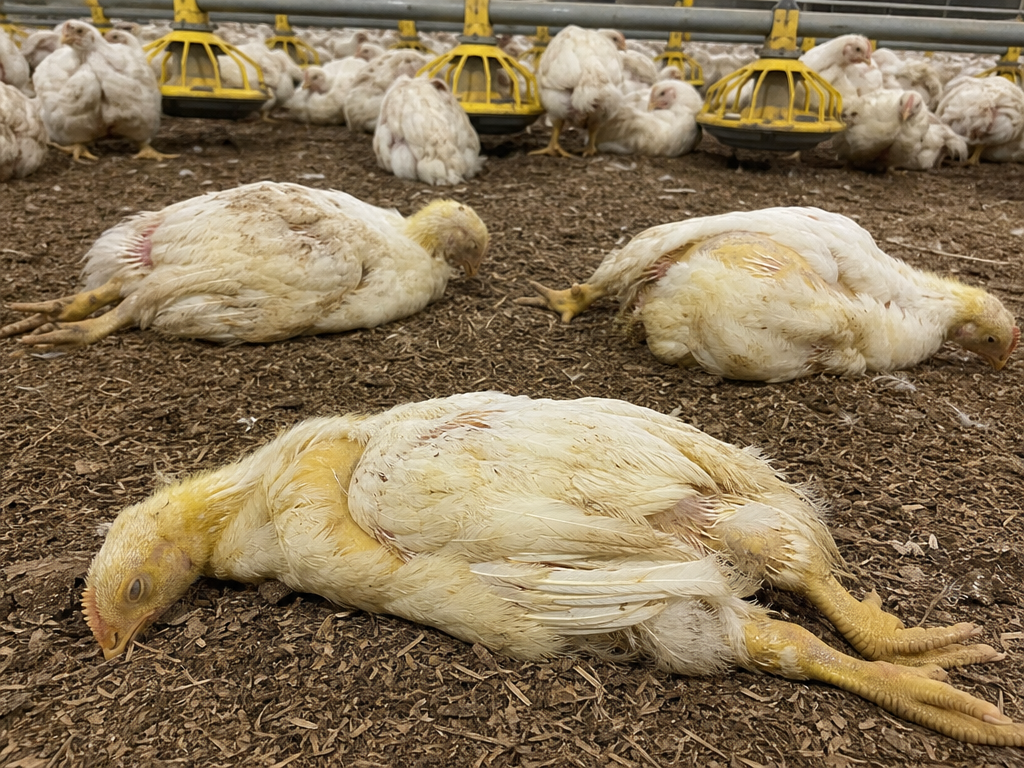
- sudden deaths in broilers aged 3-7 weeks with no prior signs, pale, anemic-appearing birds found near death, huddling and lethargy in survivors
- Prognosis
- Moderate. Most IBH outbreaks are self-limiting over 1-2 weeks with total flock mortality of 3-10%. Outbreaks associated with IBD or CIA co-infection can reach 30-40% mortality without intervention. Surviving birds may show reduced growth performance. Breeder vaccination dramatically reduces both incidence and severity in progeny flocks.
📑 On This Pagetap to expand
🔍What Are the Symptoms of Inclusion Body Hepatitis?
- ●Sudden deaths in broilers aged 3-7 weeks with no prior signs
- ●Pale, anemic-appearing birds found near death
- ●Huddling and lethargy in survivors
- ●Reduced feed and water intake
- ●Flock-level mortality spike of 3-10% over 1-2 weeks then self-limiting
- ●No characteristic respiratory or diarrheal signs
- ●Jaundice (yellow skin) in some affected birds
🧬What Causes Inclusion Body Hepatitis in Chickens?
Fowl Adenoviruses (FAdV) cause IBH, but underlying immunosuppression is the critical factor that determines whether exposure results in subclinical infection or an IBH outbreak with significant mortality.
- FAdV serotypes 4 and 11: The most virulent strains. FAdV-4 also causes Hydropericardium Syndrome (Angara disease) with cardiac involvement. FAdV-8b is associated with gizzard erosion. Multiple serotypes circulate in commercial poultry environments.
- Vertical transmission: Breeder hens with FAdV antibodies pass maternal immunity to progeny, protecting chicks through the first weeks of life. Breeders without antibodies (naive or unvaccinated) produce chicks with no protection, leaving them vulnerable when FAdV exposure occurs in the broiler house.
- Immunosuppressive co-infections: Infectious Bursal Disease (IBD) and Chicken Infectious Anemia (CIA) dramatically lower resistance to FAdV. Nearly all severe IBH outbreaks involve immunosuppression from one or both of these concurrent infections.
- Horizontal fecal-oral spread: FAdV is shed in feces and respiratory secretions of infected birds. Contaminated litter, water, and equipment spread the virus within and between flocks.
🔬How Is Inclusion Body Hepatitis Diagnosed?
Sudden mortality spike in 3-7 week broilers with characteristic liver findings at necropsy is the hallmark presentation of IBH.
- Necropsy: Pale, yellow, swollen, and extremely fragile liver that ruptures easily during handling. Petechial hemorrhages on the liver surface. Intranuclear inclusion bodies visible on histopathology (the definitive diagnostic finding that gives the disease its name).
- Histopathology: Eosinophilic or basophilic intranuclear inclusion bodies in hepatocytes are pathognomonic for FAdV hepatitis. Required for definitive diagnosis.
- PCR and virus isolation: Liver or intestinal content samples confirm FAdV and identify the serotype, guiding vaccine selection.
- Immunosuppression workup: Any IBH outbreak should trigger testing for IBD (bursal lesions) and CIA (anemia, pale bone marrow) as predisposing conditions.
💊How Is Inclusion Body Hepatitis Treated?
There is no specific antiviral treatment for IBH. The outbreak is typically self-limiting over 1-2 weeks, but mortality can be significant without supportive measures.
Supportive care: Electrolytes and vitamins in water maintain hydration and nutrition in surviving birds. Keep litter dry and maintain optimal brooding temperature to reduce stress.
Antibiotic coverage: Secondary bacterial infections of the damaged liver (E. coli colisepticemia) can dramatically increase mortality in IBH outbreaks. Prophylactic broad-spectrum antibiotics (amoxicillin, trimethoprim-sulfa) during the acute phase are commonly used to reduce secondary losses.
Breeder vaccination (primary prevention): Vaccinating breeder hens with an inactivated FAdV vaccine ensures maternal antibody protection in progeny. This is the most effective intervention, implemented before the broiler flock exists.
Natural & Integrative Care for Inclusion Body Hepatitis
IBH outbreaks are controlled through breeder vaccination to provide maternal immunity, combined with managing the immunosuppressive co-infections (IBD, CIA) that amplify mortality.
Natural supportive approaches follow the same principles as conventional supportive care.
Vitamin E and selenium: These antioxidants protect hepatocytes from adenovirus-induced oxidative damage. Supplement at 3-5x maintenance during and after an IBH outbreak.
Reduce immunosuppressive pressure: Address IBD and CIA vaccination status in breeders. These immunosuppressive agents are the primary amplifiers of IBH severity and eliminating them has more impact than any supportive treatment.
🛡️How Can Inclusion Body Hepatitis Be Prevented?
- Vaccinate breeder flocks with an inactivated FAdV vaccine 4-6 weeks before peak production to ensure high maternal antibody titers in progeny. This is the single most effective IBH prevention tool.
- Vaccinate breeders against IBD and CIA. These immunosuppressive infections are the primary amplifiers of IBH mortality. Eliminating them dramatically reduces outbreak severity even when FAdV exposure occurs.
- Practice all-in, all-out flock management. Continuous flow of flocks through the same building maintains chronic FAdV contamination. Thorough cleaning and disinfection between flocks reduces environmental virus load.
- Source chicks from vaccinated breeder flocks. When purchasing chicks, ask about breeder vaccination programs including FAdV, IBD, and CIA status.
📞When Should I Call a Vet for Inclusion Body Hepatitis?
Call a veterinarian promptly if:
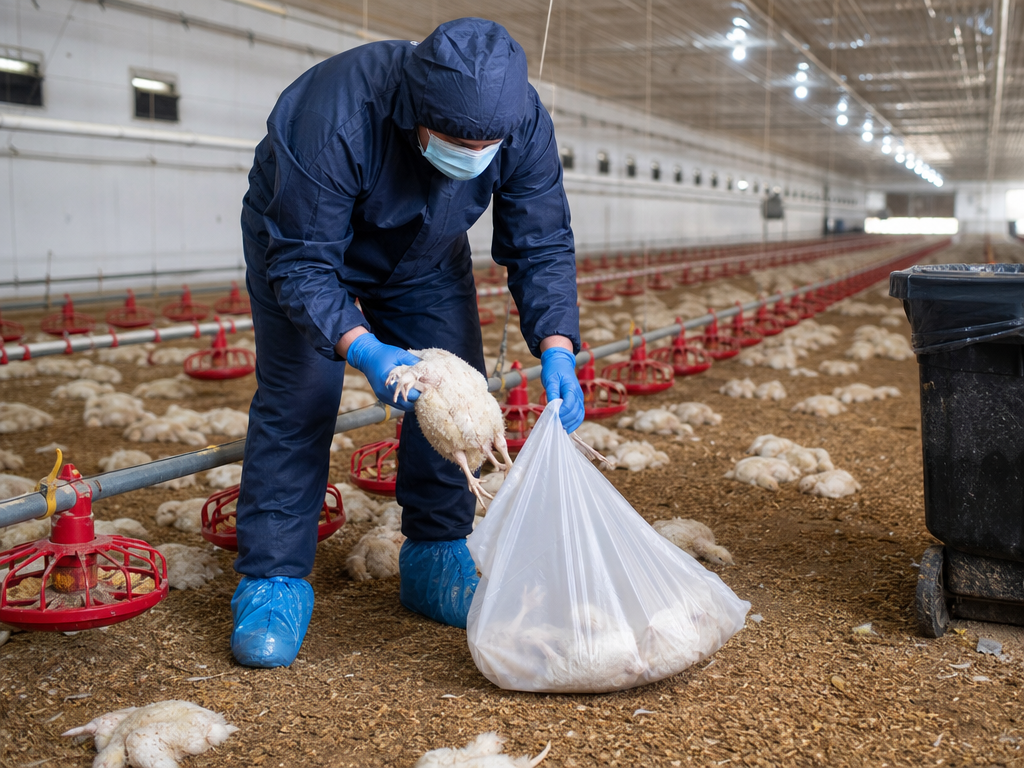
- Mortality of 1% or more per day appears in a broiler flock at 3-7 weeks of age. Fresh carcasses should be submitted for necropsy immediately to confirm IBH and test for concurrent IBD/CIA.
- Liver abnormalities (pale, enlarged, fragile, or hemorrhagic) are found at necropsy of young broilers. Histopathology is needed to confirm inclusion bodies and distinguish IBH from other hepatitis causes.
❓Inclusion Body Hepatitis: Frequently Asked Questions
What is Inclusion Body Hepatitis in chickens?
Inclusion Body Hepatitis (IBH) is a viral liver disease of young broilers (3-7 weeks) caused by Fowl Adenoviruses (FAdV). It causes sudden mortality from severe hepatitis, with pale, swollen, and fragile livers at necropsy. Breeder vaccination that provides maternal antibodies to chicks is the primary prevention strategy.
What does the liver look like in IBH?
IBH livers are pale yellow to pale pink, swollen, and extremely fragile; they rupture easily when handled. Petechial (pinpoint) hemorrhages are scattered across the liver surface. Histopathology shows intranuclear inclusion bodies in liver cells, which is the definitive diagnostic finding that gives the disease its name.
Why is immunosuppression important in IBH?
IBH rarely causes significant mortality in immunocompetent birds. Infectious Bursal Disease (IBD) and Chicken Infectious Anemia (CIA) destroy immune tissue and leave birds unable to control FAdV replication. Nearly all severe IBH outbreaks involve one or both of these immunosuppressive co-infections. Controlling IBD and CIA dramatically reduces IBH mortality.
How do you prevent Inclusion Body Hepatitis?
Vaccinate breeder hens with an inactivated FAdV vaccine to ensure high maternal antibody titers in progeny. Also vaccinate breeders against IBD and CIA. Maternal antibodies from vaccinated breeders protect chicks through the first weeks of life when IBH mortality is highest.
Is IBH contagious between flocks?
FAdV spreads between birds within a flock via feces and respiratory secretions. Spread between separate flocks occurs via contaminated equipment, vehicles, clothing, and shared personnel. All-in, all-out management with thorough disinfection between flocks reduces environmental contamination significantly.
📋Key Points
- ✓Fowl Adenoviruses (FAdV) cause IBH, but underlying immunosuppression is the critical factor that determines whether exposure results in subclinical infection or an IBH outbreak with significant mortality.
- ✓Key symptoms: sudden deaths in broilers aged 3-7 weeks with no prior signs, pale, anemic-appearing birds found near death, huddling and lethargy in survivors, reduced feed and water intake.
- ✓Moderate. Most IBH outbreaks are self-limiting over 1-2 weeks with total flock mortality of 3-10%. Outbreaks associated with IBD or CIA co-infection can reach 30-40% mortality without intervention. Surviving birds may show reduced growth performance. Breeder vaccination dramatically reduces both incidence and severity in progeny flocks.
- ✓This condition is contagious, isolate affected birds promptly.
🔗Related
Related Conditions
📚Sources & References
- 1.Inclusion Body Hepatitis in Poultry. Merck Veterinary Manual. 2024
- 2.Fowl Adenoviruses - A Review. PubMed / Avian Pathology. 2017
- 3.Adenovirus Infections in Poultry. USDA APHIS. 2022