Gangrenous Dermatitis in Chickens: Symptoms, Causes and Treatment
Gangrenous dermatitis is a rapidly progressive bacterial skin infection caused by Clostridium perfringens, C. septicum, and sometimes Staphylococcus aureus. It produces wet, dark necrosis of the skin and subcutaneous tissue, most commonly starting at the wing web, breast, or thigh. It is almost always associated with underlying immunosuppression from infectious bursal disease (IBD), chicken infectious anemia (CIA), or management failures. Mortality in affected birds is high without prompt antibiotic treatment.
Veterinarian Reviewed
FlockVet Veterinary Editorial Team· Reviewed August 2026
This is a veterinary emergency.
If your bird is showing these signs, contact a veterinarian immediately. Do not wait. Time-sensitive conditions can deteriorate rapidly without professional intervention.
At a Glance
- Urgency
- Emergency
- Contagious
- No
- Affects Humans
- No
- Key Symptoms
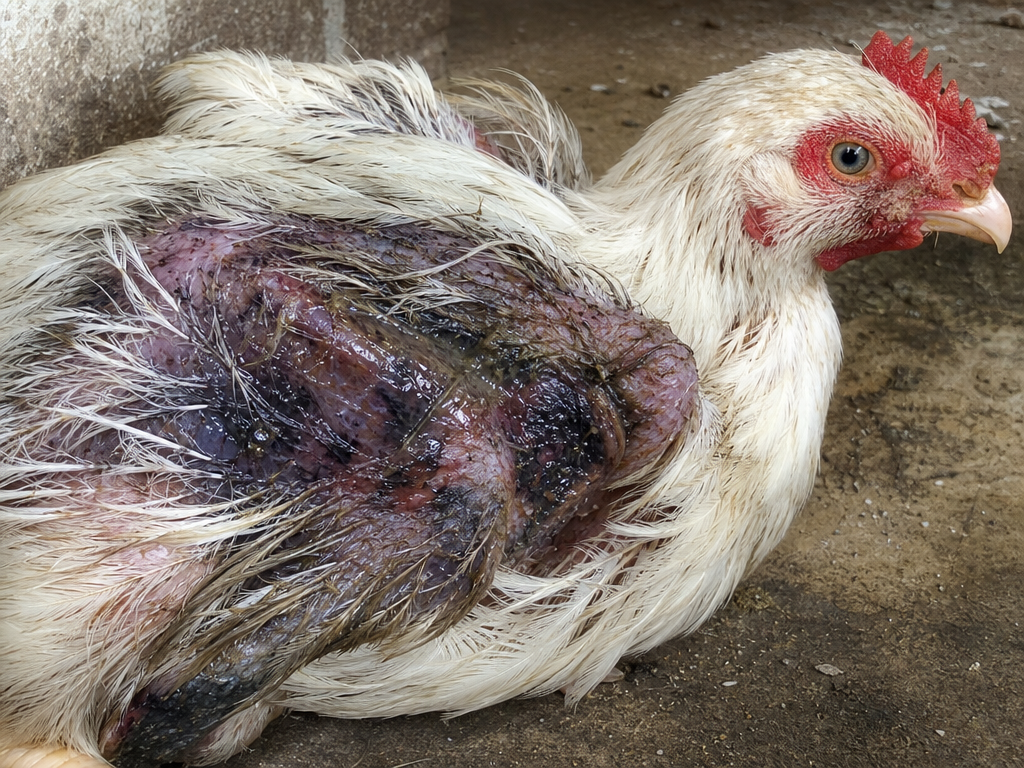
- wet, dark (purple-black or greenish) necrotic areas of skin on wing web, breast, or thigh, blistered or oozing skin surface with serosanguineous fluid, foul odor from affected skin areas
- Prognosis
- Poor for individual birds with established gangrenous dermatitis; most die within 24-48 hours of clinical signs without aggressive treatment. Good for the flock if antibiotics are provided promptly and the immunosuppressive predisposing condition is identified and controlled. Flock mortality in outbreaks without intervention can reach 10-20%.
📑 On This Pagetap to expand
🔍What Are the Symptoms of Gangrenous Dermatitis?
- ●Wet, dark (purple-black or greenish) necrotic areas of skin on wing web, breast, or thigh
- ●Blistered or oozing skin surface with serosanguineous fluid
- ●Foul odor from affected skin areas
- ●Sudden death in birds with no observed prior lesions (peracute form)
- ●Affected skin feels cold and loses sensation (necrosis)
- ●Gas palpable under the skin in some cases (gas gangrene form)
- ●Profound depression and rapid deterioration once signs are visible
- ●Multiple birds affected, especially if immunosuppression is flock-wide
🧬What Causes Gangrenous Dermatitis in Chickens?
Gangrenous dermatitis is caused by opportunistic Clostridial bacteria that colonize damaged or immunosuppressed tissue. It almost never occurs in immunocompetent birds with intact skin.
- Clostridium perfringens type A: The most common causative organism. Found in soil, litter, and the intestinal tract of normal birds. In immunosuppressed birds with skin trauma, it rapidly colonizes subcutaneous tissue and produces necrotizing toxins (alpha toxin).
- Infectious Bursal Disease (IBD/Gumboro): The most important predisposing condition. IBD virus destroys the Bursa of Fabricius, causing profound immunosuppression in young birds (3-8 weeks). Gangrenous dermatitis outbreaks almost always follow IBD exposure in unvaccinated flocks.
- Chicken Infectious Anemia (CIA/CAV): CIA virus causes immunosuppression and anemia, predisposing birds to secondary Clostridial infection. CIA-associated gangrenous dermatitis often presents as wing tip necrosis (blue wing disease).
- Skin trauma: Wounds from pecking, fighting, wire injuries, or external parasites create entry points. Immunosuppressed birds cannot mount a local defense, allowing Clostridial organisms to rapidly invade surrounding tissue.
🔬How Is Gangrenous Dermatitis Diagnosed?
The sudden appearance of wet, dark, foul-smelling skin necrosis in young chickens, especially in flocks with known IBD or CIA exposure, is strongly suggestive of gangrenous dermatitis.
- Visual diagnosis: Wet, discolored, oozing skin lesions with a necrotic center and often a gas-distended periphery. The smell is strongly putrefactive. Feathers pull away easily from the necrotic tissue.
- Bacteriology: Culture of fresh necrotic tissue on blood agar in anaerobic conditions grows Clostridium within 48 hours. Gram stain shows large gram-positive rods.
- Underlying immunosuppression workup: Any gangrenous dermatitis outbreak should trigger investigation for IBD and CIA as predisposing causes. Serology and PCR testing of flock blood samples identifies the immunosuppressive agent.
💊How Is Gangrenous Dermatitis Treated?
Treatment of gangrenous dermatitis has a poor success rate in individual birds once extensive necrosis is established, but antibiotic coverage of the flock can limit additional cases.
Penicillin (drug of choice): High-dose penicillin G intramuscularly (10,000-20,000 IU/kg twice daily) is the most effective treatment for Clostridial infections. If IM injection of all affected birds is not practical, procaine penicillin can be added to drinking water.
Lincomycin or tylosin: Effective alternatives against Clostridium, particularly where penicillin resistance is suspected. Tylosin at 200 mg/gallon in water for 5-7 days provides reasonable flock-level coverage.
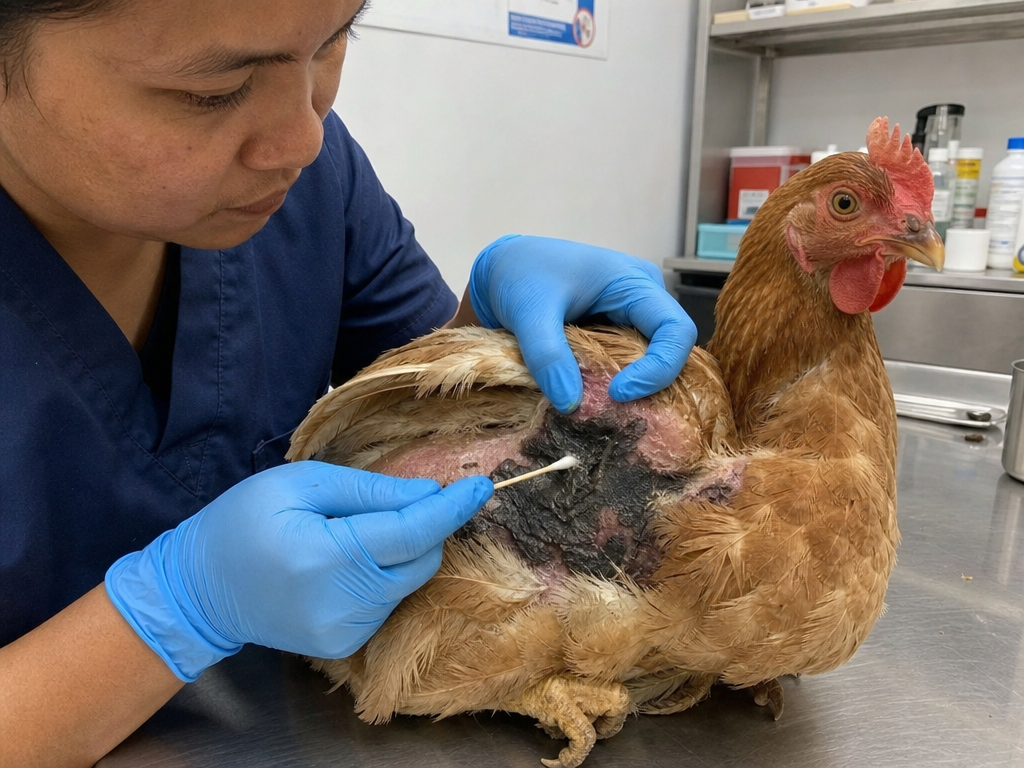
Wound debridement: For individual pet birds, surgical debridement of necrotic tissue followed by daily wound cleaning with dilute chlorhexidine and systemic antibiotics can allow survival if the necrosis has not spread to deep muscle or internal organs.
Immunosuppression management: Identify and address the underlying immunosuppressive agent. If IBD is the cause, ensure proper vaccination of future flocks. Remove and disinfect the environment to reduce Clostridial spore load.
Natural & Integrative Care for Gangrenous Dermatitis
Gangrenous dermatitis requires immediate systemic penicillin treatment; identifying and addressing underlying immunosuppression (IBD, CIA) is essential to prevent flock-wide recurrence.
Natural approaches are not adequate treatment for active gangrenous dermatitis. The disease progresses rapidly and fatally without systemic antibiotics. Do not delay treatment.
Manuka honey wound dressing: For individual pet birds under veterinary care, Manuka honey applied to debrided wound surfaces has documented antibacterial activity and promotes granulation tissue formation. Use only after debridement and as an adjunct to systemic antibiotics.
🛡️How Can Gangrenous Dermatitis Be Prevented?
- Vaccinate against Infectious Bursal Disease (IBD/Gumboro) at 14-18 days of age with an intermediate IBD vaccine. IBD-related immunosuppression is the primary predisposing factor for gangrenous dermatitis outbreaks.
- Vaccinate breeder hens against CIA to ensure maternal antibody protection in progeny. CIA-associated gangrenous dermatitis (blue wing disease) is prevented by breeder vaccination.
- Control feather pecking and cannibalism. Wounds from pecking are the most common entry point for Clostridial skin infection. Address stocking density, boredom, and nutritional imbalances that trigger pecking behavior.
- Maintain dry litter. Wet litter dramatically increases Clostridial spore concentrations in the environment and skin maceration that creates infection entry points.
- Isolate and treat injured birds immediately. Any bird with a skin wound in a flock with recent IBD exposure should be isolated and observed closely for early signs of gangrenous dermatitis.
📞When Should I Call a Vet for Gangrenous Dermatitis?
Treat as an emergency if:
- You find dark, wet, foul-smelling skin lesions on one or more birds. Begin penicillin treatment immediately and contact a veterinarian for flock evaluation.
- Multiple birds are dying with necrotic skin lesions in a young flock (3-8 weeks). This pattern strongly suggests IBD-associated gangrenous dermatitis requiring urgent diagnosis and vaccination protocol review for future flocks.
❓Gangrenous Dermatitis: Frequently Asked Questions
What is gangrenous dermatitis in chickens?
Gangrenous dermatitis is a rapidly fatal bacterial skin infection caused by Clostridium perfringens that produces wet, dark, foul-smelling necrosis of skin and subcutaneous tissue. It almost always occurs in immunosuppressed birds, particularly those affected by Infectious Bursal Disease (IBD) or Chicken Infectious Anemia. Prompt penicillin treatment is essential.
What causes gangrenous dermatitis in chickens?
Clostridium perfringens and related bacteria cause the infection, but underlying immunosuppression is the root cause. Infectious Bursal Disease (IBD/Gumboro) is the most important predisposing condition, destroying immune tissue in young birds. Skin wounds from pecking or injuries allow the bacteria to invade. The combination of immunosuppression plus a skin wound is the typical pathway.
Is gangrenous dermatitis contagious between chickens?
Not directly. Clostridium is a soil organism present in most poultry environments. What appears contagious is actually the shared immunosuppressive condition (IBD or CIA) that makes multiple birds susceptible simultaneously. Once the immunosuppressive agent is controlled, new cases stop appearing even without removing Clostridium from the environment.
How is gangrenous dermatitis treated?
High-dose penicillin G is the drug of choice, given intramuscularly to affected birds and ideally flock-wide in water to prevent additional cases. Individual birds with localized lesions may survive with debridement and systemic antibiotics. Birds with extensive necrosis have a poor prognosis regardless of treatment.
How do you prevent gangrenous dermatitis in chickens?
Vaccinate against IBD (Gumboro disease) at 14-18 days. Vaccinate breeders against CIA. Control feather pecking by addressing stocking density and nutrition. Maintain dry litter. Treat any skin wounds promptly and isolate injured birds from flocks with IBD or CIA history.
📋Key Points
- ✓Gangrenous dermatitis is caused by opportunistic Clostridial bacteria that colonize damaged or immunosuppressed tissue.
- ✓Key symptoms: wet, dark (purple-black or greenish) necrotic areas of skin on wing web, breast, or thigh, blistered or oozing skin surface with serosanguineous fluid, foul odor from affected skin areas, sudden death in birds with no observed prior lesions (peracute form).
- ✓Poor for individual birds with established gangrenous dermatitis; most die within 24-48 hours of clinical signs without aggressive treatment. Good for the flock if antibiotics are provided promptly and the immunosuppressive predisposing condition is identified and controlled. Flock mortality in outbreaks without intervention can reach 10-20%.
🔗Related
Related Conditions
📚Sources & References
- 1.Gangrenous Dermatitis in Poultry. Merck Veterinary Manual. 2024
- 2.Clostridial Dermatitis in Broilers. PubMed / Avian Diseases. 2009
- 3.Gangrenous Dermatitis - Poultry Diseases. University of Georgia Extension. 2021