Chicken Infectious Anemia: Symptoms, Causes and Vaccination
Chicken Infectious Anemia (CIA) is caused by Chicken Anemia Virus (CAV/Gyrovirus), a small DNA virus that destroys red blood cell precursors in the bone marrow and lymphocyte precursors in the thymus, causing profound anemia and immunosuppression in chicks 2-4 weeks of age. Breeder vaccination to produce maternal immunity in chicks is the primary control strategy.
Veterinarian Reviewed
FlockVet Veterinary Editorial Team· Reviewed August 2026
This is a veterinary emergency.
If your bird is showing these signs, contact a veterinarian immediately. Do not wait. Time-sensitive conditions can deteriorate rapidly without professional intervention.
At a Glance
- Urgency
- Emergency
- Contagious
- Yes
- Affects Humans
- No
- Key Symptoms
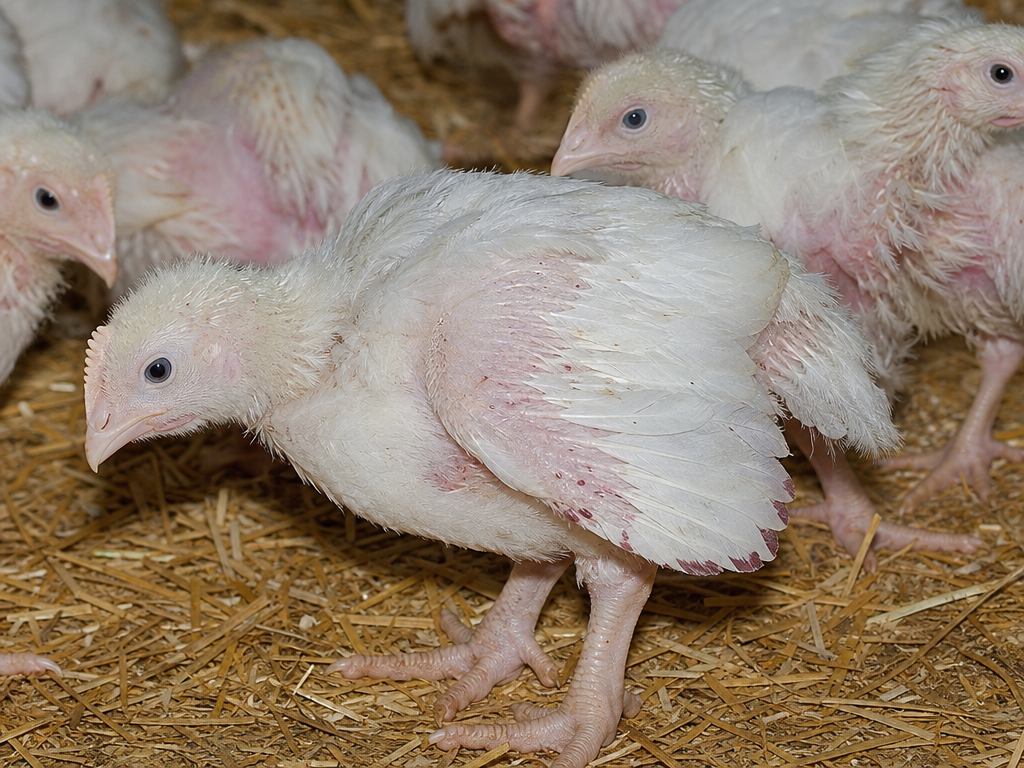
- pale pink to white combs, wattles, and skin from severe anemia, blue-tinged wing tips (blue wing disease) from hemorrhage under wing skin, profound lethargy and depression in affected chicks
- Prognosis
- High mortality (up to 30%) in naive chicks without maternal antibodies. Most survivors recover with supportive care but remain immunosuppressed for 2-4 weeks, making them highly vulnerable to secondary infections during recovery. Prognosis is excellent in chicks born to vaccinated breeders with adequate maternal titers.
📑 On This Pagetap to expand
🔍What Are the Symptoms of Chicken Infectious Anemia?
- ●Pale pink to white combs, wattles, and skin from severe anemia
- ●Blue-tinged wing tips (blue wing disease) from hemorrhage under wing skin
- ●Profound lethargy and depression in affected chicks
- ●Increased susceptibility to other infections from immunosuppression
- ●Reduced growth and feed conversion in subclinically affected flocks
- ●Gangrenous dermatitis (necrotic skin lesions) as a secondary consequence of immunosuppression
- ●High mortality in naive chicks (up to 30%) without maternal antibody protection
- ●Adult birds: subclinical infection, lifelong seroconversion, no signs
🧬What Causes Chicken Infectious Anemia in Chickens?
Chicken Anemia Virus (CAV) is a circovirus-like pathogen that specifically targets and destroys precursor cells in bone marrow and thymus, eliminating both red blood cell production and immune T-cell development simultaneously.
- Vertical transmission (primary): CAV-infected breeder hens without sufficient antibody titers transmit the virus through eggs. Chicks hatch already infected and develop clinical disease at 2-4 weeks when maternal antibody protection wanes. This is why breeder vaccination is the primary control tool.
- Horizontal fecal-oral transmission: CAV spreads efficiently in feces and respiratory secretions. Once in a flock, it spreads rapidly to all susceptible birds. The virus is extremely stable in the environment.
- Age-dependent susceptibility: Chicks under 2 weeks old are highly susceptible to fatal disease. Birds over 3-4 weeks old that are infected may develop subclinical immunosuppression without frank anemia. Adults are generally resistant but become lifelong carriers.
- Immunosuppressive amplification: CAV dramatically worsens outcomes for any concurrent infection. Flocks with CAV have higher mortality from Marek's, IBD, gangrenous dermatitis, and IBH than CAV-negative flocks facing the same pathogens.
🔬How Is Chicken Infectious Anemia Diagnosed?
CIA should be suspected in any flock with unexplained anemia, pallor, and increased susceptibility to secondary infections in 2-4 week old chicks.
- PCV (packed cell volume): Normal chicken PCV is 27-35%. CIA-affected chicks typically have PCV below 20%, and severe cases below 10%. This rapid field test confirms significant anemia.
- Bone marrow appearance: At necropsy, the bone marrow of CIA-affected birds is pale yellow (fat-replaced) rather than the normal pink-red. This is visible on cut section of the femur or tibiotarsus.
- Thymus atrophy: The thymus, visible in young chicks as paired lobes along the neck, is severely atrophied in CIA cases.
- Serology: ELISA or virus neutralization tests detect CAV antibodies in surviving birds or breeder flocks. PCR on blood or tissue confirms active infection.
💊How Is Chicken Infectious Anemia Treated?
There is no specific antiviral treatment for Chicken Infectious Anemia. Affected chicks require supportive care and secondary infection control.
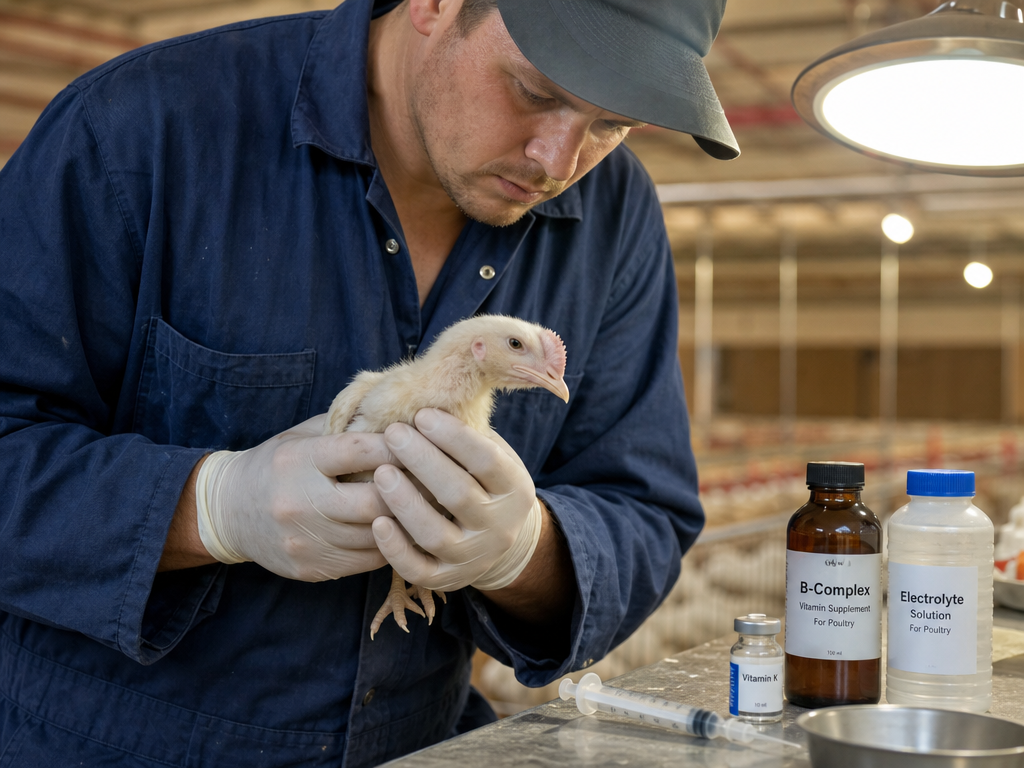
Supportive care: Electrolytes and B vitamins (particularly B12, folate, and iron) support whatever residual hematopoietic function remains. High-quality nutrition and reduced stress limit additional losses.
Secondary infection control: Because CIA causes profound immunosuppression, secondary infections (bacterial, other viral) drive most of the mortality. Prophylactic broad-spectrum antibiotics during the acute phase reduce secondary bacterial septicemia.
Breeder vaccination (prevention, not treatment): Live CAV vaccine administered to breeders 4-6 weeks before peak egg production ensures maternal antibodies protect progeny. This is the only effective control measure.
Natural & Integrative Care for Chicken Infectious Anemia
CIA is controlled through breeder vaccination that provides maternal immunity to chicks; there is no treatment for affected birds beyond supportive care for secondary infections.
Natural approaches provide supportive benefit during recovery but cannot address the underlying hematopoietic failure of CIA.
Iron-rich supplements: Ferrous sulfate in water (0.5g per gallon) provides supplemental iron for residual red blood cell production. This is a supportive measure, not a treatment for the viral cause.
Vitamin E and selenium: Antioxidant supplementation helps protect fragile, anemic red blood cells from oxidative damage during recovery.
🛡️How Can Chicken Infectious Anemia Be Prevented?
- Vaccinate breeder flocks with a live CAV vaccine 4-6 weeks before hens enter the laying period. Adequate maternal antibody titers protect chicks through the critical 2-4 week susceptibility window.
- Test incoming breeder flocks for CAV antibody status. Seronegative breeders should be vaccinated before they begin laying to ensure progeny protection.
- Ensure IBD vaccination is current in breeder flocks. IBD and CIA co-infection dramatically worsens outcomes. Eliminating IBD protects against CIA-secondary disease expression.
- All-in, all-out flock management and thorough disinfection between flocks reduces environmental CAV burden. The virus is extremely environmentally stable but proper disinfection with sodium hydroxide or formalin is effective.
📞When Should I Call a Vet for Chicken Infectious Anemia?
Consult a veterinarian if:
- Chicks 2-4 weeks old develop pallor, blue wing tips, and high mortality. Measure PCV immediately - a value below 20% confirms severe anemia requiring urgent diagnosis.
- Recurring secondary infections (gangrenous dermatitis, IBH) suggest an immunosuppressive underlying condition. CIA and IBD should both be tested as predisposing factors.
- Breeder flock serology shows CAV-negative status. These breeders require immediate vaccination to protect their progeny.
❓Chicken Infectious Anemia: Frequently Asked Questions
What is Chicken Infectious Anemia?
Chicken Infectious Anemia (CIA) is caused by Chicken Anemia Virus and destroys bone marrow and thymus in chicks 2-4 weeks old, causing severe anemia and immunosuppression. Pale combs, blue wing tips, and high secondary infection rates are the clinical signs. Breeder vaccination is the primary prevention strategy.
What is blue wing disease in chickens?
Blue wing disease is a colloquial name for CIA in some regions, referring to the blue-purple discoloration of the wing tips caused by hemorrhage under the skin of the wing web. It is a visible sign of the severe anemia and vascular fragility associated with Chicken Anemia Virus infection.
How is CIA prevented in chickens?
Breeders are vaccinated with a live CAV vaccine 4-6 weeks before peak production to generate high antibody titers. These maternal antibodies are transferred to eggs and protect chicks through the critical first 2-4 weeks of life when they are susceptible to fatal disease. Seronegative breeders should be vaccinated before they begin laying.
Why does CIA cause increased susceptibility to other diseases?
CAV destroys developing T-lymphocytes in the thymus in addition to red blood cell precursors. T-lymphocytes are essential for cell-mediated immunity against viruses, bacteria, and parasites. CIA-affected birds cannot mount adequate immune responses, making them vulnerable to Marek's disease, IBH, gangrenous dermatitis, and other pathogens that healthy birds easily resist.
Can adult chickens get Chicken Infectious Anemia?
Adult chickens are generally resistant to clinical CIA due to age-related non-specific resistance. They become infected, seroconvert, and remain lifelong carriers but show no signs of illness. The disease is limited to chicks under 4 weeks old that lack sufficient maternal antibody protection.
📋Key Points
- ✓Chicken Anemia Virus (CAV) is a circovirus-like pathogen that specifically targets and destroys precursor cells in bone marrow and thymus, eliminating both red blood cell production and immune T-cell development simultaneously.
- ✓Key symptoms: pale pink to white combs, wattles, and skin from severe anemia, blue-tinged wing tips (blue wing disease) from hemorrhage under wing skin, profound lethargy and depression in affected chicks, increased susceptibility to other infections from immunosuppression.
- ✓High mortality (up to 30%) in naive chicks without maternal antibodies. Most survivors recover with supportive care but remain immunosuppressed for 2-4 weeks, making them highly vulnerable to secondary infections during recovery. Prognosis is excellent in chicks born to vaccinated breeders with adequate maternal titers.
- ✓This condition is contagious, isolate affected birds promptly.
🔗Related
Related Conditions
📚Sources & References
- 1.Chicken Anemia Virus. Merck Veterinary Manual. 2024
- 2.Chicken Infectious Anemia Virus - A Review. PubMed / Avian Pathology. 2008
- 3.Control of Immunosuppressive Diseases in Broilers. University of Georgia Extension. 2021