Blackhead Disease (Histomoniasis) in Chickens: Symptoms, Causes and Treatment
Blackhead disease (histomoniasis) is caused by the protozoan Histomonas meleagridis, transmitted through the eggs of cecal worms (Heterakis gallinarum). It causes severe liver necrosis and cecal inflammation with sulfur-yellow diarrhea. Turkeys are far more susceptible than chickens, but chickens serve as a carrier reservoir. Mortality in turkeys approaches 100% without treatment.
Veterinarian Reviewed
FlockVet Veterinary Editorial Team· Reviewed August 2026
This is a veterinary emergency.
If your bird is showing these signs, contact a veterinarian immediately. Do not wait. Time-sensitive conditions can deteriorate rapidly without professional intervention.
At a Glance
- Urgency
- Emergency
- Contagious
- Yes
- Affects Humans
- No
- Key Symptoms
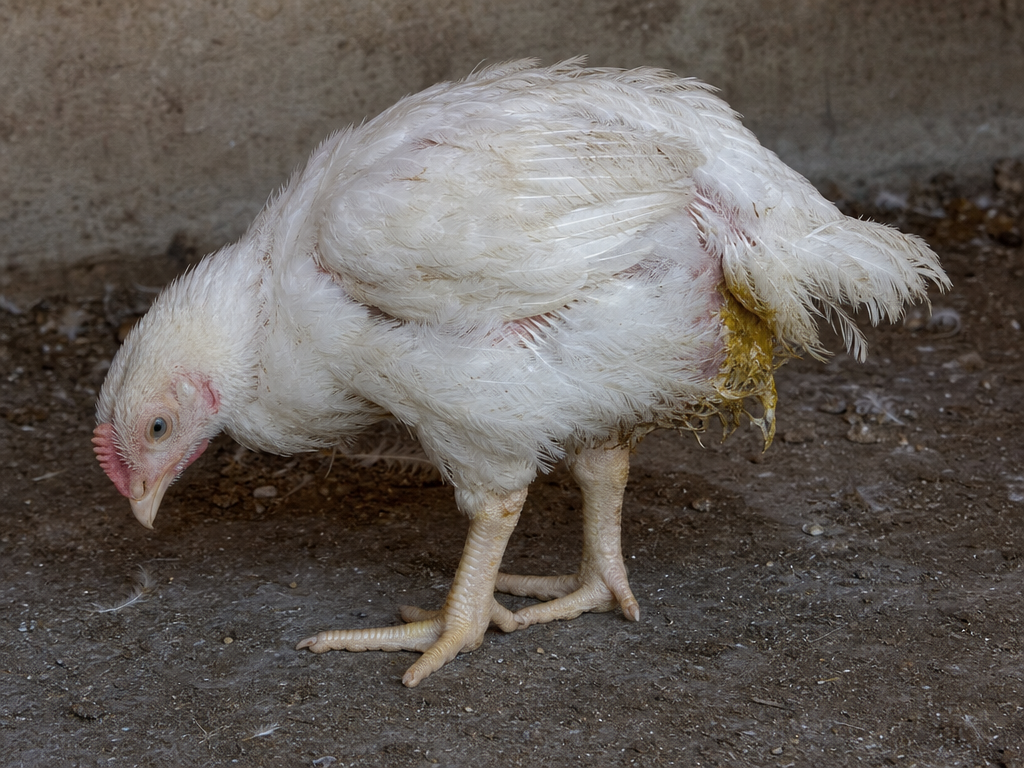
- sulfur-yellow or greenish-yellow diarrhea (pathognomonic color), lethargy and hunched posture, droopy wings and ruffled feathers
- Prognosis
- Prognosis is very poor for turkeys without treatment - mortality approaches 80-100% in severe outbreaks. Chickens rarely die from histomoniasis and often recover without intervention, but remain carriers. Early supportive care in turkeys reduces mortality. The flock environment remains contaminated for years via cecal worm eggs in soil, requiring permanent separation of species and aggressive worm control.
📑 On This Pagetap to expand
🔍What Are the Symptoms of Blackhead Disease (Histomoniasis)?
- ●Sulfur-yellow or greenish-yellow diarrhea (pathognomonic color)
- ●Lethargy and hunched posture
- ●Droopy wings and ruffled feathers
- ●Darkened or cyanotic head tissue (the 'blackhead' - not always present)
- ●Rapid weight loss
- ●Reduced appetite
- ●Death within 1-3 weeks in severe cases, especially turkeys
🧬What Causes Blackhead Disease (Histomoniasis) in Chickens?
Histomonas meleagridis is a fragile protozoan that cannot survive long outside a host - it relies on cecal worm eggs as a protected vehicle for transmission.
- Cecal worm (Heterakis gallinarum) transmission: H. meleagridis survives inside the eggs of cecal worms. Chickens ingest cecal worm eggs from soil, become infected, and shed infected eggs in their feces. Earthworms can harbor cecal worm eggs for years, extending environmental persistence.
- Direct transmission: In dense flocks, direct cloacal-to-oral contact can transmit the protozoan without worm eggs, though this is less efficient than the worm egg route.
- Co-housing chickens with turkeys: Chickens are relatively resistant to blackhead and become lifelong subclinical carriers. When chickens and turkeys share ground, chickens continuously seed the environment with infected cecal worm eggs that devastate the turkey flock.
🔬How Is Blackhead Disease (Histomoniasis) Diagnosed?
Sulfur-yellow diarrhea in turkeys with liver lesions at necropsy is classic histomoniasis.
- Clinical signs: Sulfur-yellow feces + lethargy + rapid weight loss in multiple birds, especially turkeys, in a mixed-species flock.
- Post-mortem: Circular, target-like necrotic lesions in the liver (pathognomonic) and thickened, caseous cecal cores filled with yellow material.
- Lab confirmation: Wet mount or histopathology of cecal content or liver lesion tissue identifies the organism. PCR is most sensitive.
💊How Is Blackhead Disease (Histomoniasis) Treated?
There is no USDA-approved drug for histomoniasis in the US as of 2024. Metronidazole (Flagyl) was historically used but is currently banned in food animals in the US.
- Supportive care: Electrolytes, vitamins, and high-quality feed to support birds through the acute phase. Isolation of affected birds.
- Nitarsone: Historically the approved treatment in the US, but removed from the market in 2015. Not currently available.
- Compounded metronidazole (pet birds only): In non-food-producing flocks, a vet may prescribe compounded metronidazole. Never use in birds producing eggs or meat for human consumption.
- Separate turkeys from chickens permanently: This is the single most important management step for turkey flocks.
Natural & Integrative Care for Blackhead Disease (Histomoniasis)
Natural treatment options are not effective against active histomoniasis. Prevention through management is the primary strategy.
- Coop and ground management: Move birds to clean ground with no history of poultry use. Deep-till soil to expose and destroy cecal worm eggs. Do not reuse contaminated ground for 3 years.
- Worm control: Eliminate cecal worms with fenbendazole to break the transmission cycle. Without cecal worms, histomoniasis transmission drops dramatically.
🛡️How Can Blackhead Disease (Histomoniasis) Be Prevented?
Prevention is far more effective than treatment for this disease.
- Never co-house chickens and turkeys: This is the most important rule. Even temporary co-housing or shared ground infects turkeys. Maintain completely separate housing, equipment, and range.
- Deworm regularly: Control cecal worms (Heterakis gallinarum) with fenbendazole (Safeguard) twice yearly. No cecal worms = no histomoniasis vector.
- Manage earthworms: Earthworms harbor cecal worm eggs for years. Rotating range and avoiding recently composted areas reduces earthworm contact with infected cecal worm eggs.
📞When Should I Call a Vet for Blackhead Disease (Histomoniasis)?
Call a vet immediately if turkeys in a mixed flock develop yellow diarrhea and lethargy. Histomoniasis in turkeys kills quickly - waiting 24 hours in the hope of improvement in turkeys almost always means losing more birds. Confirm diagnosis and begin supportive care under vet guidance immediately.
❓Blackhead Disease (Histomoniasis): Frequently Asked Questions
What is blackhead disease in chickens?
Blackhead disease (histomoniasis) is a protozoan infection caused by Histomonas meleagridis, transmitted through the eggs of cecal worms. It causes severe liver necrosis and cecal inflammation with sulfur-yellow diarrhea. Chickens are relatively resistant and become carriers, but the disease is nearly always fatal in turkeys exposed to infected chickens.
Can chickens give blackhead disease to turkeys?
Yes. This is the primary way turkeys contract histomoniasis. Chickens are subclinical carriers that continuously shed infected cecal worm eggs in their feces. When turkeys share ground with chickens, they ingest these eggs and develop fatal disease. Turkeys and chickens should never share housing or range for this reason.
What does blackhead disease look like in chickens?
Most infected chickens show minimal signs. When symptoms appear, expect sulfur-yellow diarrhea, lethargy, and hunched posture. The 'blackhead' (dark cyanotic head tissue) is rarely seen and is not required for diagnosis. Chickens rarely die from histomoniasis but remain lifelong carriers.
How is blackhead disease treated?
There is no USDA-approved drug for histomoniasis in food-producing birds in the US. Metronidazole (Flagyl) is effective but banned in food animals. For non-production pet birds, a vet may prescribe compounded metronidazole. Management (separating species, deworming, moving to clean ground) is the primary intervention.
How do you prevent blackhead disease?
Never co-house chickens and turkeys. Deworm chickens regularly with fenbendazole to control cecal worms, which carry and transmit the protozoan. Rotate range and avoid ground with a history of poultry use. If you keep both species, maintain completely separate housing, equipment, and pasture with no shared contact.
📋Key Points
- ✓Histomonas meleagridis is a fragile protozoan that cannot survive long outside a host - it relies on cecal worm eggs as a protected vehicle for transmission.
- ✓Key symptoms: sulfur-yellow or greenish-yellow diarrhea (pathognomonic color), lethargy and hunched posture, droopy wings and ruffled feathers, darkened or cyanotic head tissue (the 'blackhead' - not always present).
- ✓Prognosis is very poor for turkeys without treatment - mortality approaches 80-100% in severe outbreaks. Chickens rarely die from histomoniasis and often recover without intervention, but remain carriers. Early supportive care in turkeys reduces mortality. The flock environment remains contaminated for years via cecal worm eggs in soil, requiring permanent separation of species and aggressive worm control.
- ✓This condition is contagious, isolate affected birds promptly.
🔗Related
Related Conditions
📚Sources & References
- 1.Histomoniasis in Poultry. Merck Veterinary Manual. 2024
- 2.Internal Parasites of Poultry. Merck Veterinary Manual. 2024
- 3.Blackhead Disease Control in Turkeys. University of Georgia Extension. 2021