Egg Production Problems in Chickens: Causes and Solutions
Egg production problems include a sudden stop, gradual decline, or consistently low output in laying hens. Common causes include insufficient daylight, nutritional deficiencies, molt, age, disease, and management stress. Identifying and correcting the primary trigger usually restores production within 2-6 weeks.
Veterinarian Reviewed
FlockVet Editorial Team· Reviewed August 2026
At a Glance
- Urgency
- Moderate
- Contagious
- No
- Affects Humans
- No
- Key Symptoms
- complete stop in egg laying, gradual week-over-week decline in eggs collected, eggs laid on the floor rather than in nesting boxes
- Prognosis
- Excellent if the cause is light, nutrition, or molt. Good if caused by infectious disease with prompt treatment. Poor if caused by reproductive tumors, advanced internal laying, or end-stage peritonitis.
📑 On This Pagetap to expand
🔍What Are the Symptoms of Egg Production Problems in Chickens?
- ●Complete stop in egg laying
- ●Gradual week-over-week decline in eggs collected
- ●Eggs laid on the floor rather than in nesting boxes
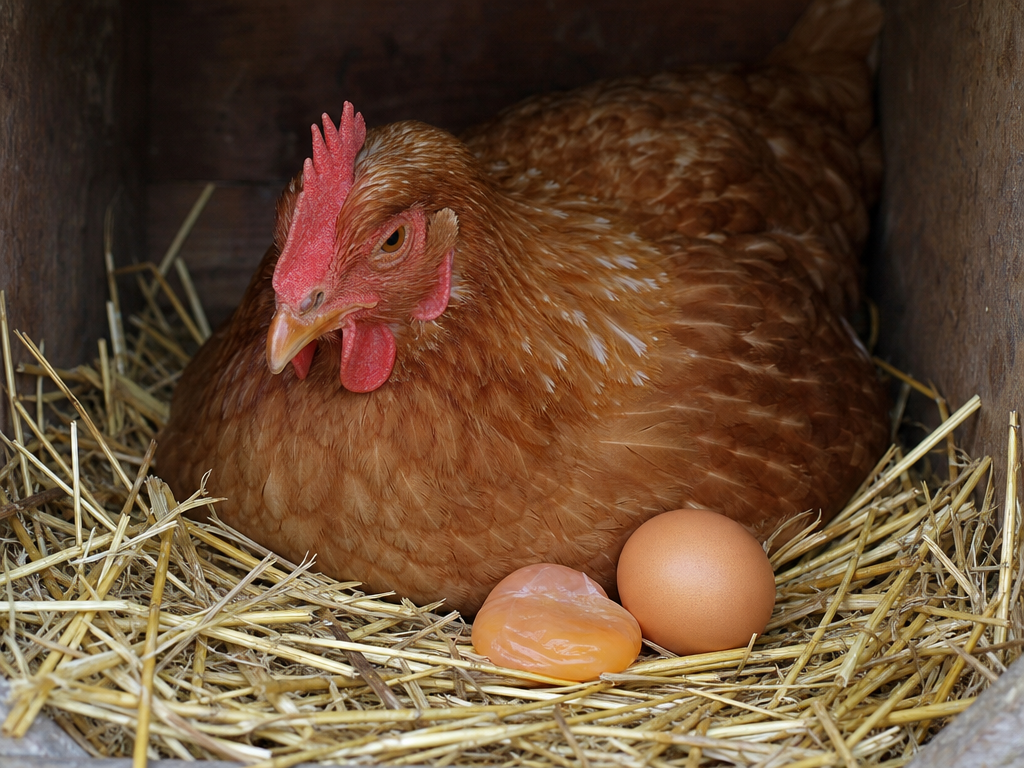
- ●Abnormal eggs (soft, thin, misshapen, pale yolks)
- ●Hen appears healthy but is not laying
- ●Whole flock stops simultaneously (light, disease, or molt)
- ●Individual birds stop (age, internal laying, reproductive disease)
- ●Hens eating less or losing body condition
- ●Behavioral changes: lethargy, hiding, or aggression
- ●Increased feed consumption without increased output
🧬What Causes Egg Production Problems in Chickens in Chickens?
Egg production problems are almost always traceable to one or more correctable causes. Work through this list systematically before assuming disease.
- Insufficient light: Hens require 14-16 hours of light per day to maintain laying. Short winter days are the single most common reason for a flock-wide production drop.
- Nutritional deficiency: Calcium, vitamin D3, phosphorus, and protein are all essential for egg production. Hens fed scratch grain, kitchen scraps, or unfortified feed as a primary diet will consistently underperform.
- Natural molt: Most hens stop laying for 2-4 months annually during molt. Feather regrowth is metabolically expensive and takes priority over egg production. High-protein feed accelerates recovery.
- Age: Hens lay best in years 1-3. Production declines 10-20% per year after peak. By year 4-5, many hens produce fewer than 100 eggs per year.
- Reproductive disease: Egg yolk peritonitis, internal laying, ovarian cysts, salpingitis, or oviduct tumors prevent normal egg formation. These often affect individual birds with a history of high production.
- Infectious disease: Infectious Bronchitis, Newcastle Disease, Avian Influenza, Mycoplasma, and Marek's Disease all reduce or stop egg production. A sudden flock-wide drop accompanied by respiratory signs is an emergency.
- Stress factors: Predator visits, new flock members, coop changes, extreme heat, transport, or loud disturbances disrupt the hormonal signals needed for ovulation.
🔬How Is Egg Production Problems in Chickens Diagnosed?
Assess these factors in order before considering infectious causes:
- Measure daylight hours: Use a light meter or observe actual sunrise and sunset times. Supplement with a 40-60W incandescent or LED bulb on a timer to reach 16 hours total.
- Review feed: Confirm hens have 24/7 access to a complete layer pellet with 16-18% protein and 3.5-4.5% calcium. Check that scratch, treats, and scraps are under 10% of total intake.
- Assess molt stage: Feather loss on neck, back, or wings confirms molt. Count weeks since molt began. Expect laying to resume 6-12 weeks after new feathers emerge.
- Individual examination: Palpate the abdomen for masses, fluid, or distension. A hen that feels heavy in the belly but is not laying may have internal laying or peritonitis.
- Disease workup: If multiple birds decline rapidly alongside respiratory or neurological signs, submit samples to a state poultry diagnostic lab immediately.
💊How Is Egg Production Problems in Chickens Treated?
Light supplementation: Add artificial light on a timer so total daily exposure reaches 15-16 hours. Use gradually increasing increments of 30 minutes per week to avoid shocking the flock.
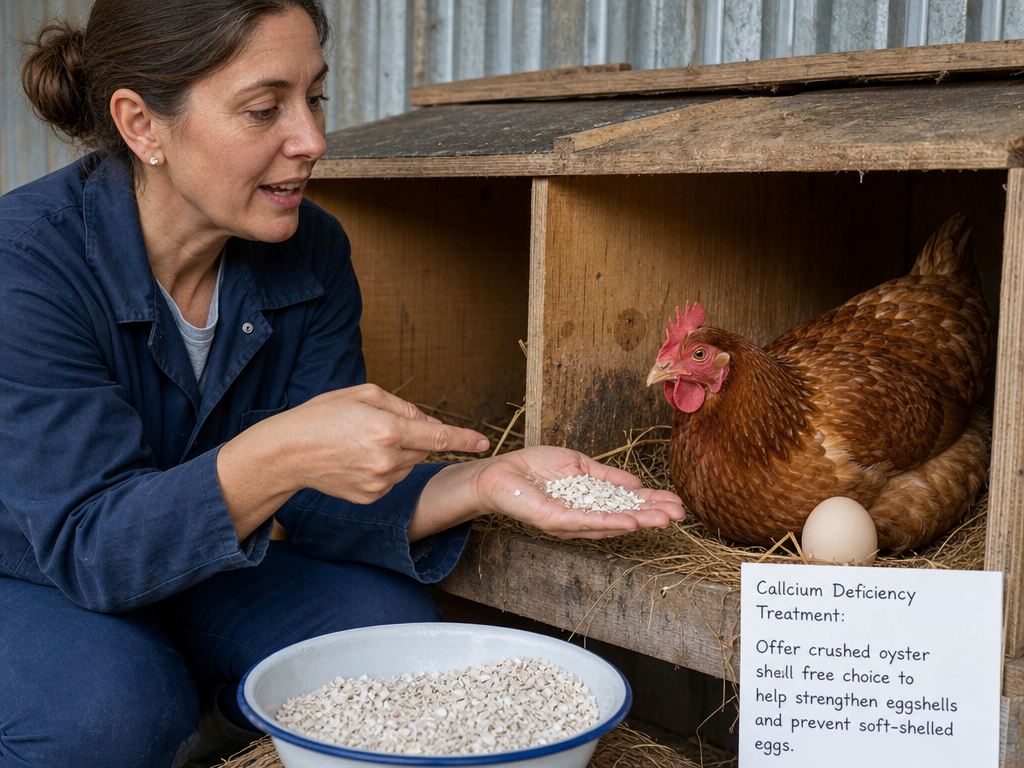
Nutritional correction: Switch to a complete layer pellet (16% protein, 3.5% calcium). Offer crushed oyster shell free-choice at all times. Supplement vitamin D3 in winter if access to outdoor sunlight is limited.
Molt management: Transition to a high-protein (20-22%) feed during molt to speed feather regrowth and shorten the non-laying period. Return to standard layer pellets when feathers are fully regrown.
Disease treatment: Specific therapy depends on the pathogen identified. Infectious Bronchitis requires only supportive care; Mycoplasma responds to tylosin or doxycycline. Reproductive tumors or severe peritonitis may require euthanasia.
Natural & Integrative Care for Egg Production Problems in Chickens
Most egg production problems respond to light correction, nutritional improvement, or molt management. Rule out management causes fully before investigating disease.
Natural interventions are most effective for nutritional and stress-related causes of egg production decline.
Calcium-rich supplementation: Offer crushed dried eggshells or agricultural limestone as free-choice grit alongside standard oyster shell. Hens self-regulate calcium intake according to laying need.
High-protein treats during molt: Black soldier fly larvae, mealworms, and pumpkin seeds provide concentrated protein and healthy fats to support feather regrowth. Limit to 10% of daily diet.
Stress reduction: Add perch space so all hens can roost without competition. Block sight lines to predator areas. Maintain a consistent daily routine, including feeding times.
Herbal nesting box refresh: Lavender, mint, and calendula in nesting boxes reduce stress and repel mites, both of which can suppress laying.
🛡️How Can Egg Production Problems in Chickens Be Prevented?
- Install a timer-controlled light in the coop before the autumn equinox. Maintaining 15-16 hours of light year-round is the most reliable way to sustain winter laying.
- Feed a complete layer pellet as the base diet and keep treats under 10% of intake. Nutritional imbalances are the second most common cause of preventable production loss.
- Add oyster shell free-choice starting at 16 weeks and maintain it continuously throughout the laying life of the flock.
- Vaccinate for Marek's Disease at hatch. Marek's is a major cause of reproductive system tumors that end laying careers early.
- Minimize flock disruptions during peak laying. Adding new birds, rearranging the coop, or handling hens frequently during spring production suppresses output.
📞When Should I Call a Vet for Egg Production Problems in Chickens?
Seek veterinary advice if:
- Egg production drops more than 30% across the whole flock within 1 week with no change in management. This pattern strongly suggests an infectious cause requiring laboratory confirmation.
- Individual hens appear lethargic, have a distended abdomen, are breathing abnormally, or have stopped eating alongside the production drop.
- Multiple hens are producing abnormal eggs (soft, liquid, no shell) simultaneously. This can indicate infectious bronchitis, Newcastle Disease, or severe calcium depletion.
❓Egg Production Problems in Chickens: Frequently Asked Questions
Why did my chickens suddenly stop laying eggs?
The most common reasons for a sudden stop are a drop in daylight hours (below 14 hours), the start of molt, a disruption or stressor, or an infectious disease. Check light exposure first, as it is the most frequently overlooked factor in backyard flocks during late summer and fall.
How long does it take for chickens to start laying again?
After correcting light exposure, production typically resumes within 2-4 weeks. After molt, most hens resume laying 4-8 weeks after feathers are fully regrown. Disease-related stoppages depend on the pathogen and treatment response.
What should I feed my chickens to increase egg production?
Feed a complete layer pellet with 16-18% protein and 3.5-4.5% calcium as the primary diet. Offer crushed oyster shell free-choice. During molt, increase to a 20% protein feed. Limit scratch and treats, as they dilute protein and calcium intake.
At what age do chickens stop laying eggs?
Most hens slow significantly after year 3-4 and produce very few eggs by year 5-6. The average laying hen produces roughly 250 eggs per year at peak (age 1-2) and declines 10-20% each subsequent year.
Can stress cause a chicken to stop laying?
Yes. Predator pressure, introduction of new birds, moving the coop, loud noises, and extreme heat all suppress the hormonal cascade that triggers ovulation. Hens typically resume laying 1-3 weeks after the stressor is removed.
Do sick chickens stop laying eggs?
Yes. Any systemic illness reduces egg production. Respiratory infections, Marek's Disease, coccidiosis, and reproductive tract infections are common disease causes of production decline. If a bird is sick and not laying, treat the underlying illness first.
📋Key Points
- ✓Egg production problems are almost always traceable to one or more correctable causes.
- ✓Key symptoms: complete stop in egg laying, gradual week-over-week decline in eggs collected, eggs laid on the floor rather than in nesting boxes, abnormal eggs (soft, thin, misshapen, pale yolks).
- ✓Excellent if the cause is light, nutrition, or molt. Good if caused by infectious disease with prompt treatment. Poor if caused by reproductive tumors, advanced internal laying, or end-stage peritonitis.
🔗Related
Related Conditions