Why Did My Chicken Stop Laying? Causes and Solutions
A chicken stops laying eggs when her body redirects resources away from reproduction in response to reduced light, molt, nutritional gaps, stress, aging, or disease. Most causes are correctable. Identifying whether the stoppage is flock-wide or individual and whether it coincides with seasonal or management changes points to the cause within minutes of observation.
Veterinarian Reviewed
FlockVet Editorial Team· Reviewed August 2026
At a Glance
- Urgency
- Mild
- Contagious
- No
- Affects Humans
- No
- Key Symptoms
- no eggs collected for 3 or more consecutive days, gradual decline over several weeks to complete stop, hen appears otherwise healthy and is eating normally
- Prognosis
- Excellent for light, molt, stress, broodiness, nutritional, and hidden-nest causes. All resolve with appropriate management. Good for disease-related causes caught early. Poor for advanced reproductive tract tumors or severe Marek's disease involvement.
📑 On This Pagetap to expand
🔍What Are the Symptoms of Why Did My Chicken Stop Laying??
- ●No eggs collected for 3 or more consecutive days
- ●Gradual decline over several weeks to complete stop
- ●Hen appears otherwise healthy and is eating normally
- ●Hen shows signs of molt (feather loss, regrowth pins)
- ●Multiple hens stop simultaneously (light or disease trigger)
- ●One hen stops while others continue (individual cause)
- ●Eggs found hidden or outside the nesting box
- ●Hen is broody (sitting, puffed up, refusing to leave nest)
- ●Older hen with known multi-year laying history
- ●No eggs during shortest days of winter (November through January)
🧬What Causes Why Did My Chicken Stop Laying? in Chickens?
Egg laying is a hormonally driven process that stops whenever the hen's body perceives conditions as unsuitable for reproduction. There are 9 distinct causes, and most are fixable.
- Insufficient daylight (most common): Hens require 14-16 hours of light to sustain the hypothalamic light detection that triggers the laying hormone cascade. As days shorten after the summer solstice, production declines and many hens stop entirely by November.
- Annual molt: Most hens stop laying for 2-4 months during their annual molt. The body prioritizes growing new feathers over egg production. Molt typically begins in late summer or fall, often triggered by decreasing day length.
- Age: Peak production occurs at 1-2 years. Hens typically slow 10-15% per year after peak. By age 4-5, many hens produce very few eggs and may take long breaks between laying cycles.
- Stress: A predator visit, new flock members, coop rearrangement, transport, loud disturbances, extreme heat, or sudden cold can interrupt the hormonal cycle and halt laying for 1-3 weeks.
- Broodiness: A broody hen stops laying entirely and sits on eggs (or an empty nest) waiting to hatch. Silkies, Cochins, and Orpingtons are highly prone. Broodiness can last 3-8 weeks if not broken.
- Nutritional deficiency: Inadequate protein (under 15%), calcium, vitamin D3, or general caloric deficit suppresses laying. Hens fed primarily scratch grain or kitchen scraps often produce poorly or stop.
- Disease: Infectious Bronchitis, Newcastle Disease, Marek's Disease, Mycoplasma, and reproductive tract infections can stop laying either through direct oviduct damage or systemic immune response.
- Hidden nest: Hens that free-range sometimes establish a hidden nest away from the coop. The keeper may not find eggs for weeks while the hen continues to lay normally.
- Egg binding or internal laying: A hen with an egg stuck in the oviduct or that has begun laying internally will stop producing normal eggs. These conditions are medical emergencies requiring urgent attention.
🔬How Is Why Did My Chicken Stop Laying? Diagnosed?
Walk through this checklist before assuming disease:
- Count daylight hours: Is it autumn or winter? Are days shorter than 14 hours? If yes, install a timer light to reach 15-16 hours total before doing anything else.
- Check for molt: Gently part the feathers. Loose feathers falling easily, bare patches, and visible pin feathers indicate active molt. Laying will resume 4-8 weeks after feather regrowth is complete.
- Assess for broodiness: Is the hen puffed up, sitting in the nest box, growling when approached, and refusing to leave? This is broodiness, not illness.
- Check for a hidden nest: Search the yard perimeter, under bushes, and in corners for a secret clutch. Free-range hens frequently establish hidden nests.
- Review diet: Is the hen eating a complete layer pellet? Has the diet changed recently? Protein or calcium shortfalls are common causes that resolve quickly with diet correction.
- Look for stress events: Was there a predator attack, new bird introduction, or management change in the past 1-3 weeks? Stress-related laying cessation typically resolves within 2-3 weeks of stabilization.
💊How Is Why Did My Chicken Stop Laying? Treated?
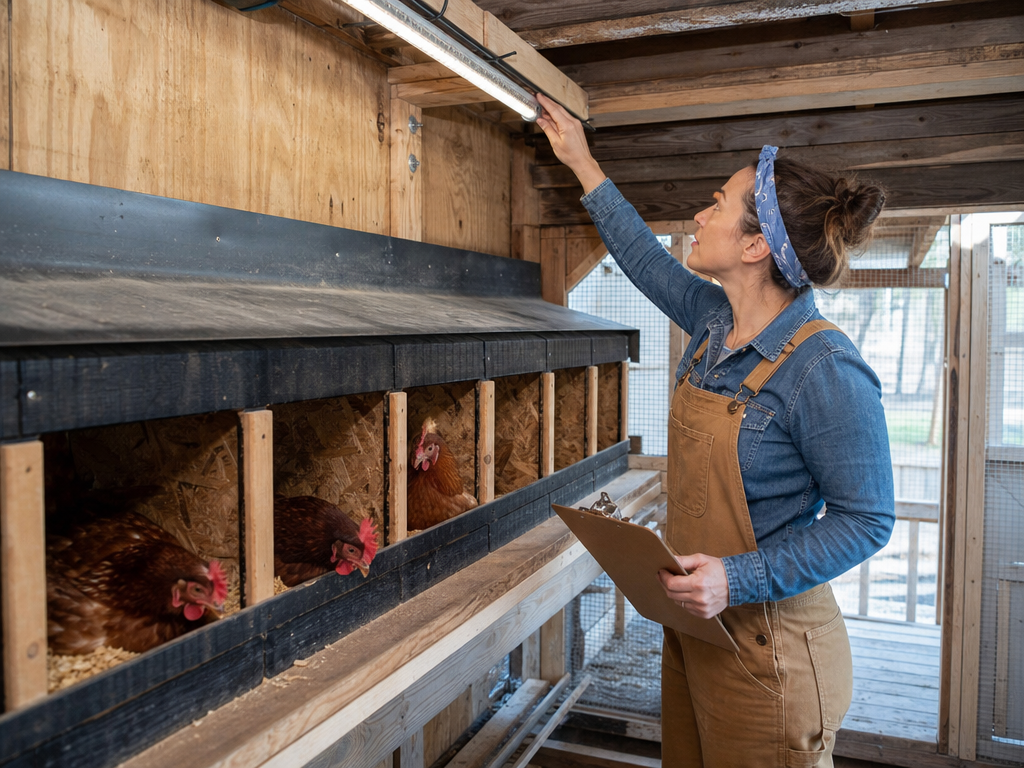
Light therapy: Install a 40-60W incandescent or LED bulb on a timer to provide 15-16 hours of combined natural and artificial light per day. Most hens resume laying within 2-4 weeks.
Break broodiness: Place the broody hen in a wire-floored cage with good airflow (no nesting material) for 3-5 days. This drops the brooding body temperature and hormone levels, breaking the cycle. Isolating her away from the flock is often sufficient.
Nutritional correction: Switch to or confirm a complete layer pellet with 16-18% protein. Offer free-choice oyster shell. Reduce scratch to under 10% of total diet.
Disease workup: If no management cause is found and multiple hens have stopped, submit samples to a state diagnostic lab for IBV and NDV PCR testing.
Natural & Integrative Care for Why Did My Chicken Stop Laying?
Work through the checklist: light, molt, broodiness, hidden nest, diet. These account for over 90% of backyard flock laying stoppages and all are correctable without veterinary intervention.
Natural interventions address the most common correctable causes effectively.
Protein-rich treats during molt: Offer black soldier fly larvae, mealworms, pumpkin seeds, or dried fish as high-protein treats. Feed a 20% protein feed during active molt to accelerate feather regrowth and shorten the non-laying period.
Herbal stress reduction: Add dried lavender, chamomile, or valerian to nesting boxes and the coop. These herbs have mild sedative properties and reduce flock stress hormones, supporting faster return to laying after stressful events.
Apple cider vinegar in water (1 tbsp/gallon): Supports gut health and nutrient absorption, particularly for calcium uptake. Use 3 days on, 4 days off.
🛡️How Can Why Did My Chicken Stop Laying? Be Prevented?
- Install coop lighting on a timer before the autumn equinox (late September). Maintaining artificial light ensures consistent production through winter without waiting for natural daylength to increase.
- Feed a quality layer pellet year-round and keep scratch under 10% of diet. Nutritional consistency prevents deficiency-related laying gaps.
- Manage broodiness proactively in breeds prone to it. Break broodiness within the first few days to minimize the total non-laying period.
- Minimize flock disruptions during peak laying (spring and summer). Plan introductions, coop changes, and vet visits for the natural non-laying period (mid-molt).
📞When Should I Call a Vet for Why Did My Chicken Stop Laying??
Consult a veterinarian if:
- A hen stops laying and is also lethargic, has a distended abdomen, or appears to be in pain. These signs combined with cessation of laying suggest egg binding, internal laying, or peritonitis.
- The whole flock stops suddenly and the cause cannot be identified through the management checklist. This pattern warrants PCR testing for Infectious Bronchitis and Newcastle Disease.
- A hen does not resume laying within 6 weeks of correcting light and nutrition. Further examination for oviduct pathology is indicated.
❓Why Did My Chicken Stop Laying?: Frequently Asked Questions
Why did my chicken suddenly stop laying eggs?
Sudden stops are most commonly caused by a drop in daylight (seasonal), a stressful event (predator, new birds, coop change), the onset of molt, or the start of broodiness. Work through the checklist: check light hours, inspect for feather loss, observe nest box behavior, and review any management changes in the past 2-3 weeks.
How do I get my chicken to start laying again?
Start with the two most common fixes: add a timer light to maintain 15-16 hours of light daily, and confirm the hen is eating a complete layer pellet with free-choice oyster shell. Break broodiness with isolation if applicable. Most hens resume within 2-4 weeks of correcting the primary cause.
At what age do chickens stop laying?
Production slows significantly after age 3 and most hens produce very few eggs by age 5-6. However, individual variation is large. Some heritage breeds lay well into year 4-5, while high-production breeds like White Leghorns decline more steeply after year 2.
Why is my hen not laying in winter?
Hens need 14-16 hours of light per day to maintain egg production. During the shortest winter days, many hens stop laying entirely without supplemental lighting. Install a coop light on a timer to extend total daily light to 15-16 hours.
Can stress make a chicken stop laying eggs?
Yes. Stress from predator attacks, new flock members, transport, extreme heat, or routine disruption suppresses the hormonal signals required for ovulation. Most hens resume 1-3 weeks after the stressor is removed and conditions stabilize.
My chicken is not laying but seems healthy. What should I check?
A healthy-appearing hen that is not laying may have a hidden nest (search the yard carefully), be in early molt (check for feather loosening or loss), or be in the early stages of broodiness (sitting in the nest box, puffed up). These are all normal, non-disease causes.
📋Key Points
- ✓Egg laying is a hormonally driven process that stops whenever the hen's body perceives conditions as unsuitable for reproduction.
- ✓Key symptoms: no eggs collected for 3 or more consecutive days, gradual decline over several weeks to complete stop, hen appears otherwise healthy and is eating normally, hen shows signs of molt (feather loss, regrowth pins).
- ✓Excellent for light, molt, stress, broodiness, nutritional, and hidden-nest causes. All resolve with appropriate management. Good for disease-related causes caught early. Poor for advanced reproductive tract tumors or severe Marek's disease involvement.
🔗Related
Related Conditions