Egg Drop Syndrome in Chickens: Symptoms, Causes and Prevention
Egg Drop Syndrome 76 (EDS-76) is caused by an avian adenovirus (Duck Adenovirus A) that produces a sudden drop in egg production with thin-shelled, soft-shelled, or shell-less eggs in otherwise healthy laying hens. Broiler breeders and brown egg-laying strains are most susceptible. The primary reservoir is waterfowl. There is no treatment; vaccination protects against production losses.
Veterinarian Reviewed
FlockVet Veterinary Editorial Team· Reviewed August 2026
At a Glance
- Urgency
- Moderate
- Contagious
- Yes
- Affects Humans
- No
- Key Symptoms
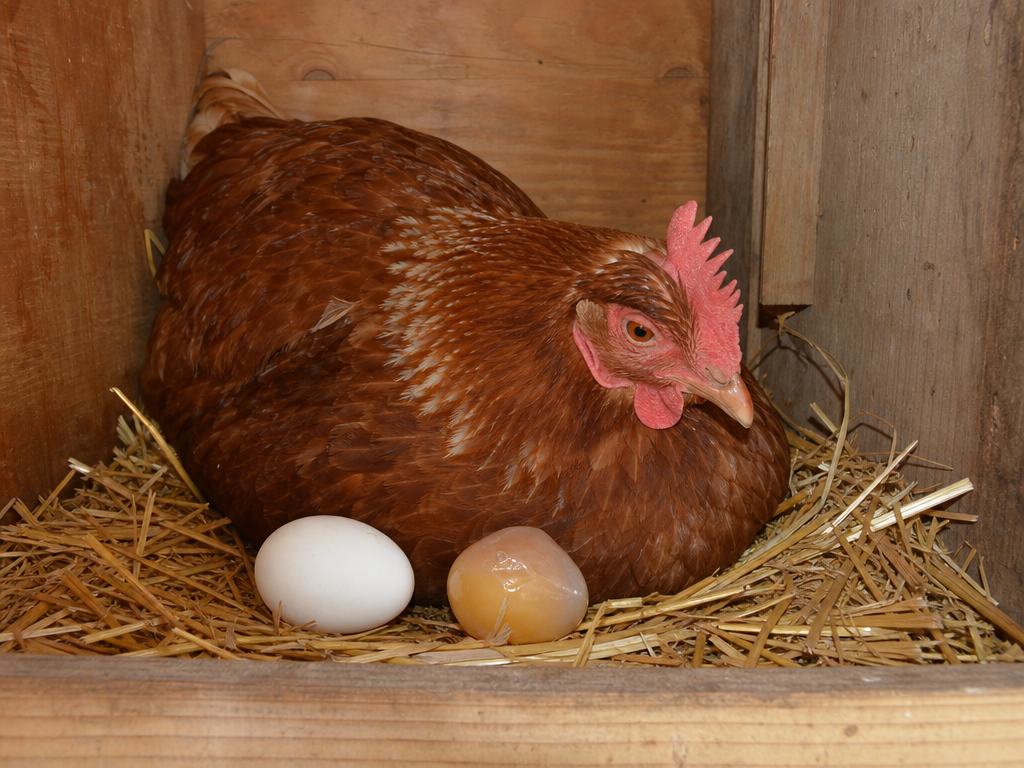
- sudden drop in egg production of 20-50% in apparently healthy hens, production of shell-less or soft-shelled eggs, pale or depigmented eggshells in normally brown-shelled breeds
- Prognosis
- Good for individual bird health. Most hens survive and remain productive, though at reduced levels. Production recovery over 8-12 weeks with supportive management. Economic impact can be significant in commercial operations. Vaccinated flocks show minimal or no drop in production even if exposed.
📑 On This Pagetap to expand
🔍What Are the Symptoms of Egg Drop Syndrome?
- ●Sudden drop in egg production of 20-50% in apparently healthy hens
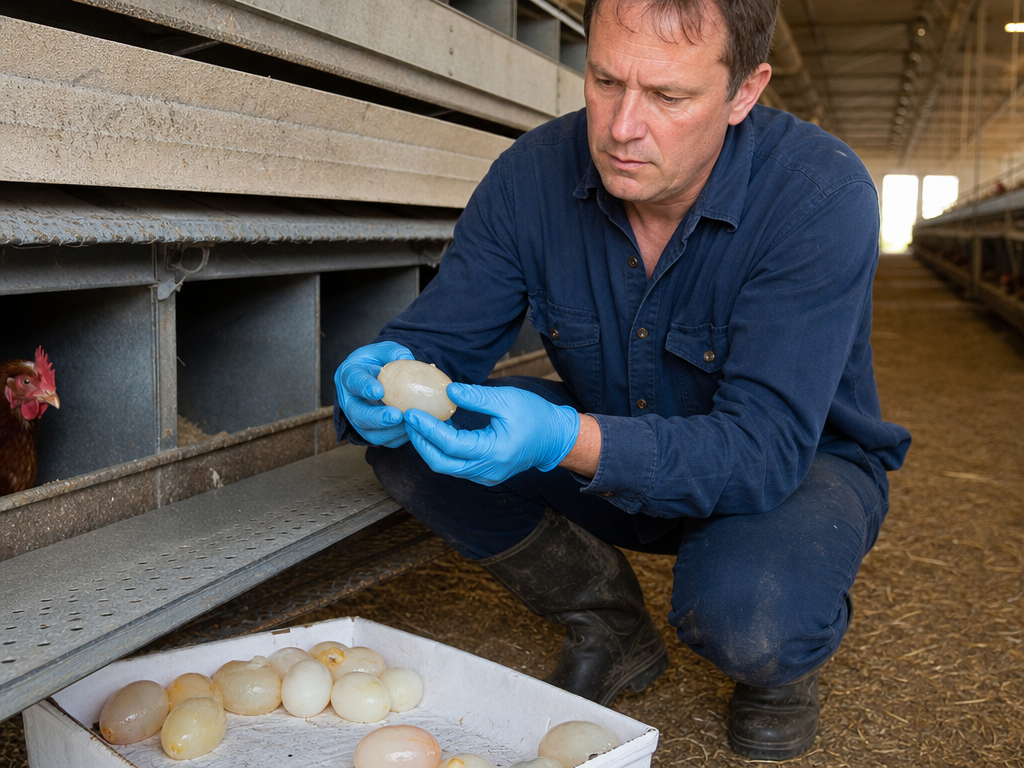
- ●Production of shell-less or soft-shelled eggs
- ●Pale or depigmented eggshells in normally brown-shelled breeds
- ●Thin, rough, or sandpaper-textured shells
- ●Normal or slightly watery egg white and yolk quality
- ●Hens appear healthy with normal appetite and behavior
- ●Minimal respiratory signs (distinguishes EDS from IB)
- ●Rapid flock-wide spread over 2-4 weeks
🧬What Causes Egg Drop Syndrome in Chickens?
Egg Drop Syndrome 76 is caused by Duck Adenovirus A (DAdV-A), an adenovirus whose natural host is ducks and geese rather than chickens.
- Contaminated vaccine origin (historic): EDS-76 was originally introduced worldwide via contaminated Marek's disease vaccine produced in duck embryos in the 1970s. This accounts for the global distribution of the virus despite its duck origin.
- Waterfowl reservoir: Ducks and geese carry EDS-76 without any clinical signs. Chickens sharing water sources, land, or equipment with domestic or wild waterfowl can be exposed to the virus via feces and oral secretions.
- Vertical transmission: EDS-76 can be transmitted through infected hatching eggs. Chicks hatch with latent infection that activates when hens reach peak production (26-30 weeks) under the influence of reproductive hormones.
- Lateral spread: Once active in a flock, EDS-76 spreads laterally via fecal-oral route and contaminated equipment, though spread between separate flocks is less efficient than vertical transmission.
🔬How Is Egg Drop Syndrome Diagnosed?
The combination of sudden egg production drop with shell quality changes in otherwise healthy hens, without significant respiratory signs, is highly suggestive of EDS-76.
- Key differentiator from IB: Infectious bronchitis also causes egg production drops and shell quality changes, but IB is accompanied by significant respiratory signs, sneezing, and tracheal rales. EDS-76 hens look completely healthy except for egg quality.
- Hemagglutination Inhibition (HI) test: A 4-fold or greater rise in HI antibody titer between acute and convalescent serum samples (taken 3 weeks apart) confirms recent EDS-76 infection.
- Virus isolation: EDS-76 virus can be isolated from the uterus or oviduct of affected hens on duck embryo fibroblasts.
- PCR: Real-time PCR on oviduct swabs or oviduct tissue provides rapid, sensitive confirmation.
💊How Is Egg Drop Syndrome Treated?
There is no antiviral treatment for Egg Drop Syndrome. Management focuses on minimizing production losses and preventing spread to unvaccinated flocks.
Supportive management: Ensure optimal nutrition, particularly adequate calcium (4%) and vitamin D3 for shell formation. Reduce any concurrent stressors (lighting changes, feed disruptions) that may worsen the production drop.
Production recovery: Most flocks begin recovering production 4-6 weeks after the peak drop. Complete production recovery may take 8-12 weeks. Some flocks never fully recover to their pre-infection production peak.
Vaccination of adjacent unaffected flocks: If EDS-76 is confirmed in one flock on a multi-flock site, vaccinate adjacent flocks immediately to prevent lateral spread.
Natural & Integrative Care for Egg Drop Syndrome
EDS-76 has no treatment; vaccination before peak production is the only reliable method of preventing production losses.
No natural treatments exist for EDS-76. Nutritional support during the recovery phase aids shell quality recovery.
Calcium and vitamin D3 optimization: Ensure oyster shell is available free-choice and that vitamin D3 levels in feed are adequate (2,000-4,000 IU/kg). These support the shell gland's ability to mineralize shells as production recovers.
🛡️How Can Egg Drop Syndrome Be Prevented?
- Vaccinate all breeding and laying flocks with an oil-emulsion EDS-76 killed vaccine at 14-18 weeks of age, before peak production. A single dose provides protection for the full laying cycle.
- Prevent waterfowl contact with chicken facilities. Ducks and geese are the primary EDS-76 reservoir and shed virus without signs. Do not share water sources, equipment, or land with domestic waterfowl.
- Test incoming breeding stock for EDS-76 antibodies. Seropositive birds may be latent carriers that activate during peak production.
- Use closed flock management where possible. EDS-76 spreads between flocks via contaminated equipment, vehicles, and personnel.
📞When Should I Call a Vet for Egg Drop Syndrome?
Consult a veterinarian if:
- You observe a sudden 20-50% drop in egg production with shell quality changes in healthy hens. Confirm the diagnosis with HI serology to distinguish EDS-76 from Newcastle disease, IB, or nutritional deficiency.
- The production drop does not begin recovering within 6-8 weeks. Persistent non-recovery may indicate concurrent infection or nutritional issues requiring separate investigation.
❓Egg Drop Syndrome: Frequently Asked Questions
What is Egg Drop Syndrome in chickens?
Egg Drop Syndrome 76 (EDS-76) is a viral disease caused by Duck Adenovirus A that causes sudden drops in egg production and poor shell quality (thin, pale, soft, or shell-less eggs) in otherwise healthy hens. Hens show no other signs of illness. The primary reservoir is waterfowl. Vaccination before peak production prevents losses.
How does Egg Drop Syndrome affect egg quality?
EDS-76 attacks the shell gland (uterus) of the oviduct, impairing its ability to deposit calcium. Affected hens produce pale eggs (brown egg breeds), thin-shelled eggs, soft-shelled eggs, or completely shell-less eggs. Egg white and yolk quality remain normal. Shell quality gradually recovers as the immune system clears the infection.
How is Egg Drop Syndrome treated?
There is no treatment for EDS-76. Production typically recovers on its own over 8-12 weeks. Ensuring optimal calcium, vitamin D3, and reducing other stressors supports shell quality during recovery. Vaccination of unaffected neighboring flocks prevents spread.
How do chickens get Egg Drop Syndrome?
EDS-76 comes from waterfowl (ducks and geese) that carry it without showing signs. Chickens sharing water, land, or equipment with waterfowl can be exposed. The virus can also be passed vertically through infected hatching eggs, activating when the hen reaches peak production. Historically, contaminated Marek's disease vaccines spread it globally.
Is there a vaccine for Egg Drop Syndrome in chickens?
Yes. An effective oil-emulsion killed EDS-76 vaccine is administered once at 14-18 weeks of age, before peak production. It provides excellent protection through the full laying cycle. Vaccination is recommended in all laying flocks, particularly those with access to areas used by ducks, geese, or wild waterfowl.
📋Key Points
- ✓Egg Drop Syndrome 76 is caused by Duck Adenovirus A (DAdV-A), an adenovirus whose natural host is ducks and geese rather than chickens.
- ✓Key symptoms: sudden drop in egg production of 20-50% in apparently healthy hens, production of shell-less or soft-shelled eggs, pale or depigmented eggshells in normally brown-shelled breeds, thin, rough, or sandpaper-textured shells.
- ✓Good for individual bird health. Most hens survive and remain productive, though at reduced levels. Production recovery over 8-12 weeks with supportive management. Economic impact can be significant in commercial operations. Vaccinated flocks show minimal or no drop in production even if exposed.
- ✓This condition is contagious, isolate affected birds promptly.
🔗Related
Related Conditions
📚Sources & References
- 1.Egg Drop Syndrome in Poultry. Merck Veterinary Manual. 2024
- 2.Egg Drop Syndrome 1976 - A Review. PubMed / Avian Pathology. 1981
- 3.Layer Flock Health Management. University of Georgia Extension. 2022