Depluming Mites in Chickens: Symptoms, Causes and Treatment
Depluming mites (Knemidocoptes laevis) burrow into the skin at the base of feathers, causing intense irritation that leads to self-plucking and feather loss. Unlike scaly leg mites (K. mutans), depluming mites affect the feathered body surface rather than the legs. Ivermectin or lime sulfur dips are the primary treatments. Affected birds must be isolated from the flock to prevent spread.
Veterinarian Reviewed
FlockVet Veterinary Editorial Team· Reviewed August 2026
At a Glance
- Urgency
- Mild
- Contagious
- Yes
- Affects Humans
- No
- Key Symptoms
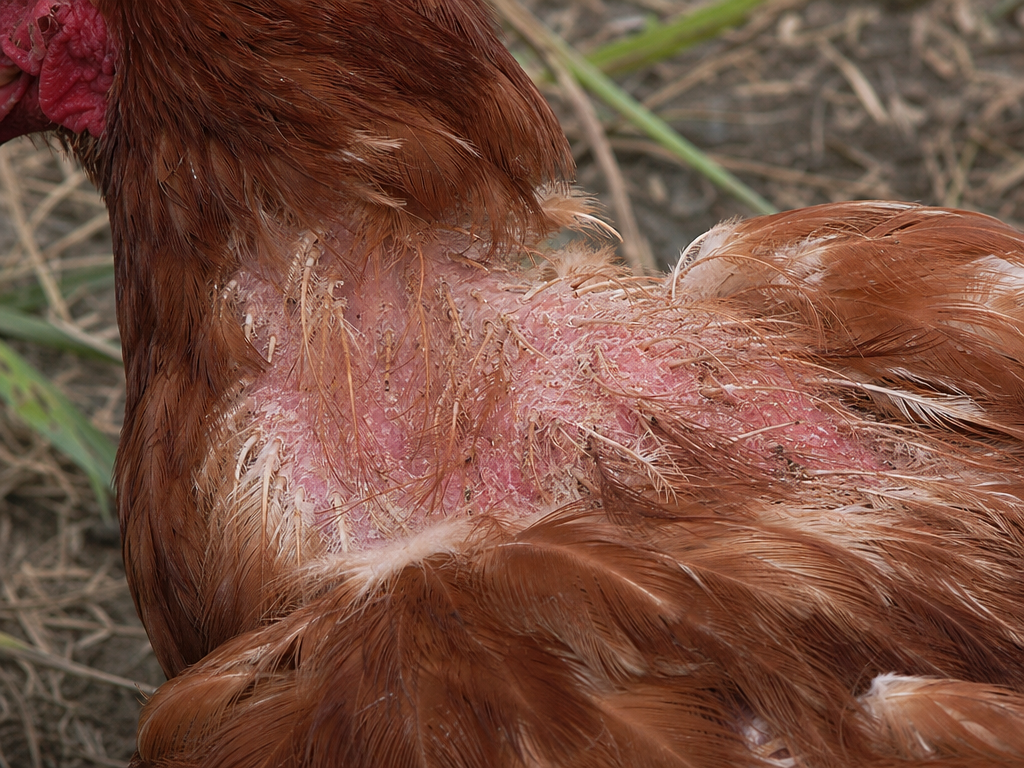
- intense feather-pulling and self-plucking behavior, bare patches of skin, particularly around the head, neck, and back, skin inflammation and crust formation at feather bases
- Prognosis
- Good with prompt treatment. Feathers regrow within 6-8 weeks after mite elimination. Prognosis for full feather coat recovery is excellent. Reinfection from untreated flock members is the primary cause of treatment failure.
📑 On This Pagetap to expand
🔍What Are the Symptoms of Depluming Mites?
- ●Intense feather-pulling and self-plucking behavior
- ●Bare patches of skin, particularly around the head, neck, and back
- ●Skin inflammation and crust formation at feather bases
- ●Broken feather shafts with encrustations at their roots
- ●Restlessness and constant preening
- ●Weight loss from caloric expenditure of constant grooming
- ●Crusty or scaly appearance at the base of affected feathers
- ●Spread to other birds through direct contact
🧬What Causes Depluming Mites in Chickens?
Knemidocoptes laevis is a small (0.2mm) burrowing mite that spends its entire lifecycle on the host, tunneling into the epidermis at the feather follicle base.
- Direct bird-to-bird contact: K. laevis completes its lifecycle entirely on the host and survives only hours off the bird. Transmission requires direct physical contact between birds. Introduction of an infested bird into a clean flock spreads the mite to all birds in contact over 2-4 weeks.
- Distinguish from K. mutans: Knemidocoptes mutans (scaly leg mite) burrows under leg scales. K. laevis burrows into feathered body skin. Both cause crusting but at different body locations. Treatment is similar for both.
- Long-term subclinical carriage: Mite populations can remain at low levels for months before the bird's immune response fails to contain them, causing sudden apparent onset of symptoms. This explains why birds can appear healthy for months and then develop sudden severe depluming.
- Stressed or immunocompromised birds: Malnourished or immunosuppressed birds develop much more severe depluming mite infestations than healthy birds exposed to the same mite load.
🔬How Is Depluming Mites Diagnosed?
Depluming mites are confirmed by microscopic examination of feather base scrapings.
- Scraping technique: Grasp a feather with obvious crust at its base and pull firmly. The crust and surrounding skin debris collected at the base is placed on a microscope slide with a drop of mineral oil. Cover slip and examine at 40-100x for mites and eggs.
- Clinical differentiation: Feather pecking from flock mates causes feather breakage at varying heights. Depluming mite self-plucking is recognized by the bird's constant preening attention to its own feathers and the characteristic crust at feather bases.
- Differentiate from nutritional deficiency: Methionine, lysine, or protein deficiency can cause feather pulling and poor feather quality. Depluming mites show crust at feather follicles; nutritional deficiencies show poor feather quality without crust.
💊How Is Depluming Mites Treated?
Ivermectin is the most reliable treatment for depluming mites.
Ivermectin: 0.2 mg/kg body weight applied topically (1% ivermectin solution) to the bare skin on the back of the neck, or administered orally. Repeat in 14 days to kill mites that hatched after the first treatment. Do not use in birds producing eggs for human consumption; observe withdrawal periods per your country's regulations.
Lime sulfur dip: Dilute lime sulfur solution (8% concentration) applied as a whole-body dip or spray weekly for 3-4 weeks is effective for depluming mites. Wear gloves and eye protection; lime sulfur has a strong odor and is caustic to human skin.
Isolation: Isolate all affected birds from the flock immediately to prevent spread. Treat the entire flock, not just visibly affected birds, as subclinical carriers facilitate reinfection.
Natural & Integrative Care for Depluming Mites
Ivermectin is the most reliable treatment for depluming mites; isolate affected birds and treat the entire flock to prevent reinfestation.
Natural approaches provide mild supportive activity but should not replace ivermectin or lime sulfur in established infestations.
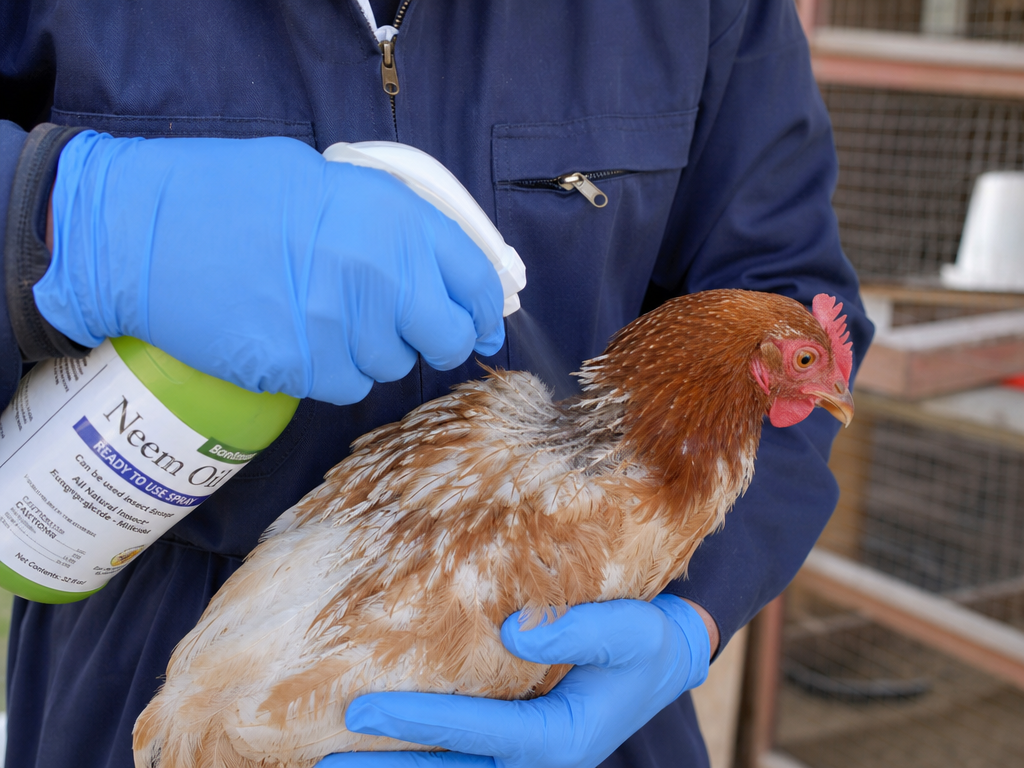
Neem oil (diluted 1-2% in water): Neem oil has documented acaricidal properties and is used as a spray on the feathered body surface. Apply weekly. Results are less consistent than ivermectin for established depluming mite infestations.
Sulfur dust: Dusting the feathered body surface with plain sulfur powder provides mild acaricidal activity. Less effective than lime sulfur dip but easier to apply.
🛡️How Can Depluming Mites Be Prevented?
- Quarantine all new birds for 30 days before flock integration. Inspect for crust at feather bases and self-plucking behavior during quarantine.
- Examine the feather base condition of flock birds monthly, especially during winter when mites tend to proliferate faster under dense feathering.
- Maintain good nutrition. Well-nourished birds with healthy immune function contain depluming mite populations far more effectively than stressed or malnourished birds.
- Treat any newly acquired birds prophylactically with ivermectin before introducing them to the flock, regardless of apparent health.
📞When Should I Call a Vet for Depluming Mites?
Consult a veterinarian if:
- Feather-plucking is severe and skin wounds are developing. Confirm depluming mites by microscopy rather than treating empirically, as feather pecking from flock mates requires a completely different management approach.
- Ivermectin treatment at standard doses does not produce improvement within 21 days. Higher doses or alternative acaricides may be needed.
❓Depluming Mites: Frequently Asked Questions
What are depluming mites in chickens?
Depluming mites (Knemidocoptes laevis) burrow into skin at feather bases, causing intense irritation and self-plucking that creates bare patches. Unlike scaly leg mites (which affect legs), depluming mites affect the feathered body surface. Ivermectin is the most effective treatment. Isolation of affected birds prevents flock spread.
How do you tell depluming mites from feather pecking?
Depluming mites cause the affected bird to pluck its own feathers obsessively, starting with areas it can reach (neck, back, wings). Feather pecking from flock mates causes feather breakage directed at specific birds, often producing bleeding wounds. Microscopic examination of feather base scrapings confirms mites.
What is the difference between depluming mites and scaly leg mites?
Both are Knemidocoptes species, but they affect different body regions. Scaly leg mites (K. mutans) burrow under leg scales, causing raised, crusty legs. Depluming mites (K. laevis) burrow at feather follicle bases on the body, causing self-plucking. Treatment with ivermectin is effective for both.
How do you treat depluming mites in chickens?
Ivermectin (0.2 mg/kg topically or orally, repeated in 14 days) is the most effective treatment. Lime sulfur dip (8% weekly for 3-4 weeks) is an alternative. Isolate affected birds immediately. Treat the entire flock as subclinical carriers will reinfect treated birds if not addressed simultaneously.
Can depluming mites spread to humans?
No. Knemidocoptes laevis is a poultry-specific mite that cannot establish on human skin. Brief contact may cause mild transient irritation, but depluming mites do not infest humans. Normal hygiene after handling affected birds is sufficient.
📋Key Points
- ✓Knemidocoptes laevis is a small (0.2mm) burrowing mite that spends its entire lifecycle on the host, tunneling into the epidermis at the feather follicle base.
- ✓Key symptoms: intense feather-pulling and self-plucking behavior, bare patches of skin, particularly around the head, neck, and back, skin inflammation and crust formation at feather bases, broken feather shafts with encrustations at their roots.
- ✓Good with prompt treatment. Feathers regrow within 6-8 weeks after mite elimination. Prognosis for full feather coat recovery is excellent. Reinfection from untreated flock members is the primary cause of treatment failure.
- ✓This condition is contagious, isolate affected birds promptly.
🔗Related
Related Conditions
📚Sources & References
- 1.Knemidokoptes Mites in Poultry. Merck Veterinary Manual. 2024
- 2.Knemidocoptes Infestations in Chickens. PubMed / Avian Pathology. 2002
- 3.External Parasites of Poultry. University of Georgia Extension. 2021