Cage Layer Fatigue in Chickens: Symptoms, Causes and Treatment
Cage layer fatigue (CLF) is a metabolic bone disease of high-producing laying hens caused by progressive calcium depletion from the skeleton to maintain eggshell production. Hens in peak production can lay eggs for months with declining bone density before sudden paralysis, fractures, or death from hypocalcemia occur. Adequate dietary calcium, vitamin D3, and exercise opportunities are the primary preventive measures.
Veterinarian Reviewed
FlockVet Veterinary Editorial Team· Reviewed August 2026
At a Glance
- Urgency
- Moderate
- Contagious
- No
- Affects Humans
- No
- Key Symptoms
- sudden inability to stand with legs extended backward (typical presentation), hypocalcemic tetany: muscle tremors, rigid paralysis, thin-shelled, soft-shelled, or shell-less eggs preceding paralysis
- Prognosis
- Good for birds treated promptly with calcium gluconate if structural bone damage is not yet severe. Poor for birds with multiple fractures or advanced osteoporosis. Flock prevention with adequate calcium nutrition and exercise is highly effective.
📑 On This Pagetap to expand
🔍What Are the Symptoms of Cage Layer Fatigue (Osteoporosis)?
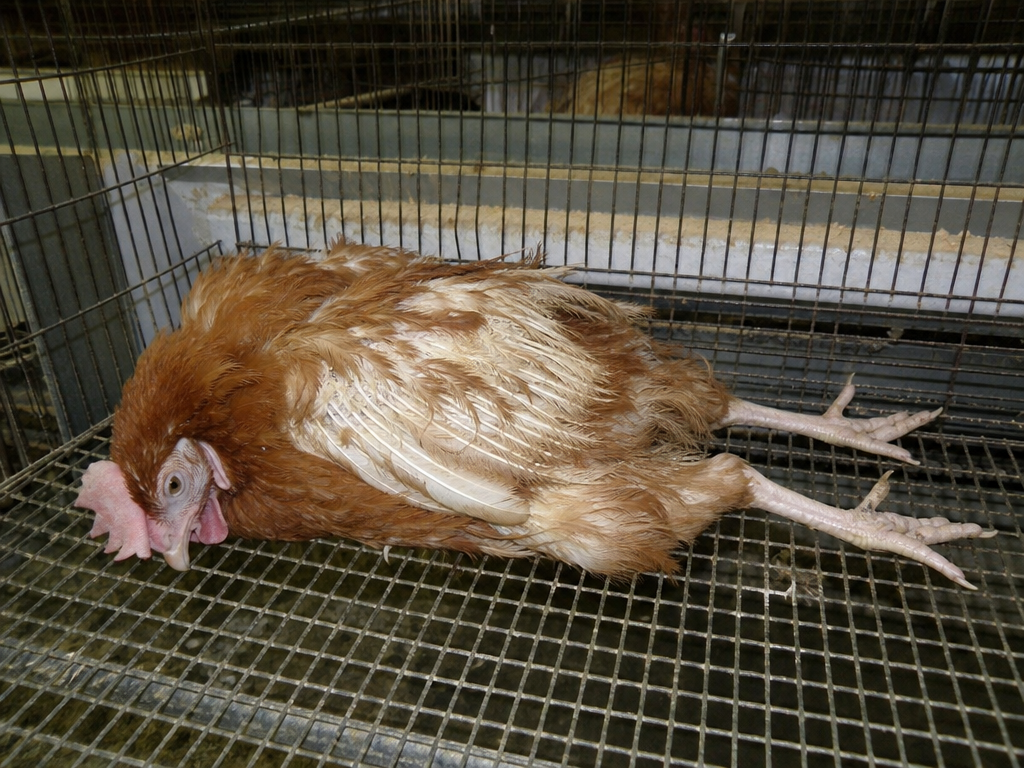
- ●Sudden inability to stand with legs extended backward (typical presentation)
- ●Hypocalcemic tetany: muscle tremors, rigid paralysis
- ●Thin-shelled, soft-shelled, or shell-less eggs preceding paralysis
- ●Pale, chalky appearance of the leg bones on necropsy
- ●Spinal and long bone fractures from handling in advanced osteoporosis
- ●Reduced egg production and poor shell quality in affected flocks
- ●High mortality from hypocalcemia, especially in peak production
🧬What Causes Cage Layer Fatigue (Osteoporosis) in Chickens?
Cage layer fatigue results from chronic negative calcium balance: the rate of calcium extraction from bones for eggshell production exceeds the rate of dietary calcium absorption and bone deposition.
- Peak production calcium demand: A laying hen deposits approximately 2.2 grams of calcium in each eggshell, which requires mobilization of 40% of the total body calcium over 24 hours. Hens in peak production (90%+ lay rate) are in chronic calcium stress.
- Insufficient dietary calcium: Layer feeds require 4.0-4.5% calcium for peak production. Calcium below this level forces the skeleton to supply the deficit for eggshell formation. Coarse oyster shell particles (vs. fine limestone) release calcium overnight when the shell gland is most active.
- Vitamin D3 deficiency: Vitamin D3 is essential for intestinal calcium absorption. Deficiency reduces the efficiency of dietary calcium uptake, increasing skeletal calcium demand. Target is 3,000-5,000 IU/kg in layer feed.
- Lack of exercise: Confined hens with no opportunity to walk, scratch, or use perches develop lower structural bone density (corticoid bone) than free-range hens. Cage confinement is the original source of this condition's name.
- Age and production stage: First-year pullets in their initial high-production months have not had time to build medullary bone reserves. Late-lay hens who have depleted reserves over multiple cycles are also high-risk.
🔬How Is Cage Layer Fatigue (Osteoporosis) Diagnosed?
Sudden paralysis or an inability to stand in a high-producing laying hen, especially in peak or late lay, is highly suggestive of cage layer fatigue.
- Clinical presentation: Bird is found unable to stand with legs extended backward. May have muscle tremors. Mental status is often normal despite paralysis (distinguishes from Marek's where birds are depressed).
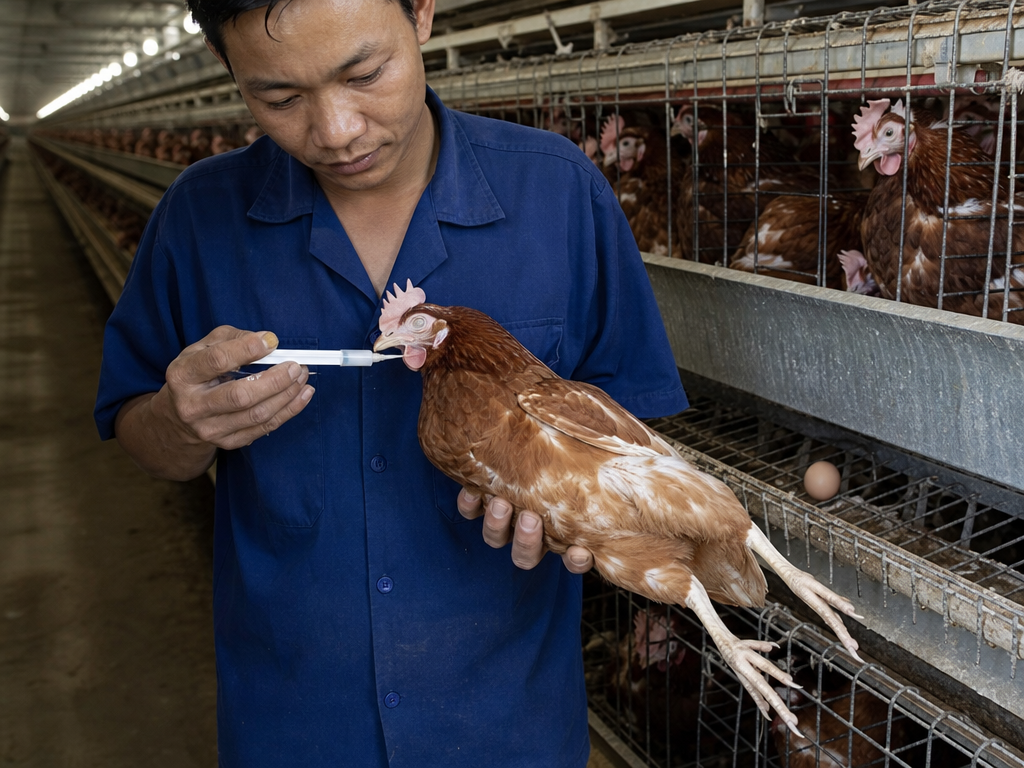
- Calcium supplementation response test: Administer 5-10 ml of calcium gluconate (10% solution) by slow IV or IO injection. Hens with hypocalcemic CLF often stand within minutes of calcium administration. This is both diagnostic and therapeutic.
- Necropsy: Bones appear pale, chalky white and snap easily. Medullary bone spaces are empty of red marrow. Eggshell may be soft or present in the oviduct despite the paralysis.
💊How Is Cage Layer Fatigue (Osteoporosis) Treated?
Emergency calcium administration restores function in acute hypocalcemia. Long-term management requires dietary and husbandry correction.
Calcium gluconate (emergency): 5-10 ml of 10% calcium gluconate IV or IO (into the bone marrow) administered slowly reverses hypocalcemic paralysis. Dilute to 5% for IV use and inject no faster than 1 ml per minute to prevent cardiac arrhythmia.
Oral calcium supplements: After emergency stabilization, provide free-choice oyster shell or calcium carbonate. Hens will self-regulate calcium intake according to their egg production demands when given free-choice access.
Review and correct layer diet: Verify dietary calcium is at 4.0-4.5% for peak lay and that vitamin D3 is 3,000-5,000 IU/kg. Coarse particle calcium (oyster shell) is significantly better than fine limestone for overnight shell formation.
Environmental modification: Provide perches, adequate floor space, and the ability to walk. These support structural bone maintenance that confined hens cannot achieve.
Natural & Integrative Care for Cage Layer Fatigue (Osteoporosis)
Free-choice oyster shell, adequate vitamin D3 in feed, and exercise opportunities are the three pillars of cage layer fatigue prevention.
Natural approaches center on providing adequate calcium in bioavailable forms and supporting exercise.
Free-choice oyster shell: Offering coarse oyster shell free-choice alongside the regular diet allows hens to self-regulate calcium intake. This is the most important natural management tool for preventing CLF.
Outdoor or free-range access: Exercise significantly improves structural bone density in laying hens. Even limited daily outdoor access (1-2 hours) reduces CLF risk compared to full confinement.
🛡️How Can Cage Layer Fatigue (Osteoporosis) Be Prevented?
- Offer coarse oyster shell free-choice alongside the complete layer feed at all times. Hens consume more calcium during active shell formation (overnight) and will self-regulate intake.
- Verify layer diet calcium is at 4.0-4.5% and vitamin D3 is 3,000-5,000 IU/kg. Have feed tested if CLF is occurring in a flock on a commercial diet.
- Provide perches and adequate floor space to encourage locomotion. Even small increases in daily exercise significantly improve bone density in high-producing hens.
- Monitor shell quality daily. Thin, pale, or rough shells precede clinical CLF by days to weeks. A declining shell quality score is an early warning sign to check calcium nutrition.
- Reduce lay rate temporarily if CLF is occurring. Reducing light by 2-4 hours daily can slow ovulation enough to allow bone calcium recovery before severe fractures occur.
📞When Should I Call a Vet for Cage Layer Fatigue (Osteoporosis)?
Treat as urgent if:
- A hen is found unable to stand during peak lay season. Immediate calcium gluconate administration can restore function within minutes, so prompt action is critical.
- Multiple hens in a flock develop paralysis. This indicates a flock-level calcium or vitamin D3 deficiency requiring immediate diet investigation and correction.
❓Cage Layer Fatigue (Osteoporosis): Frequently Asked Questions
What is cage layer fatigue in chickens?
Cage layer fatigue is a metabolic bone disease in which high-producing hens deplete their skeleton's calcium reserves to maintain eggshell production, eventually developing paralysis, fractures, and death from hypocalcemia. Adequate dietary calcium, vitamin D3, and exercise prevent it. Emergency calcium gluconate reverses acute hypocalcemic paralysis.
Why do laying hens go paralyzed?
Paralysis in laying hens during peak production is most often hypocalcemic: the hen has depleted her blood calcium maintaining shell formation, and the neuromuscular system fails from low calcium. Prompt administration of calcium gluconate (10% solution, slow IV) reverses this within minutes in true CLF cases.
How much calcium do laying hens need?
Peak-production laying hens require 4.0-4.5 grams of calcium per day, which requires the feed to contain 4.0-4.5% calcium by weight. Coarse oyster shell particles provide calcium more effectively for overnight shell formation than fine limestone. Free-choice oyster shell supplementation alongside complete layer feed is standard best practice.
Can hens recover from cage layer fatigue?
Yes, if treated before severe bone loss occurs. Acute hypocalcemic paralysis reverses within minutes of calcium gluconate administration. Hens with mild to moderate osteoporosis recover with dietary correction and exercise over 4-8 weeks. Hens with multiple fractures or severe bone depletion have poor prognosis regardless of treatment.
Is cage layer fatigue only in caged hens?
No. The name reflects the original observation in battery cages, but cage layer fatigue occurs in any confined high-producing hen with insufficient calcium or vitamin D3. Free-range hens have lower rates due to exercise-enhanced structural bone density, but they are not immune if dietary calcium is inadequate.
📋Key Points
- ✓Cage layer fatigue results from chronic negative calcium balance: the rate of calcium extraction from bones for eggshell production exceeds the rate of dietary calcium absorption and bone deposition.
- ✓Key symptoms: sudden inability to stand with legs extended backward (typical presentation), hypocalcemic tetany: muscle tremors, rigid paralysis, thin-shelled, soft-shelled, or shell-less eggs preceding paralysis, pale, chalky appearance of the leg bones on necropsy.
- ✓Good for birds treated promptly with calcium gluconate if structural bone damage is not yet severe. Poor for birds with multiple fractures or advanced osteoporosis. Flock prevention with adequate calcium nutrition and exercise is highly effective.
🔗Related
Related Conditions
📚Sources & References
- 1.Cage Layer Fatigue and Osteoporosis in Poultry. Merck Veterinary Manual. 2024
- 2.Osteoporosis in Laying Hens. PubMed / Poultry Science. 2007
- 3.Calcium Nutrition in Laying Hens. University of Georgia Extension. 2021