Broody Hen in Chickens: Symptoms, Causes and Treatment
Broodiness is a normal hormonal state in which a hen stops laying and sits persistently on a nest to incubate eggs. It is triggered by prolactin and shortened daylength, and is not a disease. Management ranges from breaking the broody cycle to allowing her to hatch eggs.
Veterinarian Reviewed
FlockVet Veterinary Editorial Team· Reviewed August 2026
At a Glance
- Urgency
- Mild
- Contagious
- No
- Affects Humans
- No
- Key Symptoms
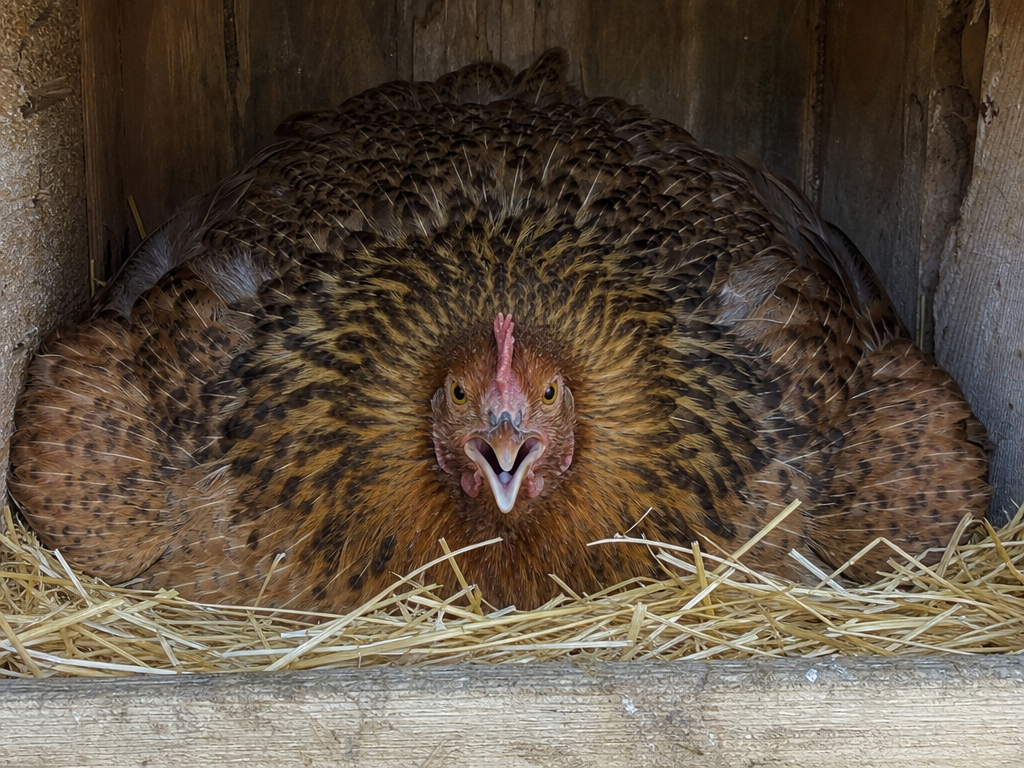
- sitting on the nest all day and refusing to leave, flattening and puffing up when approached, growling or pecking, pulling breast feathers to create a brood patch
- Prognosis
- Broodiness resolves completely with proper management. Most hens break within 5-7 days using the wire cage method and resume laying within 2-3 weeks. Hens allowed to successfully hatch a clutch or adopt chicks return to laying 6-8 weeks after chick independence.
📑 On This Pagetap to expand
🔍What Are the Symptoms of Broody Hen?
- ●Sitting on the nest all day and refusing to leave
- ●Flattening and puffing up when approached, growling or pecking
- ●Pulling breast feathers to create a brood patch
- ●Stopped egg production
- ●Leaving the nest only once or twice daily for food and water
- ●Pale comb from reduced activity and eating
- ●Rapid weight loss if broodiness continues more than 2-3 weeks
🧬What Causes Broody Hen in Chickens?
Broodiness is driven by the hormone prolactin, not by a disease process. Certain breeds are far more prone than others.
- Hormonal trigger (prolactin surge): Accumulation of eggs in the nest box, warm temperatures, and reduced daylight signal the hypothalamus to release prolactin, suppressing ovulation and activating nesting behavior.
- Breed predisposition: Silkies, Cochins, Brahmas, and Orpingtons are highly broody. Leghorns and production breeds have been selectively bred to rarely go broody.
- Environmental cues: Dark, secluded nest boxes, warm weather, and the presence of eggs in the nest accelerate the onset and duration of broodiness.
- Time of year: Spring and early summer are peak broody season due to daylength and temperature, though indoor flocks under artificial light can go broody year-round.
🔬How Is Broody Hen Diagnosed?
Broodiness is diagnosed by behavior, not lab tests. A broody hen is immediately distinguishable from a sick hen by her active defensive posture.
- Key signs: Sitting tight on the nest, puffing up and growling when disturbed, and returning immediately after removal.
- Distinguish from illness: A sick hen sits hunched, quiet, and unresponsive. A broody hen is alert, vocal, and aggressive when disturbed.
- Confirm: Remove her from the nest - a truly broody hen returns within minutes and resumes the flat, spread-wing posture.
💊How Is Broody Hen Treated?
Breaking broodiness prevents weight loss, nutrient depletion, and extended laying disruption. The most effective method is a wire-bottomed broody breaker cage.
- Wire cage method (most effective): Place the hen in an elevated wire-bottom cage with food, water, and no nesting material for 3-5 days. Air circulation under the body cools the brood patch and drops prolactin levels. Success rate is 80-90% within 5 days.
- Do not use ice baths or dunking: These are stressful and minimally effective compared to the cage method.
- Return to flock test: After 3 days in the cage, release her in the evening. If she returns to a nest within 24 hours, cage for 2 more days.
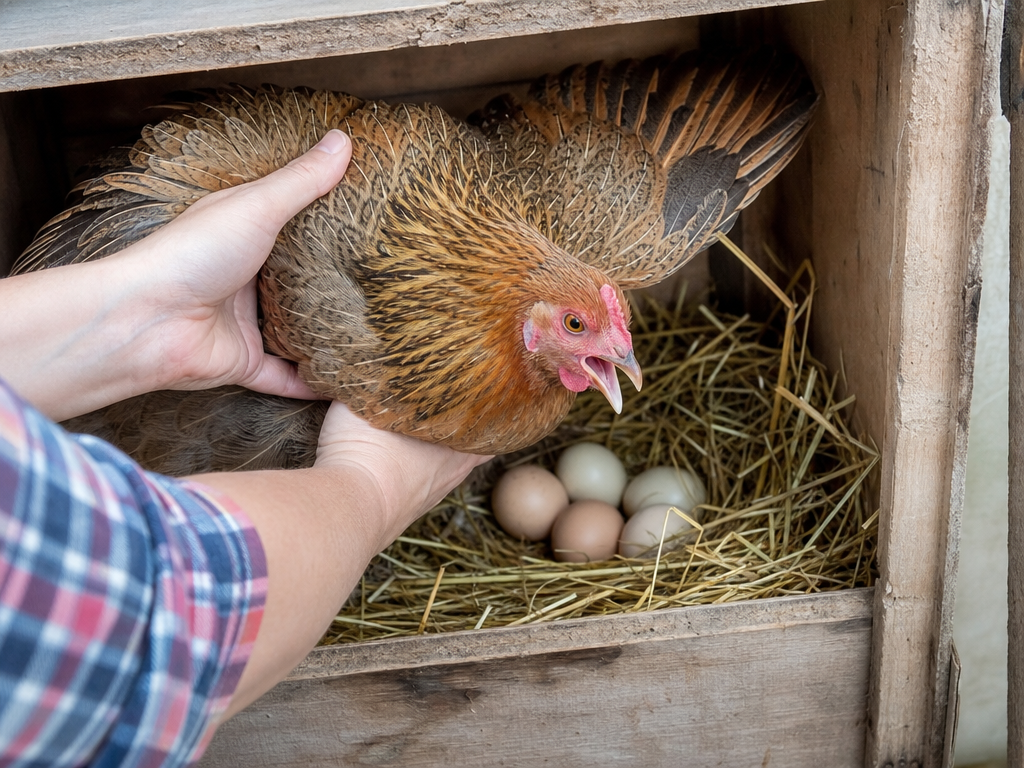
- Allow her to hatch: If broodiness is accepted, provide fertile eggs (or day-old chicks) within 24 hours of going broody for a smooth adoption.
Natural & Integrative Care for Broody Hen
Disrupting the nesting environment can help break mild broodiness without a cage.
- Block nest box access: Close nest boxes during the day for 1-2 weeks. Less effective for strongly broody hens but works for mild cases.
- Collect eggs frequently: Remove eggs immediately after laying to reduce the nest accumulation cue that reinforces broodiness.
- Ice pack under her: Placing a frozen water bottle under the broody hen several times daily cools the brood patch, though results are inconsistent compared to the cage.
🛡️How Can Broody Hen Be Prevented?
Prevention is most practical for production flocks where broodiness disrupts laying.
- Choose non-broody breeds: Leghorns, sex-links, and commercial laying hybrids rarely go broody. Silkies and Cochins almost always will.
- Collect eggs 2-3 times daily: Reducing egg accumulation in the nest removes the primary environmental trigger.
- Brightly lit nest boxes: Dark, secluded nest boxes encourage broodiness. Good lighting discourages it.
📞When Should I Call a Vet for Broody Hen?
Call a vet if the hen has been broody for more than 3 weeks without eating or drinking adequately - severe weight loss, pale comb, and weakness indicate she needs supportive care. Also consult a vet if she develops a crop impaction or shows signs of illness during broodiness.
❓Broody Hen: Frequently Asked Questions
How do you break a broody hen fast?
The fastest method is a wire-bottom broody breaker cage elevated off the ground. Place the hen inside with food and water but no nesting material for 3-5 days. Air circulation cools the brood patch, dropping prolactin levels. Most hens break within 5 days and resume laying within 2-3 weeks.
How long does a hen stay broody if you let her?
An uninterrupted broody hen typically sits for 21 days - the natural incubation period. If no eggs hatch, she may continue for another 1-2 weeks before giving up. Some persistent hens, especially Silkies, will sit indefinitely if not broken.
Will a broody hen starve herself?
A broody hen usually leaves the nest once or twice daily to eat, drink, and defecate, but her intake drops significantly. After 2-3 weeks of broodiness without chicks, weight loss becomes a health concern. Monitor her weight and intervene if she looks gaunt.
Can a broody hen die from broodiness?
In rare cases, yes. Prolonged broodiness (3+ weeks) without adequate food and water can cause dangerous weight loss, anemia, and immune suppression. A hen found collapsed on the nest needs immediate supportive care including food, water, and vitamins.
What is a broody breaker cage?
A broody breaker cage is an elevated wire-bottom cage that allows airflow under the hen, cooling her brood patch and disrupting the hormonal feedback loop that maintains broodiness. It is the most humane and effective method for breaking a broody hen in 3-5 days.
📋Key Points
- ✓Broodiness is driven by the hormone prolactin, not by a disease process.
- ✓Key symptoms: sitting on the nest all day and refusing to leave, flattening and puffing up when approached, growling or pecking, pulling breast feathers to create a brood patch, stopped egg production.
- ✓Broodiness resolves completely with proper management. Most hens break within 5-7 days using the wire cage method and resume laying within 2-3 weeks. Hens allowed to successfully hatch a clutch or adopt chicks return to laying 6-8 weeks after chick independence.
🔗Related
Related Conditions
📚Sources & References
- 1.Broody Hens - Management and Control. Merck Veterinary Manual. 2023
- 2.Reproductive Physiology of the Hen. Merck Veterinary Manual. 2023
- 3.Backyard Poultry Management. University of Georgia Extension. 2022