Breast Blister in Chickens: Symptoms, Causes and Prevention
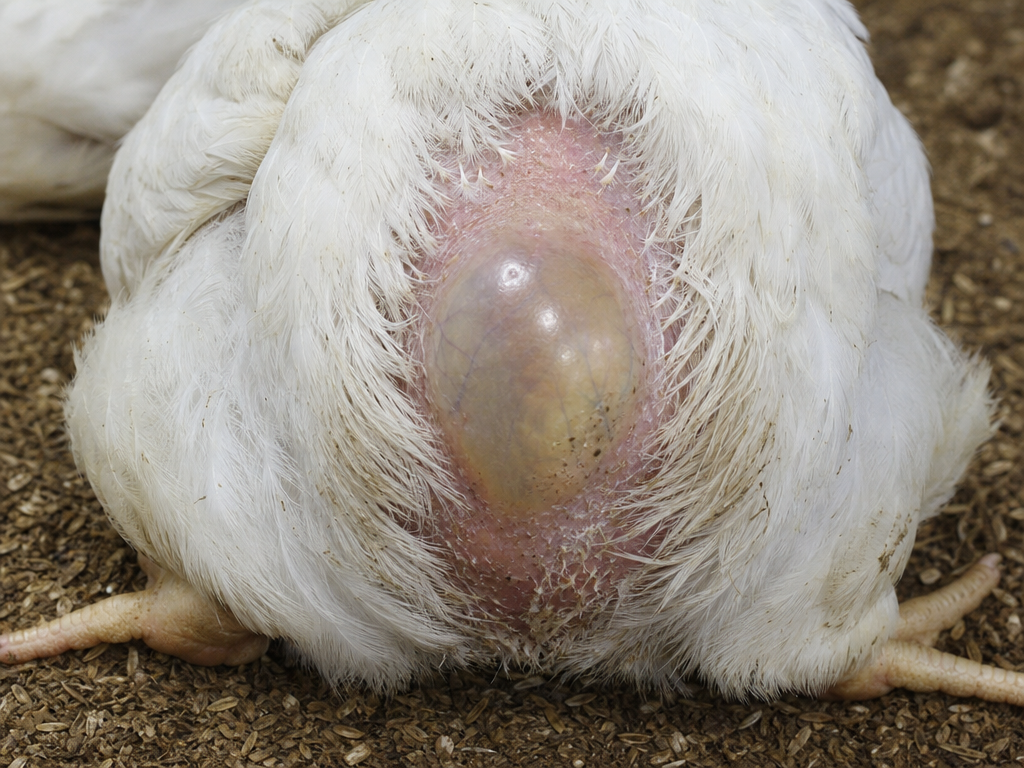
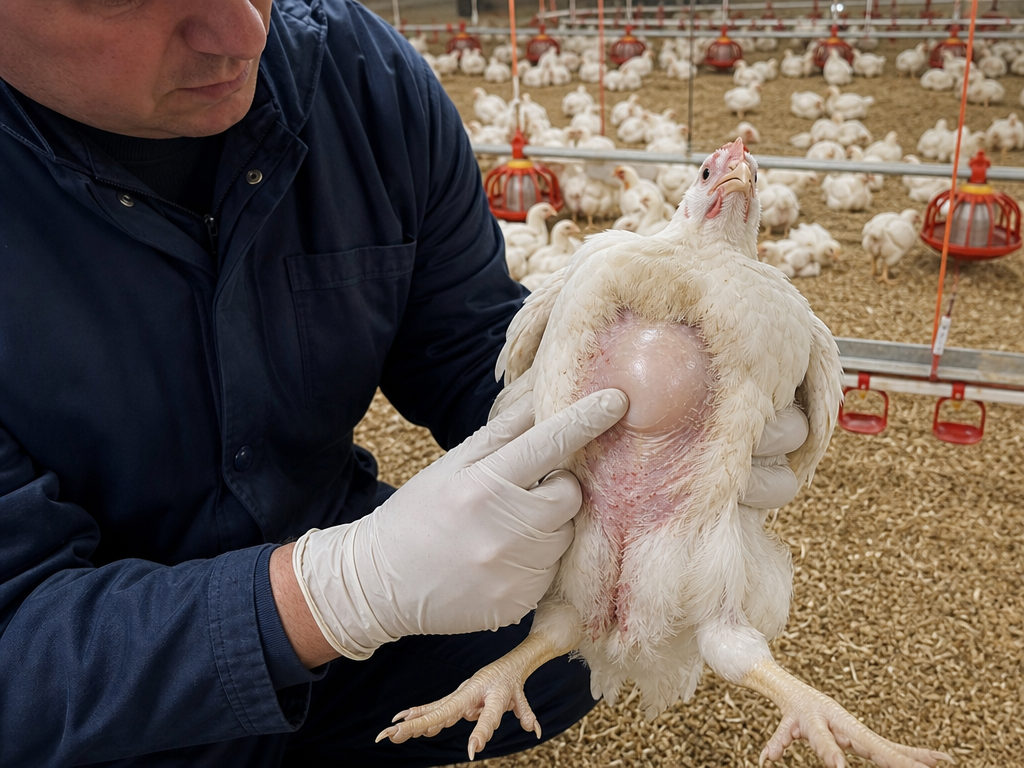
Breast blister is a contact bursitis causing a fluid-filled or fibrous swelling over the keel (sternum) bone of chickens from pressure on hard, wet, or abrasive litter. It ranges from a small, clear fluid blister (Grade 1) to large, fibrous, discolored masses (Grade 3). The condition is primarily a welfare and meat quality issue in broilers and a management concern in backyard flocks.
Veterinarian Reviewed
FlockVet Veterinary Editorial Team· Reviewed August 2026
At a Glance
- Urgency
- Mild
- Contagious
- No
- Affects Humans
- No
- Key Symptoms
- visible fluid-filled blister or fibrous swelling over the keel bone, grade 1: small, translucent, thin-walled blister filled with clear fluid, grade 2: larger blister with thickened wall, yellow-tinged fluid or early fibrosis
- Prognosis
- Excellent for Grade 1 (spontaneously resolves with litter correction). Good for Grade 2 with aspiration and litter management. Fair for Grade 3; fibrous masses are permanent without surgery and represent a meat quality condemnation in broilers.
📑 On This Pagetap to expand
🔍What Are the Symptoms of Breast Blister (Keel Bursitis)?
- ●Visible fluid-filled blister or fibrous swelling over the keel bone
- ●Grade 1: small, translucent, thin-walled blister filled with clear fluid
- ●Grade 2: larger blister with thickened wall, yellow-tinged fluid or early fibrosis
- ●Grade 3: large, fibrous, greenish or dark mass with caseous material
- ●Reluctance to stand or move in severe cases
- ●Feather loss over the keel area from friction
- ●No systemic illness signs in uncomplicated cases
🧬What Causes Breast Blister (Keel Bursitis) in Chickens?
Breast blister is caused by sustained mechanical pressure on the keel bursa from prolonged contact with hard, wet, or abrasive flooring surfaces.
- Wet litter: Moist litter softens and macerates the skin over the keel. Wet litter also harbors bacteria (E. coli, Staphylococcus) that can infect the macerated skin and bursa.
- Hard or abrasive flooring: Wire floors, concrete, or abrasive bedding materials create direct pressure necrosis on the keel bursa. Particularly important in confined birds that spend most of their time recumbent.
- Heavy body weight: Fast-growing broilers generate more keel pressure during recumbent rest than lighter heritage breeds. The heaviest birds in a flock typically have the highest breast blister rates.
- Concurrent leg problems: Birds with perosis, TD, or joint infections spend more time lying down, dramatically increasing keel contact time and breast blister risk.
- High stocking density: Overcrowded birds disturb each other's rest and develop compensatory flooring contact patterns. Competition at feeders forces lower-status birds to spend more time resting on wet, trafficked litter.
🔬How Is Breast Blister (Keel Bursitis) Diagnosed?
Breast blister is diagnosed visually by the characteristic swelling over the keel bone.
- Grading: Palpate and observe the swelling. Grade 1 = fluid-filled, thin-walled, easy to transilluminate. Grade 2 = thicker wall, more viscous fluid, beginning fibrosis. Grade 3 = firm, dark, caseous, no fluid.
- Litter assessment: Check litter moisture at keel level. Wet litter in brooding or resting areas is the most common finding. A simple wet-test: squeeze a handful of litter; if water drips, it is too wet.
- Flock pattern: If multiple birds have breast blisters, it is an environmental management issue, not an individual bird problem. Identify the litter problem before focusing on individual bird treatment.
💊How Is Breast Blister (Keel Bursitis) Treated?
Litter management is the treatment for breast blister at flock level. Individual bird treatment is appropriate only in pet or breeding birds.
Litter correction: Add fresh dry shavings over wet spots immediately. Consider replacing the top layer of litter in heavily trafficked areas. Identify and fix the water source causing wetness (leaking drinkers, condensation).
Individual bird drainage (Grade 1-2): For pet or valuable birds, aspirate fluid from Grade 1-2 blisters with a sterile needle and apply a light protective bandage. Inject dilute betadine solution and reaspriate if the blister recurs within 48 hours. Repeat 2-3 times if necessary.
Surgical treatment (Grade 3): Fibrous Grade 3 blisters in valuable birds require surgical debridement of caseous material under local anesthesia. Flush the cavity with dilute chlorhexidine and close primarily or leave open to heal by second intention.
Antibiotic coverage: For infected Grade 2-3 blisters (warmth, swelling beyond the bursa, systemic signs), treat with trimethoprim-sulfa or cephalexin orally for 7-10 days.
Natural & Integrative Care for Breast Blister (Keel Bursitis)
Breast blister is an environmental management condition; fixing wet or hard litter prevents it; individual bird treatment ranges from aspiration to surgery depending on grade.
Prevention through litter management is the most effective natural intervention.
Deep litter management: Maintaining 4-6 inches of dry, friable litter provides cushioning and reduces keel contact pressure. Turn litter weekly and add fresh material in high-traffic zones.
Soft mat provision: Rubber or foam mats in resting areas for pet birds reduce pressure on the keel bone. Clean mats daily to prevent moisture accumulation.
🛡️How Can Breast Blister (Keel Bursitis) Be Prevented?
- Maintain litter depth at 4-6 inches of dry, friable material. Wet litter is both the primary cause of breast blister and the primary risk factor for secondary infection.
- Fix leaking drinkers and nipple lines immediately. A single nipple drip can wet an entire litter pad within hours in a heated brooder environment.
- Reduce stocking density if breast blister rates are elevated. Overcrowded birds have limited access to dry resting areas and distribute weight unevenly across the available floor space.
- Address leg problems promptly. Any condition causing a bird to spend more time lying down (perosis, TD, mycoplasma arthritis) dramatically increases breast blister risk.
- Provide perches for birds over 3-4 weeks old. Perch use reduces time in floor contact and eliminates keel pressure during the rest period.
📞When Should I Call a Vet for Breast Blister (Keel Bursitis)?
Consult a veterinarian if:
- A breast blister is hot, rapidly enlarging, or the bird shows systemic signs (lethargy, fever). Infected bursitis can progress to septicemia without antibiotic treatment.
- A Grade 3 fibrous blister in a pet or breeding bird requires surgical debridement for quality of life or egg production goals.
❓Breast Blister (Keel Bursitis): Frequently Asked Questions
What is a breast blister in chickens?
A breast blister is a fluid-filled or fibrous swelling over the keel bone caused by sustained pressure from hard, wet, or abrasive litter. Grade 1 blisters are small and fluid-filled. Grade 3 blisters are large, fibrous, and caseous. The primary cause is wet litter; fixing litter moisture prevents and resolves early-grade blisters.
What causes breast blisters in chickens?
Wet, hard, or abrasive litter creates sustained pressure on the keel bursa during prolonged recumbent rest. Heavy broiler breeds are most susceptible due to body weight. Leaking drinkers are the most common cause of wet litter. Birds with leg problems spend more time lying down and develop breast blisters at higher rates.
Can breast blisters in chickens be treated?
Grade 1-2 blisters are treated by aspirating the fluid with a sterile needle and correcting the litter environment. Grade 3 fibrous blisters require surgical debridement in pet or breeding birds. Antibiotic treatment is needed if the blister is infected. Litter correction is the primary treatment at flock level.
How do you prevent breast blisters in broiler chickens?
Maintain 4-6 inches of dry, friable litter. Fix leaking drinkers immediately. Reduce stocking density to ensure adequate dry resting space. Provide perches for birds over 3-4 weeks old. Address leg problems promptly since lame birds spend more time lying on litter.
Is a breast blister in chickens contagious?
No. Breast blister is a contact injury, not an infectious disease. It does not spread between birds. Multiple birds developing breast blisters simultaneously indicates a shared environmental problem (wet litter, hard flooring) affecting the whole flock, not bird-to-bird transmission.
📋Key Points
- ✓Breast blister is caused by sustained mechanical pressure on the keel bursa from prolonged contact with hard, wet, or abrasive flooring surfaces.
- ✓Key symptoms: visible fluid-filled blister or fibrous swelling over the keel bone, grade 1: small, translucent, thin-walled blister filled with clear fluid, grade 2: larger blister with thickened wall, yellow-tinged fluid or early fibrosis, grade 3: large, fibrous, greenish or dark mass with caseous material.
- ✓Excellent for Grade 1 (spontaneously resolves with litter correction). Good for Grade 2 with aspiration and litter management. Fair for Grade 3; fibrous masses are permanent without surgery and represent a meat quality condemnation in broilers.
🔗Related
Related Conditions
📚Sources & References
- 1.Breast Blisters and Keel Bursitis in Broilers. Merck Veterinary Manual. 2024
- 2.Litter Management and Broiler Welfare. PubMed / Poultry Science. 2011
- 3.Broiler Welfare and Environmental Management. University of Georgia Extension. 2022