Internal Parasites (Worms) in Chickens: Symptoms, Causes and Treatment
Worms in chickens are internal helminth parasites acquired from contaminated ground or intermediate hosts such as insects, earthworms, and slugs. Heavy burdens can cause weight loss, diarrhea, pale combs, reduced laying, visible worms, or respiratory gaping. Fecal testing identifies the parasite, and treatment uses a veterinary-selected dewormer with flock-wide environmental control.
Veterinarian Reviewed
FlockVet Veterinary Editorial Team· Reviewed January 2026
At a Glance
- Urgency
- Mild
- Contagious
- Yes
- Affects Humans
- No
- Key Symptoms
- weight loss despite normal or increased appetite, diarrhea or loose droppings, pale egg yolks (roundworm competition for nutrients)
- Prognosis
- Excellent with treatment. Birds recover fully from even significant worm burdens once treated. Long-term management requires ongoing prevention due to permanent soil contamination on used land.
📑 On This Pagetap to expand
🔍What Are the Symptoms of Internal Parasites (Worms)?
- ●Weight loss despite normal or increased appetite
- ●Diarrhea or loose droppings
- ●Pale egg yolks (roundworm competition for nutrients)
- ●Reduced egg production
- ●Dull, rough feather quality
- ●Lethargy and slow movement
- ●Worms visible in droppings (roundworms, tapeworm segments)
- ●Pot-bellied appearance in severe cases
- ●Head held down, reluctance to move
- ●Death in young birds with high burden
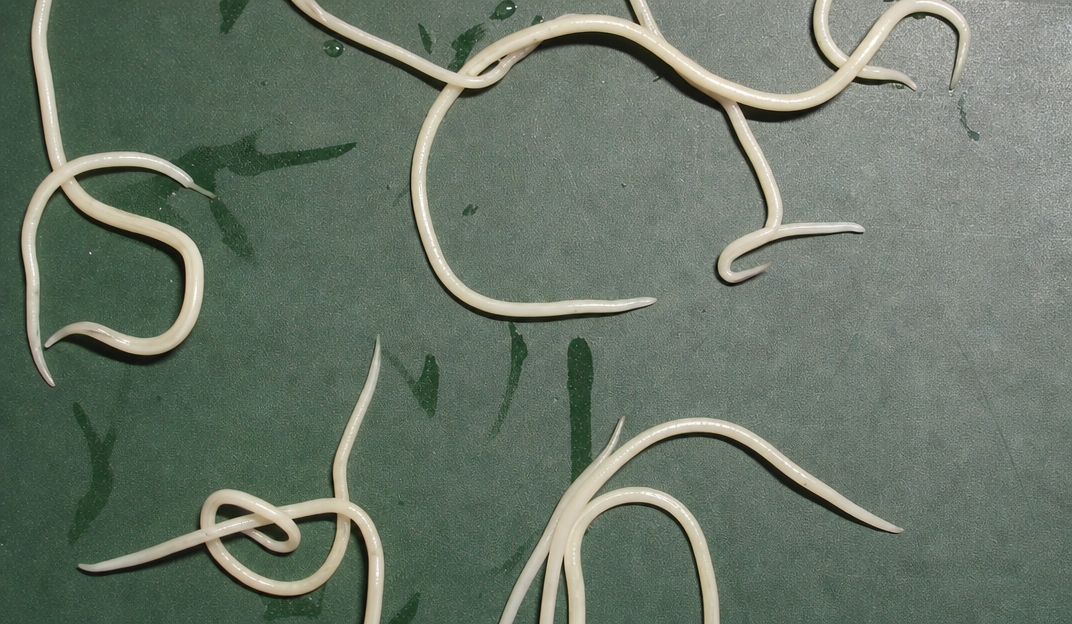
🧬What Causes Internal Parasites (Worms) in Chickens?
Several species of helminths infect poultry:
- Roundworms (Ascaridia galli): The most common. Up to 8cm long, visible in droppings. Eggs survive in soil for years. Compete directly with the bird for nutrients.
- Capillary worms (Capillaria spp.): Hair-thin, embedded in intestinal wall. Cause bloody diarrhea. More pathogenic than roundworms at lower burdens. Require microscopy to identify.
- Tapeworms (Cestodes): Require intermediate hosts (beetles, earthworms, slugs). Free-range birds have highest exposure. Cause dull yolks and poor condition.
- Cecal worms (Heterakis gallinarum): Live in the ceca. Mild direct pathogenicity but carry Histomonas (blackhead disease) which is lethal to turkeys.
- Gapeworm (Syngamus trachea): Lives in the trachea, causes "gaping" (gasping with neck extended). More common in free-range birds eating earthworms.
🔬How Is Internal Parasites (Worms) Diagnosed?
Definitive diagnosis requires a fecal float test - a simple test that identifies worm eggs under microscopy. Your vet can perform this, and many state extension services offer free or low-cost fecal floats.
Worm species identification matters for treatment selection - fenbendazole covers roundworms and capillary worms, but tapeworms require praziquantel specifically.
Post-mortem examination of a deceased bird reveals worm species and burden directly.
💊How Is Internal Parasites (Worms) Treated?
Fenbendazole (Safeguard, Panacur): Effective against roundworms, capillary worms, and cecal worms. Not labeled for poultry in the US but widely used under AMDUCA with vet guidance. 10-50mg/kg orally for 3-5 days. Egg withdrawal 14 days.
Piperazine: OTC, effective only against roundworms. Mix in water per label. Does not cover capillary worms or tapeworms.
Praziquantel: Required for tapeworms. Not widely available OTC - vet prescription. 10-20mg/kg single dose.
Ivermectin: Covers roundworms, capillary worms, and some external parasites. 0.1ml pour-on per bird. Not effective against tapeworms. Egg withdrawal 14 days.
Treat all birds at the same time. Pasture management (rest and rotation) is essential to prevent rapid reinfection.
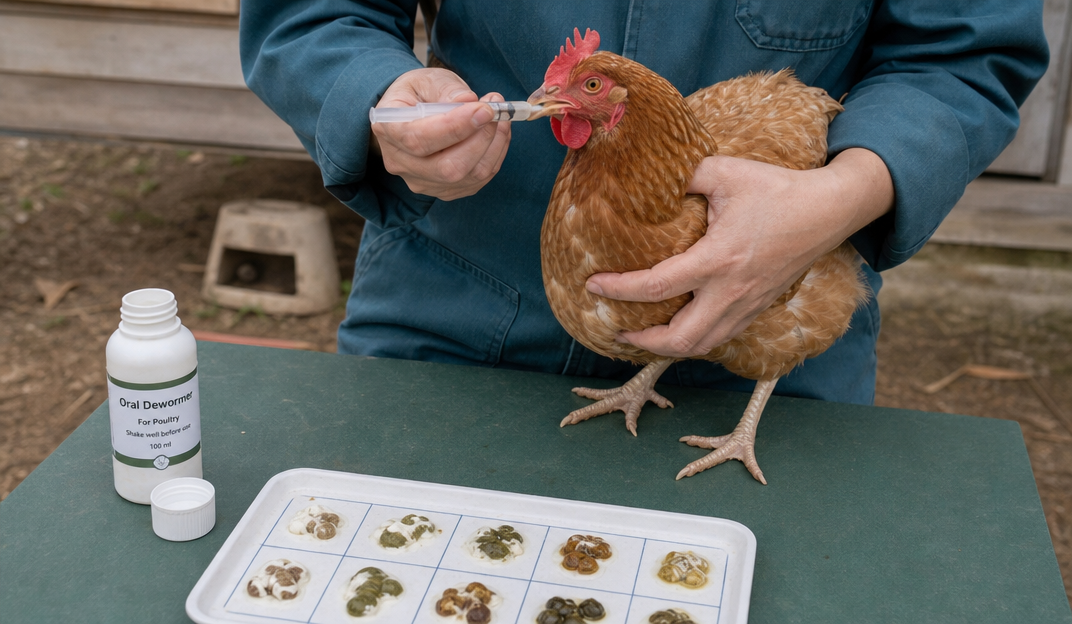
Natural & Integrative Care for Internal Parasites (Worms)
Natural anthelmintics (pumpkin seed, garlic, wormwood) are excellent for prevention and maintenance. Established heavy burdens need pharmaceutical deworming first, then natural maintenance protocols.
Natural anthelmintics have centuries of use in traditional poultry management and have modern research support. They are most effective for prevention and light burdens - severe infestations need pharmaceutical deworming.
Pumpkin seeds: Contain cucurbitin, an amino acid that paralyzes roundworms and tapeworms, allowing the immune system to expel them. Feed raw, shelled pumpkin seeds (1 tablespoon per bird) twice weekly. One of the most validated natural anthelmintics available.
Garlic: Allicin has demonstrated anthelmintic activity against roundworms and Ascaridia species. Add crushed garlic to feed (1 clove per 4 birds) or steep in water 3x weekly.
Sweet wormwood (Artemisia annua): Contains artemisinin with documented antiparasitic activity. Add dried wormwood to feed at 1-2% of feed weight 3x weekly.
Black walnut hull powder: Traditional anthelmintic with research support against intestinal parasites. Add to feed at 0.5% of feed weight weekly.
Oregano and thyme: Carvacrol and thymol reduce intestinal parasite load through antimicrobial and antiprotozoal activity. Add fresh herbs to feed 3-4x weekly.
Fermented feed: Dramatically reduces parasite egg viability in the gut and improves the microbial environment that resists reinfection. One of the most effective long-term management tools.
Pasture rotation: Worm eggs accumulate in heavily used areas. Rotating pasture every 2-3 weeks reduces reinfection pressure dramatically. The environmental management piece of natural worm control.
Photo needed
Natural remedies for Internal Parasites (Worms), pumpkin-seeds, garlic, wormwood shown together
16/9🛡️How Can Internal Parasites (Worms) Be Prevented?
- Pumpkin seeds twice weekly year-round as maintenance
- Garlic in water 3x weekly
- Pasture rotation every 2-3 weeks for free-range birds
- Fermented feed reduces worm burden and improves gut resistance
- Fecal float test 2x yearly - spring and fall
- Quarantine and deworm new birds before flock introduction
📞When Should I Call a Vet for Internal Parasites (Worms)?
Call a vet if:
- Birds are losing significant weight despite eating
- You suspect gapeworm (bird is gasping and stretching neck)
- You need fenbendazole or praziquantel with proper dosing guidance
- Turkey flock develops blackhead-like signs (cecal worm vector)
❓Internal Parasites (Worms): Frequently Asked Questions
How do you treat worms in chickens?
The most effective treatment is fenbendazole (Safeguard, Panacur) given in feed at 10mg/kg for 5 days. Ivermectin pour-on applied to the skin is effective for roundworms and gapeworms. Piperazine in water treats roundworms only. Always treat the whole flock at once and repeat in 14 days to catch newly hatched worms.
How do you treat worms in chickens naturally?
Natural deworming options include pumpkin seeds (contain cucurbitin, a natural anthelmintic), wormwood herb, black walnut hull, and garlic. These reduce worm burden but may not eliminate heavy infestations. Fermented feed creates an acidic gut environment less hospitable to worms. Natural options work best for prevention and mild cases.
What are the signs of worms in chickens?
Signs include weight loss despite normal or increased appetite, pale comb and wattles, diarrhea, lethargy, reduced egg production, and in severe cases, visible worms in droppings. Gapeworms cause a characteristic open-mouth gasping and head-shaking. Some birds carry worms with no visible symptoms until the burden becomes heavy.
How do you prevent worms in chickens?
Prevention includes rotating ranging areas so birds are not on the same ground year after year, removing wet or soiled bedding promptly, controlling insects (intermediate hosts for tapeworms), and periodic fecal float testing to check worm burden. Avoid feeding raw fish or snails, which carry tapeworm larvae.
How do you get rid of worms in chickens?
Getting rid of worms requires treating all birds at once with an appropriate anthelmintic, then repeating 14 days later. Clean and dry the coop and run to reduce reinfection. Rotate ranging areas. Test fecal samples 2-3 weeks after treatment to confirm clearance. Prevention is easier than elimination once established.
📋Key Points
- ✓Several species of helminths infect poultry: Roundworms (Ascaridia galli): The most common.
- ✓Key symptoms: weight loss despite normal or increased appetite, diarrhea or loose droppings, pale egg yolks (roundworm competition for nutrients), reduced egg production.
- ✓Excellent with treatment. Birds recover fully from even significant worm burdens once treated. Long-term management requires ongoing prevention due to permanent soil contamination on used land.
- ✓This condition is contagious, isolate affected birds promptly.
🔗Related
Related Conditions
Natural Remedies & Supplements
📚Sources & References
- 1.Internal Parasites of Poultry. Merck Veterinary Manual. 2024
- 2.Parasites of Backyard Chickens. University of Georgia Cooperative Extension Poultry Science. 2023
- 3.Common Management-Related Problems in Backyard Poultry. Merck Veterinary Manual. 2024