Avian Tuberculosis in Chickens: Symptoms, Zoonotic Risk and Control
Avian tuberculosis (avian TB) is caused by Mycobacterium avium subspecies avium and produces a chronic wasting disease with nodular granulomas in the liver, spleen, intestines, and bone marrow. It primarily affects adult birds over 2 years old. There is no effective treatment. Infected birds should be culled, and the environment requires prolonged downtime because M. avium persists in soil for years. Zoonotic risk exists for immunocompromised individuals.
Veterinarian Reviewed
FlockVet Veterinary Editorial Team· Reviewed August 2026
This is a veterinary emergency.
If your bird is showing these signs, contact a veterinarian immediately. Do not wait. Time-sensitive conditions can deteriorate rapidly without professional intervention.
At a Glance
- Urgency
- Emergency
- Contagious
- Yes
- Affects Humans
- Yes, zoonotic
- Key Symptoms
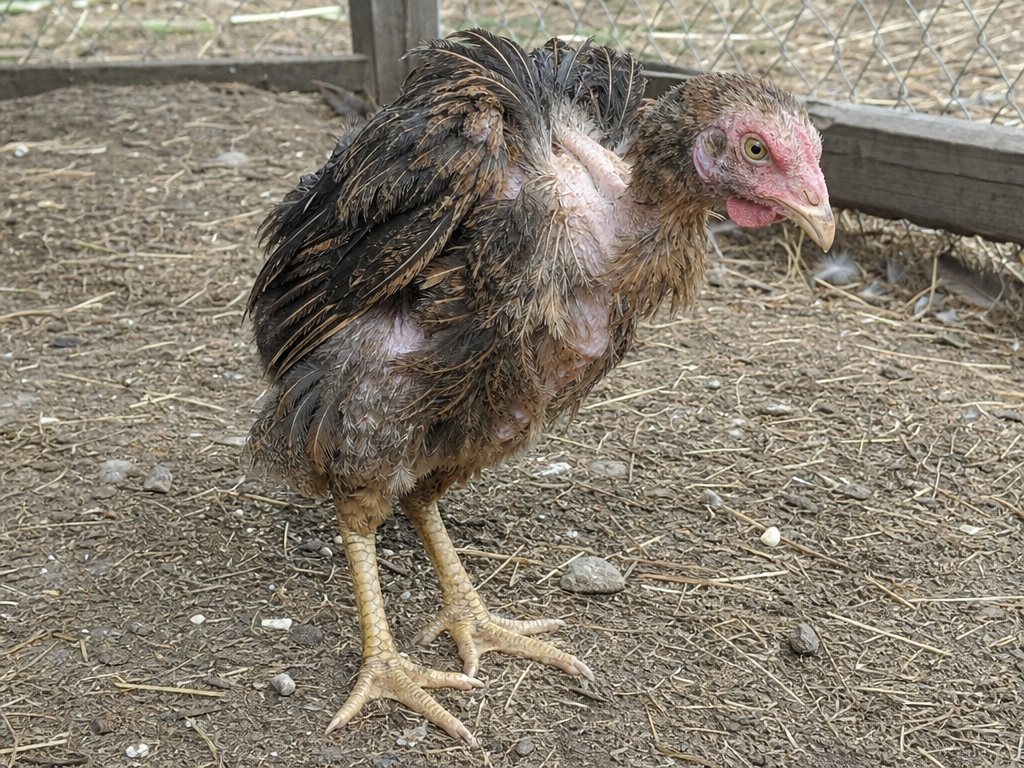
- progressive weight loss despite normal or increased appetite, muscle wasting, especially of the breast and legs, weakness and reluctance to move
- Prognosis
- Invariably fatal for infected birds. Prognosis for flock eradication is good if culling is complete and environmental management is thorough. However, reintroduction from contaminated soil or persistent wild bird reservoir can reestablish infection in restocked flocks if downtime is insufficient.
📑 On This Pagetap to expand
🔍What Are the Symptoms of Avian Tuberculosis?
- ●Progressive weight loss despite normal or increased appetite
- ●Muscle wasting, especially of the breast and legs
- ●Weakness and reluctance to move
- ●Lameness from bone lesions (advanced cases)
- ●Enlarged, lumpy abdomen from liver and spleen granulomas
- ●Pale comb from anemia
- ●Diarrhea, occasionally with blood
- ●Normal to slightly reduced egg production until late stage
🧬What Causes Avian Tuberculosis in Chickens?
Mycobacterium avium subsp. avium (MAA) is a slow-growing mycobacterium that forms granulomas in organs throughout the body. Its extreme environmental persistence makes eradication from contaminated premises very difficult.
- Fecal-oral transmission: Infected birds shed MAA in feces for months to years before showing clinical signs. Other birds in the flock ingest the organism while pecking at contaminated litter or soil.
- Soil persistence: MAA survives in soil for 4 years or longer under typical outdoor conditions. This is the key challenge in managing avian TB outbreaks: even after all infected birds are removed, the environment remains infectious for years.
- Slow progression: Avian TB typically takes 1-2 years from initial infection to clinical signs. By the time one bird shows signs, the entire flock has likely been exposed for months.
- Wild bird reservoir: Wild birds, especially crows, starlings, and sparrows, carry M. avium and can introduce it to free-range flocks. Long-lived backyard flocks with outdoor access are at highest risk.
🔬How Is Avian Tuberculosis Diagnosed?
Avian tuberculosis is usually diagnosed at necropsy when characteristic granulomas are found in the liver and intestines of a wasting bird.
- Necropsy: Multiple gray-white to yellow nodules (granulomas) throughout the liver, spleen, intestines, and bone marrow are classic. Intestinal granulomas may be palpable as hard nodules along the intestinal wall.
- Acid-fast smear: Impression smear from a granuloma, stained with Ziehl-Neelsen (acid-fast stain), reveals red-staining acid-fast bacilli. This is a rapid, inexpensive confirmatory test.
- Culture: MAA grows very slowly (4-8 weeks) on specialized Lowenstein-Jensen media. Required for definitive species confirmation but not practical for field diagnosis.
- Tuberculin skin test: Intradermal injection of avian tuberculin into the wattle shows swelling at 48-72 hours in sensitized birds. Less reliable than necropsy for flock-level diagnosis.
💊How Is Avian Tuberculosis Treated?
There is no practical or approved treatment for avian tuberculosis in poultry. Treatment options used in humans and pet birds are not applicable to production or backyard flocks.
Recommended action: Cull the entire flock as soon as avian TB is confirmed. This is the only reliable way to eliminate the infection source. Partial culling leaves subclinical carriers that continue to shed and reinfect.
Environmental decontamination: Remove all litter and topsoil to a depth of 6 inches from soil areas. Dispose as directed by your state environmental guidelines. Treat housing surfaces with phenolic disinfectants. M. avium in soil cannot be practically disinfected; the most effective approach is removing the top layer of contaminated soil.
Minimum downtime before restocking: 12 months minimum for housed birds. Outdoor runs contaminated with M. avium should be rested for 2-4 years or have topsoil completely removed and replaced before safe use.
Natural & Integrative Care for Avian Tuberculosis
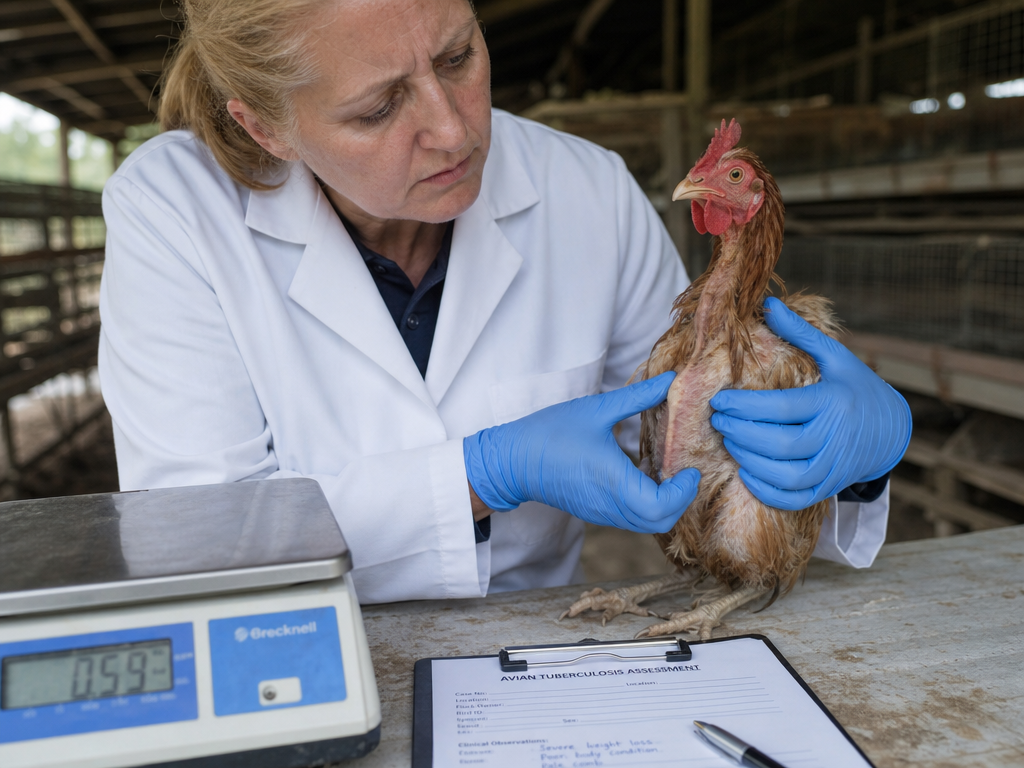
Avian tuberculosis has no practical treatment; flock culling, environmental decontamination, and prolonged downtime are the only management tools.
There are no effective natural treatments for avian tuberculosis. The decision to treat vs. cull must weigh the prolonged zoonotic risk to human contacts against the welfare of the birds and the near-zero chance of cure.
For high-value pet birds where euthanasia is not acceptable, an avian veterinarian may discuss combination antibiotic therapy (ethambutol, rifampicin, and isoniazid for 18-24 months) under strict isolation. This is not curative and is rarely pursued in backyard or production flock scenarios.
🛡️How Can Avian Tuberculosis Be Prevented?
- Limit the lifespan of your flock if possible. Avian TB rarely affects birds under 2 years. Rotating flocks every 18-24 months greatly reduces the risk of clinical disease expression.
- Prevent wild bird access to feed, water, and housing. Crows and starlings are M. avium carriers and shed the organism in their feces.
- Test any birds with unexplained chronic wasting before integrating them into a new flock. The tuberculin skin test can identify infected individuals before they seed a clean environment.
- After a confirmed avian TB outbreak, do not use the same soil run for 2-4 years. Consider replacing the top 6 inches of soil in high-density areas before restocking.
📞When Should I Call a Vet for Avian Tuberculosis?
Consult a veterinarian if:
- You find an adult bird with progressive weight loss and palpable abdominal masses. Necropsy is the fastest path to diagnosis.
- A necropsy reveals granulomatous lesions in the liver or intestines. Acid-fast smear confirming M. avium triggers immediate flock management decisions and zoonotic risk assessment for human contacts.
- Any immunocompromised individual (HIV/AIDS, transplant recipient, on chemotherapy) has regular contact with your flock and you discover avian TB. Discuss with their physician immediately.
❓Avian Tuberculosis: Frequently Asked Questions
Can avian tuberculosis spread to humans?
M. avium complex (MAC) can cause disease in immunocompromised humans, including those with HIV/AIDS, organ transplant recipients, and people on immunosuppressive therapy. Healthy adults are rarely affected. If immunocompromised individuals regularly handle your flock, avian TB represents a genuine zoonotic risk that should be discussed with their physician.
What does avian tuberculosis look like in chickens?
Avian TB presents as progressive weight loss and muscle wasting in adult birds (usually over 2 years old) with no apparent cause. The abdomen may feel lumpy from enlarged, nodular liver and spleen. Lameness from bone lesions can develop. Birds often eat normally until late in the disease while visibly wasting away.
Can avian tuberculosis be treated?
No practical treatment exists for poultry. Culling the entire flock is the recommended and most humane approach. Combination antibiotic therapy used in human TB requires 18-24 months, does not reliably cure birds, and leaves them as potential zoonotic risks during treatment. Euthanasia is the standard management recommendation.
How long does Mycobacterium avium survive in soil?
M. avium survives in soil for 4 years or longer under typical outdoor conditions. This is the primary challenge in managing avian TB: even after culling all infected birds, the environment remains a source of infection for any restocked flock. Outdoor runs used by an infected flock should rest for 2-4 years or have the top 6 inches of soil removed.
How does avian tuberculosis spread between chickens?
Infected birds shed M. avium in their feces for months to years before showing signs. Other birds ingest the organism while pecking at contaminated litter or soil. Wild birds (crows, starlings) carrying M. avium can introduce it to free-range flocks. The slow progression means an entire flock is usually exposed before any bird shows clinical signs.
📋Key Points
- ✓Mycobacterium avium subsp.
- ✓Key symptoms: progressive weight loss despite normal or increased appetite, muscle wasting, especially of the breast and legs, weakness and reluctance to move, lameness from bone lesions (advanced cases).
- ✓Invariably fatal for infected birds. Prognosis for flock eradication is good if culling is complete and environmental management is thorough. However, reintroduction from contaminated soil or persistent wild bird reservoir can reestablish infection in restocked flocks if downtime is insufficient.
- ✓This condition is contagious, isolate affected birds promptly.
- ✓This condition is zoonotic and can potentially affect humans. Practice thorough hygiene when handling sick birds.
🔗Related
Related Conditions
📚Sources & References
- 1.Avian Tuberculosis. Merck Veterinary Manual. 2024
- 2.Mycobacterium avium Complex in Backyard Poultry. PubMed / Avian Diseases. 2010
- 3.Avian Mycobacteriosis and Zoonotic Risk. CDC. 2023