Avian Metapneumovirus in Chickens: Symptoms, Causes and Prevention
Avian metapneumovirus (aMPV) causes respiratory disease and, in chickens, Swollen Head Syndrome (SHS) when secondary E. coli infection spreads from the upper respiratory tract to the subcutaneous tissues of the head. In turkeys it causes Turkey Rhinotracheitis (TRT). There is no specific treatment; vaccination reduces severity and spread.
Veterinarian Reviewed
FlockVet Veterinary Editorial Team· Reviewed August 2026
At a Glance
- Urgency
- Moderate
- Contagious
- Yes
- Affects Humans
- No
- Key Symptoms
- swelling of the periorbital tissues, head, and sinuses in chickens (shs), frothy or watery discharge from the eyes (conjunctivitis), sneezing, nasal discharge, and tracheal rales
- Prognosis
- Good for individual birds with prompt antibiotic treatment of secondary infections. Mortality is typically low (1-3%) in uncomplicated SHS. Egg production usually recovers within 3-4 weeks. Prognosis worsens significantly with concurrent Newcastle disease, IBV, or Mycoplasma infections.
📑 On This Pagetap to expand
🔍What Are the Symptoms of Avian Metapneumovirus (Swollen Head Syndrome)?
- ●Swelling of the periorbital tissues, head, and sinuses in chickens (SHS)
- ●Frothy or watery discharge from the eyes (conjunctivitis)
- ●Sneezing, nasal discharge, and tracheal rales
- ●Torticollis (wry neck) and disorientation in advanced cases
- ●Reduction in egg production during active respiratory phase
- ●In turkeys: severe rhinotracheitis with nasal discharge and tracheal foaming
- ●Increased susceptibility to secondary bacterial infections
- ●Spread to most of the flock within 7-10 days
🧬What Causes Avian Metapneumovirus (Swollen Head Syndrome) in Chickens?
aMPV is a pneumovirus (family Pneumoviridae) with four subtypes (A, B, C, D) that vary in geographic distribution and vaccine cross-protection.
- Aerosol transmission: aMPV spreads rapidly through respiratory aerosols and direct contact. In housed flocks, spread to 60-80% of susceptible birds within 7-10 days is typical.
- Swollen Head Syndrome mechanism: aMPV infects the upper respiratory tract and nasal sinuses, predisposing the damaged sinus epithelium to secondary E. coli and Ornithobacterium rhinotracheale (ORT) infection. These bacteria spread from sinuses to the surrounding subcutaneous tissues of the head, causing the characteristic swelling of SHS.
- Wild bird introduction: Migratory wild birds are natural reservoirs for some aMPV subtypes. Backyard flocks with outdoor access during migration seasons are at risk.
- Poor ventilation amplification: High ammonia and low ventilation dramatically worsen aMPV respiratory damage and increase secondary bacterial colonization.
🔬How Is Avian Metapneumovirus (Swollen Head Syndrome) Diagnosed?
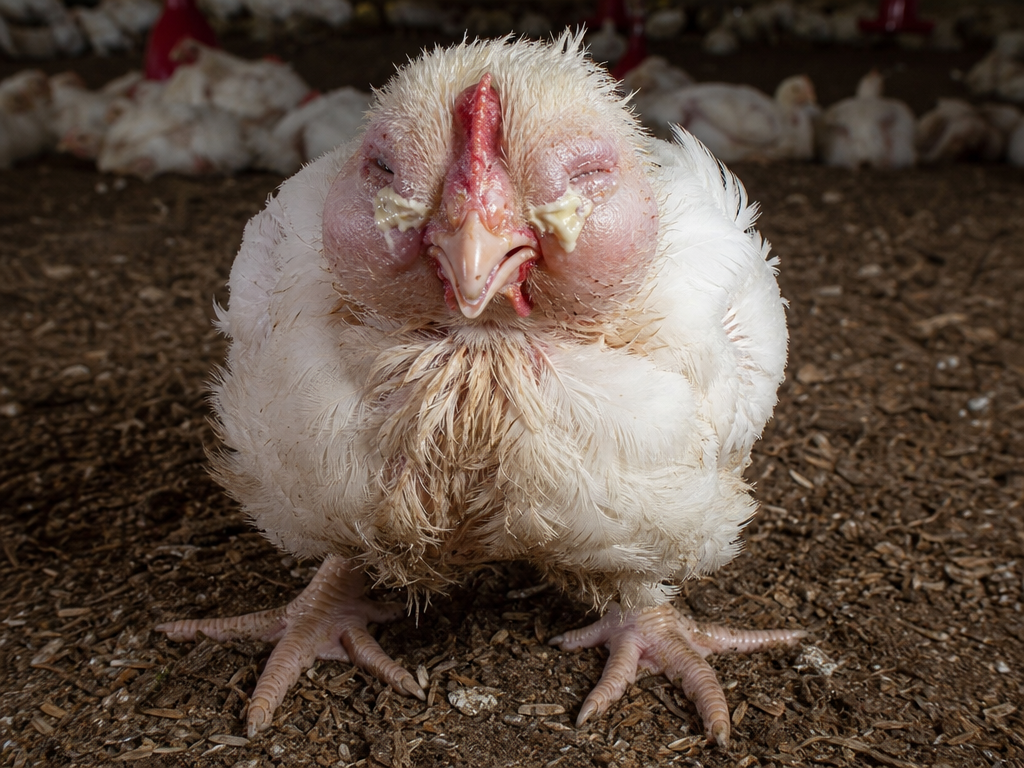
Swollen Head Syndrome in chickens is diagnosed by the characteristic head swelling combined with respiratory signs in an otherwise alert and active bird.
- Clinical pattern: Frothy eye discharge and sneezing precede head swelling by 3-7 days. The swelling is periorbital and subfrontal, giving the head a puffy, broadened appearance. Birds remain ambulatory and alert unlike severe systemic illness.
- Serology: ELISA for aMPV antibodies detects flock seroconversion. A 4-fold titer rise between acute and convalescent samples confirms recent aMPV infection.
- Virus detection: RT-PCR on fresh tracheal swabs or sinus exudate identifies aMPV and the subtype.
- Differential: Infectious coryza (foul odor, no swollen head), mycoplasmosis (slower spread, no head swelling), Newcastle (more severe systemic signs and mortality).
💊How Is Avian Metapneumovirus (Swollen Head Syndrome) Treated?
No specific antiviral treatment exists for aMPV. Management targets secondary bacterial infections that cause most of the morbidity in Swollen Head Syndrome. The viral phase is self-limiting in 7-14 days; the secondary bacterial cascade driving the head swelling is what requires active treatment.
Antibiotic selection for secondary infections: Amoxicillin (15 mg/kg orally twice daily, or equivalent water medication), tylosin (100 mg/gallon for 5 days), oxytetracycline (200 mg/gallon for 5-7 days), or trimethoprim-sulfamethoxazole (30 mg/kg orally twice daily) are first-line options against E. coli and Ornithobacterium rhinotracheale. When clinical response is poor within 72 hours, sinus aspiration for culture and sensitivity testing identifies resistant strains and guides selection of alternative antibiotics. ORT has variable sensitivity to tetracyclines; amoxicillin-clavulanate may be needed in resistant cases.
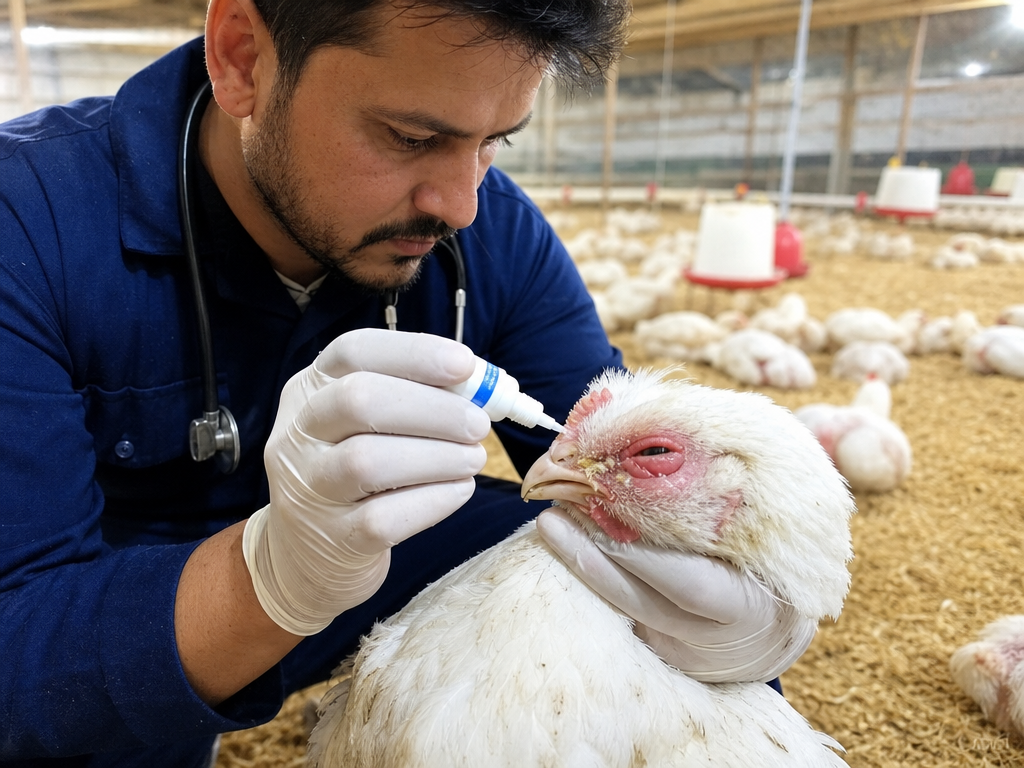
Sinus aspiration for severe swelling: In birds with severely swollen eyes or sinuses, needle aspiration of the sinus contents (using a 20-22 gauge needle at the infraorbital sinus anterior to the eye) removes the bacterial exudate responsible for tissue pressure and allows antibiotic penetration. Flush with dilute chlorhexidine (0.05%) after aspiration. Repeat every 48-72 hours until swelling resolves.
Anti-inflammatory support: Meloxicam (0.5 mg/kg orally once daily for 3-5 days) reduces sinus tissue inflammation and improves feed intake during recovery. Vitamin C at 250-500 mg/gallon of drinking water supports mucosal immunity throughout the outbreak. Vitamin E at 3x maintenance supports tissue recovery.
Ventilation correction: Ammonia above 25 ppm at bird level is both a predisposing factor and a perpetuating factor in aMPV outbreaks. Check ammonia at head height in the coop, not at the door. Fresh litter, increased air exchange, and reduced stocking density are the most impactful environmental interventions during and immediately after an aMPV outbreak.
Natural & Integrative Care for Avian Metapneumovirus (Swollen Head Syndrome)
aMPV/SHS is managed by treating secondary bacterial infections with appropriate antibiotics and improving ventilation; vaccination prevents severity in future flocks.
Natural approaches are supportive during the acute phase but do not address the viral infection.
Oregano oil (3-5 drops/gallon): Carvacrol has some activity against bacterial secondary pathogens. Use alongside antibiotic treatment during SHS outbreaks.
Vitamin C supplementation: 250-500 mg per gallon of drinking water supports mucosal immunity and tissue recovery in the respiratory tract.
🛡️How Can Avian Metapneumovirus (Swollen Head Syndrome) Be Prevented?
- Vaccinate with an aMPV live vaccine (spray or eye-drop) at appropriate age in endemic areas. Match vaccine subtype to the circulating strain in your region.
- Maintain ventilation and keep ammonia below 25 ppm. High ammonia dramatically worsens aMPV respiratory damage and secondary bacterial colonization.
- Control wild bird access during migration seasons. aMPV is maintained in wild bird reservoirs and introduced via respiratory aerosol contact.
- Vaccinate against Mycoplasma gallisepticum and E. coli (where available) to reduce secondary infection severity when aMPV strikes.
📞When Should I Call a Vet for Avian Metapneumovirus (Swollen Head Syndrome)?
Consult a veterinarian if:
- Head swelling appears in multiple birds simultaneously with respiratory signs. Confirm aMPV and rule out Newcastle disease before selecting treatment.
- Mortality exceeds 5% in a flock with SHS. Higher mortality suggests concurrent infection or an antibiotic-resistant secondary pathogen.
❓Avian Metapneumovirus (Swollen Head Syndrome): Frequently Asked Questions
What is avian metapneumovirus and Swollen Head Syndrome?
Avian metapneumovirus (aMPV) causes respiratory disease in chickens and turkeys. In chickens, secondary E. coli infection after aMPV spreads to the head's subcutaneous tissues, causing Swollen Head Syndrome (SHS) with periorbital swelling and frothy eyes. There is no specific antiviral treatment; antibiotics control secondary infections.
How does Swollen Head Syndrome spread in chickens?
aMPV spreads through respiratory aerosols and direct contact, infecting 60-80% of a flock within 7-10 days. Secondary E. coli and ORT bacteria then cause the characteristic head swelling. Wild birds during migration can introduce aMPV to backyard flocks with outdoor access.
Can chickens with Swollen Head Syndrome recover?
Yes. Most affected chickens recover within 2-3 weeks with antibiotic treatment targeting secondary bacterial infections. Egg production typically returns within 3-4 weeks of the outbreak. The prognosis is good for uncomplicated SHS; concurrent infections worsen outcomes.
Is Swollen Head Syndrome the same as turkey rhinotracheitis?
They are caused by the same virus (aMPV) but manifest differently by species. In turkeys, aMPV causes severe rhinotracheitis with nasal foaming and high mortality (Turkey Rhinotracheitis/TRT). In chickens, the secondary E. coli infection produces the head swelling of SHS. The primary aMPV infection is mild in both species.
Is there a vaccine for avian metapneumovirus?
Yes. Live attenuated aMPV vaccines applied by spray or eye-drop are available in many countries. The appropriate subtype (A, B, C, or D depending on region) must be used. Vaccination significantly reduces clinical severity, production losses, and secondary SHS development when aMPV exposure occurs.
📋Key Points
- ✓aMPV is a pneumovirus (family Pneumoviridae) with four subtypes (A, B, C, D) that vary in geographic distribution and vaccine cross-protection.
- ✓Key symptoms: swelling of the periorbital tissues, head, and sinuses in chickens (shs), frothy or watery discharge from the eyes (conjunctivitis), sneezing, nasal discharge, and tracheal rales, torticollis (wry neck) and disorientation in advanced cases.
- ✓Good for individual birds with prompt antibiotic treatment of secondary infections. Mortality is typically low (1-3%) in uncomplicated SHS. Egg production usually recovers within 3-4 weeks. Prognosis worsens significantly with concurrent Newcastle disease, IBV, or Mycoplasma infections.
- ✓This condition is contagious, isolate affected birds promptly.
🔗Related
Related Conditions
📚Sources & References
- 1.Avian Metapneumovirus in Poultry. Merck Veterinary Manual. 2024
- 2.Avian Metapneumovirus - A Review. PubMed / Avian Pathology. 2003
- 3.Swollen Head Syndrome Control. USDA APHIS. 2022