Omphalitis (Navel Ill) in Chicks: Symptoms, Causes and Treatment
Omphalitis, also called navel ill or mushy chick disease, is an infection of the navel and yolk sac in newly hatched chicks caused by bacterial contamination at or before hatch. It is a leading cause of mortality in chicks under 7 days old, responsible for up to 10% of hatchery deaths in poorly managed operations. The unhealed navel provides a direct bacterial entry point, and E. coli is the most common pathogen isolated.
Veterinarian Reviewed
FlockVet Editorial Team· Reviewed August 2026
This is a veterinary emergency.
If your bird is showing these signs, contact a veterinarian immediately. Do not wait. Time-sensitive conditions can deteriorate rapidly without professional intervention.
At a Glance
- Urgency
- Emergency
- Contagious
- Yes
- Affects Humans
- No
- Key Symptoms
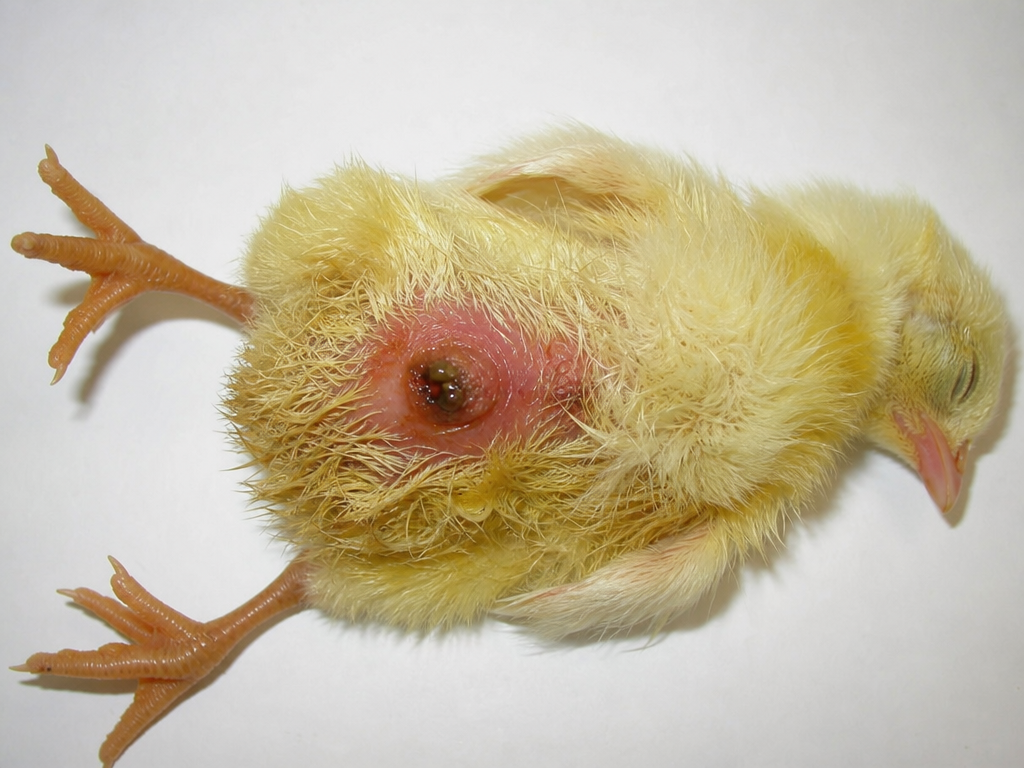
- large, soft, malodorous abdomen in chicks under 7 days, unhealed or wet navel at 24-48 hours post-hatch, discolored (brown, green, or black) navel tissue
- Prognosis
- Poor for individual chicks showing systemic signs. Mortality rate in affected chicks ranges from 50-100% depending on severity and speed of intervention. Excellent for the unaffected hatch group if hygiene failures are corrected immediately.
📑 On This Pagetap to expand
🔍What Are the Symptoms of Omphalitis (Navel Ill) in Chicks?
- ●Large, soft, malodorous abdomen in chicks under 7 days
- ●Unhealed or wet navel at 24-48 hours post-hatch
- ●Discolored (brown, green, or black) navel tissue
- ●Lethargy and separation from the brooder group
- ●Reluctance to eat or drink
- ●Drooping head and closed eyes
- ●Rapid death within 24-72 hours of showing symptoms
- ●Multiple chicks dying in the first week (hatchery source)
- ●Putrid smell from the abdominal area
- ●Normal appearance of siblings (individual yolk sac contamination)
🧬What Causes Omphalitis (Navel Ill) in Chicks in Chickens?
Omphalitis occurs when bacteria colonize the yolk sac through an unhealed or contaminated navel immediately before, during, or after hatching. The yolk sac, a rich nutrient source, becomes a bacterial culture medium if the navel fails to close properly.
- E. coli (most common): Environmental E. coli is present in incubator debris, fecal contamination on hatching eggs, and dirty brooder equipment. It is the pathogen isolated in the majority of omphalitis cases.
- Staphylococcus aureus and Streptococcus spp.: Secondary bacterial invaders that enter through E. coli-damaged tissue. Staphylococcal omphalitis tends to produce more severe tissue necrosis.
- Hatchery hygiene failures: Dirty incubators, contaminated hatching trays, and washing eggs with water cooler than egg temperature drive bacteria through pores into the shell.
- Dirty or contaminated hatching eggs: Fecal material on the shell surface harbors billions of bacteria that penetrate the porous shell and contaminate the yolk before hatch.
- Incubation errors: Overheating during the final days weakens the chick and delays navel closure. High humidity at hatch creates a moist environment ideal for bacterial growth around the navel.
- Prolonged hatching: Chicks that take too long to hatch due to humidity errors have delayed navel closure, leaving the portal of infection open longer.
🔬How Is Omphalitis (Navel Ill) in Chicks Diagnosed?
Omphalitis is diagnosed primarily by physical examination and necropsy in dead chicks:
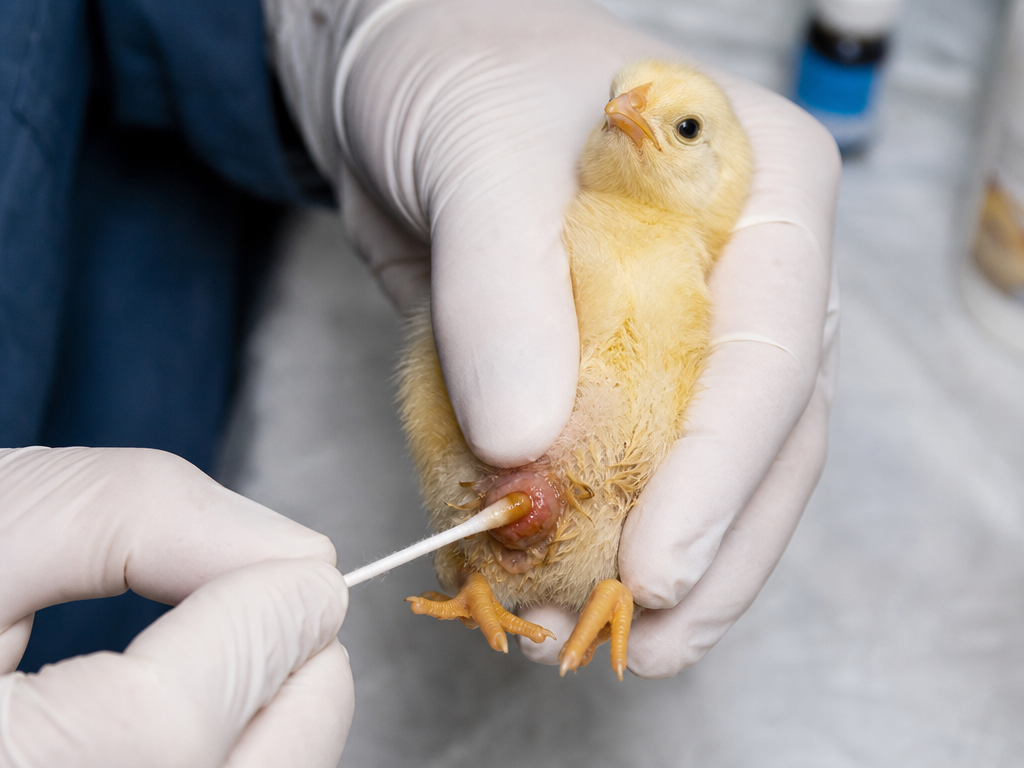
- Live chick examination: Gently part the down below the navel. An infected navel is wet, discolored (yellow-brown to black), soft, and malodorous. Normal navels are dry and closed by 24-36 hours post-hatch.
- Abdominal palpation: The abdomen feels soft and fluid-filled in infected chicks. Normal chick abdomens are firm but not distended.
- Necropsy findings: Yolk sac appears green, brown, or black and has a watery, malodorous content instead of normal yellow-cream thick yolk. Surrounding tissue is edematous and inflamed.
- Bacterial culture: Submit fresh yolk sac and navel tissue from dead chicks to a diagnostic lab for culture and sensitivity. This identifies the pathogen and guides treatment for the remaining flock.
- Pattern assessment: Multiple affected chicks from the same hatch suggest a hatchery hygiene failure. Individual affected chick suggests a dirty individual egg or localized brooder contamination.
💊How Is Omphalitis (Navel Ill) in Chicks Treated?
Prognosis is poor for individual affected chicks. Treatment focuses on supportive care for borderline cases and eliminating the source to protect remaining unaffected chicks.
Antibiotic treatment: Broad-spectrum antibiotics (amoxicillin, trimethoprim-sulfamethoxazole, or enrofloxacin based on culture results) may save chicks caught in the earliest stage. Treatment must begin within hours of sign onset. Systemically ill chicks with a large necrotic navel rarely survive regardless of treatment.
Topical navel care: In mildly affected chicks, apply iodine solution (7% povidone-iodine) to the navel area to reduce bacterial load. Do not apply to severely necrotic tissue.
Warmth and hydration: Maintain the brooder at 95 F for chicks in the first week. Offer electrolyte solution (Sav-A-Chick) in addition to clean water to support hydration in weak chicks.
Culling: Chicks that are severely lethargic, unable to lift their heads, or have a very large, blackened, putrid navel should be humanely euthanized. Allowing affected chicks to die slowly increases hatchery bacterial burden and risks spreading to healthy chicks.
Natural & Integrative Care for Omphalitis (Navel Ill) in Chicks
Omphalitis is primarily a hatchery hygiene disease. Individual chick treatment has poor success rates; focus on source identification and environmental decontamination to protect the hatch group.
Natural approaches are limited in omphalitis and should not replace antibiotic treatment in confirmed cases. They have value in supportive care and prevention of secondary spread.
Iodine navel dip: For the hatch group (not just affected birds), dipping navels in 7% iodine solution immediately at hatch is a standard hatchery practice that significantly reduces omphalitis incidence. This is both preventive and early-stage supportive.
Probiotic supplementation: Add a quality poultry probiotic (Lactobacillus acidophilus, Enterococcus faecium) to drinking water for the whole hatch group. Probiotics compete with pathogenic E. coli for intestinal colonization and may reduce secondary GI spread.
Oregano oil in water (1-2 drops per gallon): Provides broad-spectrum antimicrobial activity for the hatch group during the highest-risk first week. Use as supportive care alongside, not instead of, antibiotics for confirmed cases.
🛡️How Can Omphalitis (Navel Ill) in Chicks Be Prevented?
- Collect hatching eggs at least 3-4 times daily and store large end up at 55-65 F and 75% humidity. Never wash hatching eggs with cold water, as this creates a vacuum that draws surface bacteria into the egg.
- Sanitize the incubator thoroughly between hatches using a quaternary ammonium disinfectant. Incubator debris from a previous hatch is the primary E. coli reservoir.
- Do not set dirty or cracked eggs. Cracks and fecal material on the shell surface dramatically increase the risk of bacterial penetration before hatch.
- Dip navels in 7% iodine solution immediately at transfer from the incubator to the brooder. This is standard commercial hatchery practice and effectively reduces omphalitis rates.
- Line hatching trays with clean paper towels and replace between hatches. Do not allow debris from one hatch to contaminate the next.
- Maintain incubation temperature at 99-100 F (still air 101-102 F) and relative humidity at 50-55% during incubation, rising to 65% during the hatch window (days 18-21).
📞When Should I Call a Vet for Omphalitis (Navel Ill) in Chicks?
Contact a veterinarian or state poultry diagnostic lab if:
- More than 5% of a hatch is showing navel problems or dying in the first week. This rate indicates a systematic hatchery hygiene failure requiring professional investigation.
- You need culture and sensitivity results to guide antibiotic choice for the remaining flock. Empiric treatment without knowing the pathogen may select for resistant strains.
- You are experiencing repeated omphalitis outbreaks across multiple hatches despite improved hygiene. Environmental swab culture of the incubator can identify persistent bacterial reservoirs.
❓Omphalitis (Navel Ill) in Chicks: Frequently Asked Questions
What is omphalitis in chicks?
Omphalitis is an infection of the navel and yolk sac in newly hatched chicks, caused by bacteria (usually E. coli) entering through an unhealed navel. It is one of the most common causes of chick death in the first week of life and is primarily a hygiene failure of egg collection, incubation, or brooder management.
How do I know if my chick has omphalitis?
Signs include a wet, malodorous, discolored navel that has not closed by 24-48 hours after hatch, a soft and distended abdomen, lethargy, and failure to eat. Healthy chick navels are dry and sealed within 24-36 hours of hatch.
Can you treat omphalitis in chicks?
Treatment with broad-spectrum antibiotics can save chicks caught very early, but most chicks with established omphalitis die despite treatment. The focus should be on supportive care for borderline cases and immediate hygiene correction to protect the remaining hatch group.
How do you prevent omphalitis in chickens?
Prevention requires clean hatching eggs with no cracks or fecal contamination, a sanitized incubator between hatches, correct incubation temperature and humidity, and iodine dipping of navels immediately at hatch. These steps reduce omphalitis incidence dramatically.
Is omphalitis contagious to other chicks?
Omphalitis is not directly chick-to-chick contagious, but the source of contamination (dirty incubator, contaminated litter) puts all chicks in the same environment at risk. Chicks that die of omphalitis shed bacteria into the brooder, which can secondarily infect chicks with any wound or stress-induced immune suppression.
What bacteria causes omphalitis in chicks?
E. coli is isolated in the majority of cases. Other bacterial agents include Staphylococcus aureus, Streptococcus spp., Klebsiella, and Enterococcus. Mixed infections are common. Culture of the yolk sac from dead chicks identifies the specific pathogen.
📋Key Points
- ✓Omphalitis occurs when bacteria colonize the yolk sac through an unhealed or contaminated navel immediately before, during, or after hatching.
- ✓Key symptoms: large, soft, malodorous abdomen in chicks under 7 days, unhealed or wet navel at 24-48 hours post-hatch, discolored (brown, green, or black) navel tissue, lethargy and separation from the brooder group.
- ✓Poor for individual chicks showing systemic signs. Mortality rate in affected chicks ranges from 50-100% depending on severity and speed of intervention. Excellent for the unaffected hatch group if hygiene failures are corrected immediately.
- ✓This condition is contagious, isolate affected birds promptly.
🔗Related
Related Conditions