Pasty Butt in Chicks in Chickens: Symptoms, Causes and Treatment
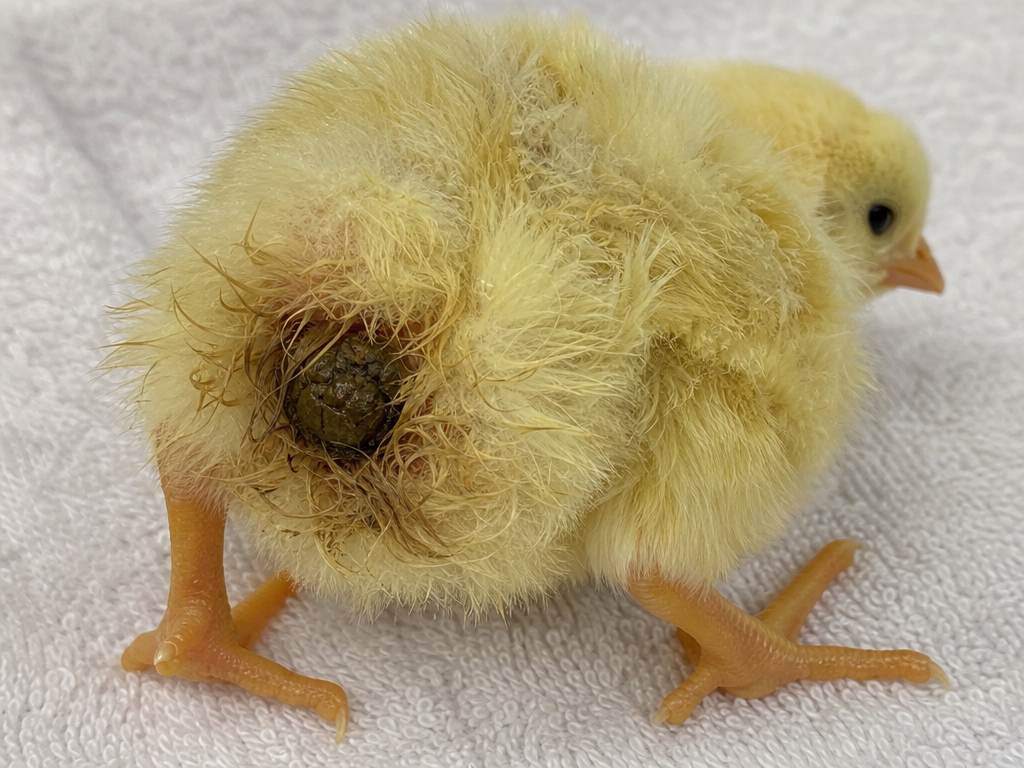
Pasty butt (pasting up) is a condition in which soft droppings accumulate and harden over the vent of a young chick, blocking excretion. Left untreated, it is fatal within 24-48 hours. It is most common in chicks 1-7 days old and is triggered by temperature stress, shipping stress, or improper diet.
Veterinarian Reviewed
FlockVet Veterinary Editorial Team· Reviewed August 2026
At a Glance
- Urgency
- Moderate
- Contagious
- No
- Affects Humans
- No
- Key Symptoms
- dried feces stuck to and covering the vent opening, chick straining to defecate with little or no result, lethargy and loss of interest in food and water
- Prognosis
- Prognosis is excellent when treated promptly. A chick with pasty butt that is cleaned and has its environment corrected recovers fully within 24 hours in the vast majority of cases. Untreated pasty butt causing complete obstruction for more than 12-24 hours is usually fatal from toxin buildup and organ failure.
📑 On This Pagetap to expand
🔍What Are the Symptoms of Pasty Butt in Chicks?
- ●Dried feces stuck to and covering the vent opening
- ●Chick straining to defecate with little or no result
- ●Lethargy and loss of interest in food and water
- ●Swollen, distended abdomen if untreated
- ●Tail held down or constantly bobbing
- ●Crying or peeping distress sounds
🧬What Causes Pasty Butt in Chicks in Chickens?
Pasty butt is a stress response, not an infection. The loose droppings that cause it result from physiological disruption in the first week of life.
- Temperature stress (most common): Chicks that are too cold or too hot produce loose droppings that are more likely to stick to vent feathers. The ideal brooder temperature is 95-100F the first week.
- Shipping stress: Newly shipped chicks almost always have some degree of gut disruption from temperature fluctuation and feed/water deprivation in transit. This is why pasty butt peaks in shipped chicks on day 1-3.
- Incorrect feed: Feeding anything other than plain chick starter to newly hatched chicks, or providing high-protein treats too early, disrupts gut flora and causes loose droppings.
- Feeding too early or too late: Chicks should access feed within 24-48 hours of hatch. Delayed feeding causes hypoglycemia and gut motility problems.
🔬How Is Pasty Butt in Chicks Diagnosed?
Diagnosis is visual - examine every chick's vent daily during the first week.
- Check the vent: Gently part the down around the vent opening. A paste of dried feces blocking the opening is pasty butt. Normal chick vents are clean and open.
- Severity assessment: Light crusting = clean and monitor. Full blockage = treat immediately. Swollen abdomen with full blockage = emergency.
- Distinguish from prolapse: A reddish-pink tissue protruding from the vent is a prolapse, not pasty butt - different treatment required.
💊How Is Pasty Butt in Chicks Treated?
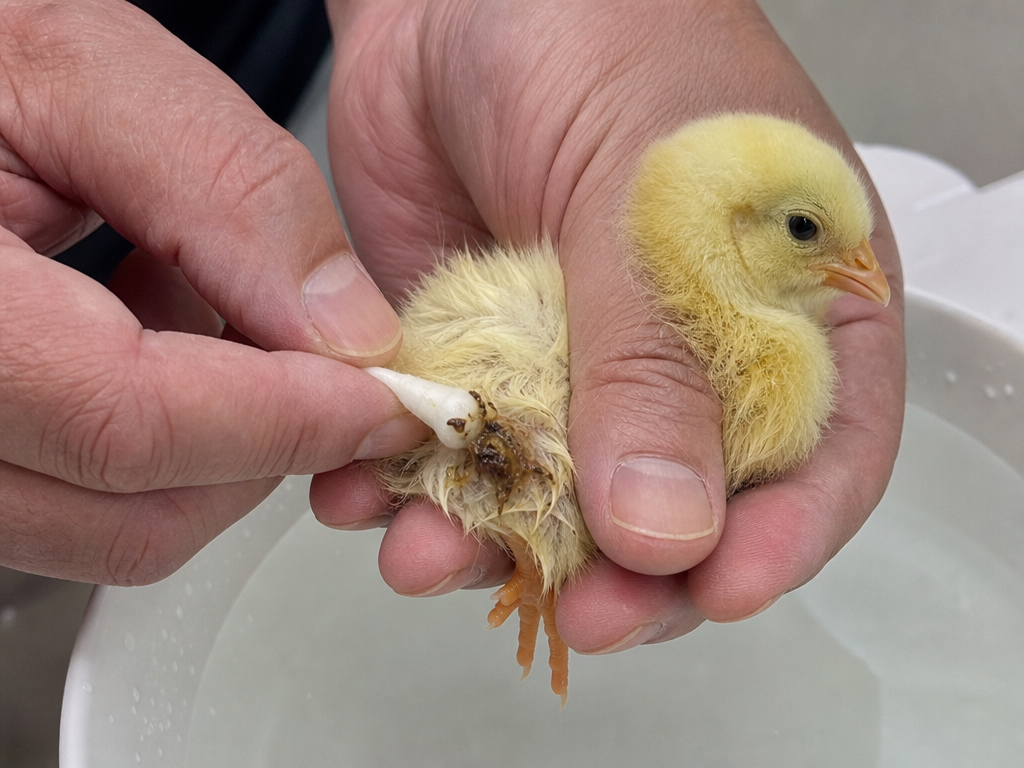
Remove the blockage gently - never pull dried feces off dry. Tearing causes bleeding wounds that attract pecking.
- Warm water soak: Hold the affected area under warm (not hot) running water or soak a cotton ball in warm water and apply to the paste for 30-60 seconds to soften it.
- Gentle removal: Once softened, gently wipe away the paste with a wet cotton ball. Never pull. Repeat soaking if needed. Pat dry completely after cleaning.
- Petroleum jelly: After cleaning, apply a tiny amount of petroleum jelly (Vaseline) around the vent to prevent the next dropping from sticking.
- Check brooder temperature: After treatment, verify the brooder is at 95-100F and chicks can move toward and away from heat as needed.
Natural & Integrative Care for Pasty Butt in Chicks
Correcting the environment is the treatment - no herbs or supplements are needed.
- Plain chick starter only: Remove any treats or supplemental feeds. Plain chick starter is all chicks need for the first 2 weeks.
- Probiotic water supplement: Add a chick-specific probiotic (SaveAChick, Rooster Booster) to drinking water per label dose to support gut flora establishment in the first week.
🛡️How Can Pasty Butt in Chicks Be Prevented?
Almost all cases of pasty butt are preventable with correct brooder setup and feed.
- Correct brooder temperature: 95-100F directly under the heat lamp the first week, with cooler areas available. Chicks choose their comfort zone - a huddled or panting flock signals the temperature is wrong.
- Water first: Offer water with electrolytes before feed for the first 2 hours after arrival. Rehydration before feeding reduces gut stress in shipped chicks.
- Check every chick daily: Inspect each chick's vent every morning for the first 7 days. Early detection makes treatment trivial; late detection is an emergency.
- Chick starter only: No treats, no scratch, no extras for the first 2 weeks. A complete balanced chick starter has everything chicks need.
📞When Should I Call a Vet for Pasty Butt in Chicks?
Call a vet if the chick's abdomen is visibly distended and the vent has been blocked for more than a few hours, if bleeding occurs during cleaning and does not stop, or if a chick continues to worsen despite a clean vent (may indicate internal yolk sac infection rather than pasty butt).
❓Pasty Butt in Chicks: Frequently Asked Questions
What is pasty butt in chicks?
Pasty butt is a condition in young chicks where soft droppings dry and harden over the vent opening, blocking excretion. It is most common in chicks 1-7 days old and is triggered by temperature stress, shipping stress, or incorrect feeding. Left untreated, it is fatal within 24-48 hours.
How do you clean a chick with pasty butt?
Hold the affected area under warm running water or soak a wet cotton ball against the paste for 30-60 seconds to soften it. Then gently wipe away the softened paste - never pull dry feces. Pat the area dry and apply a tiny amount of petroleum jelly to prevent the next dropping from sticking.
Why do chicks get pasty butt?
Pasty butt is caused by loose droppings that stick to the vent feathers and dry. The loose droppings result from temperature stress (too hot or too cold in the brooder), shipping stress in newly arrived chicks, or incorrect feeding. Correcting the temperature and offering plain chick starter prevents most cases.
Can pasty butt kill a chick?
Yes. A vent blocked by dried feces prevents the chick from excreting waste. Within 24-48 hours, toxin buildup and gut distension cause death. This is why daily vent checks in the first week are essential - early cases take 2 minutes to treat, late cases are emergencies.
How do I prevent pasty butt in chicks?
Maintain brooder temperature at 95-100F with cooler areas available. Offer water before food for the first 2 hours after arrival. Feed only plain chick starter for the first 2 weeks. Add a chick probiotic to drinking water. Check each chick's vent every morning for the first 7 days.
📋Key Points
- ✓Pasty butt is a stress response, not an infection.
- ✓Key symptoms: dried feces stuck to and covering the vent opening, chick straining to defecate with little or no result, lethargy and loss of interest in food and water, swollen, distended abdomen if untreated.
- ✓Prognosis is excellent when treated promptly. A chick with pasty butt that is cleaned and has its environment corrected recovers fully within 24 hours in the vast majority of cases. Untreated pasty butt causing complete obstruction for more than 12-24 hours is usually fatal from toxin buildup and organ failure.
🔗Related
Related Conditions
📚Sources & References
- 1.Common Management Problems in Backyard Poultry. Merck Veterinary Manual. 2024
- 2.Brooding and Growing Chicks. University of Georgia Extension. 2022
- 3.Digestive System of Poultry. Merck Veterinary Manual. 2024