Heat Stress in Chickens: Symptoms, Causes and Treatment
Heat stress in chickens is dangerous overheating caused when environmental heat and humidity exceed a bird's ability to cool itself by panting. Signs progress from open-beak panting and lifted wings to lethargy, collapse, seizures, and death. Emergency treatment is immediate shade, airflow, cool water, and electrolytes, followed by veterinary care if the bird does not respond quickly.
Veterinarian Reviewed
FlockVet Veterinary Editorial Team· Reviewed January 2026
At a Glance
- Urgency
- Moderate
- Contagious
- No
- Affects Humans
- No
- Key Symptoms
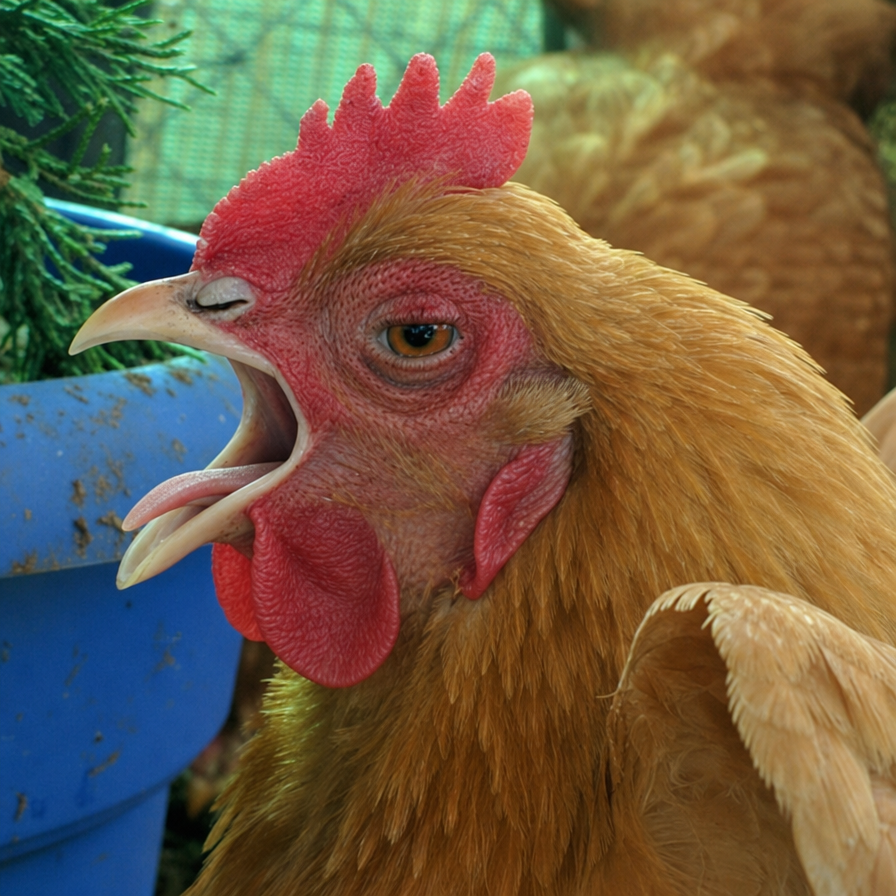
- panting with open beak, wings held away from body to dissipate heat, pale or discolored (blue/purple) comb and wattles
- Prognosis
- Excellent if caught early. Birds that collapse but are revived within 15-30 minutes usually recover fully. Birds in heat stroke (core temperature above 112°F) have guarded prognosis.
📑 On This Pagetap to expand
🔍What Are the Symptoms of Heat Stress?
- ●Panting with open beak
- ●Wings held away from body to dissipate heat
- ●Pale or discolored (blue/purple) comb and wattles
- ●Lethargy and not moving
- ●Drinking excessive water
- ●Not eating
- ●Diarrhea
- ●Reduced egg production and thin-shelled eggs
- ●Collapse, unresponsiveness
- ●Death in severe cases
🧬What Causes Heat Stress in Chickens?
Chickens and turkeys are particularly vulnerable to heat because they lack sweat glands and rely entirely on panting and behavioral thermoregulation. Risk factors:
- Temperature above 90°F: Danger zone begins here, especially with humidity above 50%
- Poor ventilation: Trapped hot air prevents any cooling from panting
- Heavy breeds: Cochins, Brahmas, Orpingtons have poor heat tolerance compared to Mediterranean breeds
- Dark feathers: Black and dark brown feathers absorb more solar radiation
- Obesity: Fat insulates, preventing heat dissipation
- High stocking density: Birds generate body heat; crowded coops become dangerously hot
- No shade access
- Compromised health from other illness: Sick birds have lower heat tolerance
🔬How Is Heat Stress Diagnosed?
💊How Is Heat Stress Treated?
Immediate cooling protocol:
- Move bird to shade or cool area immediately
- Dip feet and legs in cool (not ice cold) water - the feet have blood vessels that cool quickly
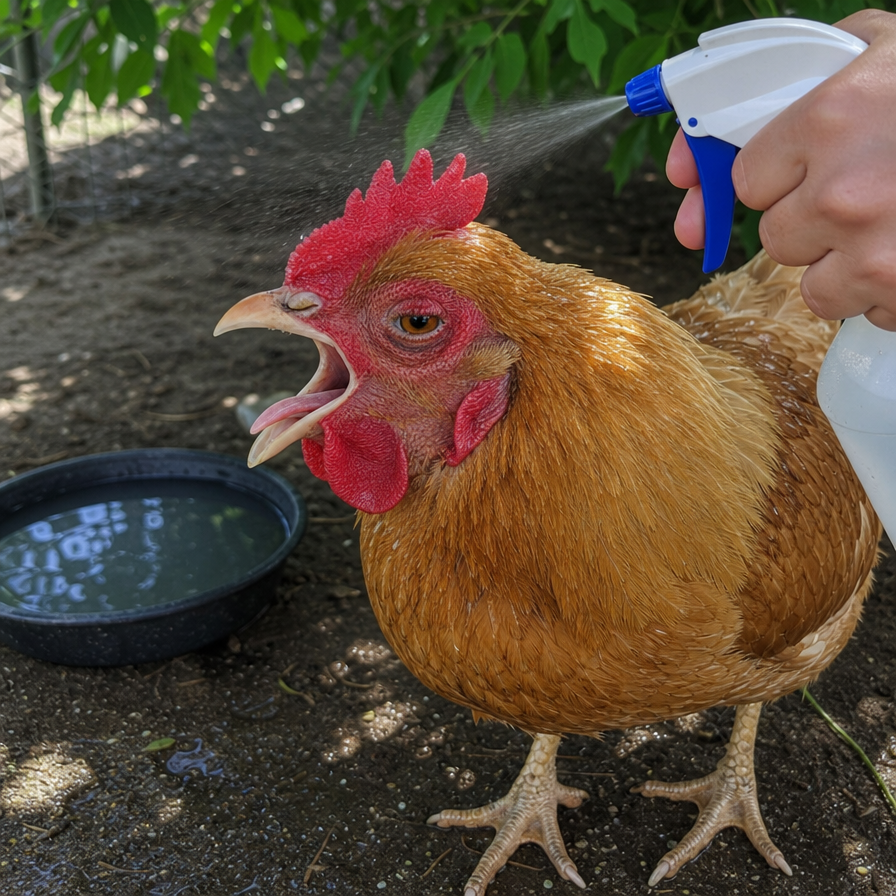
- Mist the bird with cool water, focusing on comb and wattles
- Offer cool fresh water with electrolytes
- Fan the bird to increase evaporative cooling
- Do not use ice cold water directly - the shock can worsen the situation
Flock-level interventions:
- Add frozen water bottles to the coop
- Freeze treats (watermelon, cucumber) as ice blocks
- Increase ventilation - add fans, open all vents
- Change water multiple times daily - birds will not drink warm water
Natural & Integrative Care for Heat Stress
Heat stress response is primarily environmental and hydration-based - natural electrolyte water, frozen treats, and shade management are first-line interventions.
Electrolyte water (homemade): Add a pinch of sea salt and a teaspoon of raw honey or sugar per gallon of cool water. Replaces electrolytes lost through panting without the artificial dyes of commercial products.
Basil and mint in water: Both have natural cooling properties and encourage drinking. Add a handful of fresh mint or basil to water. Birds that are hesitant to drink after heat stress often respond to herbed water.
Apple cider vinegar: 1 tablespoon per gallon reduces body temperature slightly through metabolic acidification and encourages water consumption.
Frozen fruit and vegetables: Watermelon (high water content, cooling), cucumber slices, frozen berries. Increases water intake while cooling the bird from the inside.
Shade plants: Long-term, planting sunflowers, elderberry, and tall shrubs around the run creates natural shade that reduces ambient temperature 10-15 degrees compared to direct sun.
Photo needed
Natural remedies for Heat Stress, electrolytes, apple-cider-vinegar, mint shown together
16/9🛡️How Can Heat Stress Be Prevented?
- Ensure shade access at all times - natural shade is more effective than roofing
- Frozen treats on forecast hot days - give before they need them
- Multiple waterers, changed twice daily in summer heat
- Increase ventilation before summer - add vents, cross-ventilation, fans
- Reduce stocking density in summer if coop has poor airflow
- Feed at night in summer - digestion generates body heat
- Electrolytes in water during heat waves proactively
📞When Should I Call a Vet for Heat Stress?
Call a vet if:
- Bird has collapsed and is not responding to cooling within 15 minutes
- Multiple birds collapsing simultaneously
- Bird has been in heat stroke for more than 30 minutes
❓Heat Stress: Frequently Asked Questions
What are the signs of heat stress in chickens?
Early signs include panting with the beak open, wings held away from the body, seeking shade, and reduced activity. Moderate heat stress causes lethargy, pale comb, and reduced feed intake but increased water consumption. Severe heat stress causes collapse, seizures, and can be fatal within hours.
Can chickens die from heat stress?
Yes. Chickens have no sweat glands and rely on panting to regulate body temperature. When the temperature exceeds 85 degrees Fahrenheit - especially with high humidity - their cooling mechanism becomes overwhelmed. Without intervention, severe heat stress causes organ failure and death, often within hours.
How do you cool down a chicken with heat stress?
Move the bird to shade or a cool indoor space immediately. Offer cool (not ice cold) water. Apply cool water to the comb, wattles, and feet. Add electrolytes to drinking water. Do not immerse in cold water or use ice directly - the sudden temperature change can cause shock.
How do you prevent heat stress in chickens?
Provide deep shade across at least half the run. Ensure constant access to cool, fresh water - add ice if needed. Increase ventilation in the coop. Freeze treats like watermelon or corn as enrichment that also helps cooling. Schedule chores and flock handling for early morning or evening during heat waves.
How do you treat heat stress in chickens?
Treatment involves immediate cooling - shade, cool water, and air movement. Electrolytes in the water (1 teaspoon per gallon) help restore balance. Frozen fruits and vegetables reduce body temperature. For birds that have collapsed, apply cool (not cold) wet cloths to the feet and wattles and get them to a vet.
📋Key Points
- ✓Chickens and turkeys are particularly vulnerable to heat because they lack sweat glands and rely entirely on panting and behavioral thermoregulation.
- ✓Key symptoms: panting with open beak, wings held away from body to dissipate heat, pale or discolored (blue/purple) comb and wattles, lethargy and not moving.
- ✓Excellent if caught early. Birds that collapse but are revived within 15-30 minutes usually recover fully. Birds in heat stroke (core temperature above 112°F) have guarded prognosis.
🔗Related
Related Conditions
Natural Remedies & Supplements
📚Sources & References
- 1.Heat Stress in Poultry. Merck Veterinary Manual. 2024
- 2.Heat Stress Management in Poultry. University of Georgia Cooperative Extension Poultry Science. 2023
- 3.Poultry Housing and Heat Stress. Texas A&M AgriLife Extension Poultry Science. 2023