Frostbite in Chickens: Symptoms, Causes and Treatment
Frostbite in chickens is freezing injury to exposed tissue, most often the comb, wattles, toes, and feet in cold, damp conditions. Tissue first appears pale or gray, then becomes swollen and may turn black as it dies. Treatment uses gradual warming and protection from refreezing, while blackened or infected tissue requires veterinary assessment.
Veterinarian Reviewed
FlockVet Veterinary Editorial Team· Reviewed January 2026
At a Glance
- Urgency
- Mild
- Contagious
- No
- Affects Humans
- No
- Key Symptoms
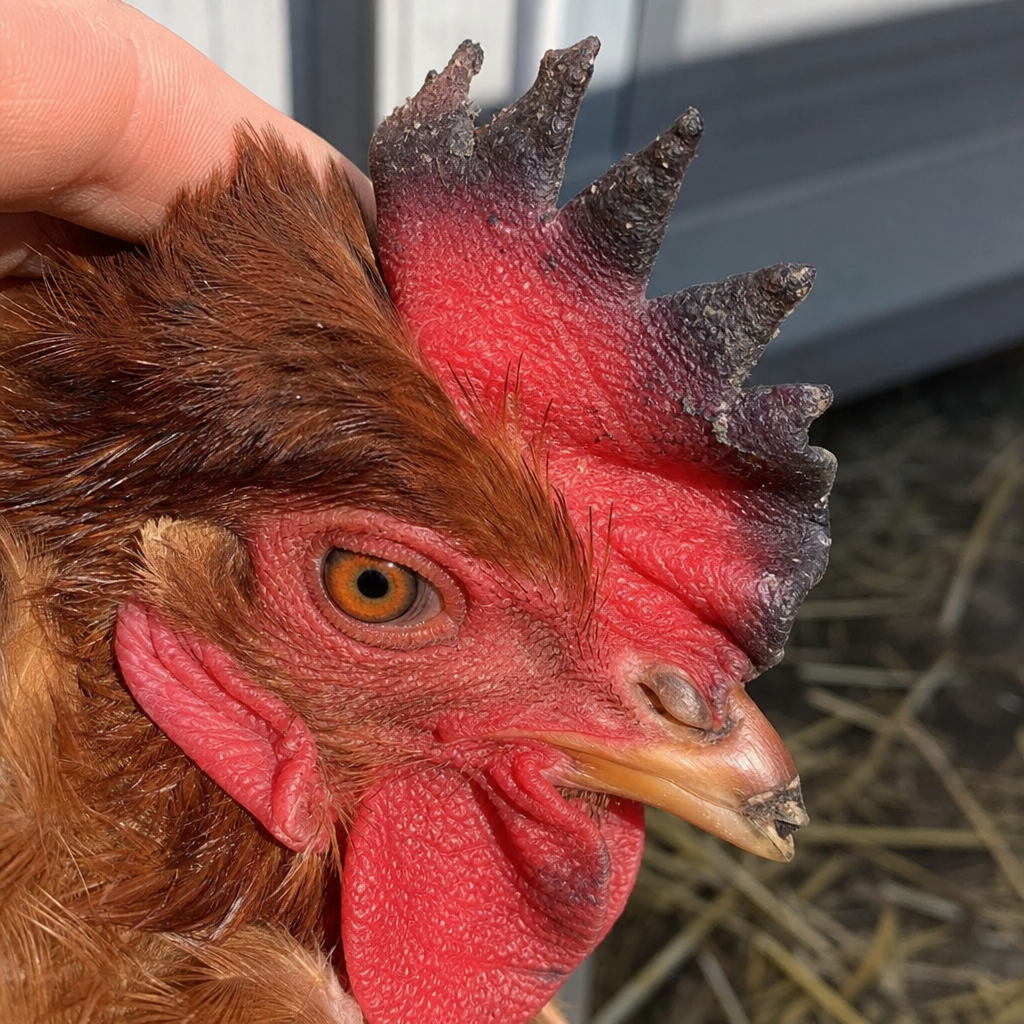
- black or dark purple tips on comb or wattles, pale or grey comb coloration, swelling of comb or wattles before blackening
- Prognosis
- Excellent for mild cases (grey tips, no sloughing). Good for moderate cases (tip loss). The bird adapts to reduced comb size. Poor cosmetically for show birds but no functional impact.
📑 On This Pagetap to expand
🔍What Are the Symptoms of Frostbite?
- ●Black or dark purple tips on comb or wattles
- ●Pale or grey comb coloration
- ●Swelling of comb or wattles before blackening
- ●Loss of comb tips (tissue sloughs off in severe cases)
- ●Swollen, red, or black toes
- ●Reluctance to walk (toe frostbite)
🧬What Causes Frostbite in Chickens?
Frostbite occurs when tissue temperature falls below freezing, causing ice crystals to form inside cells and rupture them. Key risk factors:
- Single-comb breeds in freezing temperatures - large, upright combs have poor circulation to tips
- High coop humidity - wet cold is far more dangerous than dry cold. A poorly ventilated coop with high moisture condenses on combs and accelerates freezing
- Wet combs from drinking - birds that dunk their head in waterers come out with wet combs vulnerable to freezing
- Wind exposure - wind chill dramatically accelerates tissue freezing
- Roosting issues - birds roosting on the floor instead of elevated perches are exposed to cold air pooling at ground level
🔬How Is Frostbite Diagnosed?
💊How Is Frostbite Treated?
Do NOT rub frostbitten tissue. This causes mechanical damage to fragile frozen cells and worsens the injury. Do not apply direct heat rapidly - gradual warming prevents further damage.
- Move bird to warmer area (not hot - gradual rewarming)
- Apply lukewarm (not hot) water cloths to affected areas
- Once thawed, apply petroleum jelly or antibiotic ointment
- Do not pop blisters if they form
- Allow dead tissue to dry and separate naturally - do not cut off
- Monitor for secondary infection as tissue sloughs
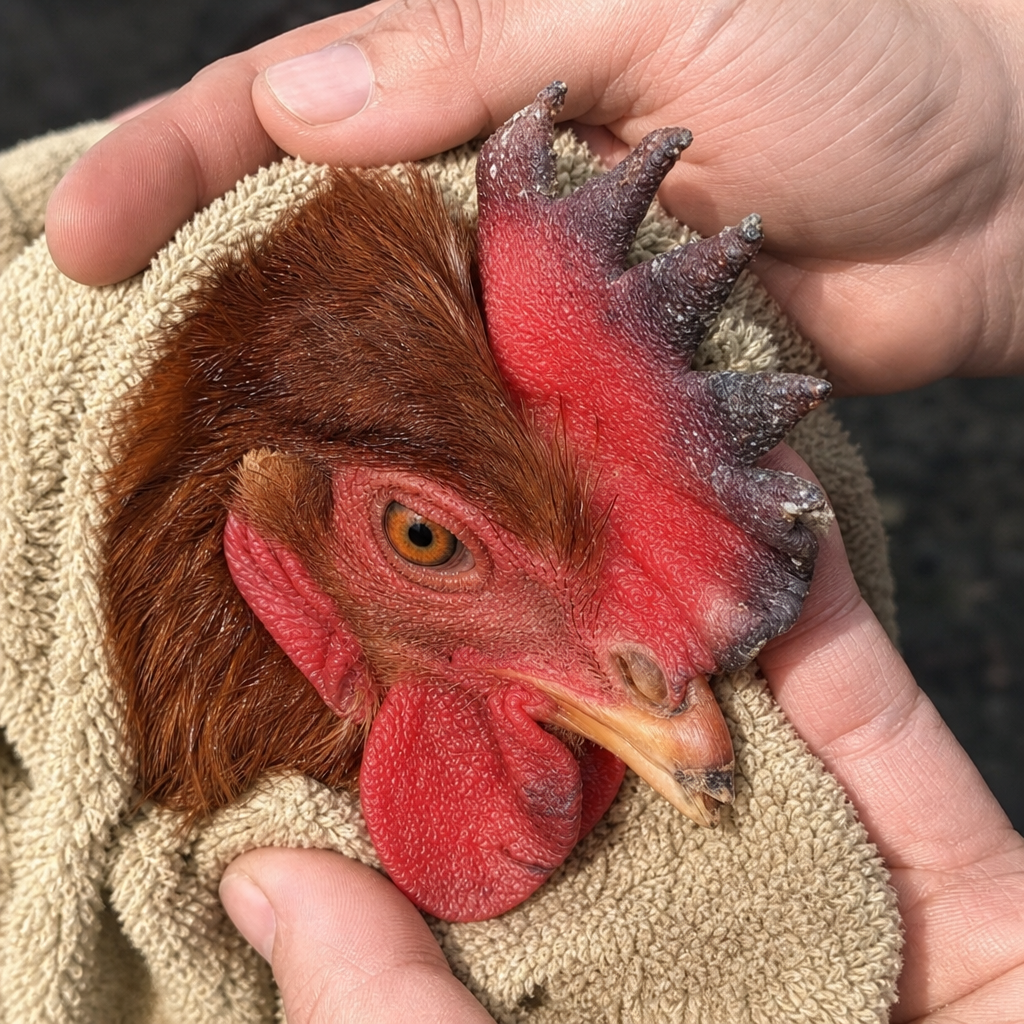
Frostbite on chicken combs
Before extreme cold, apply a thin, even film of petroleum jelly to clean, dry comb points, taking care not to trap moisture. This barrier may reduce direct moisture exposure but cannot compensate for a damp coop. Ventilate above roost level, keep bedding dry, and avoid rubbing or repeatedly coating tissue that is already frozen, blistered, or blackened.
Natural & Integrative Care for Frostbite
Frostbite is almost entirely preventable with petroleum jelly and proper ventilation. Treatment is supportive: gradual warming, coconut oil or Vaseline, and monitoring for secondary infection.
Petroleum jelly (Vaseline): Both treatment and prevention. Applied to thawed tissue, it insulates and prevents refreezing. Applied preventively before cold nights, it prevents initial freeze. This is the most validated intervention and is essentially free.
Coconut oil: Alternative to petroleum jelly. Antimicrobial properties provide additional protection against secondary infection as tissue sloughs.
Aloe vera gel: Applied to thawed frostbitten areas to soothe and promote healing. Has anti-inflammatory properties that reduce tissue damage from the inflammatory response to thawing.
Calendula salve: Once the acute phase passes and tissue begins healing, calendula promotes skin regeneration and reduces scar formation.
Ventilation improvement (most important): Reducing coop humidity through proper ventilation is the most powerful prevention. A dry cold coop is far safer than a warm humid one. Open vents at the top of the coop - warm moist air rises and must escape.
Photo needed
Natural remedies for Frostbite, petroleum-jelly, coconut-oil, calendula shown together
16/9🛡️How Can Frostbite Be Prevented?
- Apply petroleum jelly to combs, wattles, and legs of all birds before every night below 28°F
- Ensure adequate ventilation in the coop - humidity is the enemy, not cold
- Use heated or insulated waterers to prevent birds getting wet combs from frozen water attempts
- Ensure all birds are roosting on elevated perches - cold air pools at floor level
- Consider rose-comb or pea-comb breeds for cold climates (Wyandottes, Buckeyes, Dominiques)
- Deep bedding (deep litter method) generates heat from decomposition and warms the floor
📞When Should I Call a Vet for Frostbite?
Call a vet if:
- Toes are involved and bird cannot walk
- Secondary bacterial infection develops in sloughing tissue (swelling, discharge, foul smell)
- Bird is unwell beyond the frostbite itself
❓Frostbite: Frequently Asked Questions
How do you prevent frostbite in chickens?
The key to preventing frostbite is controlling moisture, not heat. Keep the coop well-ventilated to remove humid air (humidity causes frostbite faster than cold). Apply petroleum jelly or coconut oil to combs and wattles before extreme cold. Use wide, flat roosts so birds can cover their feet with their body while sleeping.
How do you treat frostbite in chickens?
Do not rub frostbitten tissue - this damages cells. Move the bird to a cool indoor area (not warm - gradual warming is critical). Warm the affected tissue gently with lukewarm water at 104 degrees Fahrenheit. Apply aloe vera or vitamin E oil after thawing. Seek vet care for blackened, necrotic tissue.
What does frostbite on chickens look like?
Early frostbite appears as pale, waxy, or gray areas on the comb, wattles, or toes. Within 1-2 days, the affected tissue turns red and swollen as circulation returns. Severe frostbite causes the tissue to turn black and harden as it dies. Combs and wattles are most commonly affected.
Can chickens get frostbite on their feet?
Yes. Chickens can get frostbite on their feet and toes, especially when roosting on narrow perches that force them to grip rather than sit flat. Wet bedding and standing in snow worsen the risk. Wide, flat roosts allow chickens to sit on their feet and warm them with body heat.
Can chickens get frostbite?
Yes, chickens are susceptible to frostbite on exposed tissue - most commonly the comb, wattles, and toes. Large-combed breeds like Leghorns and Minorcas are most vulnerable. The primary cause is moisture combined with cold, not cold alone. Humidity in the coop is the enemy, not temperature.
📋Key Points
- ✓Frostbite occurs when tissue temperature falls below freezing, causing ice crystals to form inside cells and rupture them.
- ✓Key symptoms: black or dark purple tips on comb or wattles, pale or grey comb coloration, swelling of comb or wattles before blackening, loss of comb tips (tissue sloughs off in severe cases).
- ✓Excellent for mild cases (grey tips, no sloughing). Good for moderate cases (tip loss). The bird adapts to reduced comb size. Poor cosmetically for show birds but no functional impact.
🔗Related
Related Conditions
Natural Remedies & Supplements
📚Sources & References
- 1.Frostbite in Poultry. Merck Veterinary Manual. 2024
- 2.Common Management-Related Problems in Backyard Poultry. Merck Veterinary Manual. 2024
- 3.Winter Poultry Management. Texas A&M AgriLife Extension Poultry Science. 2023