Fowl Pox in Chickens: Symptoms, Causes and Treatment
Fowl pox in chickens is a mosquito-borne or contact-spread Avipoxvirus infection that causes crusted skin lesions or plaques in the mouth and throat. Dry pox usually causes scabs on unfeathered skin, while wet pox can obstruct eating or breathing. There is no antiviral cure, so treatment is supportive and vaccination is used to protect unaffected birds at risk.
Veterinarian Reviewed
FlockVet Veterinary Editorial Team· Reviewed January 2026
At a Glance
- Urgency
- Moderate
- Contagious
- Yes
- Affects Humans
- No
- Key Symptoms
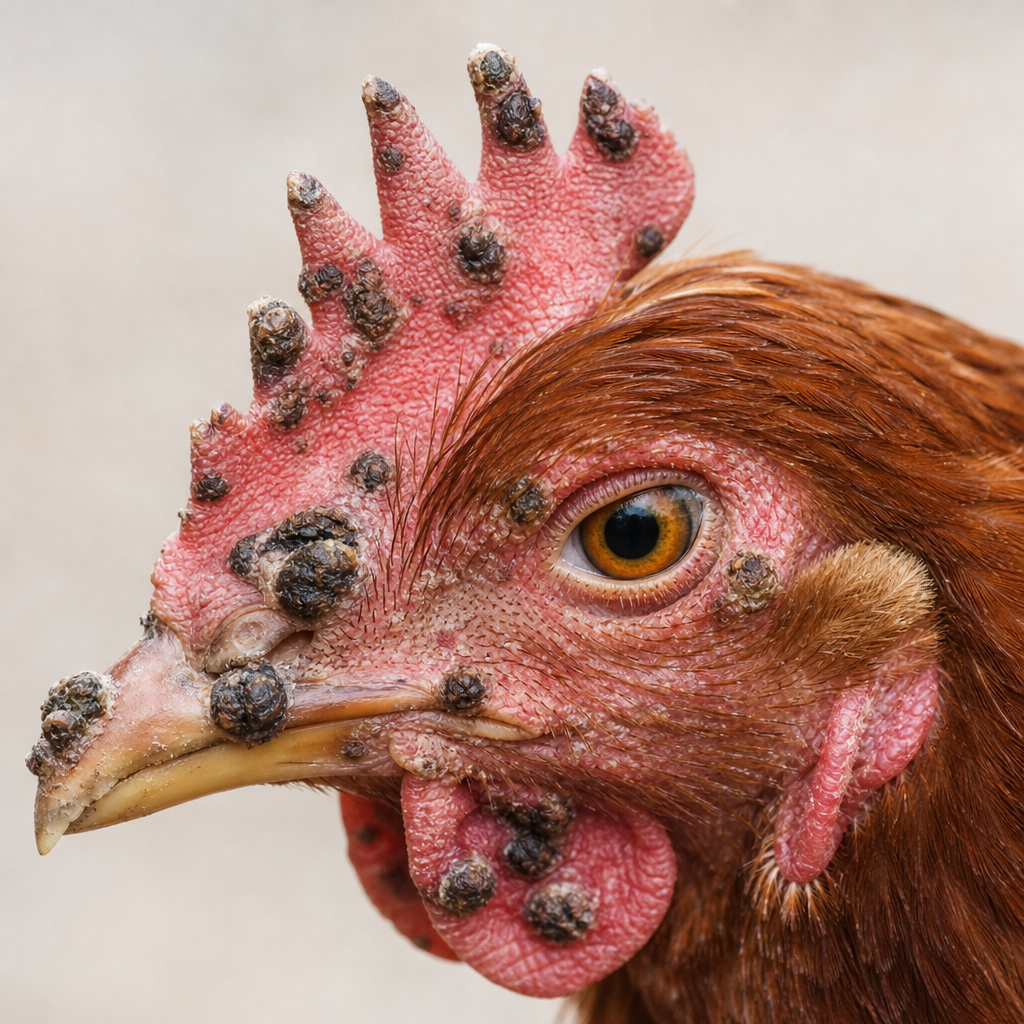
- wart-like nodules on comb, wattles, face, and eyelids (dry form), yellow or white plaques inside mouth or throat (wet form), difficulty swallowing or breathing (wet form)
- Prognosis
- Dry form: excellent. Birds recover fully in 3-4 weeks. Wet form: guarded. Mortality depends on extent of throat involvement. Birds that cannot breathe or swallow need aggressive supportive care.
📑 On This Pagetap to expand
🔍What Are the Symptoms of Fowl Pox?
- ●Wart-like nodules on comb, wattles, face, and eyelids (dry form)
- ●Yellow or white plaques inside mouth or throat (wet form)
- ●Difficulty swallowing or breathing (wet form)
- ●Reduced egg production
- ●Eye discharge or swelling
- ●Lethargy
- ●Weight loss
- ●Scabs forming and eventually dropping off (dry form recovery)
🧬What Causes Fowl Pox in Chickens?
Fowl Pox Virus (FPV) - a large DNA poxvirus with two transmission routes:
- Mosquito transmission: The primary route. Mosquitoes acquire virus from lesions and transmit mechanically via biting. Seasonal outbreaks correlate with mosquito activity.
- Direct contact: Birds contact infected lesion material. Spread through pecking at lesions.
- Fomites: Contaminated equipment, feeders, waterers
The dry form (cutaneous) is confined to skin. The wet form (diphtheritic) involves the mucous membranes of the mouth, throat, and trachea and is significantly more serious.
🔬How Is Fowl Pox Diagnosed?
Dry form is visually diagnosed by the characteristic wart-like nodules progressing through stages: papule, vesicle, pustule, scab. Full cycle takes 3-4 weeks.
Wet form requires careful examination of the mouth with a flashlight. Yellow, cheese-like plaques attached to the mucosa - these bleed when removed, which distinguishes pox from simple feed material.
Definitive diagnosis via histopathology showing intracytoplasmic inclusion bodies (Bollinger bodies).
💊How Is Fowl Pox Treated?
No antiviral treatment exists for Fowl Pox. Management is supportive:
Dry form:
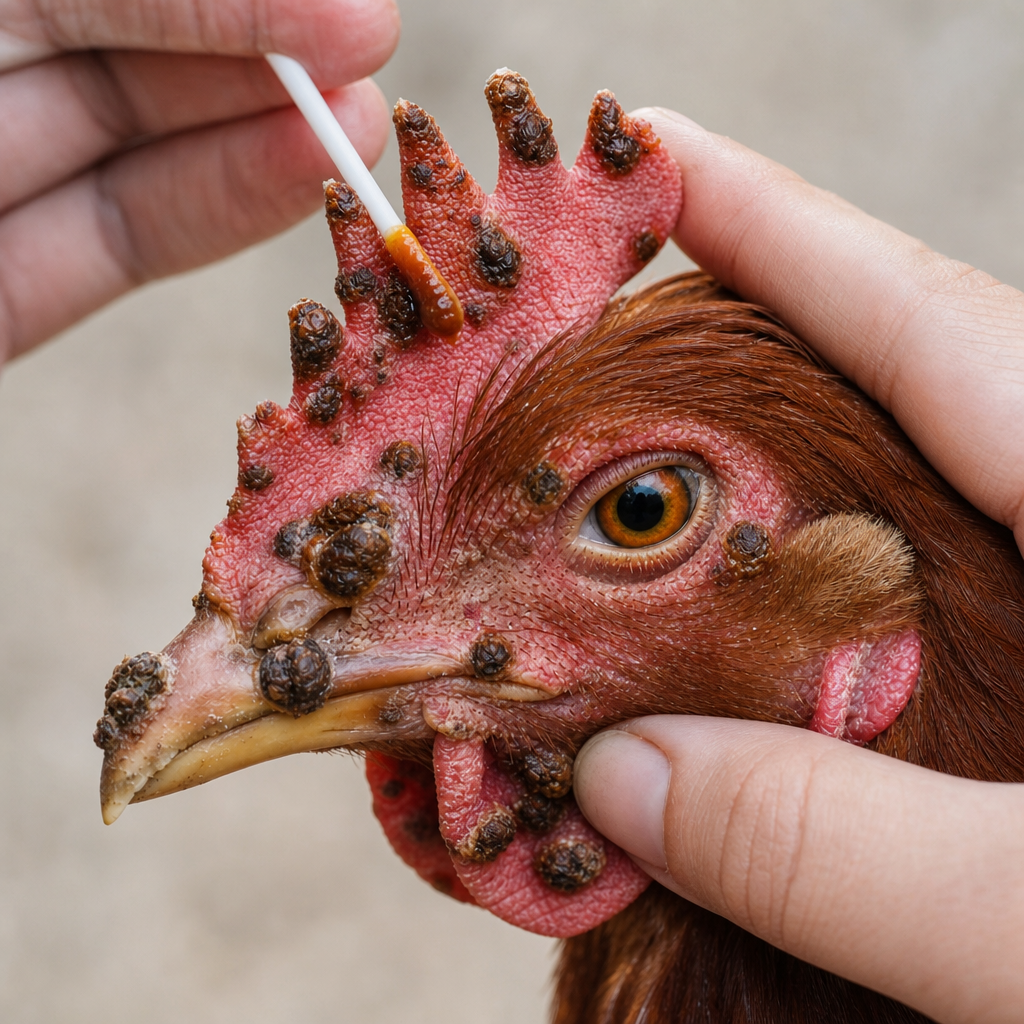
- Apply iodine tincture to lesions to prevent secondary bacterial infection
- Isolate if being pecked by flock mates
- Vitamin A supplementation supports skin and mucosal healing
Wet form:
- Carefully remove plaques with tweezers - apply iodine immediately
- Antibiotics (doxycycline) to prevent secondary bacterial pneumonia
- Soft, easy-to-swallow food
- Separate from flock to reduce stress
Vaccination: Wing-web stick vaccination is effective and provides lifetime immunity. Vaccinate unaffected birds immediately when outbreak detected.
Fowl pox vaccination
Chicken-origin or pigeon-origin live fowl pox vaccines are sold by poultry supply companies. Vaccinate healthy birds before mosquito season, commonly at 8-12 weeks, using the supplied two-pronged wing-web applicator exactly as labeled. Check for a small vaccine take at the site 7-10 days later. Do not vaccinate actively sick birds, and follow handling instructions because the live vaccine can spread mechanically.
Natural & Integrative Care for Fowl Pox
Fowl Pox has no treatment - management is supportive. Natural care (iodine, vitamin A, calendula, immune support) optimizes recovery. Vaccination is the only real prevention.
Iodine on lesions: The most effective immediate intervention. Betadine or Lugol's iodine applied to all visible lesions twice daily. Prevents secondary bacterial infection and speeds scab formation.
Vitamin A supplementation: Critical for mucosal healing. Feed sweet potato, dark leafy greens, and carrots. Vitamin A deficiency worsens both forms of Fowl Pox significantly.
Calendula salve on skin lesions: After active pustule stage, calendula promotes tissue healing and reduces inflammation. Apply once daily to scabbing lesions.
Elderberry extract in water: Contains flavonoids with documented antiviral activity. Add 1 tablespoon per gallon. Supportive - not a treatment but may reduce viral replication.
Garlic and oregano in water: Immune stimulation and secondary infection prevention during vulnerable healing period.
Mosquito management: Eliminate standing water sources within 300 feet of coop. Use citronella, lavender, and basil plants around the coop perimeter as natural mosquito deterrents.
Photo needed
Natural remedies for Fowl Pox, vitamin-a, calendula, elderberry shown together
16/9🛡️How Can Fowl Pox Be Prevented?
- Vaccinate all birds via wing-web method before mosquito season
- Eliminate standing water within 300 feet of coop
- Use mosquito netting on coop openings in high-mosquito areas
- Citronella, lavender, and basil planted around coop perimeter
- Repair any skin wounds promptly - open wounds are entry points
📞When Should I Call a Vet for Fowl Pox?
Call a vet if:
- Wet form is suspected - plaques in mouth or throat
- Bird is struggling to breathe
- You need vaccination material
- Secondary bacterial pneumonia is suspected
❓Fowl Pox: Frequently Asked Questions
How do chickens get fowl pox?
Fowl pox spreads through direct contact with infected birds, through mosquito bites (the primary vector in warm climates), or through contact with contaminated scabs or equipment. Dry pox lesions can remain infectious in the environment for months. Mosquito control is the single most important prevention measure.
How do you treat fowl pox in chickens?
There is no cure for fowl pox - the virus must run its course, which typically takes 2-4 weeks. Supportive care includes keeping scabs clean and dry, applying iodine to lesions to prevent secondary bacterial infection, and for wet pox, gently removing diphtheritic membranes from the throat. Isolate affected birds.
What causes fowl pox in chickens?
Fowl pox is caused by the Avipoxvirus, a large DNA virus. Mosquitoes transmit the virus between birds and are responsible for most backyard flock outbreaks. The virus can also spread through wounds, contaminated equipment, or respiratory secretions. Wild birds can introduce pox to a flock.
Can fowl pox kill chickens?
Dry fowl pox (skin lesions only) rarely kills birds, though it causes stress and reduced production. Wet fowl pox, which affects the mouth and throat, can be fatal if lesions obstruct breathing or eating. Young birds, birds in poor condition, and flocks with secondary bacterial infections face the highest risk.
How do you vaccinate chickens for fowl pox?
The fowl pox vaccine is a live virus applied by the wing-web stick method - a two-pronged needle dipped in vaccine is stabbed through the wing web. Birds should be vaccinated at 8-12 weeks in mosquito-endemic areas, before mosquito season. The vaccine is available from poultry supply companies without a prescription.
📋Key Points
- ✓Fowl Pox Virus (FPV) - a large DNA poxvirus with two transmission routes: Mosquito transmission: The primary route.
- ✓Key symptoms: wart-like nodules on comb, wattles, face, and eyelids (dry form), yellow or white plaques inside mouth or throat (wet form), difficulty swallowing or breathing (wet form), reduced egg production.
- ✓Dry form: excellent. Birds recover fully in 3-4 weeks. Wet form: guarded. Mortality depends on extent of throat involvement. Birds that cannot breathe or swallow need aggressive supportive care.
- ✓This condition is contagious, isolate affected birds promptly.
🔗Related
Related Conditions
Medications
Natural Remedies & Supplements
📚Sources & References
- 1.Fowlpox in Poultry. Merck Veterinary Manual. 2024
- 2.Fowl Pox - Disease Information. Georgia Poultry Laboratory Network. 2024
- 3.Management of Backyard Poultry. Merck Veterinary Manual. 2024