Impacted Crop in Chickens: Symptoms, Causes and Treatment
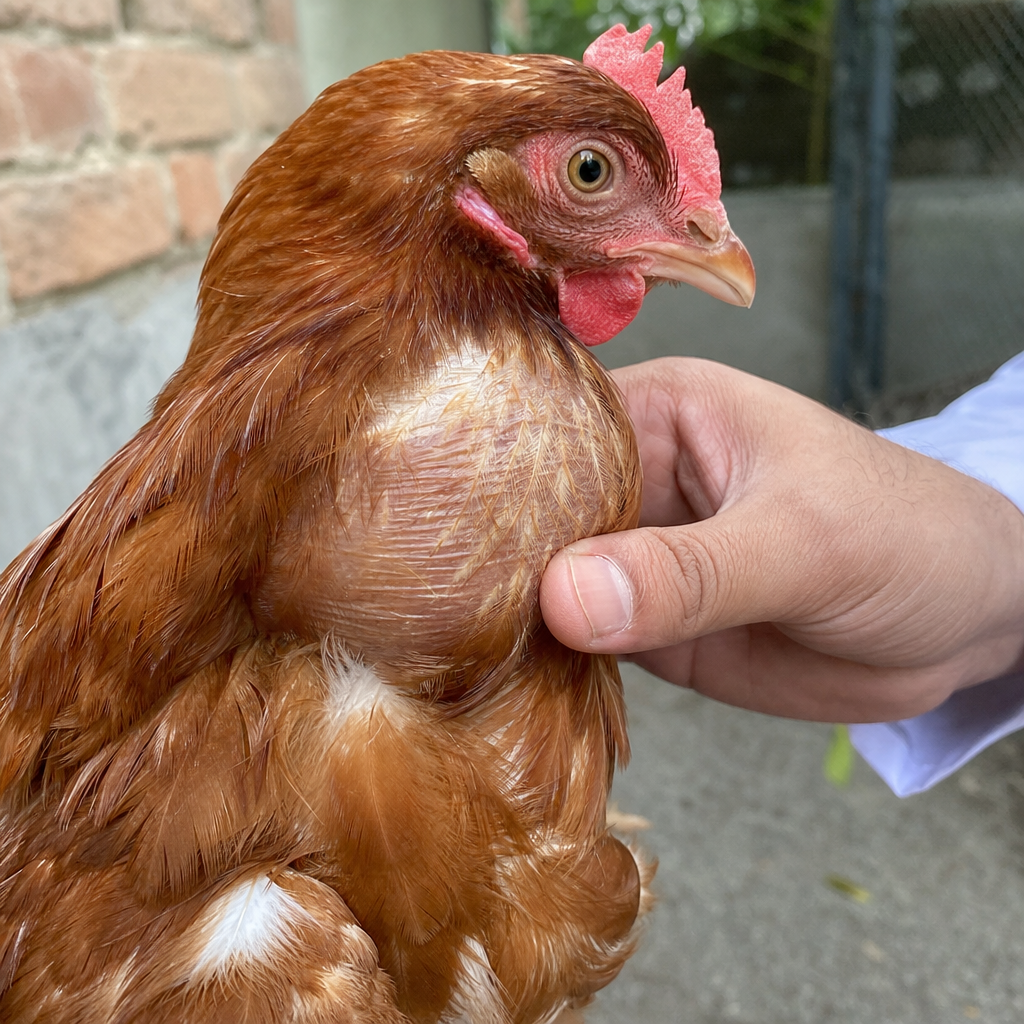
Crop impaction in chickens is a blockage of compacted feed, grass, string, or other fibrous material that prevents the crop from emptying. The crop remains enlarged and firm after an overnight fast, and the bird may lose appetite, weight, and energy. Early care uses hydration and gentle massage, while persistent obstruction requires veterinary removal.
Veterinarian Reviewed
FlockVet Veterinary Editorial Team· Reviewed January 2026
At a Glance
- Urgency
- Moderate
- Contagious
- No
- Affects Humans
- No
- Key Symptoms
- hard, firm, packed crop that does not empty overnight, crop feels like a ball of tightly packed material, loss of appetite
- Prognosis
- Good with prompt conservative management. Most mild impactions resolve within 24-48 hours of feed withdrawal, massage, and oil. Severe impactions or those involving indigestible material (rubber, string) may require surgery.
📑 On This Pagetap to expand
🔍What Are the Symptoms of Impacted Crop?
- ●Hard, firm, packed crop that does not empty overnight
- ●Crop feels like a ball of tightly packed material
- ●Loss of appetite
- ●Lethargy
- ●Weight loss
- ●No distinctive smell (unlike sour crop)
- ●Bird may gag or make swallowing motions
🧬What Causes Impacted Crop in Chickens?
Impaction occurs when fibrous or indigestible material becomes packed in the crop:
- Long grass or fibrous plants: Free-range birds eating grass that is too long (over 3 inches) is the most common cause
- Straw or hay: Bedding ingestion, especially in birds not getting enough feed
- Feathers: From feather pecking - feathers are indigestible
- Rubber or plastic debris: Foraging birds eat non-food items
- Dry, dusty feed: Insufficient grit to process it
- Dehydration: Reduces crop motility
🔬How Is Impacted Crop Diagnosed?
💊How Is Impacted Crop Treated?
Step 1: Withhold feed for 12-24 hours. Water only. This reduces pressure and gives the crop a chance to work through the material.
Step 2: Hydrate. Ensure the bird is drinking. Dehydration worsens impaction by reducing crop motility.
Step 3: Crop massage. Gently massage the crop in a downward kneading motion for 10-15 minutes, 3-4 times per day. This helps break up and move the impacted material.
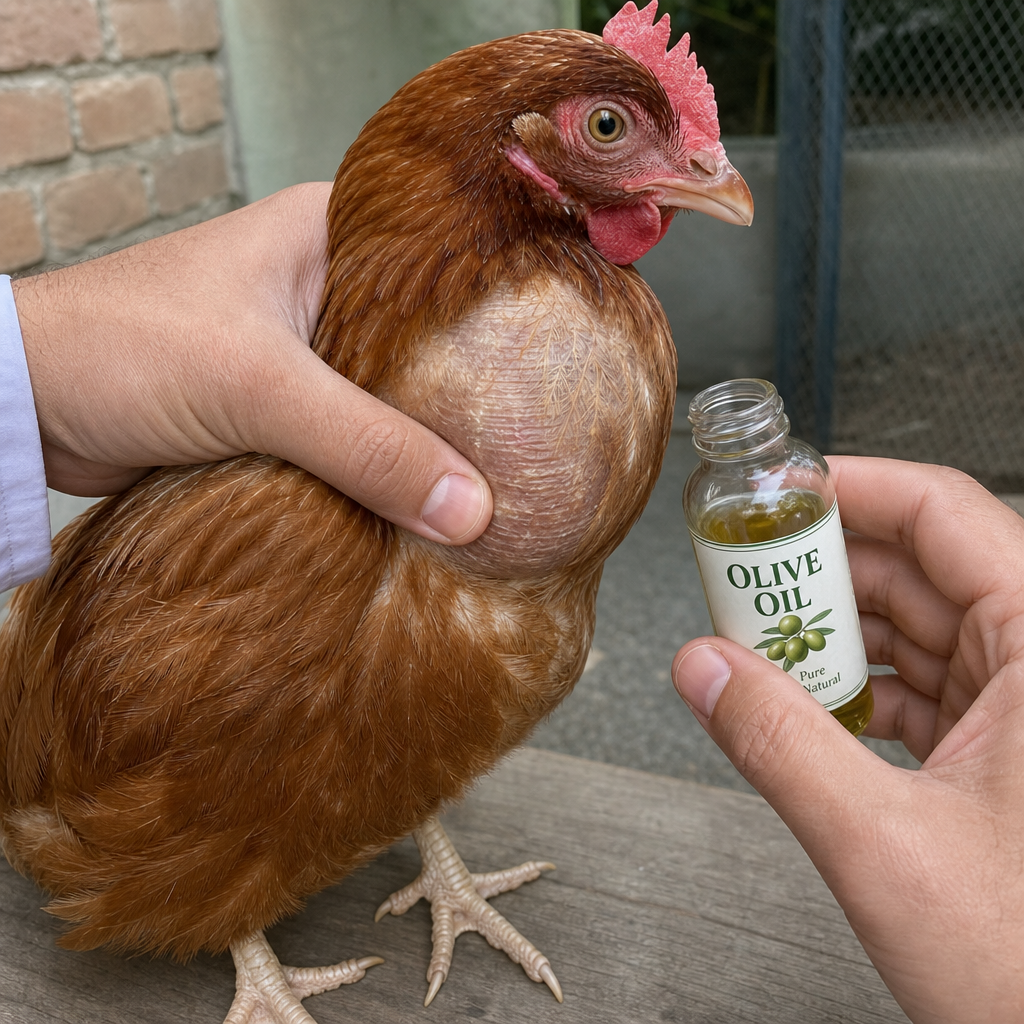
Step 4: Lubrication. Administer 1-2ml of olive oil or coconut oil orally with a dropper. This lubricates the mass and aids motility. Do not over-lubricate - aspiration risk.
Step 5: Reassess at 24 and 48 hours. If crop is not softening or beginning to empty, veterinary intervention is needed.
Veterinary option: Surgical crop emptying (ingluviotomy) under anesthesia for cases that do not resolve with conservative management.
Natural & Integrative Care for Impacted Crop
Impacted crop is managed conservatively with feed withdrawal, massage, and olive oil lubrication. Surgery is a last resort. Grit access is the key prevention.
Olive oil or coconut oil: 1-2ml administered orally with a small dropper. Lubricates the impacted mass and stimulates crop motility. Coconut oil also has mild antimicrobial properties that prevent secondary sour crop developing in the stagnant material.
Warm water massage: Combine external massage with offering warm water to drink. Warm water increases crop motility more than cold water.
Apple cider vinegar in water: 1 tablespoon per gallon after the impaction clears. Supports normal crop acid environment and prevents secondary fermentation.
Grit access: Once the impaction clears, ensure the bird has free-choice access to appropriate grit. Grit is essential for crop function and prevents recurrence. Without grit, fibrous material cannot be broken down.
Photo needed
Natural remedies for Impacted Crop, olive-oil, coconut-oil, apple-cider-vinegar shown together
16/9🛡️How Can Impacted Crop Be Prevented?
- Keep grass in the run mowed below 3 inches - long grass is the primary cause
- Free-choice grit at all times - properly sized for your birds' age and species
- Remove long fibrous plant material from foraging areas
- Ensure birds are not overly hungry when released to pasture - hungry birds eat faster and more indiscriminately
📞When Should I Call a Vet for Impacted Crop?
Call a vet if:
- Crop is still hard and full after 48 hours of conservative treatment
- Bird is not drinking
- Bird is declining rapidly
- You suspect indigestible material (rubber, string, plastic) is involved
❓Impacted Crop: Frequently Asked Questions
How do I know if my chicken has an impacted crop?
An impacted crop feels hard, doughy, or like a firm ball on the right side of the chest when you pick up the bird. A normal crop feels soft and empties overnight. Check before breakfast - if the crop is still large and firm the next morning after an overnight fast, it is likely impacted.
How do you treat impacted crop in chickens?
Withhold food but provide water and grit. Massage the crop gently in a downward circular motion for several minutes a few times per day to help break up the mass. A small amount of olive oil (1 teaspoon) can help lubricate the passage. Do not try to manually empty the crop by inverting the bird - this risks aspiration.
Can chickens die from impacted crop?
Yes. An impacted crop that is not resolved blocks the passage of food, causing the bird to slowly starve. The rotting material also produces toxic gases that can cause sour crop. If the crop is not emptying after 48-72 hours of treatment, a vet may need to surgically remove the impaction.
What is impacted crop in chickens?
An impacted crop occurs when food, grass, or fibrous material becomes compacted in the crop and cannot pass through to the gizzard. Long strands of grass, straw, or string are the most common culprits. The crop becomes hard, enlarged, and does not empty overnight as it should.
How do you fix impacted crop in chickens?
The fix requires softening and moving the blockage. Withhold solid food for 24 hours. Massage the crop frequently. Offer a small amount of olive oil to lubricate the digestive tract. For a hard, compact mass that does not budge with 48 hours of treatment, surgical crop emptying by a vet is the only option.
📋Key Points
- ✓Impaction occurs when fibrous or indigestible material becomes packed in the crop: Long grass or fibrous plants: Free-range birds eating grass that is too long (over 3 inches) is the most common cause Straw or hay: Bedding ingestion, especially in birds not getting enough feed Feathers: From feather pecking - feathers are indigestible Rubber or plastic debris: Foraging birds eat non-food items Dry, dusty feed: Insufficient grit to process it Dehydration: Reduces crop motility
- ✓Key symptoms: hard, firm, packed crop that does not empty overnight, crop feels like a ball of tightly packed material, loss of appetite, lethargy.
- ✓Good with prompt conservative management. Most mild impactions resolve within 24-48 hours of feed withdrawal, massage, and oil. Severe impactions or those involving indigestible material (rubber, string) may require surgery.
🔗Related
Related Conditions
Natural Remedies & Supplements
📚Sources & References
- 1.Crop Disorders in Poultry. Merck Veterinary Manual. 2024
- 2.Common Management-Related Problems in Backyard Poultry. Merck Veterinary Manual. 2024